Behind the Books
Epic Fantasy vs. Dark Fantasy: No, It’s Not About How Much Blood There Is
Epic fantasy is mostly about the scale of the conflict; dark fantasy is about sinister tone and proximity to horror. A story can be both.
By Yenny Astrid Londoño · October 23, 2026 · 7 min read
Share
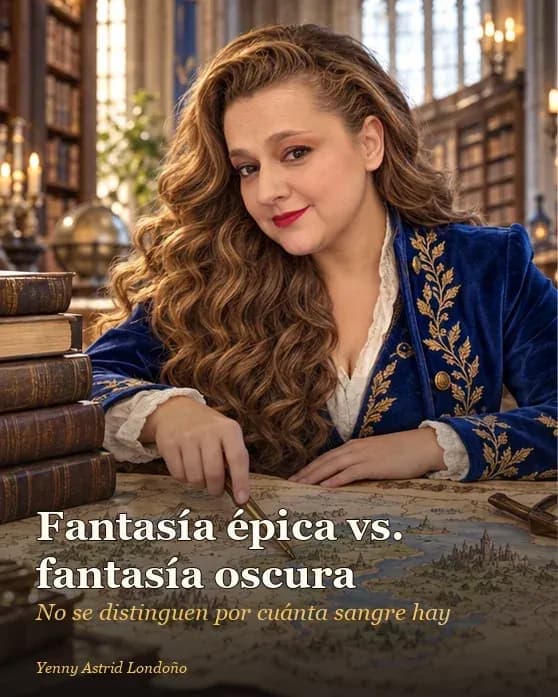
The short answer
Epic fantasy is defined mainly by the scale and reach of its conflict; dark fantasy by its sinister tone and closeness to horror. A story can be both if it follows a war or a collective fate through an oppressive atmosphere, violence, or a bleak outlook. These aren’t rival boxes. They’re useful labels for the kind of reading ahead—as long as we don’t use them like a border-control system.
What this guide covers
What people usually mean by epic fantasy
Epic fantasy usually puts something bigger than one person’s private life at stake. There may be a war, a threat to several kingdoms, a long journey, a prophecy, a struggle for power, or a world whose history shapes the characters’ choices. The setting may be entirely invented, with its own languages, religions, creatures, and magic systems, or it may draw on a fantastical version of a familiar era. Scale matters, but it isn’t a contest over who can draw the biggest map.
Penguin Libros Colombia describes epic fantasy—also called high fantasy—as a well-known branch of the genre and notes that its worlds and plots may draw on mythology, folklore, and religion. That’s a useful guide, not a rule requiring every book to include all three. Some epic series have more politics than magic; others change the world through the way their magic system works. The label says, ‘Look at the scope.’ It doesn’t promise that all the characters will be noble, virtuous, and delightful dinner guests.
What people usually mean by dark fantasy
Dark fantasy brings fantastical elements close to horror, the uncanny, or an atmosphere of threat. It may include dangerous magic, disturbing creatures, hostile places, violence, or protagonists facing morally questionable choices. There’s no universal definition that settles every argument: literary labels shift, and publishers don’t always draw the same boundaries. Penguin’s guide points to darker tones and murkier themes; in practice, the darkness needs to be central to the experience, not just cover decoration.
That doesn’t mean every page has to be depressing. A novel can have humor, tenderness, or hope and still be dark because of how it presents the world, magic, or danger. And a story doesn’t become dark fantasy just because one character is unpleasant. If ‘someone acts like a jerk’ were the only test, we’d have to relabel half the library and several family dinners.
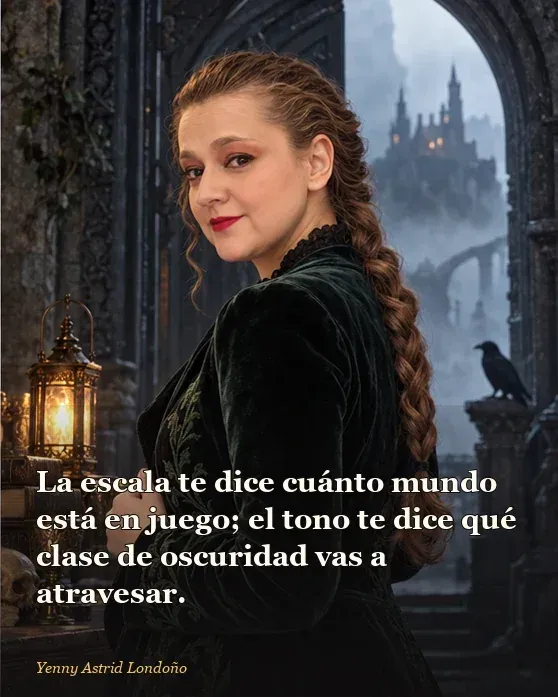
Scale tells you how much of the world is at stake; tone tells you what kind of darkness you’ll have to cross.
The differences, side by side
The guiding question: What large conflict is at stake? / What threat, horror, or atmosphere dominates the story?
Typical scale: Characters, regions, kingdoms, or a whole world. / It can be intimate or broad; it doesn’t depend on the size of the map.
Tone: Heroic, political, tragic, adventurous, or mixed. / Often sinister, unsettling, or close to horror.
Magic: May be central or secondary, depending on the book. / Often a risk, an unsettling force, or part of the sinister atmosphere.
Characters: Heroes, antiheroes, or morally gray people. / Often face fear, guilt, trauma, or ethical dilemmas.
Violence: It may appear, but doesn’t define epic fantasy by itself. / It may appear, but isn’t enough on its own to make a story dark fantasy.
Can they mix? Yes. / Yes: an epic fantasy can have a dark tone.
The most useful distinction when choosing a book is this: epic fantasy mainly describes narrative scale; dark fantasy mainly describes tone and its relationship with horror. One doesn’t cancel out the other. You can have an adventure across several kingdoms in a cruel world, with disturbing magic and characters who have nowhere to escape.
Where grimdark fits
‘Grimdark’ is often used for fantasy that’s especially cynical, violent, or disillusioned, with morally ambiguous characters and institutions that don’t seem to have a functioning ethics department. It overlaps with dark fantasy but isn’t necessarily an exact synonym. A recent academic article connects grimdark to dark fantasy and to reversals of heroic tropes; that helps explain the family resemblance—and reminds us not to pretend every critic uses the labels in exactly the same way.
The practical difference is emphasis. Dark fantasy may focus on the supernatural, fear, and atmosphere; grimdark often turns its attention to a world where power is corrupt, violence is normalized, and hope comes with fine print. But both labels are debatable, and books cross between them. If a blurb promises ‘gritty’ fantasy, check what that means in this particular book: horror, brutality, disillusionment, or all three because the author decided one kind of misery wasn’t enough.
Stories that cross both lines
A Song of Ice and Fire by George R. R. Martin is often read as epic fantasy because of its political scope, noble houses, wars, and continent-wide conflict. It also has a bleak tone, violence, and characters who don’t divide neatly into heroes and villains. Calling it only ‘epic’ misses part of the experience; calling it only ‘dark’ erases the broad structure of conflict and power.
Joe Abercrombie’s work often comes up in grimdark conversations because of its cynicism and morally complicated characters. Not all dark fantasy is grimdark, and one cynical character doesn’t turn an adventure into the same subgenre. It helps to name the actual traits: the scale of the conflict, atmosphere, treatment of violence, possibility of change, and relationship to horror.
For large-scale adventures and magic, explore this guide to epic fantasy for beginners, what to read after *A Game of Thrones*, and the guides to getting started with Brandon Sanderson. If you’re interested in another mix of fantasy and relationships, read what romantasy is. These related posts have proposed URLs; check them when they go live.
What to read based on the fantasy you want
If you want the fate of kingdoms or peoples at stake, look for epic fantasy—but check whether the story focuses on battles, politics, a journey, magic, or characters. ‘Epic’ doesn’t mean you have to love every page of the map.
If you want an unsettling atmosphere or magic you can’t trust, look for dark fantasy and check the content notes. The label doesn’t tell you exactly how much violence there is, so it’s worth checking the synopsis, edition, and spoiler-free reviews.
If you want unreliable heroes and a deeply cynical view of power, explore grimdark—with the caveat that people use the term in different ways. If you want hope and growth, don’t write off all dark fantasy: characters can resist even when the world is a complete bastard.
If you don’t want to choose, read a book that combines scale and darkness. Plenty do. Then tell me what worked for you: the map, the choices, the horror, the magic system, or the protagonist who clearly needed a break and maybe a lawyer.

A book can save a kingdom and leave your mood in the basement. Genres can live together.
Frequently Asked Questions
What’s the difference between epic fantasy and dark fantasy?
Epic fantasy usually describes the scale of the conflict and the world involved. Dark fantasy mainly describes a bleak tone, elements close to horror, or an unsettling view of magic and power.
Can a fantasy book be both epic and dark?
Yes. A series can put entire kingdoms at stake while also featuring violence, a sinister atmosphere, or morally ambiguous characters. The categories aren’t mutually exclusive.
Are dark fantasy and grimdark the same thing?
Not necessarily. They overlap, but grimdark is often used for especially cynical, disillusioned fantasy, while dark fantasy may focus on horror and atmosphere. Readers and publishers use the terms differently.
Does epic fantasy always have dragons and magic?
No. It may include them, but what stands out is the broad scale of the conflict and world. The magic and creatures vary from book to book.
Does dark fantasy always have graphic violence?
No. Atmosphere, the supernatural, ethical dilemmas, or fear can make it unsettling without graphic violence. Check content notes if that matters to you.
Is A Game of Thrones epic fantasy or dark fantasy?
It’s usually considered epic fantasy because of its political and geographic scope, and it also has dark-toned elements. Either label can fit, depending on what you want to emphasize.
Which genre is easier to start with?
It depends on what you enjoy. If you want broad worlds and collective conflicts, try epic fantasy; if you prefer an unsettling atmosphere or fantastical horror, try dark fantasy. Start with a standalone or a first installment that has a clear arc.
Choose the experience, not the label
Labels help you find books, but they don’t replace the synopsis or tell you exactly how reading will feel. Epic fantasy looks at scope; dark fantasy at tone and closeness to horror. A novel can use both, mix in other labels, or wander outside the categories while readers argue online as if a jury were waiting for their verdict.
If you want broad worlds, wars, and choices that change the fate of whole peoples, start with an epic-fantasy route. If you want creatures, magic, and an atmosphere that makes you look twice at the hallway, try dark fantasy. If you want both, don’t worry: books don’t read the bookstore labels before they’re written.

You don’t have to pick a side; just know what kind of darkness you feel like crossing.
Sources: Penguin Libros Colombia, ‘Fantasy’; ‘Violence, Fiction, and Existentialism: A Comparative Definition of Grimdark,’ SciELO; Yenny’s review archive.
Share
Written by Yenny Astrid Londoño
Looking for the Spanish original? Read it in Spanish.