Behind the Books
Books to Get Out of a Reading Slump: Read What You Want, Not What You Owe
Pick your next read by what sounds good right now, not by the guilt pile glaring at you from the shelf.
By Yenny Astrid Londoño · October 24, 2026 · 7 min read
Share

The short answer
To get back to reading, pick something you’re curious about today, even if it isn’t the most prestigious book on the shelf: a short thriller, short stories, a graphic novel, an old favorite, or an audiobook. Read for ten minutes and give yourself permission to stop if it isn’t working. You won’t cure a reading slump by punishing yourself with a novel that already felt like a chore before you opened it.
What this guide covers
What a reading slump is—and what it isn’t
A reading slump is a stretch when you want to read again but struggle to focus, feel curious, or stay with a story. It isn’t a moral failing or proof that you’re “not a reader anymore.” And you don’t have to treat every month without finishing a book like an emergency with an alarm and a rescue plan. Maybe you’re tired, overloaded, worried, or simply holding the wrong story for the moment.
Publisher Planeta lists possible causes such as stress and fatigue, lack of time, information overload, a book that doesn’t click, and outside pressure. There’s no one-size-fits-all fix, and more than one thing can be going on. If exhaustion is the problem, forcing yourself to read forty pages a day may just add another task to a week that already has you up to your eyebrows.
Why it shows up without warning
Sometimes you finish a book that swallowed you whole, and everything after it tastes bland. Other times you have several books open, twenty saved recommendations, and so many choices that picking one feels like comparing contracts. Reading can also get tied to school, work, or family pressure; once leisure starts sounding like an obligation, your brain learns to dodge it with admirable efficiency.
There’s a difference between not finding the right book and not having the energy to read. If you’re exhausted, the novel may not be the problem. If every page feels like carrying a washing machine upstairs, rest counts as an answer too. If the title simply isn’t working, you can switch without holding a farewell ceremony.
The right book depends on your energy
When your focus is low, format matters. Short stories let you finish a story in one sitting; a thriller with short chapters gives you small milestones; a graphic novel asks less of you than pages of description; an audiobook can come along on a walk or while you do chores. And rereading a book you love gives you familiarity without making you build trust in a whole new world from scratch.
Not everybody climbs out of a slump with a thriller. If screens, the news, and general noise already have you fried, another book with a crime every twenty pages may not be the rest you need. Maybe you want a warm novel, a short essay, poems, or a book you can read without tracking every clue. There’s no universal “perfect book to get back into reading.” It’s the one that doesn’t make you feel like you’re auditioning for a book club.
Ways back into a story
If you need momentum: try a novel with short chapters and one central question. The Girl on the Train, for example, shifts between voices and memories around a disappearance; read my review if you’re curious. It takes a little time to get going, though, so if you need action from page one today, another book may fit better.
If you don’t want a big commitment: choose short stories, a novella, or a standalone. Don’t start with book five of a series because someone told you it “gets good later.” That may be true, but it’s not much help when you’re just trying to enjoy one page again.
If it’s hard to stay focused: listen to the first chapter as an audiobook or read along with the audio. Changing formats doesn’t make reading less valid. And you don’t have to finish the audiobook out of pride. A tool that helps you is already doing its job; it won’t send you a diploma for suffering in silence.
If everything feels like too much: reread something you already love. Knowing the characters lowers the effort of finding your way and brings back the pleasure of being inside a story. Rereading isn’t falling behind; sometimes you visit a familiar house before heading out to find another one.
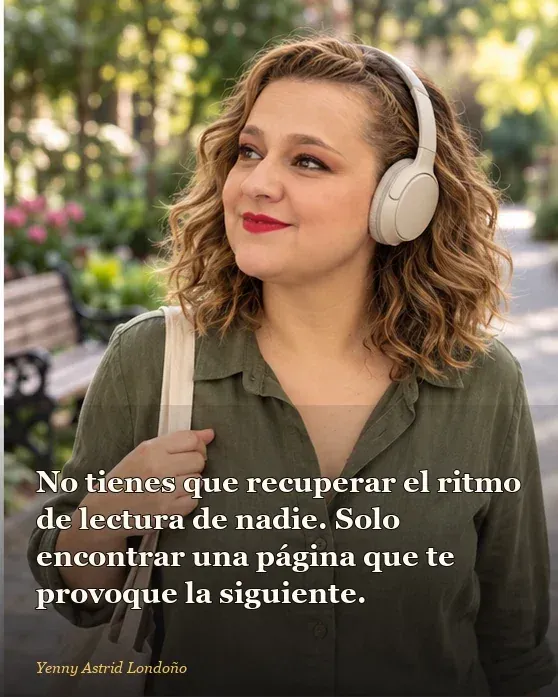
You don’t have to catch up to anybody’s reading pace. Just find a page that makes you want the next one.
A gentle seven-day plan
This isn’t a productivity challenge. It’s a way to take pressure off the decision. For two days, put away your list of books you “should” read and write down three things you’re actually curious about: a mystery, a love story, a biography, a work-related topic, a fantasy world. On day three, find a free sample or read the first ten pages of two options. Don’t force yourself through fifty pages of a novel you don’t care about just to prove you can.
Over the next few days, set aside a small, regular window—ten minutes at lunch, before bed, or while you wait for an appointment—and keep your phone out of reach if notifications pull you out of the story. When you stop, ask whether you want to know what happens next. If yes, keep going. If not, switch books. After a week, maybe you’ve picked up a habit again; maybe you’ve learned you needed rest. Both are useful information, not failure.
What to do when a book isn’t working
Set a limit that works for you: thirty pages, one chapter, or a sample. If the book doesn’t make you curious, leave it. If you’re interested but the format is tiring, try audio. If the subject appeals to you but the pacing is irritating, look for a shorter book in the same genre. You don’t have to finish it for your opinion to count—especially if you picked it because somebody else told you to.
If you’ve tried several books and none of them work, lower the bar even more. Read a poem, a long article, a comic, or one page a day. There’s no minimum quota that grants or takes away your reader card. Reading can come back through a side door; it doesn’t always arrive with a five-hundred-page novel and victory music.
Frequently Asked Questions
What’s a good book to get out of a reading slump?
Choose based on your energy and taste. If you want momentum, try a short thriller; if you want a smaller commitment, choose short stories or a graphic novel; if you want something familiar, return to a book you already love.
How long does a reading slump last?
There’s no universal timeline. It may last days or longer, depending on what’s causing it. There’s no deadline for getting back to reading, and guilt won’t make it happen faster.
Does listening to an audiobook count as reading?
Yes. It’s another way to experience a story, and it can help when it’s hard to focus on a printed page. Pick the format that works for you.
Do I have to finish a book to get past a reading slump?
No. If the book doesn’t interest you or asks for more energy than you have, quitting can be a good decision. Finishing out of obligation doesn’t guarantee you’ll feel like reading again.
What can I do if I can’t concentrate while reading?
Try shorter sessions, cut down on interruptions, switch formats, or choose shorter texts. If your lack of focus comes from a bigger situation, rest may help more than setting another goal.
Does rereading a book I already know help?
It can. Familiar characters and plot may make it easier to settle into a story and enjoy reading without having to find your way around a new world.
How do I choose a book when I have too many options?
Decide what you want to feel or how much time you have, narrow the list to two or three books, and read a sample. Don’t choose based on prestige or a to-read list that makes you feel guilty.
Get back to reading without making it a competition
A reading slump doesn’t need a grand solution. Maybe you need rest, maybe you’re overloaded, or maybe the book you’re trying to finish isn’t for you. The answer isn’t always to read more; sometimes it’s to change formats, lower the goal, or accept that your mind has other things going on this month.
Start with something that makes you curious, try ten minutes, and let the next page earn its place. If it doesn’t work, switch. You can browse the review archive by genre and find another door, but don’t turn that search into a new checklist. The point is to read because you want to—not to report back to anybody that you’re “back.”
If you’re in the mood for short chapters and a question that pulls you along, try these mysteries you won’t want to put down; if you want a story ending to talk about afterward, browse these books with memorable endings. Before you choose, read the premise and decide what sounds good now, not what you think you should have finished six months ago.

A reading habit comes back more easily when reading stops feeling like a debt.

Your unread stack isn’t a jury; you don’t have to explain why you changed books.
You don’t have to finish a book to prove you still love reading.
Sources: “Reading Slumps: What They Are and How to Get Through One,” PlanetadeLibros; Yenny Astrid Londoño’s reviews; Yenny’s review of The Girl on the Train.
Share
Written by Yenny Astrid Londoño
Looking for the Spanish original? Read it in Spanish.