Books & Reading
Books Where Marriage Is Far More Dangerous Than the Killer
Ten domestic thrillers about marriages full of secrets, control, and competing versions—where the real danger already lives at home.
By Yenny Astrid Londoño · November 1, 2026 · 11 min read
Share
What we’re getting into
- Why marriage works so well in thrillers
- The house as setting, alibi, and prison
- Six dangerous marriages where nobody needs a knife
- Ten books where getting married seriously complicated things
- The difficult wife and the reasonable husband
- Money, reputation, and the price of leaving
- Why we enjoy these fictional disasters
- What to read for the kind of marriage you want to avoid
- Frequently asked questions
Domestic thrillers understood something fairy tales settled far too quickly: marriage does not end the story. It only changes the kind of danger. Before the wedding, there were dragons, stepmothers, and dark forests. Afterward, there are mortgages, joint accounts, family group chats, and one person who knows the exact sentence capable of making you doubt yourself.
That makes a couple the perfect suspense setting. Two people share a home, routines, money, sex, memories, and a public version. They know what happened, but they also know which explanation will sound believable. If one disappears, the other does not need to invent an entire identity. Years of material, photographs, and witnesses already exist to confirm that they looked happy.
In these novels, marriage is not decoration around the crime. It is an information system. It decides who knows the secrets, who controls the money, who can leave, and who will look guilty when the door finally opens.
Why marriage works so well in thrillers
Because it combines intimacy with performance. A couple may know each other’s most vulnerable places while performing stability for the rest of the world. The distance between those versions creates almost effortless tension: what the neighbors see and what happens after the curtains close never match completely.
Marriage also concentrates power. Control does not always arrive as an explicit threat. It can look like money managed by one person, friendships that disappear, medical information used as a weapon, a reputation damaged with patience, or the habit of explaining every conflict until the person who lived it no longer trusts her own memory.
Then there is resentment, that emotional savings account where some couples make deposits for years until one person tries to withdraw everything with interest. A thriller does not need to invent hatred from nothing. It can begin with broken promises, abandoned identities, and the discovery that both people believed they signed different contracts.
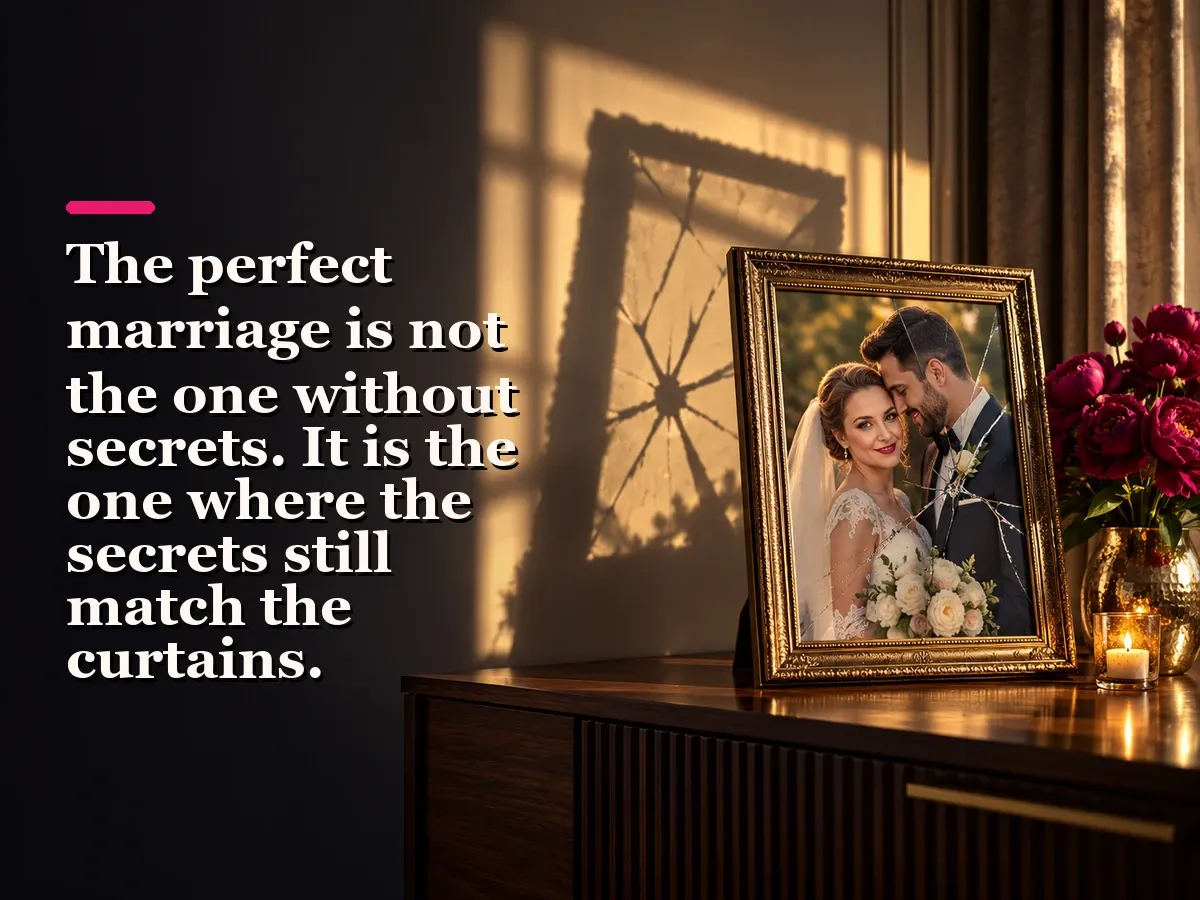
The perfect marriage is not the one without secrets. It is the one where the secrets still match the curtains.
The house as setting, alibi, and prison
The domestic house has two functions. From the outside, it communicates safety: neighborhood, garden, expensive kitchen, framed photographs. Inside, it organizes access. Somebody knows where the documents, medication, cameras, keys, and blind spots are.
That is why so many novels begin with a move, a real-estate visit, or a woman entering someone else’s home for work. Crossing the threshold means accepting a version of the people living there. Architecture helps narrate power: who sleeps where, which room stays locked, who can leave, and who needs permission even to breathe without making noise.
In Rebecca, Manderley preserves an earlier marriage. In The Housemaid, the house turns employment and dependence into surveillance. In Never Lie, an isolated property contains records capable of dismantling the people who arrived believing they only needed to assess the square footage.
The house does not kill by itself. It simply provides privacy, hierarchy, and excellent acoustics for keeping the full version from reaching anyone outside.
Six dangerous marriages where nobody needs a knife
- Type of danger: Narrative control · How it works: One person defines what happened and how it should be remembered · The sentence that often hides it: That is not how it happened
- Type of danger: Financial dependence · How it works: Leaving means losing housing, security, or status · The sentence that often hides it: And how exactly will you support yourself?
- Type of danger: Isolation · How it works: The partner removes friends, family, and witnesses · The sentence that often hides it: They never understood what we have
- Type of danger: Reputation · How it works: A public image makes any accusation unbelievable · The sentence that often hides it: Everybody knows what you are like
- Type of danger: Shared secret · How it works: Both people remain tied to a dangerous truth · The sentence that often hides it: If I talk, we both go down
- Type of danger: Intimate competition · How it works: Every disagreement becomes a war to win · The sentence that often hides it: I am only telling the truth
There is no need to diagnose every character or turn a list of behaviors into an online therapy appointment. Domestic suspense works better when it shows choices, actions, and consequences. “He is a narcissist” explains less than seeing exactly how he changes the story, manages the money, or uses the other person’s vulnerability.
Ten books where getting married seriously complicated things
1. Gone Girl: Nick and Amy married an edit, not a person
Amy disappears, and Nick is exposed to an investigation examining every gesture the husband makes. But the mystery does more than ask what happened. The novel dismantles the identities both people performed during courtship.
Each offered an optimized version and became furious when the other stopped maintaining it. Marriage turns into a war for control of both the public and private narrative. There is no single deceived spouse and no authentic one. There are two furious editors because the character stopped following the manuscript. Read my review of *Gone Girl*.
2. The Housemaid: the calm man receives automatic credit
Nina looks unstable and cruel. Andrew appears patient, polished, and concerned. Millie enters the house and receives a ready-made interpretation of the marriage: the wife is the problem, and the husband has tolerated far too much.
The novel exploits a familiar distribution of credibility. The person who shouts looks guilty; the one who speaks softly looks reasonable. But calm can be a tool too, especially when somebody has spent years arranging conditions that make the other person appear impossible. Read my review of *The Housemaid*.
3. The Couple Next Door: a missing baby opens every account
Anne and Marco leave baby Cora asleep while they have dinner next door, checking on her every half hour. When they return, the crib is empty. The disappearance begins the investigation, but it also releases money problems, resentment, family secrets, and decisions neither spouse intended to explain.
The novel works because the marriage tries to present itself as a unit while each revelation proves that both people were managing separate information. Losing control did not begin when the baby vanished. It began with the fantasy that they ever had control. Read my review of *The Couple Next Door*.
4. Behind Her Eyes: entering someone else’s marriage does not mean understanding it
Louise becomes involved with David and also grows close to Adele. She receives two intimate accounts of the same couple and believes that proximity allows her to decide who needs help and who represents the danger.
The problem is that intimacy is not neutral information. Every confession has timing, audience, and purpose. Louise does not discover a marriage from the outside. She enters a story that has been preparing a role for her. Read my review of *Behind Her Eyes*.
5. The Last Mrs. Parrish: the perfect life arrived without visible terms and conditions
Amber looks at Daphne Parrish and sees a house, jewelry, travel, and a husband capable of financing the fantasy. She decides to get close, remove Daphne, and take her place. What she cannot see is the internal cost of the marriage.
The novel works with an uncomfortable idea: from outside, control can look like privilege. The cage has marble, beautiful photographs, and somebody ready to convince the world that the woman trying to leave is unstable or ungrateful. Read my review of *The Last Mrs. Parrish*.
6. Rebecca: a second wife married to the first one too
The new Mrs. de Winter arrives at Manderley and finds Rebecca installed in the house, its objects, and everyone’s memory. Maxim does not enter the new marriage alone. He brings silence, a locked history, and a version of his dead wife that other people have turned into authority.
The danger depends on more than a past secret. It depends on inequality between the person who knows and the person forced to guess. The narrator lives in comparison with an absent woman while her husband decides how much she is allowed to learn. Read my review of *Rebecca*.
7. The Widow: what the wife knew becomes public entertainment
Jean Taylor becomes a widow after living with a man suspected of a crime. Police and journalists want to know what she understood, what she chose not to see, and which parts of married life remained protected by habit.
“How could she not know?” sounds easy from the outside. The novel shows how intimacy can be compartmentalized and how a wife can be witness, accomplice, victim, strategic narrator, or several of those things at once. Read my review of *The Widow*.
8. Verity: an immobile wife, an available husband, and one remarkably convenient manuscript
Lowen arrives to work with Verity’s writing and grows closer to Jeremy. The manuscript she finds appears to explain the marriage, motherhood, and family tragedy with a brutality that feels impossible to ignore.
But the most shocking version also benefits somebody. The novel teaches us to read intimacy as evidence while forgetting that the man left at the center receives a suspicious amount of trust. Everyone lies in this story. The question is why the hell we believed Jeremy so easily. Read my review of *Verity*.
9. Never Lie: a new house does not repair an old relationship
Tricia and Ethan tour a house during a snowstorm. The former owner disappeared and left recordings of her patients behind. Isolation and those files turn a real-estate visit into an excavation of secrets.
The couple arrives believing they are buying a future, but the novel remembers that moving does not remove what already existed inside the relationship. A new kitchen remains an excellent place to store an old lie. Read my review of *Never Lie*.
10. The Woman in the Window: the observed marriage and the lived one
Anna watches the Russells from her window and builds an idea of their family. When she believes she witnessed a crime, her perception, drinking, and isolation reduce her credibility.
The novel places two homes across from one another: the marriage Anna watches and the loss she carries inside her own house. Both show that a window offers scenes, not explanations. Domestic life can look stable from the sidewalk while someone inside has spent years learning how to be afraid without making noise. Read my review of *The Woman in the Window*.
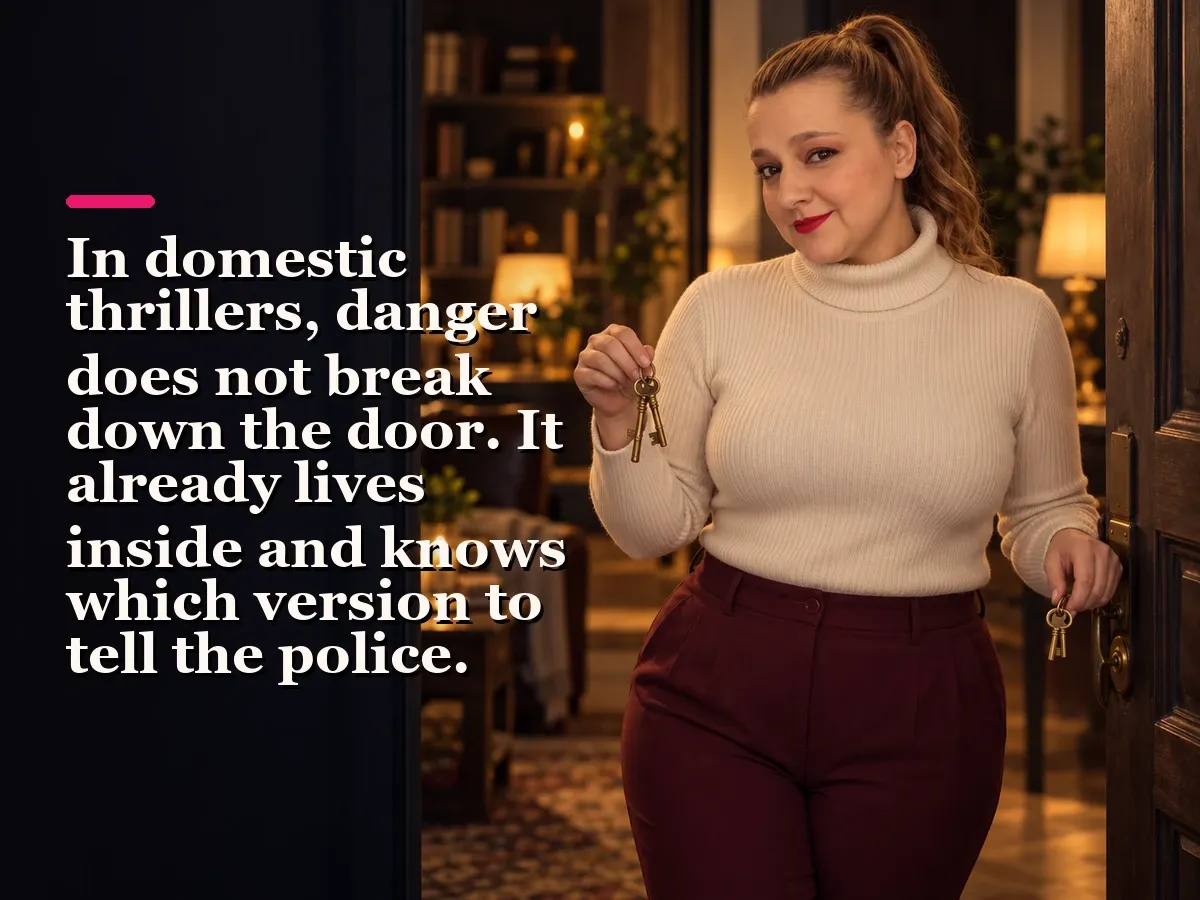
In domestic thrillers, danger does not break down the door. It already lives inside and knows which version to tell the police.
The difficult wife and the reasonable husband
The genre repeats a familiar pair of images: she is emotional; he is calm. She has a history; he has an explanation. She talks too much; he waits his turn. The difference matters because culture often confuses self-control with innocence.
A novel can use that expectation to dismantle it, as The Housemaid does, or repeat it without examination. Treatment makes the difference. Does the difficult woman have desire, strategy, and contradiction? Or does she exist only to make the man look balanced? Does his composure get examined, or does it receive a free pass?
We also do not need to turn every unpleasant wife into a secret saint. Women can manipulate, abuse, lie, and commit crimes without betraying any cause. What matters is that the book does not distribute innocence according to who behaves better at dinner.
Money, reputation, and the price of leaving
Many novels discuss dangerous relationships as if everything depended on recognizing one sign and packing a suitcase. Leaving has costs. It can mean losing housing, children, financial security, credibility, or a social network that has already been weakened.
In The Last Mrs. Parrish, luxury hides dependence. In Rebecca, the narrator arrives at a house ruled by memory and class without a position of her own. In The Widow, Jean’s public identity remains attached to her husband even after his death.
Money is not background decoration. It decides who can hire attorneys, who controls the documents, and who has somewhere to sleep after telling the truth. A domestic thriller gains depth when it understands that a door may be physically open and still be impossible to cross.
Why we enjoy these fictional disasters
Because they turn the familiar into mystery. We do not need to learn how a secret agency works. We understand a kitchen, an argument, an anniversary photograph. Danger appears in ordinary objects, which makes it feel close.
They also offer a reading fantasy: we would see the sign. We would detect the lie, never fall for the charming husband, and certainly would not enter that house. It is a pleasant fantasy until the book shows how many times we already believed the most presentable version.
And, honestly, there is something deeply human about watching a fictional marriage collapse while our most urgent real-life problem is remembering where we left the charger.
What to read for the kind of marriage you want to avoid
For a war of versions: Gone Girl.
For control hidden beneath composure: The Housemaid or The Last Mrs. Parrish.
For secrets activated by an investigation: The Couple Next Door or The Widow.
For entering a couple that already wrote your role: Behind Her Eyes or Verity.
For a house ruled by the past: Rebecca.
For isolation, recordings, and a couple that did not arrive clean: Never Lie.
For watching a family from outside and discovering a window is not enough: The Woman in the Window.
Choose by the kind of narrative damage, not by which couple looks best on the cover. That is precisely what several of these novels are about: the photograph is part of the alibi.
Marriage is not the solution to the mystery
The strongest domestic thrillers do not claim marriage is dangerous by definition. They show that intimacy amplifies what already exists: love, fear, dependence, competition, care, and control. Sharing a life gives us tools to protect another person and, when the relationship rots, frighteningly precise tools for destroying them.
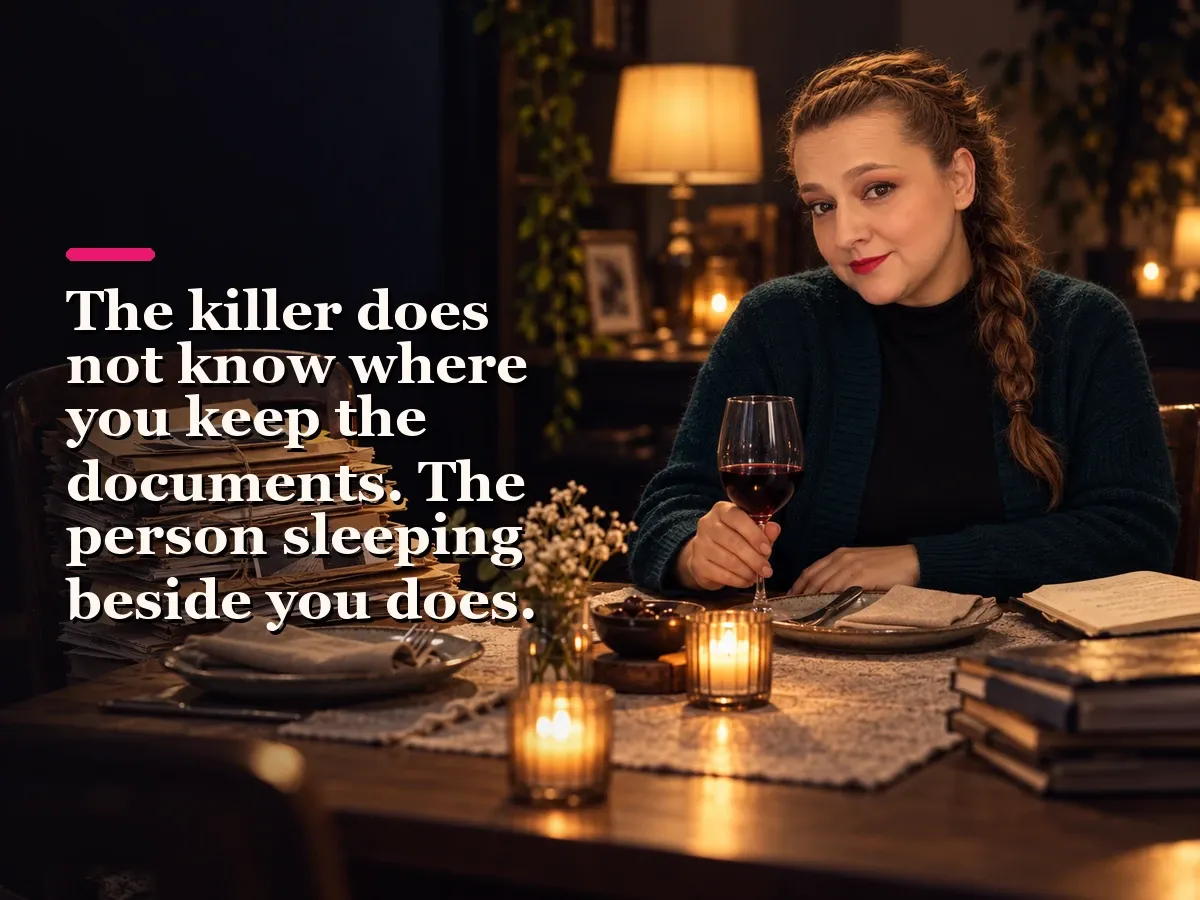
The outside killer may be terrifying. But that stranger does not know what embarrasses you, which version your family will believe, or where you keep the documents. A spouse does.
That is why these books unsettle us. The threat does not come from the dark. It comes from the person who can turn on the light without asking permission.
Frequently Asked Questions
What is a domestic thriller?
It is a thriller where the main conflict occurs inside relationships, homes, or families. Common subjects include marital secrets, control, disappearance, infidelity, parenting, money, and the distance between public image and private life.
What should I read if I liked Gone Girl?
Try The Last Mrs. Parrish for the image of a perfect marriage, The Housemaid for domestic control and fast pacing, or Verity for questionable documents and desire.
Do all these books include murder?
Not necessarily. The danger may be psychological, financial, or social. Even when a crime occurs, tension often comes from the relationship and the secrets that existed before it.
Are domestic thrillers and psychological thrillers the same thing?
They overlap, but they are not identical. Domestic identifies the setting and relationships. Psychological describes where the tension is built. One novel can be both.
Why do these thrillers feature so many perfect houses?
Because the house works as both an image of success and a private space. It contrasts what outsiders admire with what the couple hides, and it organizes access, money, and escape.
Do these books romanticize abusive relationships?
Some examine them while others may turn them into spectacle or a twist. Look at whether the text shows consequences, agency, and power—or uses abuse only to raise tension.
Which book has the most atmosphere and the least commercial-thriller pacing?
Rebecca relies on voice, setting, and psychological presence. The Widow also emphasizes observation of intimacy and public pressure over a constant race of twists.
Share
Written by Yenny Astrid Londoño
Looking for the Spanish original? Read it in Spanish.