
Book review
The Woman in the Window:
Anna rarely leaves her home, watches the neighbors through the window, and believes she has witnessed a crime. Unfortunately, her medication, drinking, and isolation make her the easiest person to doubt.
By Yenny Astrid Londoño · October 7, 2026 · 8 min read
Share
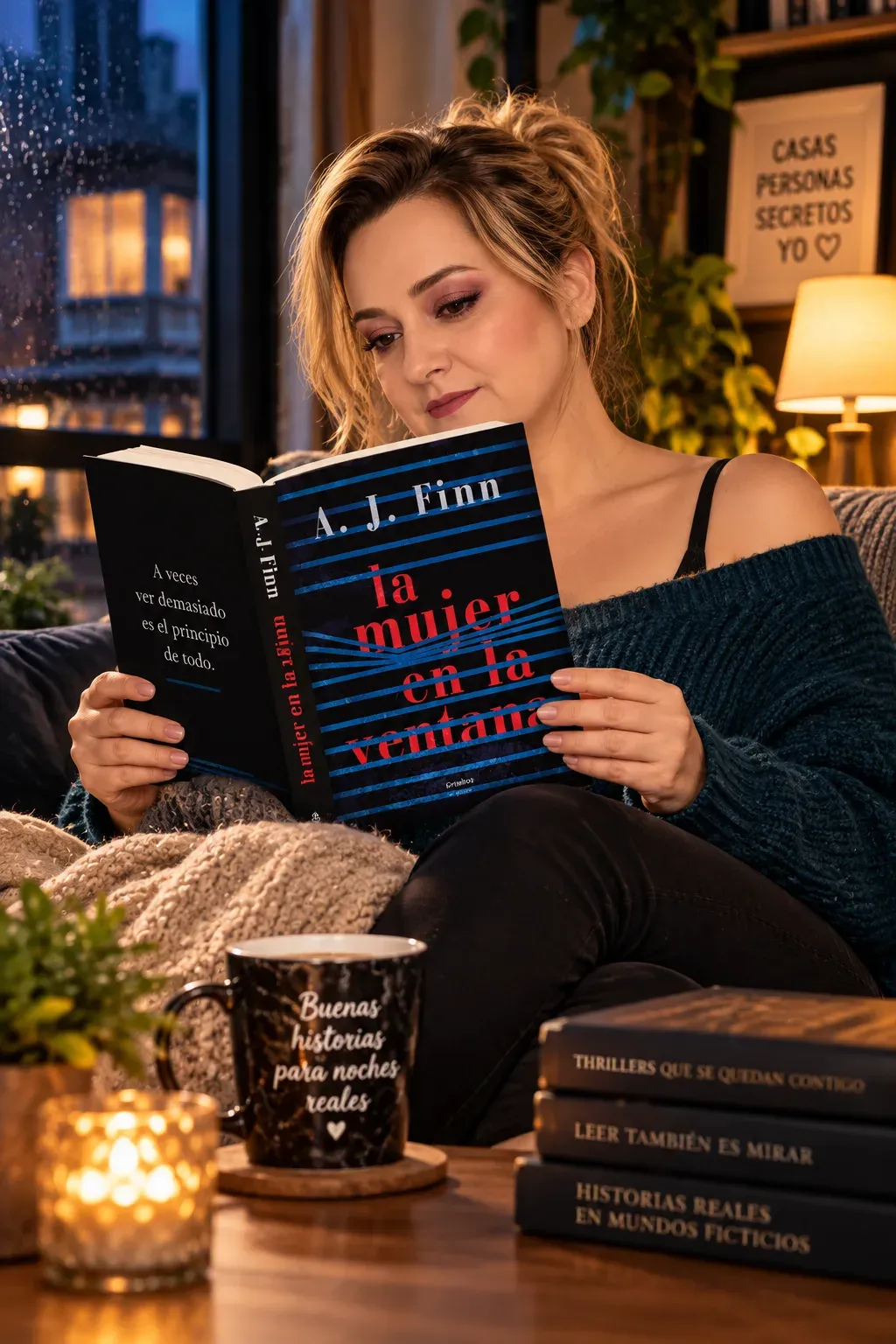
The Book
The Woman in the Window
Psychological thriller
by A. J. Finn
4 out of 5 stars
Looking was never the problem. Believing that looking equals knowing, yes.
Anna Fox spends her days inside her Harlem home. She has agoraphobia, rarely goes outside, watches old films, drinks too much, and follows the lives of her neighbors through the windows. When the Russell family moves across the street, Anna starts observing them too. Then she believes she sees a violent crime—and the people around her have plenty of reasons to question what she saw.
A. J. Finn builds the suspense around a witness who is already carrying a list of reasons people might dismiss her: she lives alone, has a psychiatric diagnosis, uses medication, drinks, and has been isolated for a long time. The question is not just whether Anna saw what she thinks she saw. It is whether anyone can separate the truth from the assumptions they have already made about the woman reporting it.
Anna’s home is a shelter that has become a boundary
Anna’s agoraphobia shapes the entire novel. The home keeps her from confronting the outside world, but it also limits the evidence she can gather and the help she can reach. She knows the street from above and behind glass. She can see movement, gestures, and light; she cannot hear every conversation or understand what happens after a curtain closes.
That distance creates a particular kind of suspense. Anna is close enough to form an opinion and far enough away to be wrong. It also makes the house feel complicated: it is her safe place, her workplace as an observer, and the place where her own mind can echo without interruption. Isolation does not make someone’s perceptions meaningless. It does make it harder to test them against other people’s accounts.
The Russells give Anna a new life to watch
The family across the street looks like the kind of subject Anna can observe without risk. Alistair Russell is controlled and difficult to read. Jane appears warm. Their son Ethan seems lonely and uncomfortable in his new home. Anna becomes involved in their lives through a series of encounters, and the line between watching and participating starts to blur.
I liked that the book makes Anna’s curiosity both understandable and concerning. She has lost a lot of ordinary contact with people, so the neighbors become a source of connection. At the same time, watching strangers can turn into a private story where the observer decides what every look means. Anna does not have the full context, and the plot keeps asking us to notice how much she is filling in herself.
“Seeing something through a window is not the same as knowing the whole story. It is, however, a decent reason to ask questions.” — Yenny Astrid Londoño
The alleged crime turns a private suspicion into a public problem
When Anna believes she has seen a woman attacked, she tries to report what happened. The problem is that the version of the Russell family she knows does not line up neatly with the scene she describes. The woman she thought she knew is suddenly disputed, and Anna’s credibility becomes part of the investigation.
This is where the novel’s premise works best. A witness can have real limitations and still notice something important. Anna’s drinking and medication matter because they affect her memory and judgment; they do not automatically prove that she invented everything. The book uses that tension to make both the reader and the characters choose between evidence and reputation. It is easy to believe the calm person with a clean explanation. It is harder to listen to the person who arrives with a history everyone can use against her.
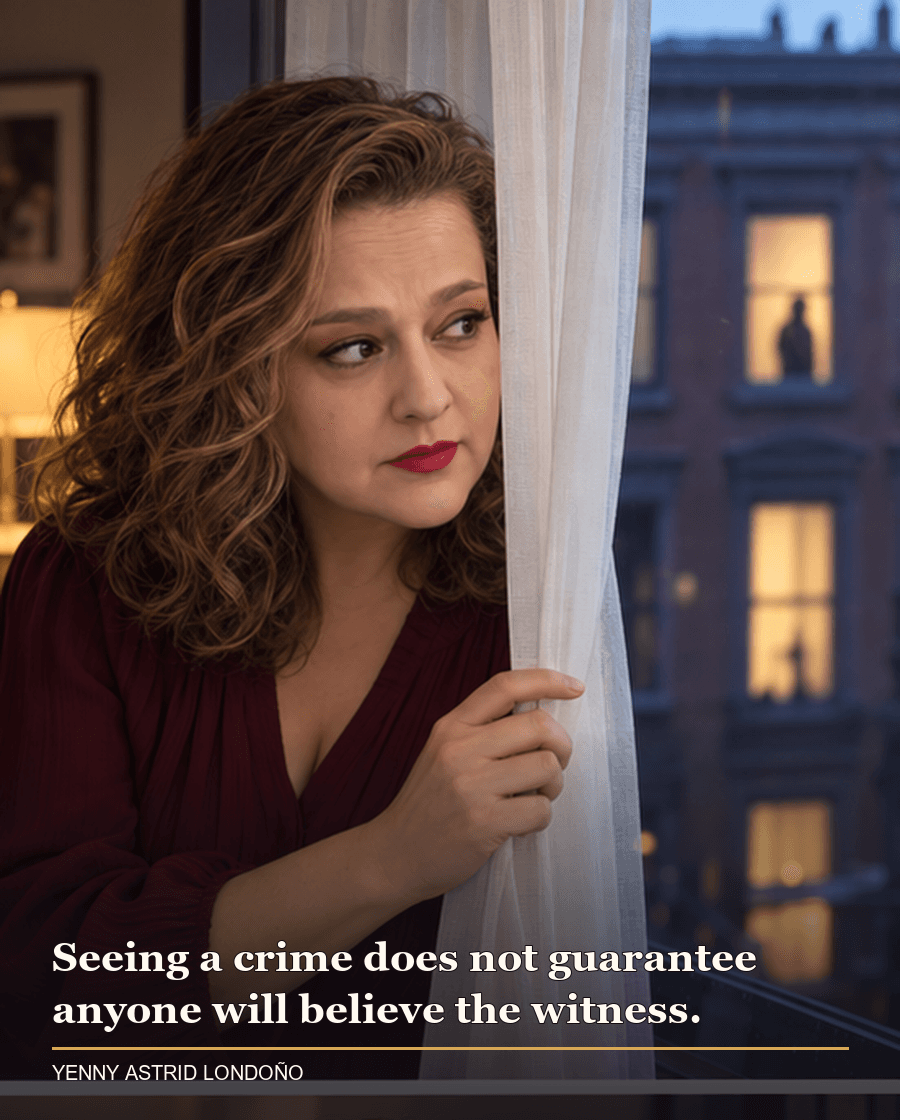
Medication, alcohol, and grief complicate what Anna remembers
Anna’s dependence on alcohol and medication is not an incidental quirk. It shapes the gaps in her memory and her ability to distinguish what happened from what she feared or imagined. The novel gives us a narrator whose account must be questioned, but it also gives us enough emotional history to understand why she has built her life around staying indoors.
There are moments when this device becomes repetitive: Anna doubts herself, someone doubts Anna, and the reader gets another reason to wonder whether the scene happened as she recalls. Still, the uncertainty is tied to her isolation and grief rather than pasted on as a magic trick. The real question is not “Can a person with addiction ever be believed?” Of course she can. It is “What evidence exists, and who is willing to look at it?”
The old films are more than a hobby
Anna watches classic movies and knows the language of suspense. That makes her a slightly funny, slightly sad commentator on the danger she thinks she sees. She can identify a cinematic setup, but recognizing a trope does not tell her whether her own life has become one. Sometimes all the movie knowledge in the world still leaves you with a window, a glass of wine, and a neighbor behaving strangely.
The film references also reinforce the book’s interest in performance. People play roles for their families and neighbors. Anna may be narrating from the safest room she can find, but the people outside are also presenting versions of themselves. The domestic street looks ordinary because ordinary is the costume everyone expects it to wear.
“A witness can be frightened, medicated, and still be right about the danger next door.” — Yenny Astrid Londoño

Where the mystery succeeds, and where it pushes too hard
The tight perspective keeps the reader trapped with Anna, which is both the book’s advantage and its risk. We are not given an objective camera angle. We have to decide how much trust to place in a woman whose life has already made her question herself. The gradual introduction of the neighbors and the disputed crime produces an effective, claustrophobic pace.
Some twists are designed to shock first and withstand questions later. A few characters make convenient choices, and the story leans heavily on the familiar “maybe the narrator is imagining it” device. I wanted more subtlety in stretches where one additional ambiguous moment seemed to exist only to keep Anna—and us—unsteady. The central conflict is strong enough without every shadow needing to wave at the reader.
Is The Woman in the Window worth reading?
If you enjoy an enclosed psychological thriller with an isolated narrator and a neighborhood mystery, yes. The book works best when it asks how trauma, addiction, and limited perspective alter the way evidence is understood. It is less compelling when it tries to top its own twist with another dramatic turn.
Anna is not an easy narrator to trust, but she is also not a puzzle the reader should solve by diagnosing her. Her fear, grief, and substance use all matter, and none cancels out her right to be taken seriously. The book is a tense, accessible page-turner with a deliberately distorted view of the street. I recommend it if you are willing to question what Anna sees—and question why everyone else is so eager to do the same.
Watching is not the same as knowing—and not the same as lying
Anna’s position at the window is a useful image for the whole novel. She sees enough to notice possible danger, but she lacks the context that would make her certain. That is a limitation of her vantage point, not proof that she has no vantage point at all. The people around her make the opposite mistake: they treat her diagnosis and addiction as a complete explanation for everything she reports.
I wanted the book to hold onto that distinction more firmly. The thriller sometimes uses Anna’s instability as a convenient way to delay the answer, but its most meaningful question is about the response to her. Doubt can be responsible. Dismissal can be lazy. If someone may be wrong, we still have to ask what happened before we decide that their report is worthless.
“Isolation makes every rumor louder and every closed door look like a verdict.” — Yenny Astrid Londoño

My verdict: the view is limited, but the danger may be real
The Woman in the Window gives us a protagonist who cannot simply walk across the street and verify her suspicions. Anna observes through glass, and the people around her use her isolation and addiction to challenge every part of her account. That makes the mystery compelling, especially when the reader notices the difference between “she may be mistaken” and “therefore nothing she says matters.”
I liked the claustrophobic setting, the film references, and the way the book places credibility at the center of its suspense. Some twists feel over-engineered, and the repeated doubt can become tiring. Still, Anna’s story has enough tension and emotional context to keep the windows interesting. The neighbor may be hiding something. So may the person who insists the witness is simply crazy.
Frequently asked questions
What is The Woman in the Window about?
Anna Fox lives with severe agoraphobia and watches her neighbors from home. When she believes she witnesses a crime in the Russell family’s house, her memory and credibility become part of the mystery.
Is The Woman in the Window based on a true story?
No. It is a work of fiction by A. J. Finn, built around a fictional narrator, family, and crime.
Is Anna Fox a reliable narrator?
Not completely. Her agoraphobia, alcohol use, medication, and isolation affect what she remembers and how she interprets events. The novel asks readers to examine evidence rather than accept or dismiss her automatically.
What genre is The Woman in the Window?
It is a psychological thriller with domestic-suspense and mystery elements. The story centers on Anna’s limited perspective and the question of what she witnessed across the street.
Does Yenny’s review contain spoilers?
Yes. It discusses Anna’s reported crime, the Russell family, her mental and physical isolation, and the final explanation.
What did Yenny think of The Woman in the Window?
I liked the claustrophobic point of view and the question of who gets believed. Some twists reach too hard for shock, but Anna’s isolation and the disputed evidence make the central suspense work.
The Book
The Woman in the Window
by A. J. Finn
Get the bookIf you buy through this link, Yenny earns a small commission and you pay the same price.
Keep reading
If you liked it, keep going

Javier Castillo
The Snow Girl
The Snow Girl: Kiera disappears and everyone moves on except her parents
Javier Castillo's The Snow Girl: Kiera vanishes at a New York parade and a tape reopens the case five years later. My honest review, 4 out of 5.
October 22, 2026

John Katzenbach
The Analyst
The Analyst: a birthday threat, fifteen days and a therapist who has lost control
John Katzenbach's The Analyst: a psychoanalyst gets fifteen days to find out who is threatening him. My honest review of this thriller.
October 22, 2026
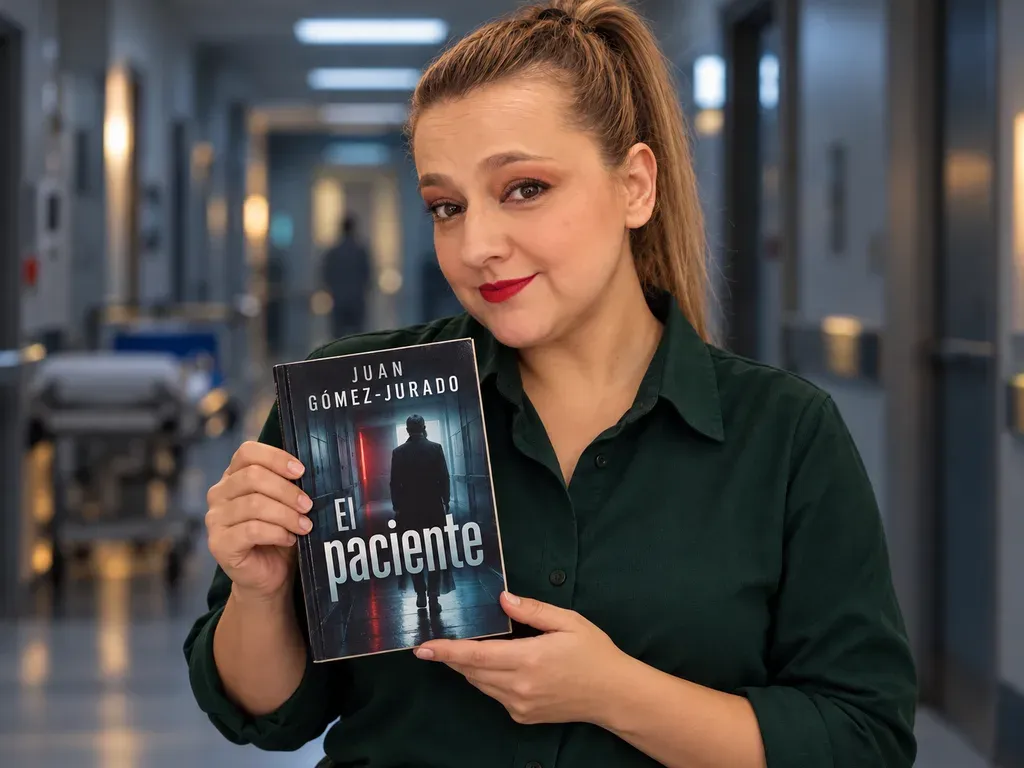
Juan Gómez-Jurado
The Patient
The Patient: the President on the operating table and a daughter nobody can trade
Juan Gómez-Jurado's The Patient: a neurosurgeon, a President on the table and a kidnapped daughter in sixty-three hours. My honest review.
October 22, 2026
Want more like this? Join the Readers Club and get one of my books for free.
Share
My books
Books by Yenny Astrid Londoño



About the author
Yenny Astrid Londoño
Yenny Astrid Londoño is a Colombian author and entrepreneur, founder of Anchetas Medellín. She writes about real life with sarcasm, irony and smart humor, turning everyday situations, mistakes and imperfect relationships into stories that readers can laugh at and recognize themselves in.

A free book from me
Get a free book from me
Subscribe and get Sobreviviendo a mis muertos in full as a PDF.
After that, I'll only write when I have something worth telling you.
Also available: Read this review in Spanish →