
Book review
The Snow Girl:
Javier Castillo's The Snow Girl: Kiera vanishes at a New York parade and a tape reopens the case five years later. My honest review, 4 out of 5.
By Yenny Astrid Londoño · October 22, 2026 · 7 min read
Share

The Book
The Snow Girl
Psychological thriller
by Javier Castillo
More reviews by Javier Castillo →
4 out of 5 stars
The disappearance and that minute of VHS grab me by the throat.
A crowded parade, and then one child is gone
New York, 1998. Three-year-old Kiera Templeton disappears during the Thanksgiving Day Parade. It is a cruelly effective setting: thousands of people, cameras, music, balloons, and adults looking everywhere except at the one hand they needed to keep hold of. A moment earlier, Aaron and Grace are parents taking their child to a parade. Then they are looking for her among a city full of strangers.
I stay with the fear before I admire the thriller mechanics. Anyone who has lost sight of a child for even a few seconds knows how fast an ordinary outing can become a private catastrophe. The book understands that the case is not just an intriguing headline; it is a family whose sense of time is about to be rearranged.
A lock of hair is evidence to the police and a nightmare to parents
Investigators find Kiera’s clothes and locks of her hair. The same objects have different meanings depending on who is looking: evidence to investigators, a lead to journalists, and something Aaron and Grace can touch while imagining the worst. I get impatient when thrillers use a family’s pain as fuel for a clever detective and forget that grief is not a decorative crime-scene prop.
The public wants the case solved. The parents need to remain parents while nobody can tell them where their daughter is. Those needs overlap, but they are not interchangeable. A missing-child story has to keep Kiera in view as a person, not only as the question that makes the adults move.
One minute of VHS changes five years of waiting
In 2003, on the day Kiera would turn eight, Aaron and Grace receive a one-minute VHS recording of her playing in an unfamiliar room. The tape gives them no explanation. It gives them a new image to fear over, and the knowledge that someone else chose the date, the room, and the minute they were allowed to see.
That is the emotional center for me: relief and terror arriving in the same package. “She is alive” should be a complete sentence. Here it becomes the start of a hundred questions. The sender is not simply sharing information; the sender is managing the family’s hope. What a precise, cruel kind of control.
Miren Triggs investigates, but this is not her story alone
Miren begins as a journalism student and pursues her own investigation. She is persistent, curious, and willing to keep looking after other people have moved on. I like that determination, but it comes with an ethical problem: a high-profile missing-child case can become a career-making story for the person reporting it. That does not make Miren’s work illegitimate. It means she has to remember the family behind the scoop.
Miren’s personal history brushes against the case, giving the investigation emotional stakes beyond professional ambition. The connection can deepen her character, though at times her path threatens to take up room that belongs to Aaron and Grace’s long wait. I believe the story most when Miren’s experience illuminates the family’s pain without pretending both losses are the same.

Journalism can search for truth and still cause harm
Miren is not a detective with a badge. Journalism gives her access to some questions and creates other responsibilities: what to publish, which details to leave private, and when a photograph helps versus when it turns someone’s pain into traffic. A camera can bring a witness forward; it can also expose a family to another round of attention they never asked for.
The novel makes room for the tension between reporting and spectacle. The person who sends the tape understands that a journalist has an audience and can use that audience to steer attention. I find that more interesting than a convenient clue that appears because the plot needs a new headline. Information is power, and the person controlling the frame may not be trying to help.
New York is full of cameras and blind spots
The city’s scale supports the mystery: crowds, neighborhoods, routes, and people who might have seen something but cannot say exactly what. We believe more recording means more certainty. The VHS complicates that comfort. A recording shows a selected minute; it cannot tell us what happened before the camera turned on, or why the sender chose this angle.
The five-year leap also gives the story room to show how uncertainty alters ordinary life. There is no single way to wait. Some days are consumed by searching; on others, parents may try to laugh and then feel guilty for having done so. People hand out advice about hope with astonishing confidence when they are not the ones asked to live inside it.
The mystery should not swallow Kiera
I want to know who took Kiera, why the tape arrived, and what happened during the parade. Those questions keep the plot moving. But a missing child should not become only a prize at the end of an investigation. Kiera is growing while everyone searches, even if the reader sees her through the fragments others choose to share.
The book sometimes has to balance the Templetons’ experience with Miren’s trajectory and several timelines. That gives the thriller layers, but the machinery can feel crowded; there is enough material here for two novels. When the journalist’s life occupies too much space, the parents’ wait recedes. The structure asks for attention, and the emotional center occasionally has to compete for it.

Who should read The Snow Girl?
I recommend it to readers who like disappearance thrillers, persistent reporters, and mysteries that unfold across years. The central image of a one-minute tape stays with me because it makes hope feel like something another person can switch on and off.
It includes a child’s disappearance and sustained family distress. If that subject is too close or simply not what you want to read right now, choose another book. There is no medal for forcing yourself through a story that hurts. I rate it 4 out of 5: the premise and emotional pressure work; I take a star off when the multiple threads crowd the Templetons’ experience and the plotting reaches for one more jolt.
A one-minute tape and five years of questions
The book works best when it treats the VHS not as a magic clue but as a new burden for the people who already have no answers. I recommend it for that tension, for Miren’s investigation, and for the uncomfortable question of who gets to tell a family’s story while they are still living it.

Frequently asked questions
Three-year-old Kiera Templeton disappears during the 1998 Thanksgiving parade in New York. Years later, a VHS tape showing her alive restarts the search and draws journalism student Miren Triggs into the case.
Miren is a journalism student who starts investigating Kiera’s disappearance and follows the case across years. Her own history also affects how she approaches the search.
It introduces Miren Triggs, who appears in later novels by Javier Castillo. The book has its own central case, while Miren’s story continues.
The plot moves across different years and timelines, so it asks for attention. It also deals with a child’s disappearance and family trauma.
Yes. A young child disappears, and the story explores the family’s distress and the long uncertainty surrounding the case. Consider that before choosing it.
I rate it 4 out of 5 stars. The VHS premise and emotional tension hooked me, though I wanted the parents’ experience to remain more central.
Frequently asked questions
What is The Snow Girl about?
Kiera Templeton disappears in New York during the 1998 Thanksgiving parade. Years later, her parents receive a tape in which she appears alive, and Miren Triggs investigates the case.
Is the book related to The Soul Game?
Yes. Both are part of Miren Triggs's series. It's best to start with The Snow Girl.
Does the girl appear alive in the tape?
The publisher's premise says the recording shows her playing in an unfamiliar room. The review does not reveal what that means for the ending.
Who is Miren Triggs?
A journalism student who starts a parallel investigation into Kiera and becomes a central figure in the series.
Is it the same as the TV adaptation?
It's a different work. If you have seen the adaptation, read the novel without assuming characters, timelines and solutions match.
Are there difficult scenes?
The central theme is a girl's disappearance and her family's grief. Check a sample if that content may affect you.
Does Miren Triggs appear in other Javier Castillo books?
Yes. Miren stars in La chica de nieve, The Soul Game and La grieta del silencio. The Soul Game continues her story after this case.
The Book
The Snow Girl
by Javier Castillo
Get the bookIf you buy through this link, Yenny earns a small commission and you pay the same price.
Keep reading
If you liked it, keep going
John Katzenbach
The Analyst
The Analyst: a birthday threat, fifteen days and a therapist who has lost control
John Katzenbach's The Analyst: a psychoanalyst gets fifteen days to find out who is threatening him. My honest review of this thriller.
October 22, 2026
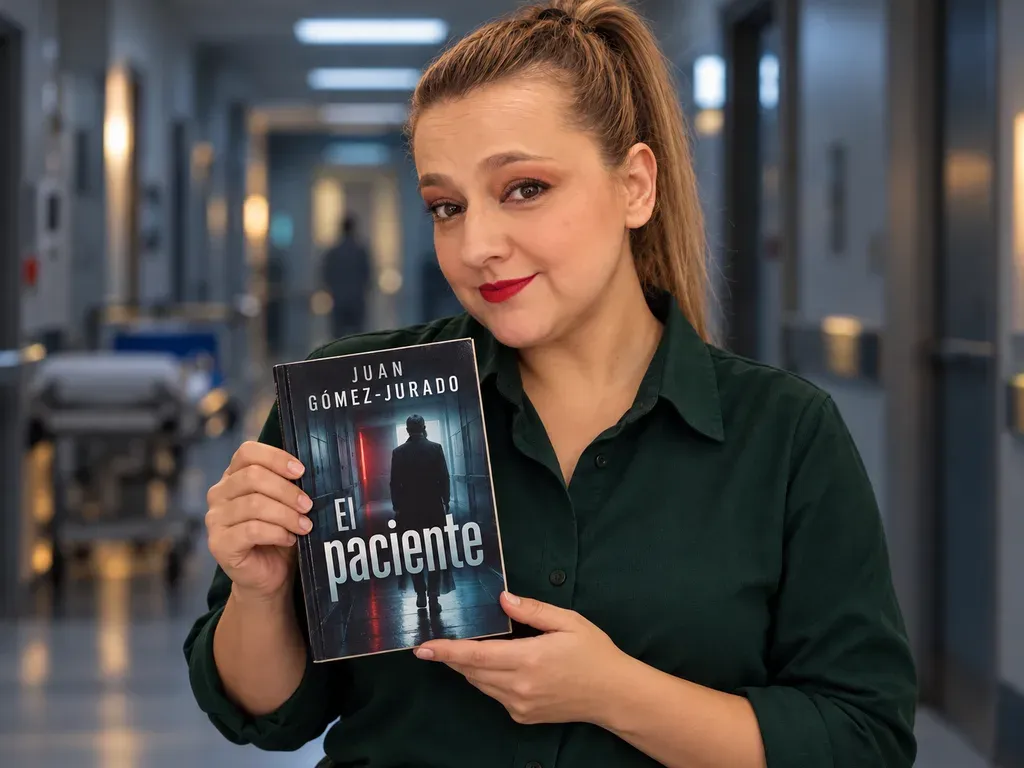
Juan Gómez-Jurado
The Patient
The Patient: the President on the operating table and a daughter nobody can trade
Juan Gómez-Jurado's The Patient: a neurosurgeon, a President on the table and a kidnapped daughter in sixty-three hours. My honest review.
October 22, 2026
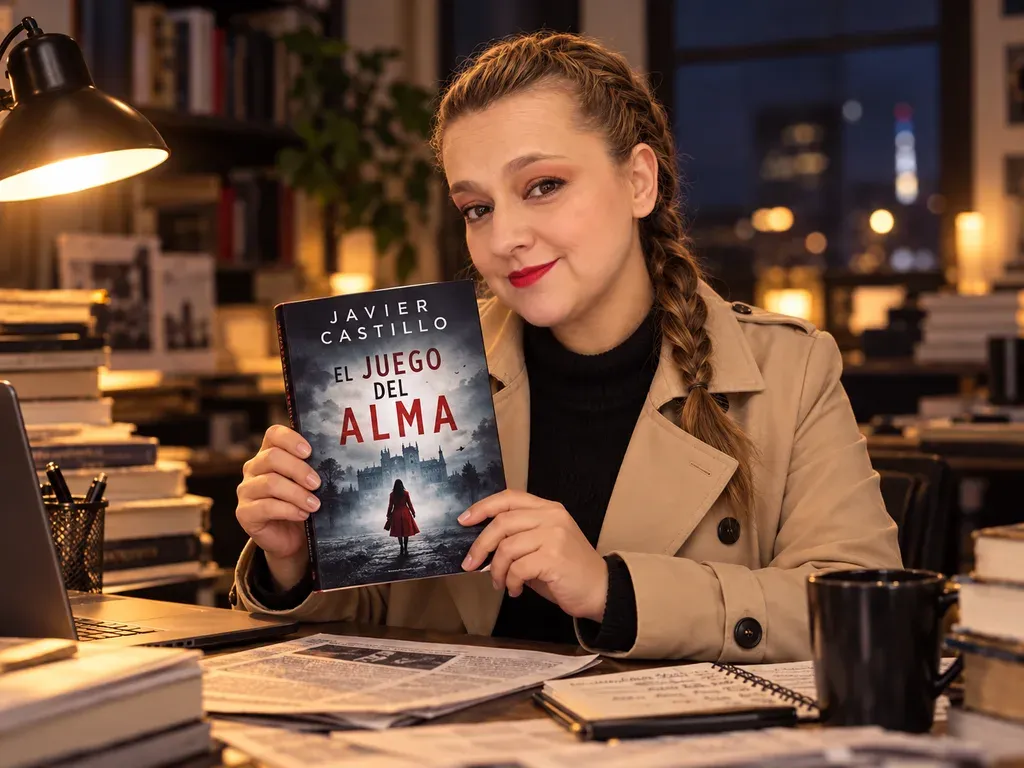
Javier Castillo
The Soul Game
The Soul Game: a teenager is dead and someone still thinks it's a game
Javier Castillo's The Soul Game: a Polaroid of a bound girl, a 2011 murder and a suspense plot that sometimes crowds out the victims. Review, 3.5 out of 5.
October 21, 2026
Want more like this? Join the Readers Club and get one of my books for free.
Share
My books
Books by Yenny Astrid Londoño



About the author
Yenny Astrid Londoño
Yenny Astrid Londoño is a Colombian author and entrepreneur, founder of Anchetas Medellín. She writes about real life with sarcasm, irony and smart humor, turning everyday situations, mistakes and imperfect relationships into stories that readers can laugh at and recognize themselves in.

A free book from me
Get a free book from me
Subscribe and get Sobreviviendo a mis muertos in full as a PDF.
After that, I'll only write when I have something worth telling you.
Also available: Read this review in Spanish →