
Book review
The Analyst:
John Katzenbach's The Analyst: a psychoanalyst gets fifteen days to find out who is threatening him. My honest review of this thriller.
By Yenny Astrid Londoño · October 22, 2026 · 6 min read
Share
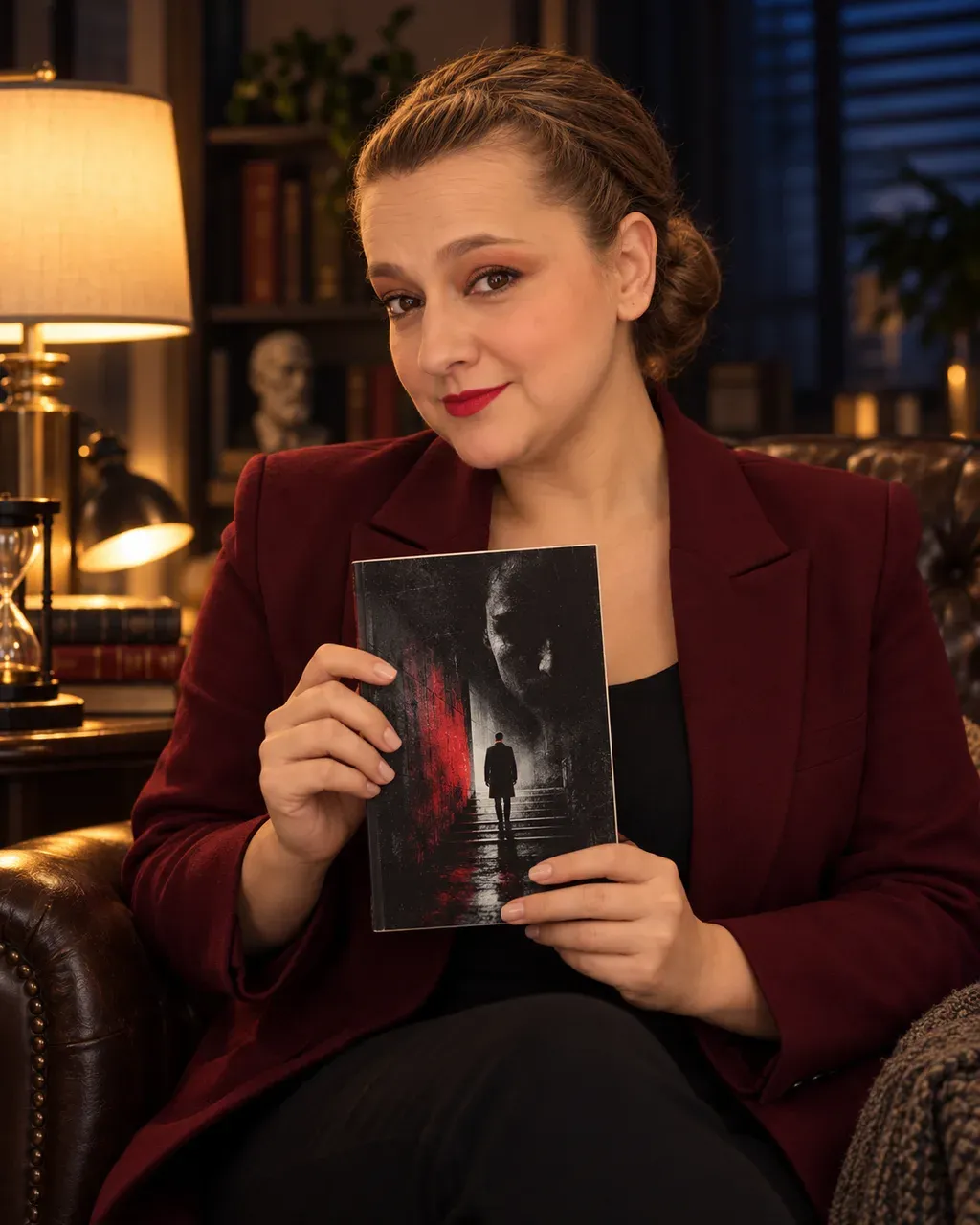
The Book
The Analyst
Psychological thriller
by John Katzenbach
4 out of 5 stars
The deadline, the reversal of power between analyst and pursuer, and the threat that creeps into daily life carry a lot of force.
Happy birthday, doctor. Start counting.
Frederick Starks is a psychoanalyst with an orderly life. At fifty-three, he has earned the kind of calm people imagine you get after listening to other people’s problems for decades. Then a message arrives: he has fifteen days to figure out who is threatening him. If he fails, he must kill himself or watch people close to him get hurt. What a thoughtful birthday present. Some people send flowers; this one sends an ultimatum.
The premise works because it invades a private space. No stranger is yelling at him in the street. Someone seems to know him, speaks like they have waited a long time, and turns his routine into a calendar of fear. First Starks loses his peace. Then he loses every hour.
The analyst no longer controls the conversation
A psychoanalyst asks questions, listens, and tries to understand why people repeat certain choices. Here, Starks gets shoved into the uncomfortable chair: he needs answers and discovers that the person leading the conversation can lie, stay quiet, or change the rules whenever they feel like it.
That reversal interests me more than the physical threat. The doctor spent years working with incomplete stories. Now he has to examine his own, and that always gets expensive. We are all brilliant at spotting patterns in someone else’s life. When the pattern points at us, suddenly we remember we have a migraine and cannot continue the session.
Fifteen days: the most fucked-up therapy imaginable
The deadline is long enough to search and too short to live normally. Starks cannot ask for a pause to sort through his memories or wait for someone to confess out of basic politeness. After the threat, even the phone sounds suspicious. A call might be a clue, a joke, or proof the enemy already knows the next move.
The clock also forces him to prioritize. Who does he call first? Which part of the past should he revisit? What relationship might have left a wound he never noticed? An investigation always has too many possible stories. The anonymous threat uses that uncertainty to make every delay feel like Starks’s fault. If someone gets hurt while he follows the wrong lead, time itself becomes a weapon.

The office keeps secrets; memory keeps traps
We picture a therapist’s office as a safe place: closed door, private conversation, someone who does not go tell the neighbors. The threat contaminates that idea. How much of what a therapist thinks they understand depends on the version someone told them? How many people leave a session feeling unheard even though the professional was certain they did the right thing?
The novel does not need to make Starks a villain to ask that. A profession built around listening does not vaccinate anyone against bad judgment. And it does not make the person threatening him innocent. There is a huge difference between asking someone to answer for harm and putting other people in the crosshairs. The blackmailer crosses it with chilling ease.
His family becomes collateral for a guilt that is not theirs
The letter does not just say, “I am coming for you.” It says people close to him may pay if he fails. That touches a particularly ugly nerve: when an aggressor cannot control your answer, they control your worry. Every name Starks remembers becomes a possible target.
From the couch, it is easy to say he should call the police, move, or refuse to cooperate. Brilliant advice, honestly. It is also easy to give when the message does not carry the name of someone you love. The threat works because affection becomes a vulnerability. That does not make Starks weak; it makes the person who chose that leverage more of a coward.
A threat needs a performance
You can throw a letter away. A skilled stalker makes that feel unsafe: they provide details, manage signals, and make the target doubt what they see. The game is not just about hiding a name. It is about making Starks treat every ordinary event as part of a conspiracy.
That is where the psychological fear lives. Paranoia does not need everyone to be involved. It only needs you to stop knowing whether something is a coincidence or a message. The doctor, trained to interpret, gets trapped interpreting too much. I like that cruelty in the storytelling, but I still demand rules: if the enemy knows absolutely everything because the author needs it, suspense stops being clever and becomes a trap with an unlimited budget.
Searching the past is not the same as understanding it
The threat points toward an old debt. Moral debts are hard to calculate because two people can remember the same event in entirely different ways. What felt like one more session to Starks may have changed someone’s life. That does not excuse the ultimatum, but it gives the search more depth than checking a list of obvious enemies.
One question stays with me: what happens when someone spends their career interpreting other people’s pain and gets it wrong about the pain that comes back for them? I do not need the book to turn the therapist into a martyr or the avenger into a cardboard monster. I want the discomfort of seeing how an unequal relationship can leave consequences years later.

An identity does not fit inside a file
In a puzzle thriller, finding a name is often presented as the solution. Here it is not enough. Starks needs to know why that person decided to turn other people’s lives into a board game. And the reader needs something similar: “who” matters, but “why now, and why like this?” is the question that may stick.
I like mysteries that do not confuse explanation with absolution. Knowing an aggressor’s wound does not give victims back their time, peace, or safety. A revenge story may have an understandable origin without becoming admirable. Some people turn injustice into a cause; others treat it as permission to spread harm. Here, the second option has a countdown clock.
What I did not like
The fifteen-day deadline and the list of threatened people create real pressure, but Rumplestiltskin’s ability to anticipate Starks can start to feel omniscient. When the pursuer seems to have an answer for every move, the solution stops feeling earned. And the threat of suicide is a very heavy device; I want the suspense to handle that harm with more care than treating it as a clever riddle.
Who should read it
This is for readers who enjoy psychological suspense, hidden identities, and a protagonist forced to question his own certainty. If you want a procedural built around lab evidence and official interviews, the mental pursuit matters more here. The suicide threat and threats to family members are also worth knowing about before you start.
I give it 4 out of 5 stars. The deadline, the reversal of power between analyst and pursuer, and the way fear gets into daily life are strong. I take off a star when the plan seems to need more omniscience than intelligence. I like fear; I like plot tricks less.

Frequently asked questions
What is The Analyst about?
Frederick Starks, a psychoanalyst, receives an anonymous message on his fifty-third birthday. He has fifteen days to find out who is behind it; if he fails, there will be consequences for him or for people close to him.
Who is Frederick Starks?
The psychoanalyst at the center of the story. His profession and his past are central to the psychological duel the novel sets up.
How long does he have to find the sender?
Fifteen days. That limit keeps the pressure on and forces him to investigate under threat.
Is The Analyst a standalone book?
Yes. You can read it without any previous book. There is a sequel with the Spanish title Jaque al psicoanalista.
Is it horror or a psychological thriller?
It is a psychological thriller: the fear comes from the persecution, the blackmail and the doubt about who is in control.
What sensitive content does it include?
The premise includes threats against family members and a demand for suicide. If you need to avoid those topics, check a sample first.
The Book
The Analyst
by John Katzenbach
Get the bookIf you buy through this link, Yenny earns a small commission and you pay the same price.
Keep reading
If you liked it, keep going

Javier Castillo
The Snow Girl
The Snow Girl: Kiera disappears and everyone moves on except her parents
Javier Castillo's The Snow Girl: Kiera vanishes at a New York parade and a tape reopens the case five years later. My honest review, 4 out of 5.
October 22, 2026
Juan Gómez-Jurado
The Patient
The Patient: the President on the operating table and a daughter nobody can trade
Juan Gómez-Jurado's The Patient: a neurosurgeon, a President on the table and a kidnapped daughter in sixty-three hours. My honest review.
October 22, 2026

Javier Castillo
The Soul Game
The Soul Game: a teenager is dead and someone still thinks it's a game
Javier Castillo's The Soul Game: a Polaroid of a bound girl, a 2011 murder and a suspense plot that sometimes crowds out the victims. Review, 3.5 out of 5.
October 21, 2026
Want more like this? Join the Readers Club and get one of my books for free.
Share
My books
Books by Yenny Astrid Londoño



About the author
Yenny Astrid Londoño
Yenny Astrid Londoño is a Colombian author and entrepreneur, founder of Anchetas Medellín. She writes about real life with sarcasm, irony and smart humor, turning everyday situations, mistakes and imperfect relationships into stories that readers can laugh at and recognize themselves in.

A free book from me
Get a free book from me
Subscribe and get Sobreviviendo a mis muertos in full as a PDF.
After that, I'll only write when I have something worth telling you.
Also available: Read this review in Spanish →