
Book review
The Last Mrs. Parrish:
Amber wants Daphne’s wealth, status, and husband. She studies the family, gets close to Daphne, and plans a replacement. The problem with wanting a life from the outside is that you may not know what the door is hiding.
By Yenny Astrid Londoño · October 8, 2026 · 7 min read
Share

The Book
The Last Mrs. Parrish
Domestic psychological thriller
by Liv Constantine
4 out of 5 stars
The other one is still asking how much it costs to get in.
Amber Patterson wants what Daphne Parrish has: money, status, a beautiful home, and a husband who appears to have built a perfect life. She approaches Daphne with a story about shared grief and gradually becomes part of the family’s orbit. But Amber’s friendship is a plan. She wants to replace Daphne and take the life she has been watching from the outside.
The setup gives Liv Constantine a deliciously uncomfortable protagonist. Amber is calculating, envious, and often appalling, but the novel does not ask us to assume that Jackson’s charm is proof he deserves the sympathy he receives. The story shifts perspective, and what looks like a contest between two women starts revealing a different imbalance. Amber may be plotting to take a marriage; that does not make the marriage a prize worth winning.
Amber turns friendship into a replacement application
Amber studies Daphne’s routines and presents herself as someone who understands her. The connection is designed to create access: an invitation into the home, information about the family, and enough trust to make her useful. She is not hoping to become Daphne’s friend by accident. She has identified what she wants and is making herself difficult to refuse.
That calculation is fascinating and nasty in equal measure. Amber’s ambition is not hidden from the reader, which changes the suspense. We know she is manipulating Daphne; the question becomes how far the plan will go and what Amber has failed to understand about the household. Her confidence is a major part of the danger. She sees a wealthy man and assumes she has found an upgrade. A résumé, but for becoming someone else’s wife.
Jackson’s money makes the life look better from outside
Jackson has wealth, influence, and the social polish that can make people forgive a lot before they know what they are forgiving. He looks like the successful husband Amber wants. The more the story reveals, the less those possessions tell us about the quality of life inside the marriage.
I liked that the book makes status part of the manipulation. Money can buy privacy, credibility, and a room full of people willing to call a woman difficult instead of asking what she is reacting to. Jackson’s apparent perfection serves him because it gives everyone a convenient picture to defend. A beautiful house is still not a character reference.
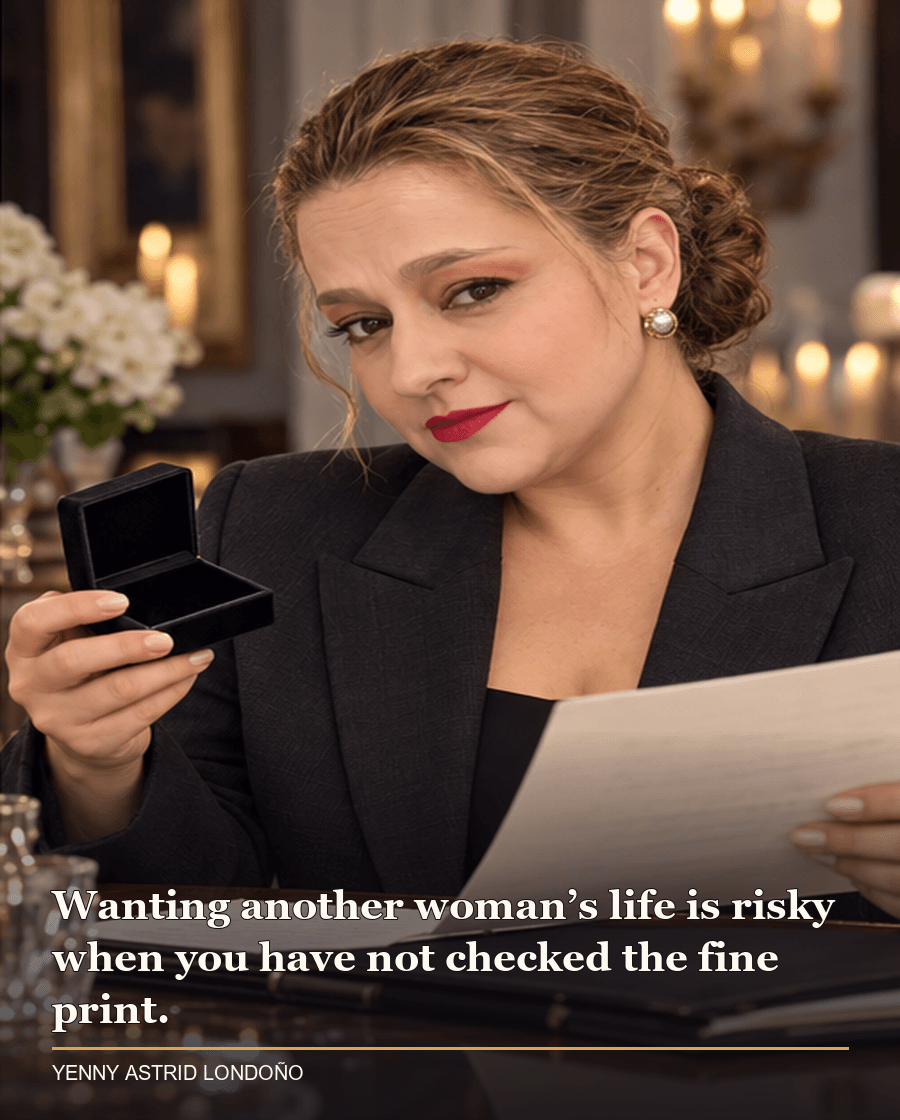
“Amber wanted to become the last Mrs. Parrish before asking whether being Mrs. Parrish was actually a prize.” — Yenny Astrid Londoño
Daphne’s generosity is not the same as weakness
Daphne initially appears warm, trusting, and perhaps too eager to welcome Amber. She has her own reasons for behaving as she does, and the change in perspective reveals that her position is more complicated than Amber believes. Daphne is not simply the obstacle in another woman’s scheme. She has been living inside the marriage and understands things Amber has only observed.
The shift works because it asks us to revise the meaning of earlier scenes. A kind gesture can be genuine and tactical at the same time. A person can seem trusting because she is testing what someone will do with the access they have been given. I enjoyed watching Daphne’s knowledge change the balance, especially because it does not require her to become a perfect strategist who never made a mistake.
The novel changes the question from “Who gets the husband?”
At first, the story can look like a contest over Jackson. That framing is part of Amber’s mistake. The real question is not which woman will end up with him; it is what kind of man he is when no one is watching and how the women around him have been shaped by that reality.
The novel uses its split perspectives to move from envy to survival. Amber can be cruel and still be wrong about the life she wants. Daphne can be wealthy and still be trapped. Those facts do not cancel each other out. I appreciated the refusal to make one woman’s bad behavior into evidence that a man’s control is acceptable. We can criticize Amber’s plan and still ask why Jackson gets to be the prize at the center of it.
Daphne finds a way to use what she knows
Once Daphne’s perspective opens up, the story’s power shifts. She has knowledge of Jackson that cannot be gained by watching from outside, and she understands more about the conditions of her marriage than Amber does. Her response is not simply to wait for somebody else to save her. She studies the situation and looks for a way to regain control.
I found this part more satisfying than a straightforward revenge fantasy. Daphne’s choices carry risk, and her plan depends on what she can prove and whom she can trust. The novel also gives her room to feel conflicted. Leaving a bad situation does not mean every decision becomes easy or morally spotless. The important part is that her future stops being defined only by the role Jackson assigned her.
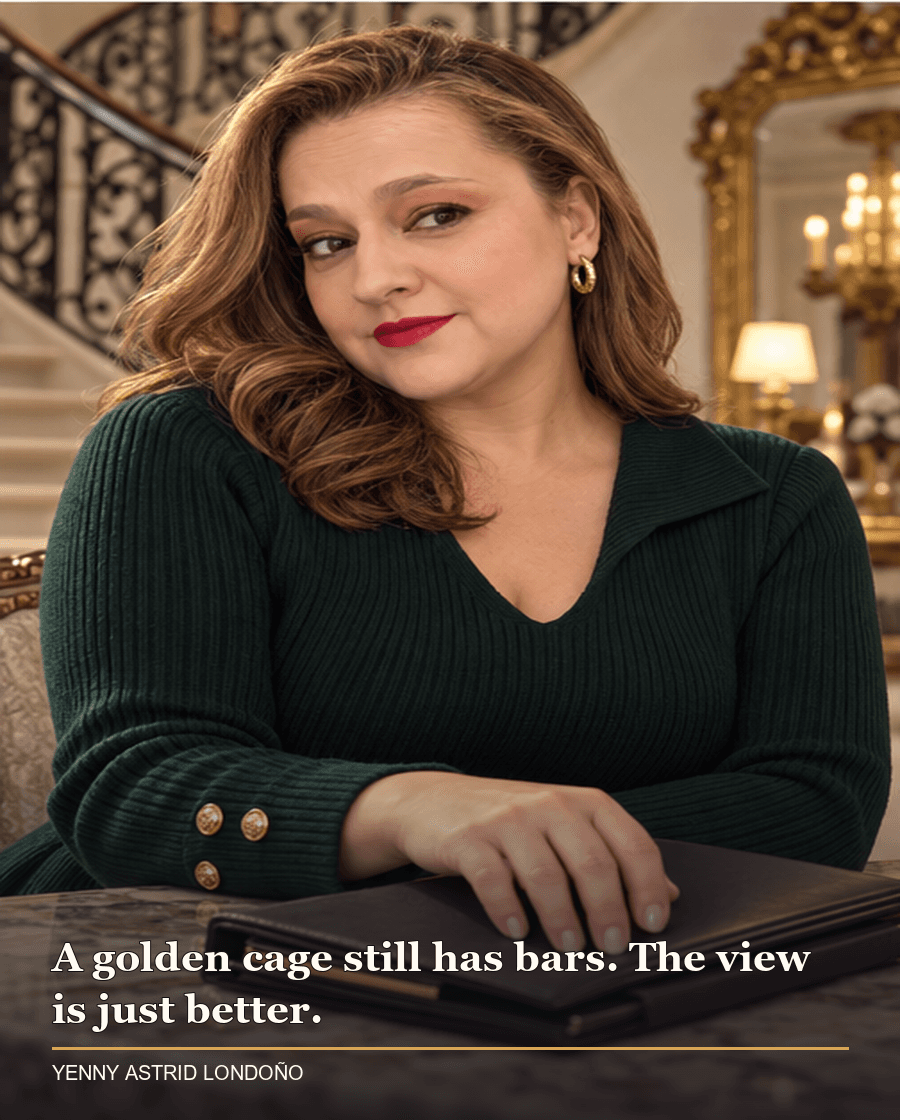
“A man’s money can make a terrible life look like an excellent investment.” — Yenny Astrid Londoño
Amber can be awful without making Jackson the victim
Amber’s manipulation is the engine of the first part, and she is not secretly a saint. She lies, studies Daphne, and tries to take advantage of her. But the book is more interesting when it refuses the easy equation “bad woman equals deserving whatever happens.” Jackson’s behavior must be judged on its own, not excused because Amber came in with a scheme.
That distinction matters for the ending and for the reader’s reaction. Women can harm one another; that does not turn a controlling husband into a misunderstood romantic lead. A wealthy man can be a target of social climbing and still be responsible for how he treats his wife. The novel’s best material lives in those uncomfortable truths, where no one gets to hide behind someone else’s wrongdoing.
What worked for me, and what feels heightened
The alternating perspectives give the story propulsion, and Amber’s audacious plan is entertaining because we know what she is doing while watching how Daphne responds. Jackson’s polished image makes a useful contrast with the private reality. I also liked the shift from social envy to a more serious look at control, safety, and what it takes to leave.
Some turns are heightened and convenient, and the characters sometimes make choices that keep the drama moving when a calmer conversation could change the scene. The first section also leans so heavily into Amber’s scheming that readers may misread the whole novel as a simple “mean woman steals rich husband” story. It is sharper than that, but it takes time to show its hand.
Who should read The Last Mrs. Parrish?
Read it if you enjoy domestic thrillers with a self-aware schemer, shifting narrators, class envy, and a polished home that conceals a much less polished marriage. It is a good choice for readers who like revisiting early scenes after the perspective changes.
If you need every character to be likable, Amber will make that difficult on purpose. If you want subtle realism above all else, a few plot turns may feel too theatrical. But if you enjoy watching a plan collide with facts the planner did not bother to investigate, this book has a very satisfying way of asking whether the life you envy is actually safe to enter.
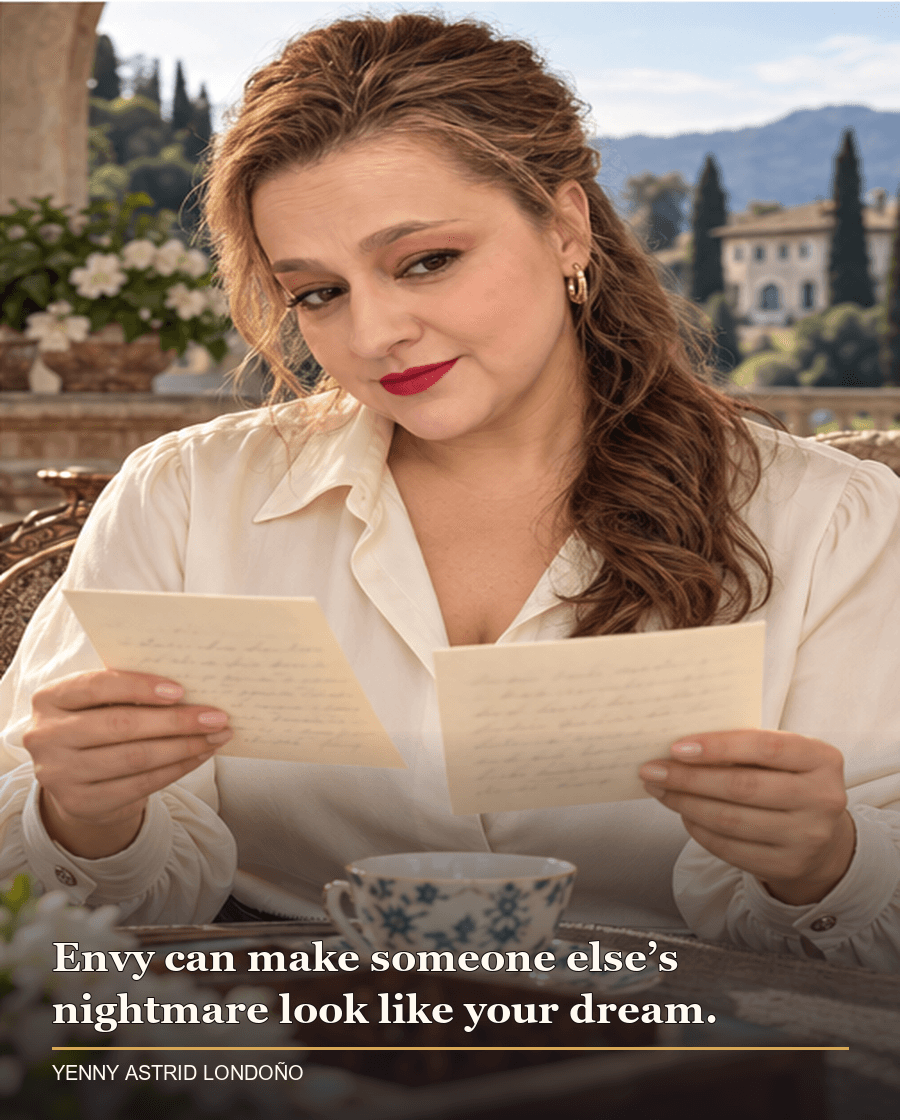
“Daphne’s kindness is not stupidity. Sometimes it is strategy with a very good memory.” — Yenny Astrid Londoño
My verdict: the life Amber wants is not the life Daphne needs to escape
The Last Mrs. Parrish begins with a social-climbing scheme and gradually reveals a much more uncomfortable marriage. Amber is calculating, Daphne is more perceptive than she first appears, and Jackson’s money and polish cannot stand in for goodness. The story’s central trick is making the reader look at the same household from two women’s positions and see how much the angle changes.
I enjoyed the perspective shift, the tension around Amber’s plan, and the way the novel separates a woman’s ambition from a man’s responsibility. Some developments are heightened, but the book has more on its mind than a catfight over a rich husband. Amber wants the life she sees. Daphne knows what it costs. That is a useful distinction before anyone accepts the invitation.
Frequently asked questions
What is The Last Mrs. Parrish about?
Amber befriends wealthy Daphne Parrish while secretly plotting to take her place in the family. As the story changes perspective, the apparent social-climbing scheme reveals more about Daphne’s marriage and Jackson’s behavior.
Who wrote The Last Mrs. Parrish?
It is a domestic psychological thriller by Liv Constantine, the pen name used by sisters Lynne Constantine and Valerie Constantine.
Is The Last Mrs. Parrish part of a series?
Yes. It is followed by The Next Mrs. Parrish and The Last Time I Saw You. The first novel can be read on its own, though the sequels revisit the characters.
Is Amber the villain in The Last Mrs. Parrish?
Amber manipulates Daphne and pursues her plan knowingly, but the novel complicates the initial picture by showing more of Daphne’s marriage and Jackson’s private behavior. The review considers those actions separately.
Does this review spoil the ending?
Yes. I discuss Amber’s plan, Daphne’s perspective, Jackson’s abuse, and the shift in power between the women.
What did Yenny think of The Last Mrs. Parrish?
I enjoyed the split perspective and the way the story changes from social envy to a question of control and escape. Some turns are heightened, but the novel is more thoughtful than a simple contest over a rich husband.
The Book
The Last Mrs. Parrish
by Liv Constantine
Get the bookIf you buy through this link, Yenny earns a small commission and you pay the same price.
Keep reading
If you liked it, keep going

Javier Castillo
The Snow Girl
The Snow Girl: Kiera disappears and everyone moves on except her parents
Javier Castillo's The Snow Girl: Kiera vanishes at a New York parade and a tape reopens the case five years later. My honest review, 4 out of 5.
October 22, 2026

John Katzenbach
The Analyst
The Analyst: a birthday threat, fifteen days and a therapist who has lost control
John Katzenbach's The Analyst: a psychoanalyst gets fifteen days to find out who is threatening him. My honest review of this thriller.
October 22, 2026

Juan Gómez-Jurado
The Patient
The Patient: the President on the operating table and a daughter nobody can trade
Juan Gómez-Jurado's The Patient: a neurosurgeon, a President on the table and a kidnapped daughter in sixty-three hours. My honest review.
October 22, 2026
Want more like this? Join the Readers Club and get one of my books for free.
Share
My books
Books by Yenny Astrid Londoño



About the author
Yenny Astrid Londoño
Yenny Astrid Londoño is a Colombian author and entrepreneur, founder of Anchetas Medellín. She writes about real life with sarcasm, irony and smart humor, turning everyday situations, mistakes and imperfect relationships into stories that readers can laugh at and recognize themselves in.

A free book from me
Get a free book from me
Subscribe and get Sobreviviendo a mis muertos in full as a PDF.
After that, I'll only write when I have something worth telling you.
Also available: Read this review in Spanish →