
Book review
A Fate Inked in Blood by Danielle L. Jensen:
Freya dreams of wielding an axe and living a life she chose herself. Instead, she is stuck in an unhappy marriage, caught in a prophecy and bound by a magical oath to a jarl who wants to control her. This is my review of Danielle L. Jensen’s A Fate Inked in Blood, a Norse-inspired romantasy about divine blood, political ambition and a woman who keeps being told that her destiny belongs to somebody else.
By Yenny Astrid Londoño · November 2, 2026 · 5 min read
Share
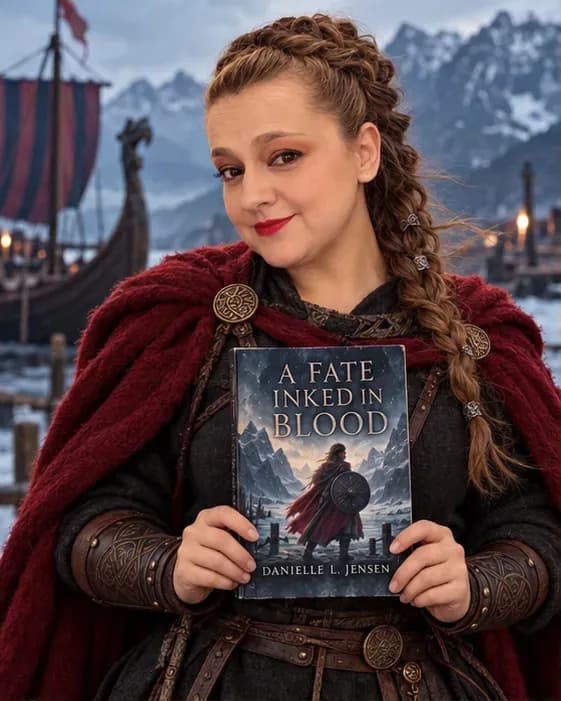
The Book
A Fate Inked in Blood
by Danielle L. Jensen
3.5 out of 5 stars
Freya, the oath and the conflict over autonomy hooked me; I take off a point for the uneven pace and because politics gives way to romance too often.
Freya dreamed of being a warrior, not somebody’s property
Freya’s starting point matters. She does not enter the story as a carefree warrior waiting for a quest. She is trapped in a marriage that makes her miserable, with a wish to fight and a life that leaves little room for her own choices. When her divine blood and shield-maiden abilities become important, the attention does not automatically free her. It gives more people a reason to claim a say over what she should do.
That conflict is the strongest part for me. Freya wants to use her strength, but the world keeps translating her power into a resource for a man’s political plans. Her desire for independence is not a decorative personality trait; it is the question underneath the prophecy, the oath and the succession struggle. If she is powerful, who gets to decide what her power is for?
A prophecy everybody interprets in their own favor
The prophecy gives the court a reason to speculate about who should rule and what Freya’s blood can accomplish. As usual, prophecy is very popular among people who would like to control somebody else’s future. The competing interpretations add tension, but they also risk making Freya’s own wishes disappear beneath men explaining what fate apparently ordered.
The book is more engaging when the prophecy functions as a political weapon rather than a magical instruction manual. It creates a struggle over legitimacy, loyalty and the story people tell about power. I wanted the consequences of those decisions to receive more space, especially when the plot turns back toward the romantic relationship.
Bjorn is bodyguard, complication and possible ally
Bjorn’s role places him close to Freya, where protection, attraction and political duty become difficult to separate. He can be an ally, but the unequal arrangement around them makes every promise worth examining. Freya is not simply choosing whether she likes him; she is working out whether their connection gives her more room to act or becomes another way to direct her.
The chemistry brings energy to the story, and Bjorn is more interesting when he must reckon with what Freya wants rather than assume he knows. Their relationship has tension, but I sometimes wished the book would spend that tension on the larger questions around the oath and the jarl’s authority. Love may complicate a political problem; it does not magically repeal it.
Norse-inspired fantasy with clan politics
The setting draws on Norse mythology and clan power struggles, giving the story a world of rulers, bloodlines, gods and competing claims. The atmosphere supports the plot, and the martial culture fits Freya’s desire to fight. The magical oath gives that setting a particularly intimate threat: her choices are constrained not only by other people’s opinions but by a supernatural obligation.
The world-building is most effective when it shows how a political structure reaches into Freya’s ordinary life. She is expected to be useful, loyal and quiet about the cost. The book has room to explore more of the clans and what rule means for the people who live under it, but the central conflict stays clear: power may belong to the person with the blood, while control belongs to the person who writes the rules.
Action and domestic life collide
Freya’s story moves between household expectations, magical obligations and physical danger. That mix gives her a grounded motivation: she wants a life beyond the role she was assigned, not merely an impressive battle scene. When the action arrives, it reflects the same struggle over who gets to choose and who must obey.
The pacing is uneven. The conflict can pause for romantic drama just when I want more attention on what the jarl’s rule and the oath mean for Freya’s autonomy. The ingredients are strong; I wanted the story to keep the political consequences on the table even when the chemistry gets loud.
What I did not like
The romantic plot sometimes takes space that the political question deserved. Freya is bound by a magical oath and faces a ruler who wants to control her destiny; that gives the book plenty to say about resisting obedience when the threat has supernatural backup. Some answers stay focused on Freya and Bjorn instead of examining what the jarl’s power costs other people.
The rhythm also shifts between energetic action and slower relationship drama. I was most invested when Freya had to decide what her own strength meant. I wanted that question to remain the center, rather than repeatedly stepping aside while the romance rearranged the furniture.
My verdict: a prophecy is not a permission slip
A Fate Inked in Blood works best through Freya and the conflict between wanting a life of her own and being treated as a vessel for divine power. The oath, prophecy and Bjorn make the main question larger than who will become king: who gets to turn Freya into the road to that crown? The Norse-inspired setting and her restless energy kept me reading.
I take off points for uneven pacing and a political story that often yields the floor to romance. Freya’s struggle for autonomy is compelling, and the book gives her plenty to push against. I wanted the world around her to be as fully questioned as the men trying to decide her future.
Who should read it
Read it if you enjoy Norse-inspired fantasy, shield maidens, prophecies, magical oaths and romance woven into a political struggle. If you want a tightly focused political fantasy with little romantic detour, the balance may frustrate you.
My rating
3.5 out of 5 stars. Freya, the oath and her fight for autonomy hooked me; I take off points for uneven pacing and politics that often give way to romance.
Frequently asked questions
What is A Fate Inked in Blood about?
Freya, a woman with divine blood and shield-maiden power, is bound by an oath and caught in a prophecy that powerful people want to use for political control.
Who wrote A Fate Inked in Blood?
Danielle L. Jensen wrote the novel.
Does A Fate Inked in Blood have an official Spanish title?
Yes. The Spanish edition is published as Un destino teñido de sangre.
Is A Fate Inked in Blood romantasy?
Yes. It combines fantasy, Norse-inspired mythology, political conflict and a central romantic storyline.
Who is Freya?
Freya is the protagonist, a woman with divine blood who dreams of becoming a warrior and struggles to control her own future.
Is it a standalone novel?
No. It begins Danielle L. Jensen’s Saga of the Unfated series.
Does A Fate Inked in Blood contain adult content?
It includes violence, sexual content and mature themes. Readers who want specifics should consult a detailed content guide.
The Book
A Fate Inked in Blood
by Danielle L. Jensen
Get the bookIf you buy through this link, Yenny earns a small commission and you pay the same price.
Keep reading
If you liked it, keep going
Sabaa Tahir
An Ember in the Ashes
An Ember in the Ashes by Sabaa Tahir: two young people trapped in an empire that mistakes obedience for living
Laia wants to save her brother. Elias wants to stop serving an empire that has trained him to obey and kill. Their lives cross inside a military academy built to crush people, and neither of them gets a neat exit just because they have good intentions. This is my review of Sabaa Tahir’s An Ember in the Ashes, a young adult fantasy about survival, resistance and discovering that freedom can put other people in danger too.
November 1, 2026
Carissa Broadbent
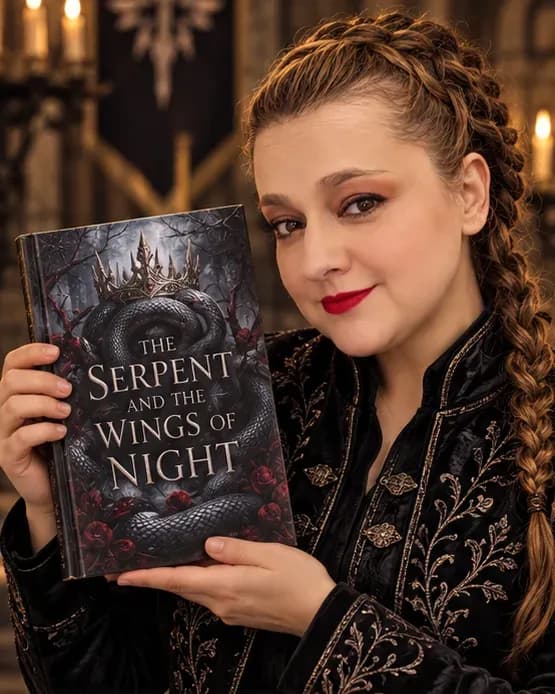
The Serpent & the Wings of Night
The Serpent & the Wings of Night by Carissa Broadbent: a human in a vampire tournament where trust is another way to bleed
Oraya is human, raised by a vampire king and living in a court that is not hers. To claim a chance at power, she enters the Kejari, a lethal tournament where every alliance comes with fine print and nobody is handing out participation trophies. This is my spoiler-light review of Carissa Broadbent’s The Serpent & the Wings of Night: a dark fantasy about survival, loyalty and the very bad idea of getting emotionally attached while surrounded by people who can bite through your plans.
October 31, 2026

Lauren Roberts
Reckless
Reckless by Lauren Roberts: a romantic chase where both people know trust is a bad idea
The competition is over, but Paedyn and Kai are nowhere near safe. She is on the run, he is hunting her, and they both have reasons not to trust the person they want. This is my spoiler-light review of Lauren Roberts’s Reckless, the second book in the Powerless trilogy, where romantic tension travels through a world outside the palace and the political questions are still waiting for a fuller answer.
October 28, 2026
Want more like this? Join the Readers Club and get one of my books for free.
Share
My books
Books by Yenny Astrid Londoño



About the author
Yenny Astrid Londoño
Yenny Astrid Londoño is a Colombian author and entrepreneur, founder of Anchetas Medellín. She writes about real life with sarcasm, irony and smart humor, turning everyday situations, mistakes and imperfect relationships into stories that readers can laugh at and recognize themselves in.

A free book from me
Get a free book from me
Subscribe and get Sobreviviendo a mis muertos in full as a PDF.
After that, I'll only write when I have something worth telling you.
Also available: Read this review in Spanish →