
Book review
Caraval by Stephanie Garber:
Fantasy, spectacle, sisterhood and a search where telling the game from real life becomes a full-time job. Here is my spoiler-light review of Stephanie Garber’s Caraval, a book that makes you want to follow the lanterns and also check whether the door locks behind you.
By Yenny Astrid Londoño · October 26, 2026 · 7 min read
Share

The Book
Caraval
by Stephanie Garber
More reviews by Stephanie Garber →
4 out of 5 stars
The setting, the tension of the five nights and Scarlett's bond with Tella hooked me.
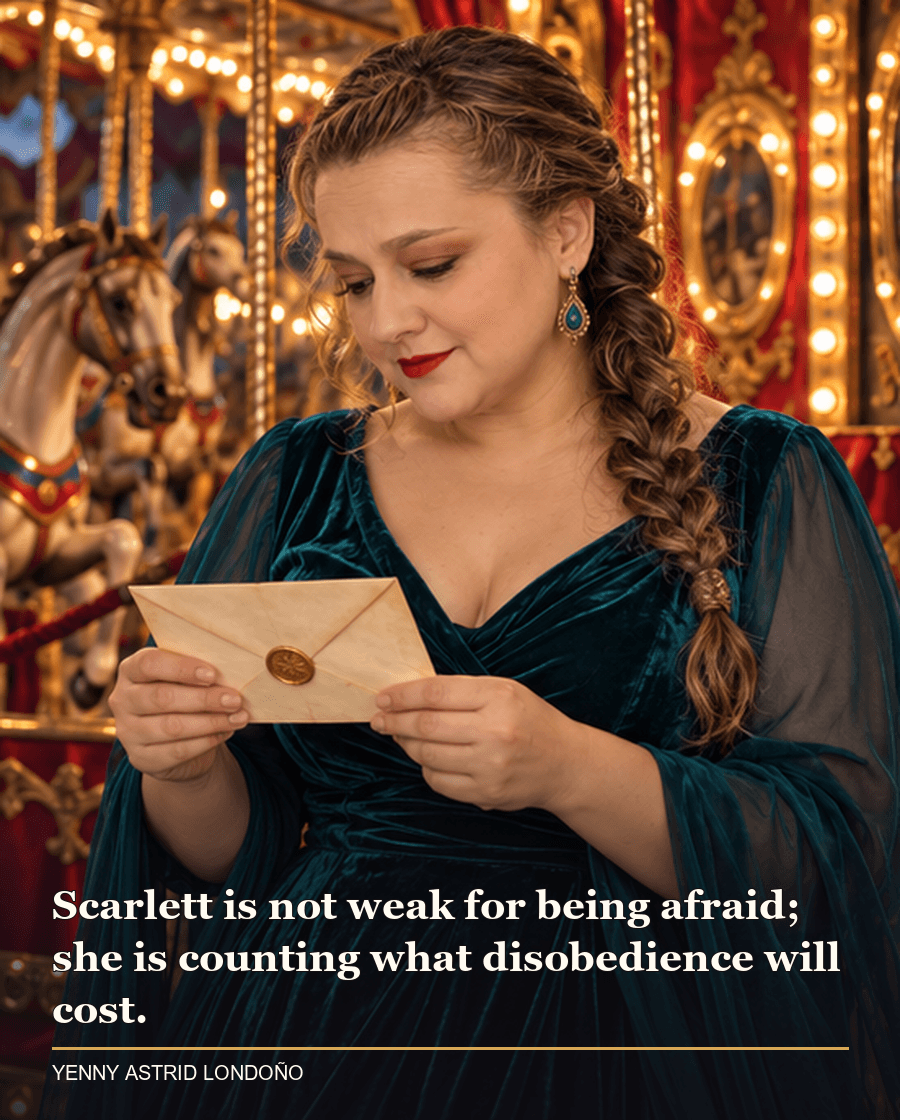
Scarlett is not a coward; she is calculating the cost of disobedience
Scarlett has spent years trying to protect herself and her sister Donatella from their father. She dreams of attending Caraval, a legendary performance where the audience can become part of the show, but the dream is tangled up with real danger and a family situation she cannot simply walk away from. Her caution can look like fear. It also comes from knowing that disobedience has consequences for both sisters.
I appreciated that Scarlett’s hesitation is not treated as a character flaw she can cure by becoming more adventurous. She has learned to think about the price of a choice. That is sensible, even if it makes the adventure harder to launch. When Donatella disappears, Scarlett has to decide whether staying safe is still protecting the person she loves or just another way of letting someone else control the outcome.
Donatella drives the search from outside the spotlight
Donatella is the reason Scarlett enters the game, but she is not only a missing person waiting to be retrieved. Their sisterhood gives the story its emotional stakes. Scarlett worries about her, remembers their shared history and has to act without knowing whether Donatella is in danger, following her own plan or somehow both.
The sisters are different in ways that create friction. Scarlett tends to calculate; Tella is more willing to move first and deal with the consequences later. It is easy to call one prudent and the other reckless until the novel shows how those habits grew out of the same household. I liked that Scarlett’s search is also a story about learning to see her sister as a person who makes choices, not just someone she has to save.
Caraval turns an island into a box of tricks
The game takes place on an island where streets, buildings and performances seem to change the rules as you learn them. Garber builds a world with the glitter of a fairy tale and the uneasy feeling that something may go wrong the moment you relax. Strange objects, beautiful locations and carefully staged clues make the setting one of the book’s strongest features.
That atmosphere is a real pleasure. It does not feel like a generic map of castles with different names pasted on. The island mixes wonder and threat, and the story keeps asking whether an experience is part of the game or something more serious. If you want a handbook with a diagram for every rule, this is not that book. It is a young woman discovering that every myth came with fine print.
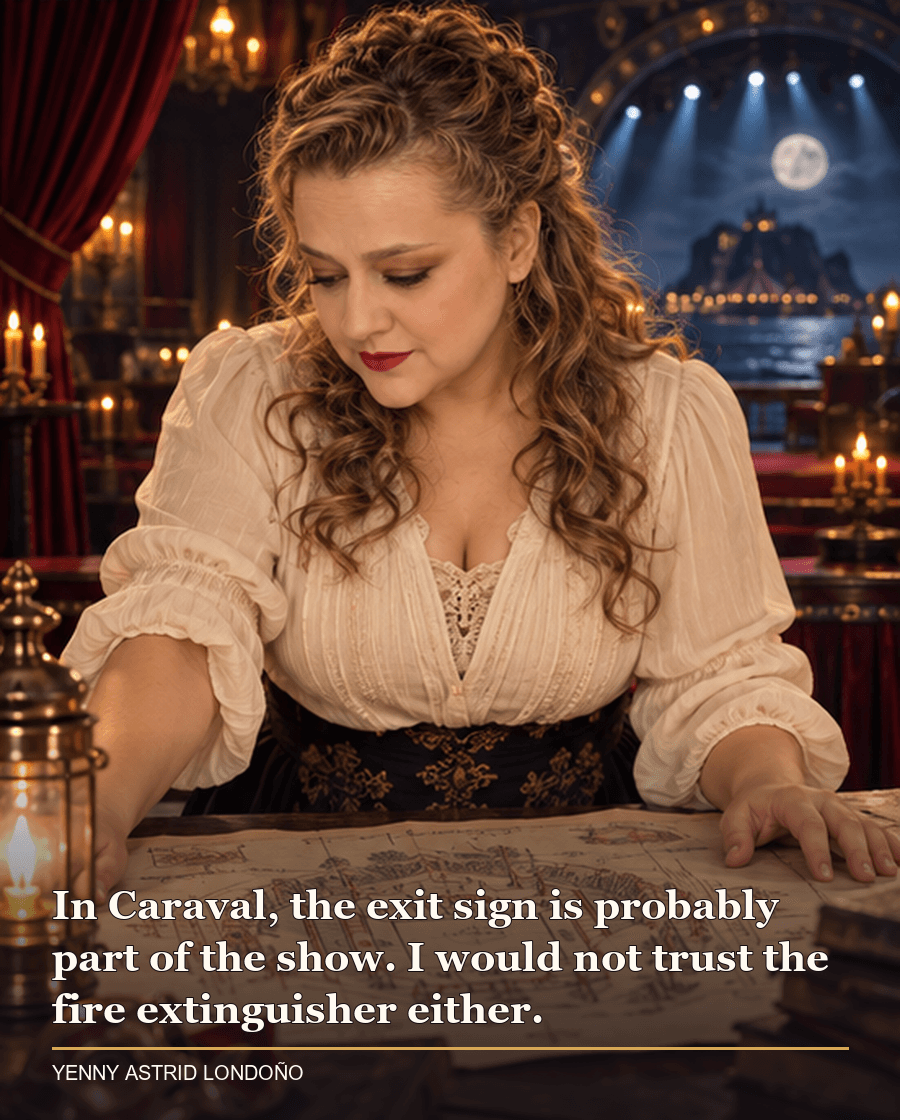
Julian helps, provokes and does not make trust easy
Julian accompanies Scarlett through the game, but his presence does not make the route simple. He can be charming, evasive and irritating in the same breath. Scarlett has to decide whether to take his help while knowing that she may not have all the information she wants.
The attraction and suspicion work together because the book does not pretend that trust arrives fully formed. Julian is not a neat romantic solution waiting for one honest conversation and a cup of tea. The dynamic keeps Scarlett alert, though sometimes the mystery around his motives stretches longer than my patience would have chosen. If you know a person is withholding something and keep asking them questions, eventually you either get an answer or start charging for the consultation.
The pace moves through clues, mistakes and locked doors
The novel pushes Scarlett forward through clues, wrong turns and obstacles that make the game feel active. The prose is visual and easy to move through. Each new place invites another question, and the uncertainty about the rules makes the pages turn.
That structure has a trade-off. Some transitions happen abruptly, just as I wanted an explanation or a moment to sit with a consequence. The story is building a series, so it leaves room for more about the world and the people in it. That can be a good promise; it can also feel like the book is waving from the next installment while I am still waiting for one conversation to finish.
The heart of the story is deciding whom to believe
Caraval is built around performance. The game wants participants to watch, interpret and make choices based on information that may be incomplete or staged. Scarlett’s feelings do not become a reliable map simply because they are sincere. She must notice what other people do, what they avoid and how much the spectacle is shaping her judgment.
That question fits the larger relationship between sisters, too. Loving someone does not mean knowing every decision they will make. Scarlett has to respond to Donatella as a person with her own agency, even when she is afraid for her. The book’s most appealing tension comes from that mix of affection, uncertainty and the need to act before all the answers arrive.
A fairy-tale mood with a few rules left hazy
The island’s atmosphere is the book’s signature. It has color, movement and a sense of danger wrapped in beauty. I could picture the scenes without feeling that the novel had turned into a catalogue of costumes. The romantic tension, sisterly bond and game structure keep changing the focus enough to make the fantasy feel lively.
The rules are not always explained with the clarity some readers will want. That adds mystery but occasionally makes it difficult to know what Scarlett could reasonably infer. I was willing to follow the feeling of the game; I still wanted the story to distinguish more clearly between a deliberate puzzle and information being withheld because the next twist needs room.
What I did not like
Scarlett’s caution makes sense, but a few decisions feel stretched to preserve the mystery rather than arise naturally from what she knows. The clues and changing rules can be exciting; they can also make the logic feel slippery. Scarlett circles through her doubts, and Tella—whose disappearance starts the search—has less direct presence than I wanted. I also wanted some reveals to clarify the game instead of asking me to accept that the game works because the book says it does. The five nights give the plot a useful clock, but the pressure does not always make Scarlett’s decisions feel less repetitive.
The abrupt transitions left me wanting more emotional aftermath in places. When Scarlett has just learned something important or made a risky choice, I sometimes wanted a scene to breathe before the next door opened. The atmosphere is strong enough to carry the story; it does not need to sprint through every feeling.
Who should read it
Read Caraval if you like lush young adult fantasy, puzzle-like settings, sisterhood and romantic tension that keeps trust uncertain. It is a good choice if you want a fairy-tale atmosphere with danger underneath the glitter.
If you prefer a tightly explained magic system or characters who communicate clearly and promptly, prepare to be annoyed. The book is built on misdirection, and it wants you to enjoy not knowing what is real. I liked the spectacle and the sisters’ bond; I just wanted the game to show its rules a little more honestly.
My rating
4 out of 5 stars. The island’s atmosphere, the tension of the five nights and Scarlett’s bond with Tella gave me an entertaining read. I take off a star for clues that stay too opaque, Scarlett circling through the same doubts and Tella’s limited direct presence. The book makes a beautiful maze; I just wanted a few more signs that were not secretly part of the maze.
Frequently asked questions
What is Caraval about?
Scarlett enters a mysterious island game after her sister Donatella disappears, following clues while trying to determine what is part of the performance and what is real.
Is Caraval a standalone novel?
No. It is the first book in Stephanie Garber’s Caraval trilogy.
Is Caraval romance or fantasy?
It is young adult fantasy with a romantic subplot, a magical competition and a mystery at its center.
Is the book appropriate for younger readers?
It is marketed as young adult fantasy. It includes family abuse, threat and danger, so readers and caregivers may want to check content details.
Does Caraval have a happy ending?
This review avoids the ending. The novel resolves parts of its immediate mystery while setting up the next book in the trilogy.
Do I need to read Caraval before Once Upon a Broken Heart?
The series are connected through characters and setting, so reading Caraval first gives helpful context, though Once Upon a Broken Heart begins a separate trilogy.
Who would enjoy Caraval?
Readers who enjoy fairy-tale settings, visual fantasy, sister relationships and stories where perception may be part of the game.
The Book
Caraval
by Stephanie Garber
Get the bookIf you buy through this link, Yenny earns a small commission and you pay the same price.
Keep reading
If you liked it, keep going

Leigh Bardugo
Shadow and Bone
Shadow and Bone by Leigh Bardugo: a soldier discovers that darkness has an owner
Alina Starkov has spent years being ordinary beside Mal, her closest friend, until a crossing through the Shadow Fold reveals that Ravka may have been wrong about her. Her new power makes her valuable to the court, but valuable and free are not the same thing. This is my review of Leigh Bardugo’s Shadow and Bone, a fantasy about power, belonging and the uncomfortable moment when everyone suddenly has a plan for your life.
October 30, 2026

Leigh Bardugo
Six of Crows
Six of Crows by Leigh Bardugo: an impossible heist and six people who cannot work together without threats
Six thieves, one impossible job and a plan whose first rule is apparently “do not kill your teammates before we get inside.” This is my spoiler-light review of Leigh Bardugo’s Six of Crows, a fantasy about criminal skill, complicated loyalties and people who learned to survive by trusting nobody—including the people they need beside them.
October 29, 2026

Lauren Roberts
Reckless
Reckless by Lauren Roberts: a romantic chase where both people know trust is a bad idea
The competition is over, but Paedyn and Kai are nowhere near safe. She is on the run, he is hunting her, and they both have reasons not to trust the person they want. This is my spoiler-light review of Lauren Roberts’s Reckless, the second book in the Powerless trilogy, where romantic tension travels through a world outside the palace and the political questions are still waiting for a fuller answer.
October 28, 2026
Want more like this? Join the Readers Club and get one of my books for free.
Share
My books
Books by Yenny Astrid Londoño



About the author
Yenny Astrid Londoño
Yenny Astrid Londoño is a Colombian author and entrepreneur, founder of Anchetas Medellín. She writes about real life with sarcasm, irony and smart humor, turning everyday situations, mistakes and imperfect relationships into stories that readers can laugh at and recognize themselves in.

A free book from me
Get a free book from me
Subscribe and get Sobreviviendo a mis muertos in full as a PDF.
After that, I'll only write when I have something worth telling you.
Also available: Read this review in Spanish →