
Book review
Magician:
Two kitchen boys leave Crydee and end up divided by a rift between worlds. The adventure is classic, warm, and painfully aware that a second book exists.
By Yenny Astrid Londoño · November 15, 2026 · 8 min read
Share
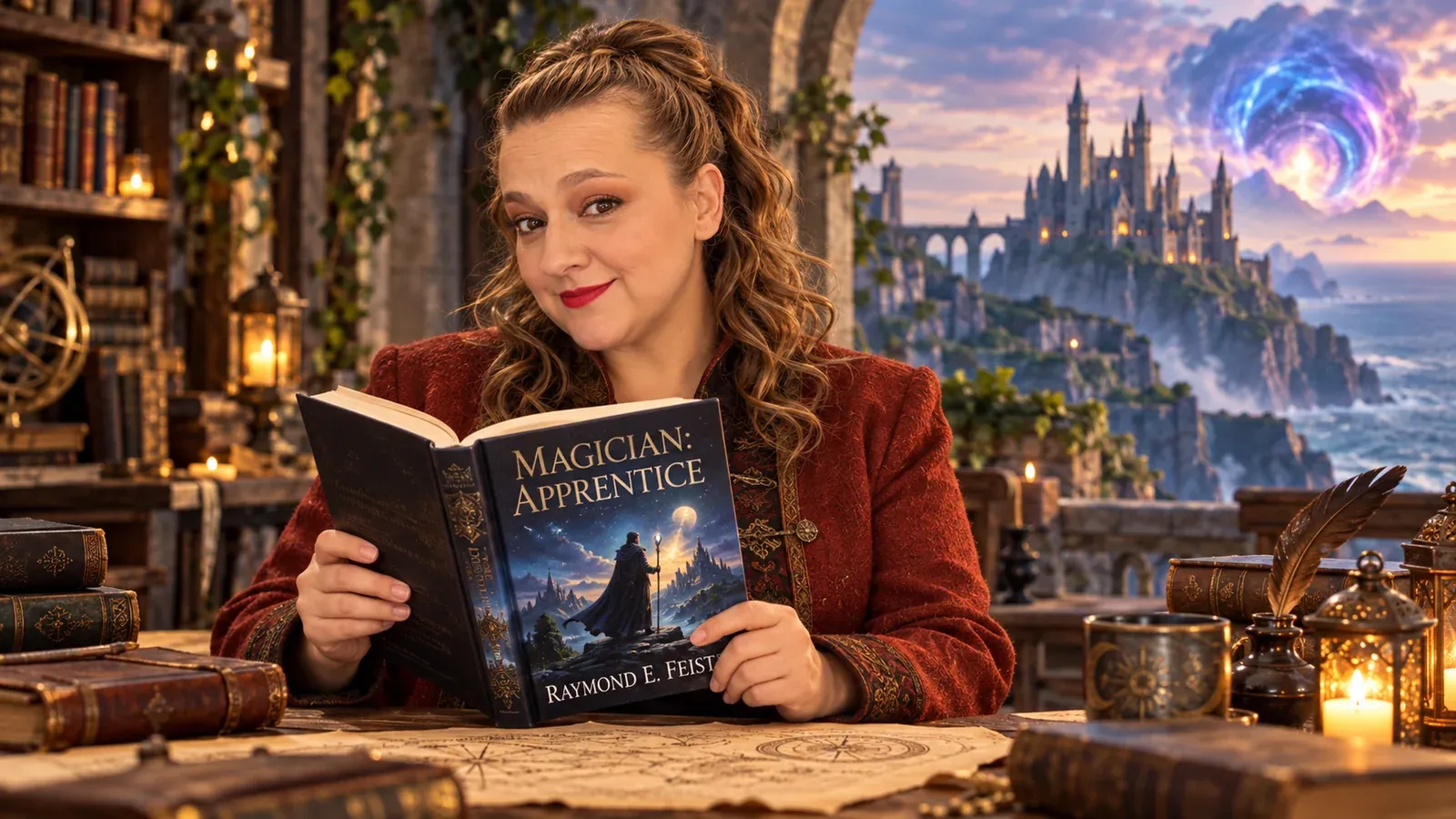
The Book
Magician: Apprentice
Epic fantasy and adventure
by Raymond E. Feist
4 out of 5 stars
A warm, accessible classic adventure carried by Pug, Tomas, and Crydee. It loses points for limited archetypes and an edition that stops where half a novel should pause rather than end.
Pug is an orphan living in Castle Crydee, waiting for the day when young people are chosen as apprentices. Tomas, his best friend, wants to become a warrior and has the confidence of someone who has never marched through rain while carrying half a household on his back. They begin near the kitchen, watching a world that looks stable because nobody has opened a door to another planet yet.
Raymond E. Feist wrote a classic adventure: castle, magician, princess, dukes, elves, dwarves, and boys discovering large destinies. He does not pretend to have invented the wheel. He simply sets it rolling with affection. The charm lives in Crydee, in Pug and Tomas's friendship, and in the feeling that ordinary life can split open one morning because an impossible ship appeared on the coast.
The original novel Magician was divided in some editions into Magician: Apprentice and Magician: Master. That matters because this first half does not close like a complete story. Just as Pug crosses the largest threshold of his life, the book points at the next volume and leaves. Efficient publishing. Emotionally, a kick in the ankle.
Crydee turns classic fantasy into a place you actually want to stay
Castle Crydee is not a glittering capital. It sits on the frontier among forests, coast, and a community where nobles, soldiers, and servants know each other. That scale keeps the beginning close. Pug does not dream of ruling the world. He wants to be chosen, find a trade, and stop feeling like the boy who survives on other people's goodwill.
Feist uses the choosing ceremony to show hierarchy without delivering a lecture. Tomas finds a place as a warrior, while Pug seems left out until Kulgan the magician selects him. The scene works because Pug's relief does not come from learning he is extraordinary. It comes from someone finally saying: you belong somewhere.
Kulgan knows Pug has power; he just does not know why it refuses to behave
Magic training does not proceed as Pug expected. He learns theory, attempts exercises, and fails at conventional forms. Kulgan does not dismiss him, but he has no answers either. When Pug saves Princess Carline from a troll using spontaneous magic, it becomes clear that the problem is not weak power but a system unable to recognize it.
I like that distinction between talent and method. Pug is not bad at magic; Kulgan's school lacks the proper vocabulary. The boy carries shame for failing an incomplete standard. That happens well beyond fantasy: when an ability does not fit somebody's box, the first conclusion is usually that the person failed. Very few people inspect the box.
Carline is more than a rescued princess, although the book still keeps her in that box too often
Pug saves Carline and receives status, land, and recognition. Their relationship mixes gratitude, affection, and class difference. She has a will and participates in her own life, but the narrative still watches her through several old fantasy habits: her romantic function often outweighs her political possibilities.
I do not mind Pug falling in love. He has the age and intensity required to turn one glance into an international treaty. I mind that Carline sometimes exists according to which boy desires her or which alliance she represents. A more complex woman appears in flashes. The novel would be stronger if she could occupy that space longer without being returned to the princess shelf.
The strange ship on the coast opens a war nobody knows how to name
The discovery of an unknown vessel and objects that do not belong to Midkemia changes the story. The Tsurani invaders do not come from another kingdom. They arrive through a Rift from Kelewan. The threat fits neither maps nor familiar politics, forcing Duke Borric to travel for help.
The journey expands the world naturally. A coming-of-age story becomes a military, diplomatic, and cultural crisis. The challenge is not only defeating enemies; it is convincing rulers that the impossible is already landing. While nobles discuss protocol, the frontier provides the dead. The fantasy is old-fashioned, but crisis management feels sadly current.
Rodric proves a crown does not include common sense
King Rodric answers invasion through paranoia, pride, and a weakening grip on reality. Borric needs resources; court offers delay and politics. Feist shows that a kingdom is not a single will. Between Crydee and central power stand rivalries, interests, and people convinced that acknowledging someone else's danger makes them less important.
The palace intrigue is sometimes simple, but it reveals the distance between those deciding a war and those living it. Arutha, Lyam, and other nobles respond differently, keeping royalty from becoming one mass. The series starts building a generation that will govern problems inherited from men too busy defending their authority.

Tomas finds legendary armor and an identity that may swallow him
While Pug follows magic, Tomas travels with the dwarves and finds the sword and armor of an ancient Valheru. It looks like a young warrior's perfect gift: strength, presence, and a connection to something immense. The problem is that inheritance does not arrive empty. The personality and history attached to the power begin influencing him.
Tomas's transformation asks a better question than how strong he will become: how much of him survives what makes him special? His relationship with the elves and Aglaranna puts desire, destiny, and danger on the same line. Power is not a neutral tool stored after battle. It can rewrite the person using it.
The Tsurani are not faceless monsters, even if this half only begins to prove it
At first, the Tsurani appear as strange invaders with unfamiliar armor, discipline, and resources. To Crydee, they are an enemy nobody understands. Feist signals that their culture has rules, classes, and motives, but Apprentice still views them mainly from Midkemia.
That makes narrative sense while limiting the war's complexity. When Pug is captured and taken through the Rift, the story is finally ready to see Kelewan from inside. The volume cuts off just before paying that promise. We know the enemy is more than a crowd. We get to buy the next book to meet them. Thoughtful.
Pug and Tomas's friendship holds together what the war separates
Pug and Tomas take different paths without the novel treating their friendship as a childhood accessory. Each carries the other as a reference while changing. Pug enters politics and magic; Tomas moves toward ancient inheritance. The war threatens not only their lives but their ability to recognize each other again.
That emotional base warms a novel full of military movement. Epic scale works better when we know which specific relationship may break. I do not need to remember every unit. I need only picture two boys leaving the kitchen believing adulthood meant choosing a trade and ending up as representatives of forces neither knew existed.
What I did not like: classic sometimes becomes too comfortable
The book uses archetypes well but does not always transform them. We get honorable nobles, a kind mentor, a princess, a chosen boy, and familiar fantasy peoples. Reading it is pleasant; surprise is less reliable. Some secondary characters mainly carry information or accompany a hero and could be exchanged without the world objecting.
The editorial decision to split Magician also matters. This volume ends with Pug captured, Tomas changing, and the war open. It is not a cliffhanger designed inside a whole novel; it is half a story doing its best beside a locked door. The adventure entertains, but the ending lacks the structural satisfaction a separate book should provide.
Pug's capture: the moment the apprentice needs another language to understand himself
Pug falls to the Tsurani and crosses the Rift into Kelewan. The moment summarizes his magic: he is entering a culture that may have tools his own world lacked to understand him. Capture removes freedom and, paradoxically, opens a path toward a larger identity.
As an ending, it produces interest and frustration in equal measure. I want to know what he learns, how he survives, and what happens to Crydee, but I cannot yet judge the complete arc. The book is a powerful first half, not a closed journey. That does not erase its strengths. It does require rating what it delivers rather than the complete novel it promises.
My verdict: a familiar adventure that still makes you want to cross the door
Magician: Apprentice does not reinvent epic fantasy, but it has heart, momentum, and characters worth accompanying. Pug and Tomas turn a war between worlds into something personal. Kulgan brings humanity, Crydee feels like home, and the Rift opens possibilities larger than the original mold.
I am giving it four stars. I am taking points off for limited women, overly comfortable archetypes, and an ending that smiles while saying “to be continued.” I still enjoyed the journey. Feist tells stories like someone who knows the classics and still believes in gathering around the fire. Sometimes I do not need the wheel destroyed. I need it to arrive on time and keep its pieces on the mountain.
Frequently asked questions about Magician: Apprentice
Is Magician: Apprentice the first book in a series?
Yes. It begins the Riftwar Saga and contains the first half of Magician in editions that split the original novel into Apprentice and Master.
Do I need to read Magician: Master next?
Yes, if you want to complete the original Magician arc. Apprentice ends with the war unresolved and Pug captive in Kelewan.
Who are Pug and Tomas?
They are friends raised in Crydee. Pug becomes Kulgan's apprentice and develops unusual magic; Tomas trains as a warrior and finds the legacy of the Valheru.
Who are the Tsurani?
They are invaders from Kelewan, another world connected to Midkemia by magical Rifts. Their culture receives much more development later.
Does Magician: Apprentice have romance?
Attraction and developing relationships appear around Pug, Carline, Tomas, and Aglaranna, but war and apprenticeship remain central.
Is Magician: Apprentice good for fantasy beginners?
Yes. Its accessible prose, clear adventure, and classic structure make it welcoming, as long as you know this edition contains only the first half.
Does Magician: Apprentice have a complete ending?
No. Pug ends the book captive beyond the Rift while the war continues. Magician: Master completes the original story.
The Book
Would I recommend Magician: Apprentice? Here is my honest verdict.
Magician: Apprentice
by Raymond E. Feist
Find the book on AmazonIf you buy through this link, Yenny earns a small commission and you pay the same price.
Keep reading
If you liked it, keep going
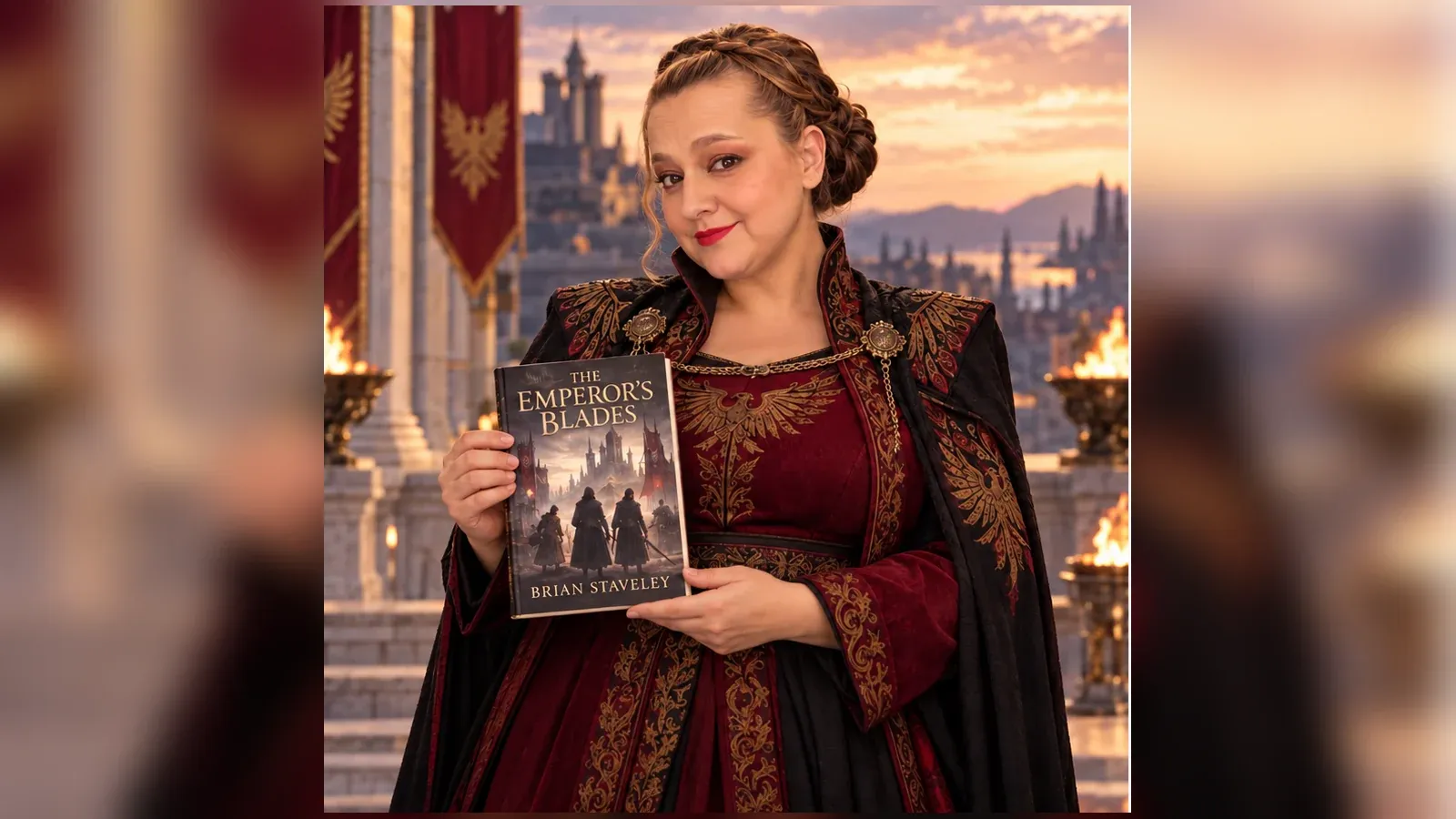
Brian Staveley
The Emperor’s Blades
The Emperor’s Blades: three heirs, one corpse, and an empire that clearly skipped crisis planning
The emperor of Annur is dead, and his three children are scattered between a monastery, a military academy, and a capital full of smiling people with knives behind their backs.
November 22, 2026
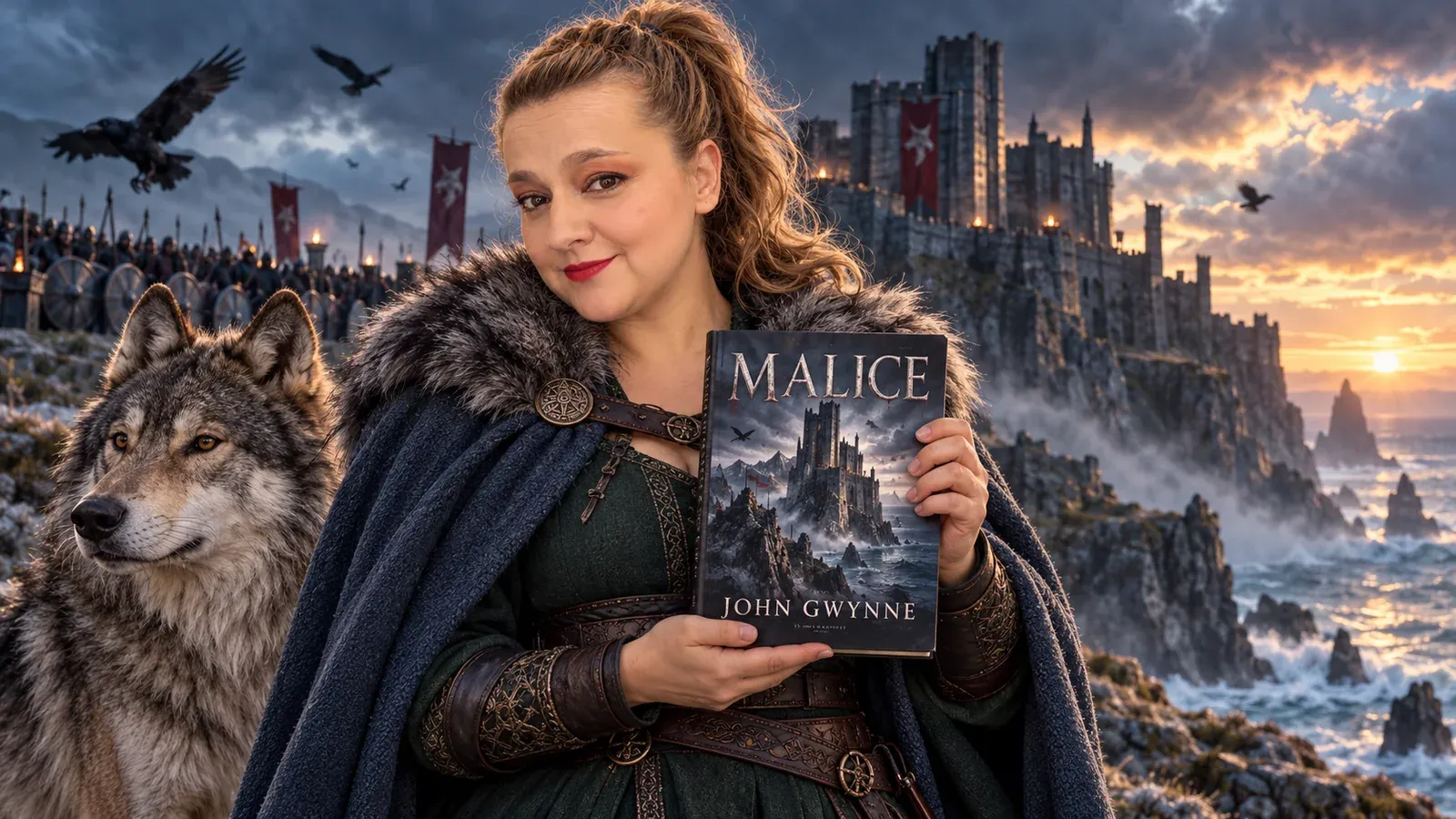
John Gwynne
Malice
Malice: Corban wanted to be a warrior and inherited a badly managed war between gods
A prophecy promises a Bright Star and a Black Sun. While powerful men decide which title flatters them best, a boy, a giant wolf, and several families get stuck with the bill.
November 21, 2026
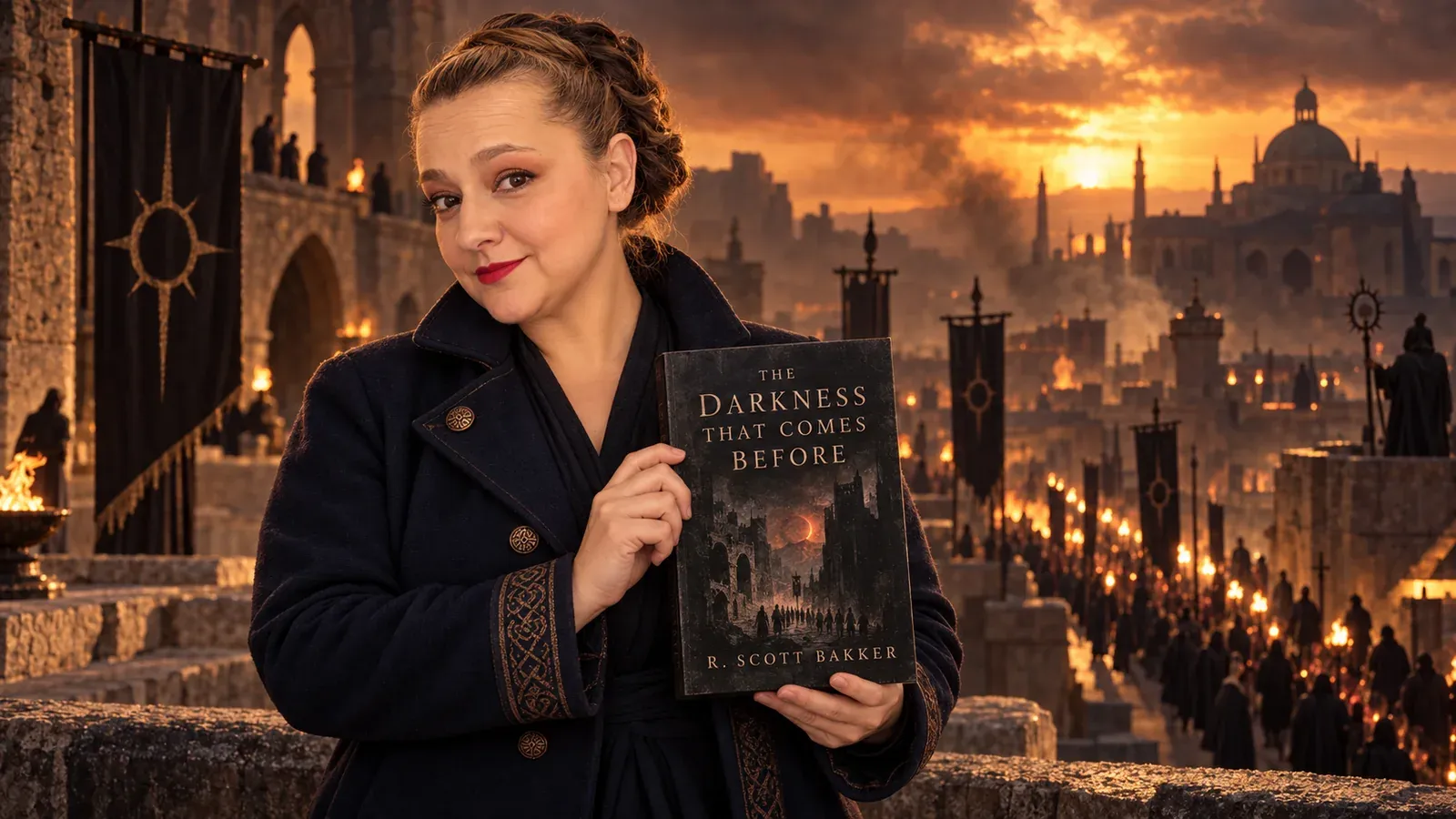
R. Scott Bakker
The Darkness That Comes Before
The Darkness That Comes Before: Kellhus reads your soul and turns it into an instruction manual
A holy war, a sorcerer dreaming about the end of the world, a barbarian who recognizes the manipulator, and a man trained to turn every human emotion into a tool. Light reading this certainly is not.
November 20, 2026
Want more like this? Join the Readers Club and get one of my books for free.
Share
My books
Books by Yenny Astrid Londoño







About the author
Yenny Astrid Londoño
Yenny Astrid Londoño is a Colombian author and entrepreneur, founder of Anchetas Medellín. She writes about real life with sarcasm, irony and smart humor, turning everyday situations, mistakes and imperfect relationships into stories that readers can laugh at and recognize themselves in.

A free book from me
Get a free book from me
Subscribe and get Sobreviviendo a mis muertos in full as a PDF.
After that, I'll only write when I have something worth telling you.
Also available: Read this review in Spanish →