
Book review
The Emperor’s Blades:
The emperor of Annur is dead, and his three children are scattered between a monastery, a military academy, and a capital full of smiling people with knives behind their backs.
By Yenny Astrid Londoño · November 22, 2026 · 8 min read
Share
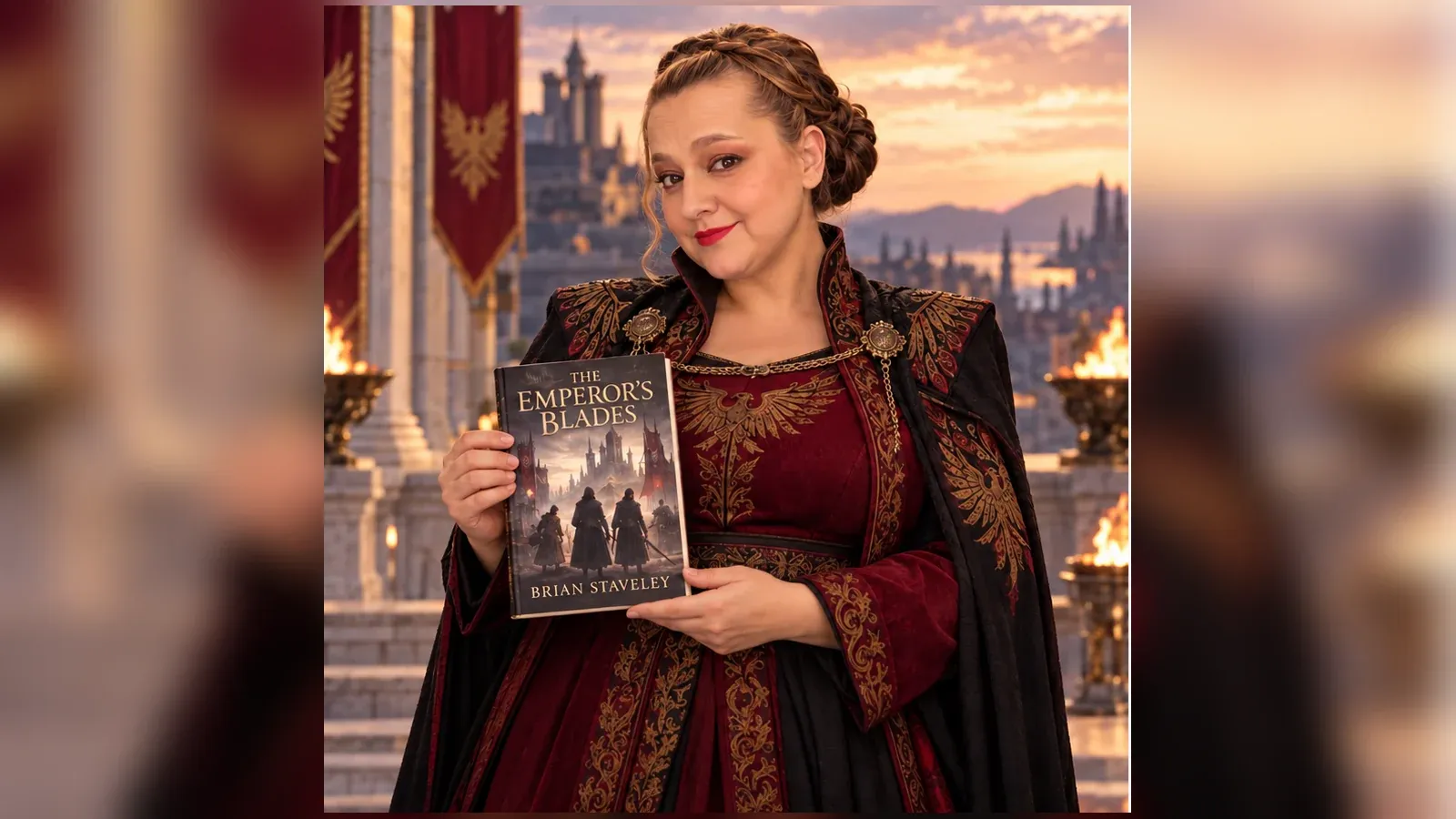
The Book
The Emperor’s Blades
Military and political epic fantasy
by Brian Staveley
4 out of 5 stars
An addictive opening with distinct heirs, excellent Kettral chapters, and a promising conspiracy. It loses points for sidelining Adare and saving too many answers for later.
An emperor is murdered, and his heirs are in three different corners of the world because their father, in a flawless display of family planning, decided to prepare each child for power without letting them become particularly close. The Emperor’s Blades opens with a broken family and an empire pretending it still knows who is in charge. That was enough to get my attention.
Kaden, the heir, has spent eight years in a monastery learning to empty his mind while being hit, humiliated, and assured that pain is educational. Valyn trains with the Kettral, an elite force that rides giant hawks and considers death a perfectly reasonable exam result. Adare remains in the capital with a political office, a suspect in her father’s murder, and far less page time than she deserves. Three paths, one corpse, and the certainty that somebody intends to finish the job.
Brian Staveley builds a fantasy of training, conspiracy, and war with a much older world underneath it. When it works, every test reveals character and every answer tears open another question. When it does not, the men get the sharpest weapons while Adare receives a folder marked Important Administrative Business. I kept reading anyway, because the Kettral, the monks, and the ancient threat make this door very hard to close.
Sanlitun dies and the empire discovers stability was decorative
The emperor’s assassination is more than a starting gun. Someone reached the protected heart of Annur, killed its ruler, and left his children too far apart to answer together. The throne is not empty for lack of an heir. It is empty because the heir has spent almost a decade at Ashk’lan, where politics arrives late and snow arrives on schedule.
I liked that the death is not merely a classy excuse for adventure. Each child receives the news inside an institution that has already reshaped them: Kaden thinks like a Shin novice, Valyn like a soldier in training, and Adare like a minister who knows the smell of court politics. The same grief produces three responses and three incomplete versions of their father.
Kaden studies emptiness while the world keeps filling it with trouble
The Shin teach Kaden the vaniate, a state of perception stripped of emotion and ego. Reaching it requires pain, deprivation, and the sort of discipline that could make a military boarding school look nurturing. His chapters can feel slow at first, but the point is precise: he must learn to see before reacting when everyone expects a future emperor to mistake impulse for authority.
The monastery also keeps knowledge older than Annur. What looks like eccentric education becomes connected to the csestriim and a war that makes the immediate fight for the throne look almost small. Staveley turns a mental discipline into a political and survival tool. The lessons do repeat often enough that I reached emptiness too, although mine was mostly exhaustion.
Valyn and the Kettral: human resources, only with giant hawks and poison
Valyn trains on the Qirin Islands with soldiers who ride enormous birds and work in teams where trust is not a corporate value but the difference between returning home and becoming mountain food. Gwenna, Annick, Talal, and Laith give his chapters camaraderie, rivalry, and some badly needed dry humor.
The tests are brutal and not always fair. Valyn wants to earn his place without living off his surname, but the news of his father’s death changes the academy. He no longer knows who is testing his ability and who is calculating the cleanest way to remove another heir. That paranoia makes the training matter. He is not only trying to graduate; he is hunting a traitor inside an institution built to hide secrets.
Adare investigates Annur with half a deck and every cheater at the table
Adare is the only sibling in the capital and the only one able to touch the machinery of the empire immediately. She has education, rank, and a theory about who ordered the murder. She is also a woman inside a structure willing to use her but unwilling to imagine her on the throne. Her work shows that succession depends on temples, ministers, armies, and whoever can turn suspicion into public truth.
Her conflict has enormous potential because she must practice politics while grieving. The novel gives her fewer pages and less motion than her brothers. Kaden crosses mountains and Valyn jumps from a war bird; Adare spends too much time reacting inside rooms. Her work is not less valuable. The book simply has not learned to dramatize it with equal energy.
Their father raised useful heirs and siblings who barely know how to speak to one another
Sanlitun scattered his children to make them different instruments of the same empire. The strategy makes sense for the state and feels cold as hell for the family. Kaden learns control, Valyn organized violence, and Adare administration. Together they could govern. Apart they are exactly what a conspiracy needs: three people who share blood without sharing enough information or trust.
The novel is strongest when it shows the emotional bill. None of them can ask why he sent them away, what he knew, or how much of their education was protection rather than manipulation. Death turns every memory into evidence. Like every complicated family, the dead man enjoys the advantage of never having to explain his terrible decisions.
The gods and the csestriim make succession look like the smaller problem
The conspiracy is not limited to an ambitious minister. Gods, devotees, ancient creatures, and the csestriim widen the story until the fight for Annur sits on top of a history its rulers barely understand. The monastery, the Kettral, and the capital’s religion appear separate until their cracks begin to connect.
That scale is exciting, but the book saves a great many answers for later. There is mystery, and then there is a narrative IOU. This novel uses both and hopes we will not inspect the due date too closely. I remained interested because the old danger changes how the murder looks, although the glossary does occasionally storm the climax and demand a speaking role.

Three parallel stories: sometimes an orchestra, sometimes three neighbors using drills
The structure changes the air before one plotline runs dry. When the monastery becomes too contemplative, the Kettral arrive. When training stretches, the court provides poison. At its best, every cut adds tension because the reader knows something the next character does not.
At other times the switch interrupts a scene just as it starts breathing. Valyn usually wins the attention contest because his story has a team, tests, and immediate danger. Kaden develops more slowly but carries the deeper ideas. Adare falls behind. The imbalance does not ruin the novel, but it reveals exactly where the author’s excitement lived.
What I did not like: Adare deserved a novel, not a waiting room
My main problem is the imbalance. The emperor’s daughter has access to court, a personal motive, political intelligence, and an investigation capable of compromising the entire system. She still receives a fraction of the development given to each masculine trial. I do not need her on a giant hawk. I need full scenes, visible consequences, and adversaries with actual depth.
The book also uses suffering as shorthand for toughness, especially in training and around some female characters. Brutality can build a world without automatically becoming profound. When every instructor competes for Worst Responsible Adult, the impact flattens. Several late revelations also arrive carrying fresh terminology, as if the glossary had seized control of the climax.
The ending brings the danger together, not the whole family
By the end, Kaden understands that his education was not monastic eccentricity, Valyn learns how far the threat reaches through his chain of command, and Adare makes a political choice that will reshape her place beside her brothers. Answers about the assassination open a larger conflict instead of closing the wound.
That may frustrate readers who want a mystery solved with culprit, explanation, and coffee. The novel concludes a stage of training and survival while the real war is only showing its face. It worked for me because the revelations reorganize what came before. It worked less well when major relationships remained in promise mode. This is a first volume wearing very visible first-volume boots.
My verdict: a strong opening with enormous wings and one sister still waiting her turn
The Emperor’s Blades mixes military school, monastery, conspiracy, and ancient fantasy without losing its human pulse. Valyn’s squad is addictive, Kaden gains depth with patience, and the world suggests a history worth exploring. Staveley knows exactly where to end a chapter so that “one more” becomes sunrise.
I give it four stars. I am docking points for sidelining Adare, repeating some training beats, and turning a few explanations into a rainstorm of names. The combination of separated siblings, suspicious institutions, and a threat older than the empire still got me. The throne is unhewn, the family is not exactly finished either, and I already want to know which one breaks first.
Frequently asked questions about The Emperor’s Blades
Is The Emperor’s Blades the first book in a series?
Yes. It opens Chronicle of the Unhewn Throne, following Kaden, Valyn, and Adare after their father’s assassination.
Who are the three main characters?
Kaden is the heir trained by Shin monks, Valyn is a Kettral cadet, and Adare is a minister in the capital investigating the emperor’s death.
What are the Kettral?
They are an elite military force that operates in small teams and rides enormous war birds. Their training dominates Valyn’s storyline.
Does The Emperor’s Blades have romance?
Romantic and sexual relationships exist, some with political weight, but training, succession, conspiracy, and the ancient threat drive the novel.
Is the book difficult to read?
The prose moves clearly, but three storylines and a late expansion of mythology introduce many names and concepts. It requires attention rather than a separate degree.
Does the ending resolve the murder?
It reveals important parts of the conspiracy and completes immediate trials, but the imperial conflict and the siblings’ relationship continue into the next books.
Is The Emperor’s Blades worth reading?
Yes if you enjoy military epic fantasy, brutal schools, court politics, and parallel plots. Readers who dislike deferred answers or uneven page time should go in warned.
The Book
Would I recommend The Emperor’s Blades? Here is my honest verdict.
The Emperor’s Blades
by Brian Staveley
Find the book on AmazonIf you buy through this link, Yenny earns a small commission and you pay the same price.
Keep reading
If you liked it, keep going
Anthony Ryan
Blood Song
Blood Song: Vaelin entered the Sixth Order as a child and left as the legend everyone wanted to use
A father abandons his son to a military order, a king discovers the boy is useful for war, and a voice in his blood keeps him alive without explaining the bill.
November 23, 2026
John Gwynne
Malice
Malice: Corban wanted to be a warrior and inherited a badly managed war between gods
A prophecy promises a Bright Star and a Black Sun. While powerful men decide which title flatters them best, a boy, a giant wolf, and several families get stuck with the bill.
November 21, 2026
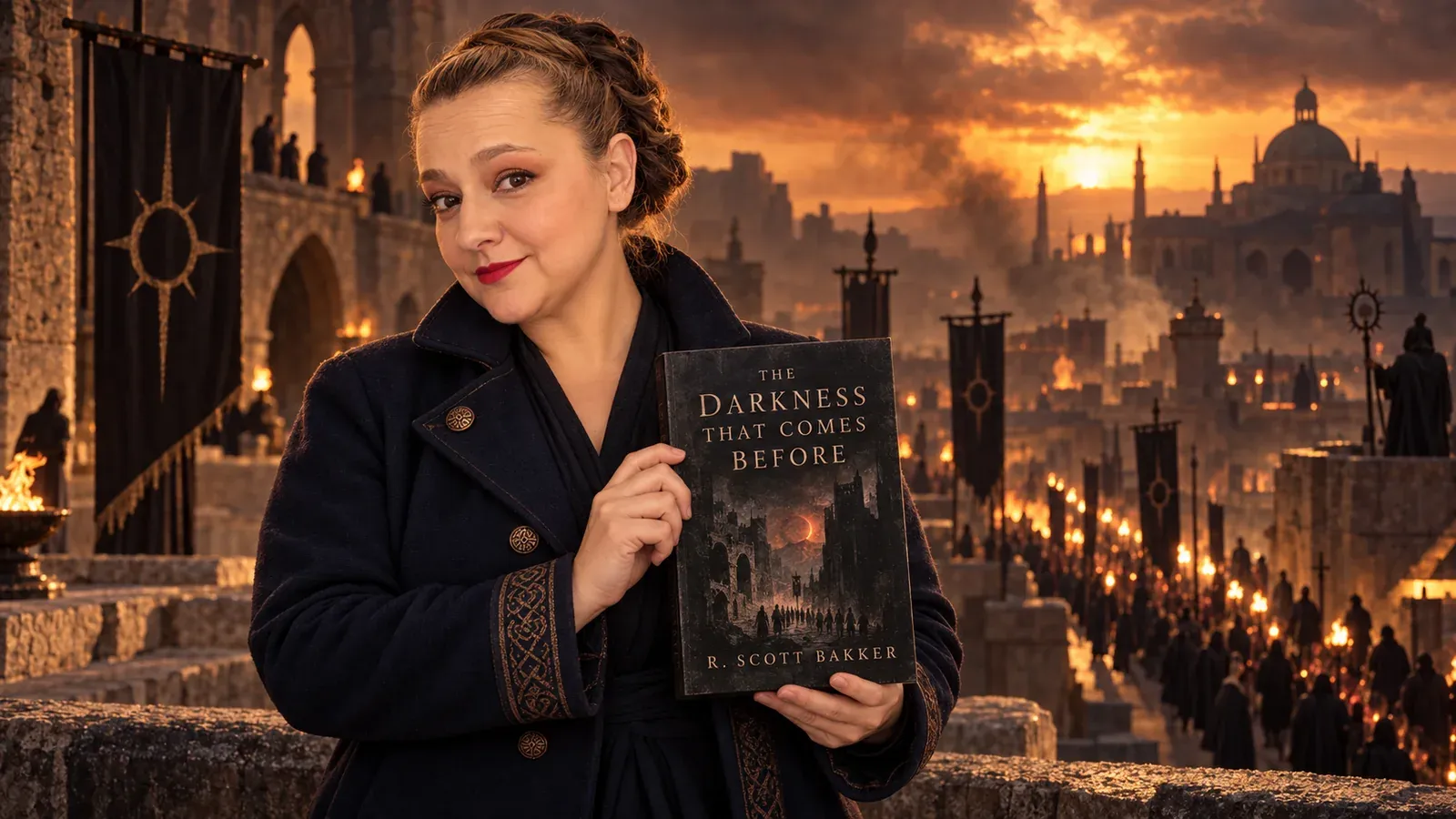
R. Scott Bakker
The Darkness That Comes Before
The Darkness That Comes Before: Kellhus reads your soul and turns it into an instruction manual
A holy war, a sorcerer dreaming about the end of the world, a barbarian who recognizes the manipulator, and a man trained to turn every human emotion into a tool. Light reading this certainly is not.
November 20, 2026
Want more like this? Join the Readers Club and get one of my books for free.
Share
My books
Books by Yenny Astrid Londoño







About the author
Yenny Astrid Londoño
Yenny Astrid Londoño is a Colombian author and entrepreneur, founder of Anchetas Medellín. She writes about real life with sarcasm, irony and smart humor, turning everyday situations, mistakes and imperfect relationships into stories that readers can laugh at and recognize themselves in.

A free book from me
Get a free book from me
Subscribe and get Sobreviviendo a mis muertos in full as a PDF.
After that, I'll only write when I have something worth telling you.
Also available: Read this review in Spanish →