
Book review
Malice:
A prophecy promises a Bright Star and a Black Sun. While powerful men decide which title flatters them best, a boy, a giant wolf, and several families get stuck with the bill.
By Yenny Astrid Londoño · November 21, 2026 · 9 min read
Share
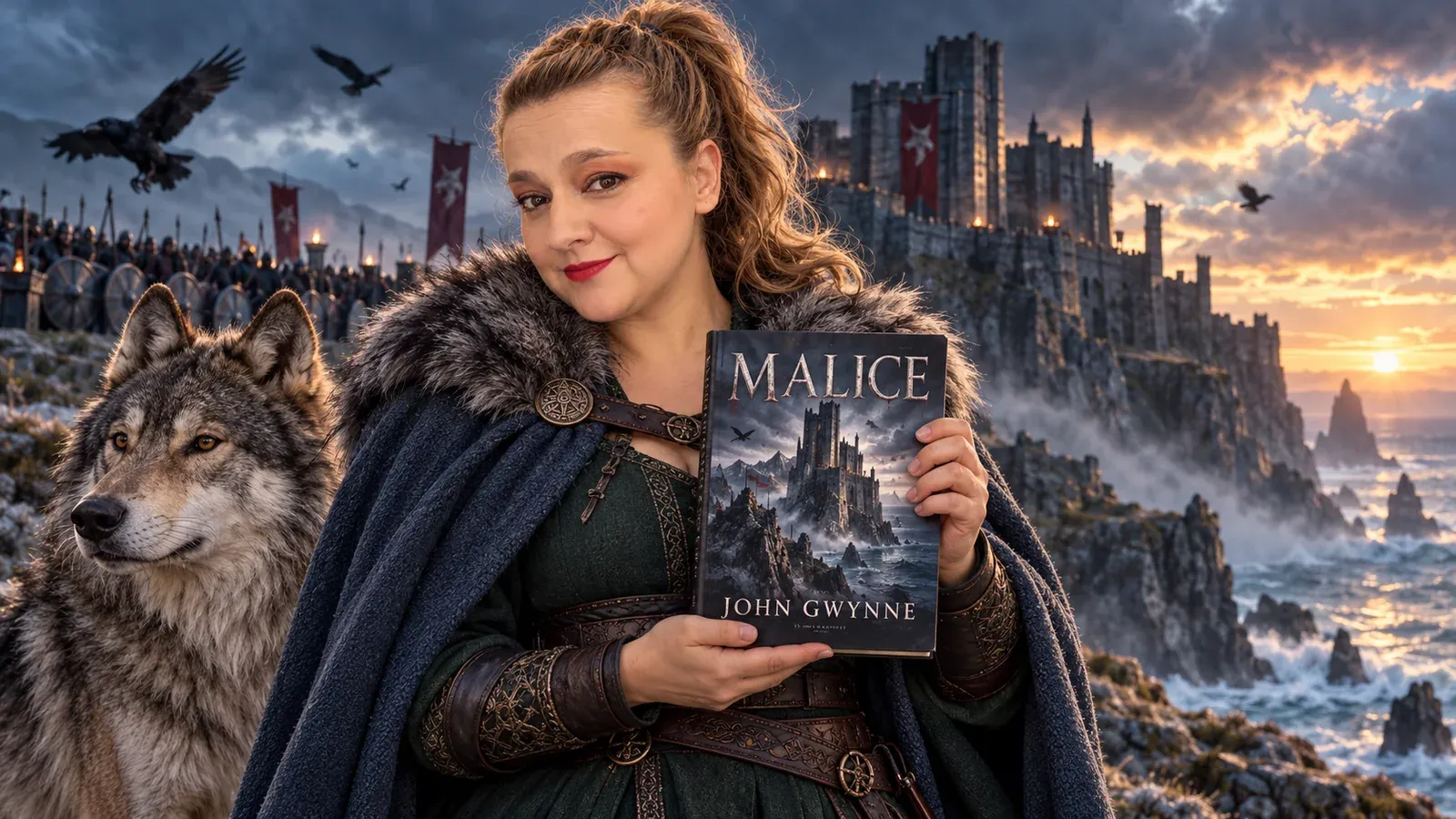
The Book
Malice
Heroic epic fantasy
by John Gwynne
4 out of 5 stars
It has heart, strong relationships, clear battles, and a powerful second half; it loses one star for the slow opening, the number of names, and its familiar devices.
Corban wants to become a warrior. It is a reasonable ambition in a world where giants are restless, ancient stones bleed warnings, and adults solve nearly every disagreement by forming a shield wall. He lives in Dun Carreg, son of the blacksmith Thannon and Gwyneth, brother to Cywen, favorite target of the bully Rafe, and accidental owner of a wolven cub that will soon become a military problem in both size and devotion.
Across the Banished Lands, High King Aquilus tries to unite the kingdoms before a prophecy comes true: Elyon and Asroth will fight again through a Bright Star and a Black Sun. His son Nathair believes—with help from suspiciously convenient advisers—that he is the Star. Veradis, a young warrior who joins his service, watches the prince combine charisma, courage, and choices that smell less like salvation every day.
Malice uses familiar materials: a destined boy, a secretive mentor, a loyal animal, an ambiguous prophecy, princes, giants, and traitors in important halls. John Gwynne does not invent the sword. What he does well is remind us that a sword matters because of who holds it, whom it protects, and which family will grieve when it fails. The first half prepares a great deal of ground; the second burns it with enough force to make me read as though I also needed to escape the fortress.
Corban wants to learn how to fight because he does not yet know what winning costs
Corban begins small, awkward, and desperate to prove he is no coward. Rafe humiliates him, and he sees strength as the entrance to respect. Gar, a quiet warrior with more history than he shares, begins training him in secret. The lessons do not turn Corban into a killing machine. They teach balance, discipline, and the difference between feeling fear and obeying it.
His appeal comes from keeping his compassion as his ability grows. Corban helps, listens, and notices people without rank. That is why the final violence carries weight. We are not watching a power fantasy come true. We are watching a boy learn that the adult world spent years preparing a war and forgot to mention that he was part of the inventory.
Storm is a giant wolf and still probably the healthiest relationship in the book
Corban rescues a wolven cub and names her Storm. She grows into a formidable companion, but the bond works before she becomes useful in battle. It has care, trust, and communication that several marriages and political alliances in this novel should study immediately.
Storm also keeps the animal-companion device from becoming decoration. She chooses, protects, and responds to Corban's character. Her loyalty does not come from a prophecy explained by an old man. It comes from food, patience, and presence. In a world where men promise allegiance with a knife hidden behind the speech, the wolf looks like the responsible adult.
Cywen refuses the role of sister who waits for men to finish the story
Corban's sister Cywen wants to train and participate even when her society's expectations try to contain her. She has nerve, sees more than several soldiers, and does not need her brother to translate danger. Their relationship mixes mockery, protection, and the intimate knowledge of two people raised in the same house.
Gwyneth and Brina also widen the women's presence, while Edana bears the political weight of being Brenin's daughter. The novel still grants men more military room, but these women do not exist solely to reward or mourn the hero. They have information, skills, and choices that alter the group's survival.
Gar trains Corban like a man trying to settle an old debt without explaining where it came from
Gar is steady, capable, and deliberately private. He sees something in Corban and prepares him before the prophecy has a clear name for the boy. The training works because Gwynne does not make Gar an automatic wisdom dispenser. He fails, withholds, and protects from within a personal history we do not fully know.
His presence raises a useful question: how much can an adult prepare a young person for violence that should never belong to him? Teaching Corban to defend himself saves his life, but it also brings him closer to an identity other people intend to use. Even loving mentorship becomes part of a war when the student is turned into a symbol.
Veradis is a good man standing in the perfect place for a bad cause to use him
Veradis enters Nathair's service seeking honor and a place beyond his family's shadow. He is brave, loyal, and capable. That is precisely what makes him useful to the prince. Through him, we watch a cause become dangerous without announcing itself as evil. Nathair offers purpose, brotherhood, and the assurance of standing on the right side.
Veradis's loyalty turns warning signs into necessary costs. When Aquilus is murdered and Mandros is blamed, he acts inside the version he has been given. He is neither stupid nor sadistic. He is a decent man handed a comfortable narrative before receiving the complete evidence. The worst structures do not survive on monsters alone. They need good soldiers convinced obedience remains a virtue.
Nathair looks like the hero because lies always arrive better dressed
Nathair is Aquilus's son, a charismatic prince and the ideal shape for the title Bright Star. Calidus feeds that interpretation while presenting himself as an ally of celestial powers. Nathair begins with choices that could pass as honorable ambition and ends allied with the Vin Thalun, the Jehar, and powers whose version of salvation requires far too many bodies.
The prophecy works because everybody wants to turn it into a certificate. Nathair wants to be the hero, his followers need to believe it, and his enemies respond to the image. Meanwhile, Corban shows signs that suggest another reading. Gwynne does not only ask who fulfills prophecy. He asks who controls the explanation before events get to speak.
Aquilus tries to unite the realms and learns that an allies' table also brings traitors closer
High King Aquilus summons the rulers because he understands that the signs announce a shared threat. His plan is sensible, but every realm arrives with ambitions, resentments, and private versions of danger. The council reveals a large world without turning into a census. Political differences matter because they later determine who responds, who hesitates, and who sells the gate.
Aquilus's murder destroys the possibility of unity and lets Nathair control the story. Mandros takes the blame, and Veradis delivers the justice he believes necessary. The crime has immediate political utility: it removes an authority, manufactures an enemy, and accelerates the son's rise. When one death solves that many problems for the same person, perhaps we should check who wrote the statement.
Evnis proves that the most efficient traitor knows the household schedule
In Dun Carreg, Evnis works close to King Brenin while preparing his fall with Rhin. His threat does not arrive from distant lands under horns and banners. He knows defenses, relationships, and weak points. Camlin and the other pieces in his network reveal how power buys need before it buys conviction.
The betrayal hurts because it destroys a community the book took time to make ordinary. We know the forge, the training yard, the friendships, and the family arguments before we see them under attack. Gwynne understands that a fortress matters because of the people inside who still believe they know who will have dinner with them tomorrow.
The battles work because every shield covers a relationship we already know
When the action accelerates, Gwynne handles physical chaos extremely well: shield walls, charges, giants, retreat, and choices made without time. The violence stays clear without becoming a movement log. We understand where danger is and why a particular person cannot simply run.
Thannon's death defending Brenin lands because he was first a father, husband, and blacksmith. The loss of people such as Pendathran does not merely increase the darkness; it changes the future of those who depended on them. War begins in the halls of power and ends by burning the home of someone who never voted for it.
What did not work for me: the first half introduces so many people I nearly took attendance
The beginning is slow. There are several kingdoms, families, warriors, advisers, and names that have not yet done enough to settle in memory. Gwynne is building a large series, but sometimes it feels like arriving at a gathering where everyone knows one another except you, and nobody had the courtesy to wear a label.
It also uses highly recognizable devices: an apparently ordinary boy, secret mentor, prophecy, extraordinary animal, and false savior. The execution has heart, but familiarity reduces surprise. Some women gain agency, though political and military power remains heavily male. And the volume leaves a great deal open. It is less a complete story than the long detonation that launches the series.
The ending burns Dun Carreg and tears Corban away from the life he thought he was preparing
Betrayal opens Dun Carreg to attack. Brenin and Thannon die, the defenses collapse, and the survivors flee by sea while the fortress burns. Corban receives no ceremony confirming his destiny. He receives loss, separation, and the knowledge that he cannot return to the home from chapter one.
Nathair consolidates power beneath a prophecy he is probably reading backward, Veradis remains at his side, and Calidus continues guiding the deception. Corban escapes with Storm and some of his people, carrying signs that he may be the true Bright Star. The ending transforms preparation into exile. The hero does not leave in search of adventure. Adventure burns down his house and leaves one direction open.
My verdict: four stars for familiar fantasy that makes you care about people rather than the map
I give it 4 out of 5 stars. The first half asks for patience, but the ordinary time spent with Corban, his family, Cywen, Gar, and Storm turns the second into a chain of real consequences. Veradis and Nathair create an excellent mirror for loyalty, propaganda, and the ease with which a dark cause can dress itself as destiny.
I recommend it to readers who enjoy classic epic fantasy, clear battles, friendship, animal companions, and badly managed prophecies. It is not the most original novel on the shelf, but it has heart, momentum once it starts, and characters worth fearing for. Sometimes you do not need the sword reinvented. You need to care who is underneath when it falls.
Frequently asked questions about Malice
What is Malice by John Gwynne about?
It follows Corban in Dun Carreg and Veradis beside Prince Nathair as a prophecy announces war between Elyon and Asroth. Both sides prepare for a conflict that changes who appears to be the hero.
Who is the Bright Star in Malice?
Nathair believes he is the Bright Star and builds power around that idea, but the signs point toward Corban. The first book does not completely resolve the prophecy.
What kind of animal is Storm?
Storm is a wolven, an enormous wolf that Corban rescues as a cub. She becomes his companion and protector.
Is there romance in Malice?
There are emotional bonds and some romantic tension, but romance is not central. Family, friendship, loyalty, and war dominate the first volume.
How does Malice end?
Dun Carreg falls after a betrayal; Brenin and Thannon die, and Corban escapes by sea with Storm and several survivors while his home burns.
Does Malice have a closed ending?
No. It concludes the fall of Dun Carreg but leaves the prophecy, the war, Corban's fate, and Nathair's rise open. It begins The Faithful and the Fallen.
Is Malice worth reading?
Yes for readers who enjoy classic epic fantasy, battles, endearing characters, and a story that accelerates strongly. The long opening requires patience.
The Book
Would I recommend Malice? Here is my honest verdict.
Malice
by John Gwynne
Find the book on AmazonIf you buy through this link, Yenny earns a small commission and you pay the same price.
Keep reading
If you liked it, keep going
Anthony Ryan
Blood Song
Blood Song: Vaelin entered the Sixth Order as a child and left as the legend everyone wanted to use
A father abandons his son to a military order, a king discovers the boy is useful for war, and a voice in his blood keeps him alive without explaining the bill.
November 23, 2026
Brian Staveley
The Emperor’s Blades
The Emperor’s Blades: three heirs, one corpse, and an empire that clearly skipped crisis planning
The emperor of Annur is dead, and his three children are scattered between a monastery, a military academy, and a capital full of smiling people with knives behind their backs.
November 22, 2026
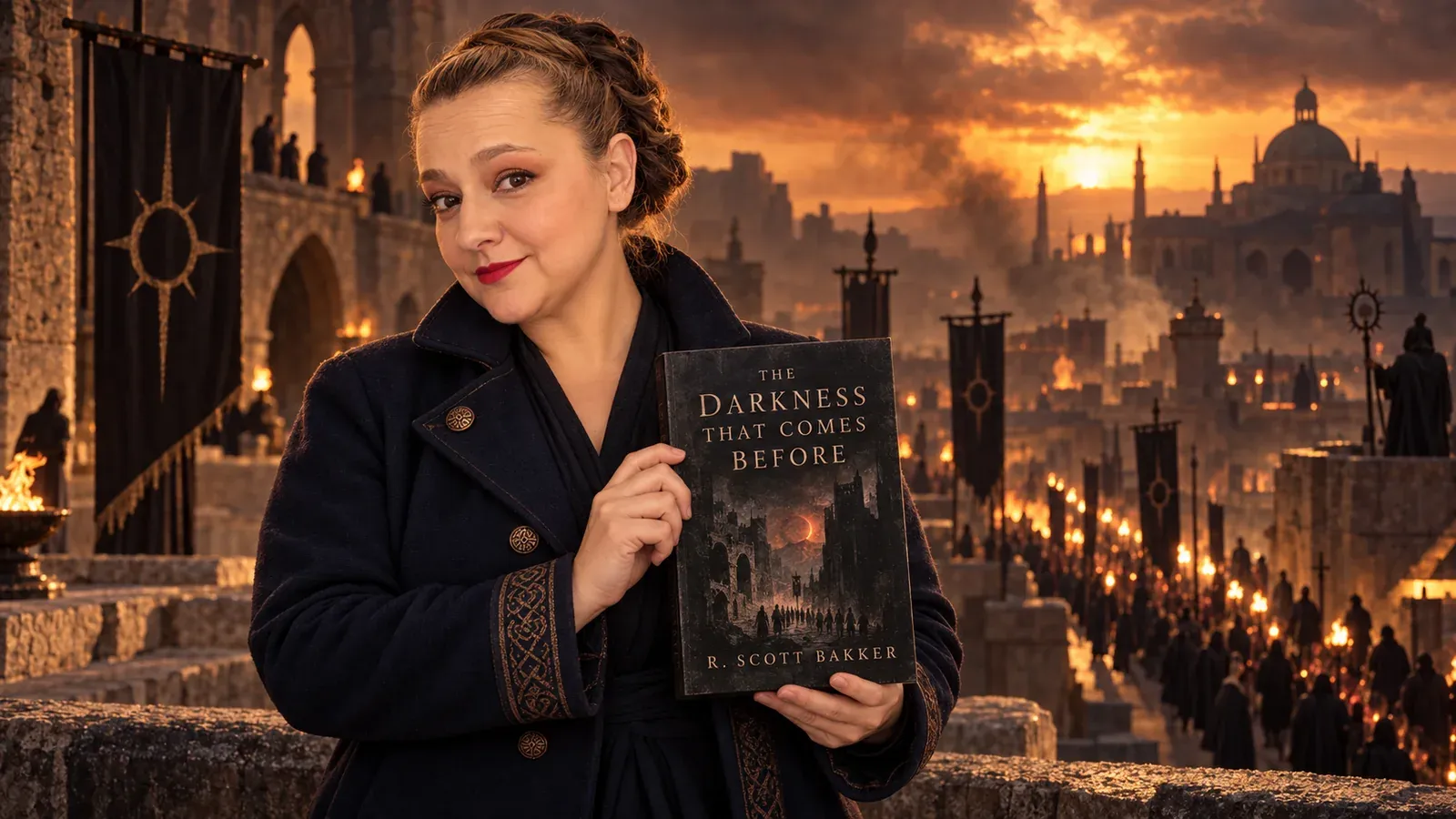
R. Scott Bakker
The Darkness That Comes Before
The Darkness That Comes Before: Kellhus reads your soul and turns it into an instruction manual
A holy war, a sorcerer dreaming about the end of the world, a barbarian who recognizes the manipulator, and a man trained to turn every human emotion into a tool. Light reading this certainly is not.
November 20, 2026
Want more like this? Join the Readers Club and get one of my books for free.
Share
My books
Books by Yenny Astrid Londoño







About the author
Yenny Astrid Londoño
Yenny Astrid Londoño is a Colombian author and entrepreneur, founder of Anchetas Medellín. She writes about real life with sarcasm, irony and smart humor, turning everyday situations, mistakes and imperfect relationships into stories that readers can laugh at and recognize themselves in.

A free book from me
Get a free book from me
Subscribe and get Sobreviviendo a mis muertos in full as a PDF.
After that, I'll only write when I have something worth telling you.
Also available: Read this review in Spanish →