
Book review
Pawn of Prophecy:
One suspiciously powerful aunt, one suspiciously mysterious old man, and a farm boy following a prophecy that has been winking at the reader since page one.
By Yenny Astrid Londoño · November 16, 2026 · 8 min read
Share
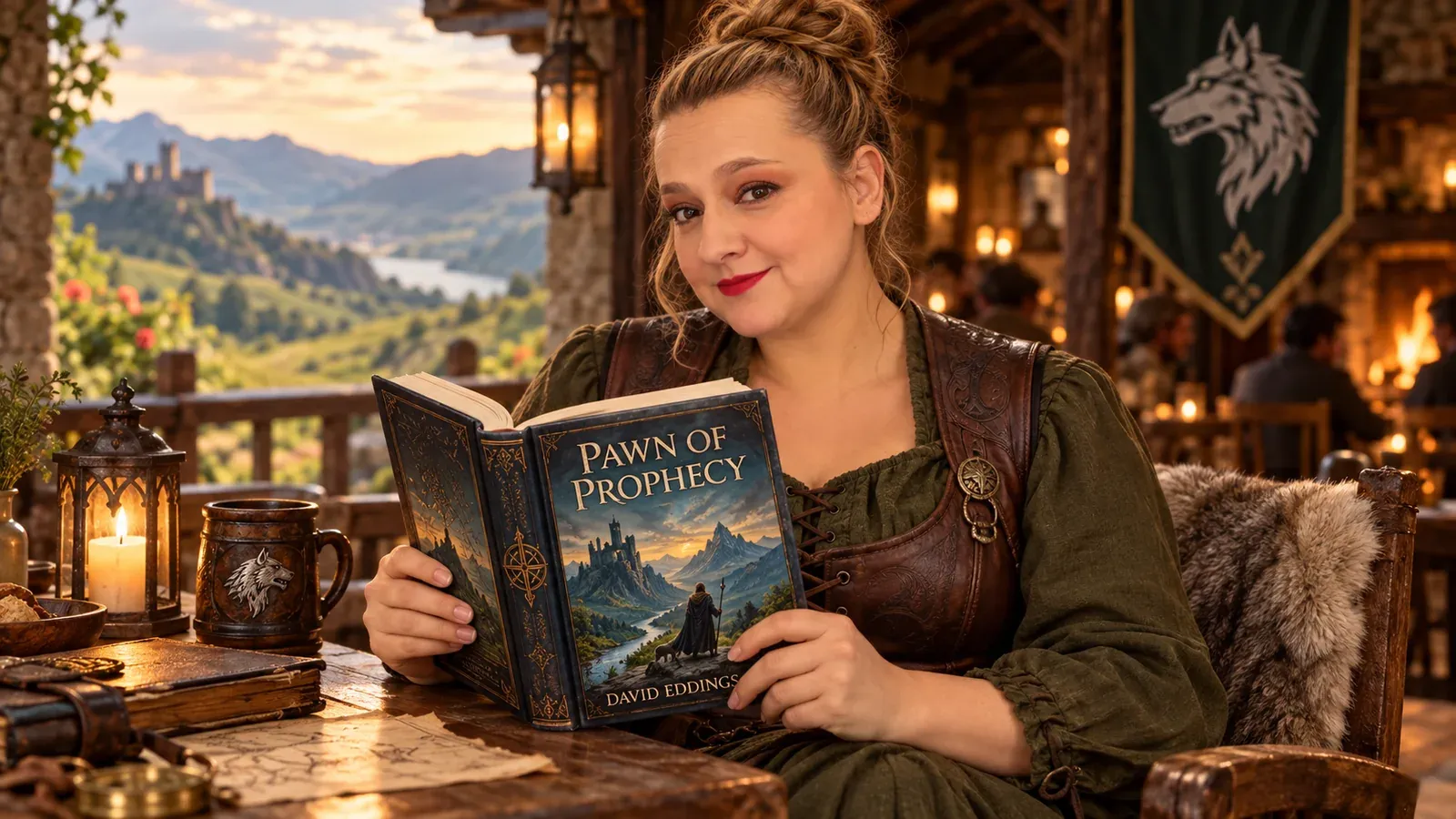
The Book
Pawn of Prophecy
Classic epic fantasy
by David Eddings
3.5 out of 5 stars
A warm, accessible adventure carried by company, humor, and travel. It loses points for an obvious prophecy, cultures reduced to labels, and a first volume that prepares much more than it…
Garion has grown up on Faldor's farm under Aunt Pol, a woman who cooks, maintains order, and answers important questions with the adult talent of using many words while delivering no useful information. The boy knows his family is a mystery, that a man called Mister Wolf appears occasionally, and that certain shadows watch him. What he does not know is that he seems to be the last guest to hear his own story.
When the Orb of Aldur disappears, Pol and Wolf leave the farm to follow the thief. Garion goes with them, along with Durnik the blacksmith, and the party grows to include Silk and Barak. Their journey crosses kingdoms, customs, and danger while the adults continue managing secrets as if they earn commission on every delayed answer.
Pawn of Prophecy is shamelessly classic fantasy: mysterious young hero, stolen object, ancient sorcerers, kings, bloodlines, and a prophecy with its own schedule. Its charm lives in the traveling company and their conversations. Its problem is that readers understand far too quickly what Garion takes an entire world to suspect.
Faldor's farm is home, routine, and the last time life looks simple
The farm gives Garion a concrete foundation. He understands work, kitchens, harvest cycles, and the people who watched him grow. Aunt Pol rules that space with total competence. The ordinary beginning matters because a journey only feels like loss if the boy first has something recognizable to leave.
Eddings uses these chapters to show Garion as a child before he becomes a prophetic figure. He is curious, jealous, insecure, and capable of turning one glance into a personal crisis. He is not always likable, but he behaves his age. The farm also explains why Durnik, practical and decent, becomes an anchor once everything else starts sounding like legend.
Aunt Pol knows who everyone is and believes Garion can wait
Polgara is powerful, intelligent, and completely aware of the mission she has protected for centuries. To Garion she remains Aunt Pol, the woman controlling the kitchen, his education, and even the volume of his questions. That double identity works because the novel keeps the domestic inside the legendary.
She also drives me crazy. Pol wants to protect him but confuses care with control and repeatedly decides which truths he can handle. Garion receives orders rather than tools for understanding his fear. I understand the danger of telling everything to a child watched by enemies. Still, one decent conversation could have prevented several tantrums, suspicions, and the feeling that the protagonist is traveling through his own life as carry-on luggage.
Belgarath calls himself Mister Wolf because humility was traveling too
The old storyteller and wanderer is Belgarath, an ancient sorcerer and servant of Aldur. His relationship with Polgara mixes family, history, and arguments they have polished over centuries. Garion watches without understanding why these two speak like exhausted relatives while everyone else sees legends.
Belgarath has charm because he refuses to act like a marble sage. He drinks, complains, manipulates, and can show affection without surrendering sarcasm. Experience has not made him flawless; it has made him skilled at making mistakes with historical context. The book gains energy when he and Pol argue, because prophecy steps down from the altar and becomes a family task nobody completed on time.
The Orb disappears, and the quest begins with more secrets than supplies
The theft of the Orb of Aldur begins the pursuit. The object matters to political and prophetic balance, although Garion receives partial explanations. The group follows the trail while Asharak, the Murgo who has watched Garion since childhood, represents a threat tied to Torak and the darker prophecy.
The mystery works less as a revelation of the main players — they are obvious — than as a question of when Garion will accept his involvement. Eddings presents prophecy almost as a conscious force pushing people toward required positions. The idea interests me, although it sometimes reduces freedom. If everything is arranged, danger risks feeling like an appointment with swords.
Silk can sell you a horse, steal your map, and make you thank him
Prince Kheldar, known as Silk, is a spy, merchant, and one of the most entertaining characters. He speaks lightly while calculating routes, prices, and lies. His intelligence requires no magic. He watches what people want and measures how much they will pay to pretend they want something else.
Silk keeps the journey from becoming solemn procession. His conversations with Belgarath and Barak bring humor and strategy. He also shows that kingdoms are not held together by crowns and prophecy alone. Someone must know the roads, markets, and rumors. In a story where everyone carries a secret title, practical power often belongs to the man who knows which guard took the bribe.
Barak carries a curse, a complicated marriage, and almost no patience
Barak enters as a massive warrior and reliable companion, but his story includes transforming into a bear when Garion needs protection. The curse or gift offers another visible clue about the boy's importance. Garion continues wondering why strange things happen around him, and I began admiring his commitment to ignoring evidence.
Barak's marriage adds texture while revealing the book's age and limits. Women are often organized around rigid roles while men travel, fight, and receive broader contradictions. Polgara breaks the mold through intelligence and power, yet even she carries maternal labor as an eternal obligation.
Every kingdom has a personality, but sometimes it looks printed on the passport
The journey introduces Sendars, Chereks, Drasnians, Arends, and other cultures. Eddings aims for clarity: each people has recognizable traits, history, and speech. In a large saga, quick identification helps. You know where you are and which tensions matter without consulting an appendix every twenty pages.
Clarity becomes caricature. Entire peoples are defined as merchants, proud fools, warriors, or plotters. Main characters soften the labels, but the world sometimes resembles a meeting where each nation received one personality trait and wore it as a uniform. Classic fantasy ages most visibly when it mistakes culture for mandatory collective personality.
Garion has a mark, an inner voice, and every reason to demand answers
Garion carries a silver mark on his palm and hears an inner voice linked to prophecy. His identity becomes less mysterious with every chapter to anyone familiar with chosen-one stories. The important question is not surprise but how a child absorbs the knowledge that his life was watched and directed before he could choose anything.
This first novel only begins that process. Garion reacts through jealousy, fear, and anger, sometimes repetitively. It makes sense and still becomes tiresome. I wanted an open conversation between him and Pol. Hiding truth preserves intrigue, but once the reader understands it, silence stops being mystery and becomes furniture everyone hits out of habit.
What I did not like: prophecy marks the road with a sign that is far too large
The story is predictable. Pol and Wolf's identities, Garion's importance, and the larger destination announce themselves so early that several revelations feel administrative. That does not destroy the pleasure of travel, but it reduces tension. The first book functions more as group assembly and map tour than a complete conflict.
Cultural stereotypes, dated gender dynamics, and functional prose also show their age. Polgara is formidable, but the story keeps associating her value with feeding, protecting, and correcting men, as if an immortal woman had nothing else on her calendar. The dynamic can be funny. Its limits are still visible.
Asharak learns that watching a child for years does not guarantee control
The confrontation with Asharak forces Garion to use power he does not understand. The threat following him since childhood stops being a shadow. His response proves that prophecy is not merely transporting him; a force inside him can alter the balance adults are trying to manage.
The scene provides action and confirms what the novel has announced, but it does not recover the Orb. Garion moves one step closer to identity while the group continues. This is unmistakably a first-volume ending: the large mission remains open and answers arrive in installments. Fortunately, the company makes continuing attractive even when the plot has not paid its full bill.
My verdict: comfortable, charming fantasy that trusts its map too much
Pawn of Prophecy works because of its traveling characters. Polgara, Belgarath, Silk, Barak, Durnik, and Garion create a makeshift family that argues, hides information, and protects each other. The plot is familiar, but the conversation warms it. This is a friendly entry for readers who want classic fantasy without beginning with a thousand-page treaty.
I am giving it three and a half stars. I enjoyed the humor, adventure, and company, but predictability, stereotypes, and the incomplete shape keep it from going higher. Eddings does not surprise you with the road; he convinces you to walk it with likable people. Sometimes that is enough. Sometimes I want someone to sit Garion down, tell him the truth, and spare us two kingdoms of misunderstandings.
Frequently asked questions about Pawn of Prophecy
Is Pawn of Prophecy the first book in a series?
Yes. It is the first volume of The Belgariad, a five-book fantasy series.
Who is Garion?
He is a boy raised on Faldor's farm by Aunt Pol. His origins, the mark on his palm, and his relationship with prophecy form the center of the series.
Who are Polgara and Belgarath?
Polgara is an ancient sorceress and Garion's protector. Belgarath, traveling as Mister Wolf, is her father and one of the god Aldur's disciples.
What is the Orb of Aldur?
It is a powerful object connected to Aldur, Torak, and the world's balance. Its theft begins the quest in this first book.
Is Pawn of Prophecy easy to read?
Yes. It has accessible prose, humor, and a clear travel structure. The names and kingdoms require some attention, but it is not as demanding as many epic fantasy series.
Does Pawn of Prophecy have romance?
Romance does not dominate this volume. There are marriages, adolescent jealousy, and relationships that develop later, but the quest and Garion's identity remain central.
Does Pawn of Prophecy have a complete ending?
Not entirely. It resolves immediate dangers, but the recovery of the Orb and Garion's destiny continue across the next books.
The Book
Would I recommend Pawn of Prophecy? Here is my honest verdict.
Pawn of Prophecy
by David Eddings
Find the book on AmazonIf you buy through this link, Yenny earns a small commission and you pay the same price.
Keep reading
If you liked it, keep going
Anthony Ryan
Blood Song
Blood Song: Vaelin entered the Sixth Order as a child and left as the legend everyone wanted to use
A father abandons his son to a military order, a king discovers the boy is useful for war, and a voice in his blood keeps him alive without explaining the bill.
November 23, 2026
Brian Staveley
The Emperor’s Blades
The Emperor’s Blades: three heirs, one corpse, and an empire that clearly skipped crisis planning
The emperor of Annur is dead, and his three children are scattered between a monastery, a military academy, and a capital full of smiling people with knives behind their backs.
November 22, 2026
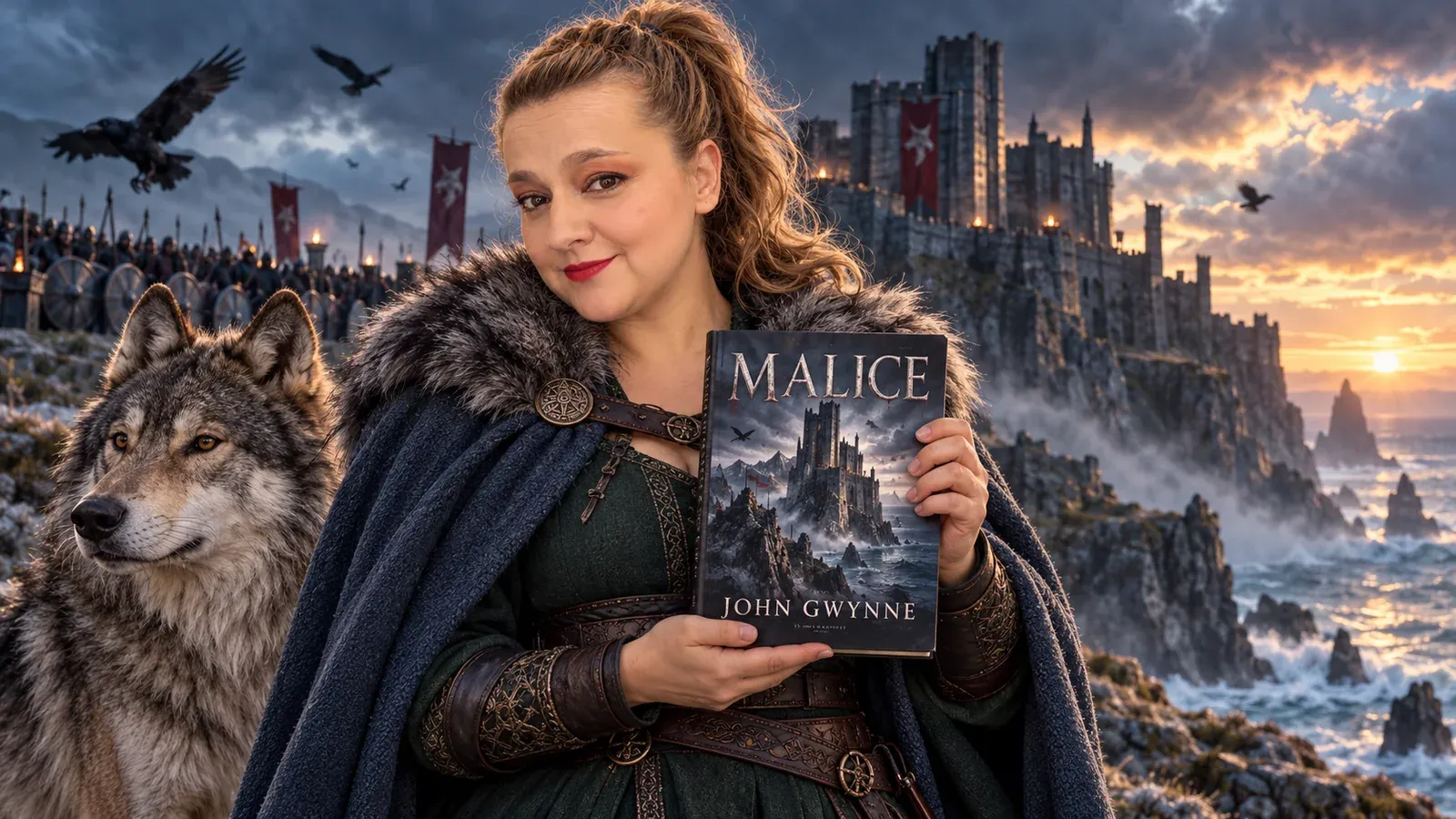
John Gwynne
Malice
Malice: Corban wanted to be a warrior and inherited a badly managed war between gods
A prophecy promises a Bright Star and a Black Sun. While powerful men decide which title flatters them best, a boy, a giant wolf, and several families get stuck with the bill.
November 21, 2026
Want more like this? Join the Readers Club and get one of my books for free.
Share
My books
Books by Yenny Astrid Londoño







About the author
Yenny Astrid Londoño
Yenny Astrid Londoño is a Colombian author and entrepreneur, founder of Anchetas Medellín. She writes about real life with sarcasm, irony and smart humor, turning everyday situations, mistakes and imperfect relationships into stories that readers can laugh at and recognize themselves in.

A free book from me
Get a free book from me
Subscribe and get Sobreviviendo a mis muertos in full as a PDF.
After that, I'll only write when I have something worth telling you.
Also available: Read this review in Spanish →