
Book review
The Dragonbone Chair:
A kitchen boy, a dead king, a priest who smells like trouble, and an ancient war waking beneath the castle. Epic fantasy knows how to cook over low heat.
By Yenny Astrid Londoño · November 14, 2026 · 8 min read
Share

The Book
The Dragonbone Chair
Classic epic fantasy
by Tad Williams
4 out of 5 stars
Classic fantasy with history, weather, and credible growth. It loses ground in the opening and Simon's repetition, but the world and conflict repay the patience.
Simon lives in the Hayholt doing work he hates and imagining adventures that, in his head, are always clean, well lit, and staffed by somebody else responsible for washing the blood away. He is fourteen, distracted, fond of listening behind doors, and blessed with the adolescent certainty that real life should arrange itself according to the epic story you invent while avoiding chores.
Then Prester John dies. His son Elias takes the throne, the priest Pryrates stands far too close to power, and the castle reveals tunnels, bones, and debts to the Sithi beneath its official history. Simon discovers that adventure is not an elegant exit from the kitchen. It is hunger, cold, fear, and adults who hid information until the information learned how to kill.
The Dragonbone Chair is slow. Not “patient” as a polite marketing phrase. It is genuinely slow. But that pace builds a home before destroying it and gives Simon's journey weight. Tad Williams does not ask you to admire the finished hero. He makes you walk beside the awkward boy who still has no idea where to put his feet.
Simon is not a hidden hero; he is a teenager avoiding work
At first Simon impresses nobody, and I liked that. Rachel the Dragon chases him through his chores, he gets lost around the castle, and every excuse becomes an opportunity to daydream. There is no immediate revelation of greatness. His curiosity outruns his discipline, which is charming for ten minutes and exhausting once danger is breathing down his neck.
Doctor Morgenes accepts him as an apprentice. For the first time, someone is not trying to make him a soldier or a perfect servant; he is teaching Simon how to look. The education seems disorganized because Simon cannot yet recognize what matters. When everything collapses, those fragments — stories, symbols, questions — become the most useful equipment he owns.
The Hayholt is a castle built on too many versions of the truth
The castle is not merely scenery. It was Asu'a, a Sithi stronghold, before becoming a human symbol. Its passages and ruins preserve history that the court has rearranged to make conquest look like destiny. Simon walks through layers he does not understand, while the reader learns that every wall remembers, even when kings prefer to hang a tapestry over it.
Williams builds Osten Ard with archaeological patience. Songs, religions, and grudges do not decorate the map; they shape what characters believe is possible. The present war grows from ancient stories manipulated by their winners. That density explains why the world cannot be reduced to a friendly prologue. Nobody inherits a kingdom without also inheriting the lies holding it together.
Elias has the crown, Pryrates has plans, and the kingdom has a serious problem
After the king's death, Elias rules through grief, pride, and Pryrates's influence. The red priest barely needs effort to look sinister; every appearance makes you think somebody should inspect the basement. The real danger is that Elias is not an empty puppet. He is a wounded man accepting terrible solutions because they promise to restore control.
Josua, his brother, represents imperfect resistance. He is not a shining prince who will repair everything as soon as people support him. He doubts, loses, negotiates, and carries limitations. The brothers keep the political conflict from becoming a simple contest between good and evil, even while Pryrates arrives dressed like a certified villain.
Morgenes dies, and adventure loses every beautiful thing Simon invented for it
When Simon discovers Josua imprisoned and becomes trapped in the conflict, Morgenes intervenes. His death destroys the boy's last protection and makes escape necessary. It hurts because the book invested time in the ordinary rhythm between teacher and apprentice. It was not perfect or sentimental on every page, but it was a place where Simon could grow without being used.
From that point, the road dismantles Simon's fantasy of heroism. He goes hungry, gets lost, and learns that knowing stories does not mean knowing how to survive. His mission does not erase fear. Williams allows him to be cowardly, selfish, and brave on different days, like a person. That slow education makes his eventual choices believable.
Binabik and Qantaqa are exactly the company this book needed
The arrival of Binabik, a Qanuc troll, and his wolf Qantaqa rescues Simon and the novel's emotional rhythm. Binabik brings knowledge, humor, and an outside view of human customs. He is not a sidekick built to admire the protagonist. He has loyalties, secrets, and a mission connected to his teacher Ookequk.
Simon and Binabik build trust through travel, misunderstanding, and care. Qantaqa adds affection without becoming decorative. The three create a small community while the larger world falls apart. In a novel crowded with bloodlines and prophecy, the most convincing bond grows from shared food, danger, and the patience required not to abandon a teenager after he does another stupid thing.

Miriamele wears a disguise without disappearing inside it
Elias's daughter Miriamele moves through the story under another identity and tries to understand events beyond her father's version. Leaving does not automatically make her an expert. She carries privilege, fear, and a will she is only beginning to use against the structure that raised her.
I appreciated that the book does not reduce her to Simon's romantic prize, even if his gaze has all the subtlety of a teenager in love. Miriamele is directly connected to the kingdom's emotional and political conflict. Much remains for later, but her presence asks a strong question: what does a daughter do when the father she loves is helping destroy what he should protect?
Ineluki and the three swords: prophecy does not organize the mess; it adds to it
Ineluki, the Storm King, turns ancient history into present danger. He is not simply a monster behind a door. He is the result of old violence retold for the comfort of its winners. His alliance with Elias, mediated by Pryrates and the sword Sorrow, turns private grief into political catastrophe.
The prophecy of the three swords — Sorrow, Minneyar, and Thorn — offers direction but no clean solution. I liked that these legendary objects are not labeled keys. Their meaning depends on history, interpretation, and human decisions. Prophecy can guide people, but it can also become the perfect excuse for chasing metal while the kingdom collapses elsewhere.
Naglimund falls, and the novel makes it clear that no refuge includes a warranty
Naglimund looks like the place where resistance can organize. Josua gathers allies, and for a moment stopping the collapse seems possible. The Norns and giants destroy that illusion. Williams uses the fortress not only for spectacle but to show that human defenses do not yet understand the scale of the enemy they have awakened.
The fall separates characters and forces the story to continue without a secure base. This is no longer a succession dispute with magic around the edges. Winter, the Sithi, the Norns, and Ineluki's history reveal a war that began before the protagonists. The adults inherited a problem and, with impressive efficiency, handed it to the young in worse condition.
What I did not like: the slow burn occasionally feels like a wet candle
The first part spends many pages on Simon wandering the Hayholt, avoiding work, and hearing stories. I understand the purpose and value the atmosphere, but some stretches could keep both with fewer circles. Simon repeats mistakes and thoughts until I began sympathizing with Rachel the Dragon. Adolescence explains him; it does not always make him entertaining.
Some revelations are so wrapped in names and history that they lose immediate impact. The book trusts the trilogy to repay the investment, which may be fair, but this volume passes seven hundred pages in many editions. That is a large request for patience. The world rewards it, but editing could have cleared a less tangled path.
Thorn, the dragon, and the boy who cannot return unchanged
The search for Thorn leads Simon and his companions toward the dragon Igjarjuk. The confrontation destroys the boundary between heroic stories and the physical experience of terror. Finding the sword does not turn Simon into a polished champion. It leaves him wounded, changed, and visibly marked in his hair.
The ending works because transformation is not coronation. Simon has done something extraordinary but still does not understand everything he carries. Thorn is found, not mastered. The war continues, and different companions pay different prices. The novel answers the immediate quest while opening the true size of the conflict. It ends a stage, not the danger.
My verdict: slow fantasy that knows exactly what it is cooking
The Dragonbone Chair demands patience and does not always manage that demand elegantly. Still, it builds a world with memory, a protagonist who grows believably, and a conflict where history is a weapon rather than wallpaper. Its influence makes sense: later fantasy borrowed its attention to the past, dynastic politics, and a hero who begins without heroic posture.
I am giving it four stars. It loses ground through an overlong beginning and moments when Simon exhausts even the people rooting for him. But once Morgenes falls, Naglimund stops being refuge, and Ineluki stretches his shadow, the book proves the waiting had a purpose. Tad Williams makes you cook for hours. When he finally serves the meal, you realize there was more in the pot than boiling water.
Frequently asked questions about The Dragonbone Chair
Is The Dragonbone Chair the first book in a series?
Yes. It opens Memory, Sorrow and Thorn, originally published as a trilogy.
Is The Dragonbone Chair very slow?
The first part is deliberately slow, establishing Simon and the Hayholt before destroying their stability. The pace accelerates after Morgenes dies and Simon escapes.
Who is Simon in The Dragonbone Chair?
He is an orphan raised among the Hayholt's kitchens. He begins as Morgenes's apprentice and becomes involved in the resistance against Elias, Pryrates, and Ineluki.
What are the three swords?
Sorrow, Minneyar, and Thorn are legendary weapons tied to the central prophecy. Their histories and true roles develop across the series.
Does The Dragonbone Chair have romance?
Attraction and developing bonds appear, especially around Simon and Miriamele, but romance does not dominate this first volume.
Is The Dragonbone Chair like The Lord of the Rings?
It shares a classic fantasy tone, travel, and deep history, but spends more time on Simon's awkward growth, dynastic politics, and the consequences of human conquest.
Does The Dragonbone Chair end on a cliffhanger?
Simon finds Thorn and survives the dragon, but the war and prophecy continue. The book closes its immediate quest while preparing the next stage.
The Book
Would I recommend The Dragonbone Chair? Here is my honest verdict.
The Dragonbone Chair
by Tad Williams
Find the book on AmazonIf you buy through this link, Yenny earns a small commission and you pay the same price.
Keep reading
If you liked it, keep going

Anthony Ryan
Blood Song
Blood Song: Vaelin entered the Sixth Order as a child and left as the legend everyone wanted to use
A father abandons his son to a military order, a king discovers the boy is useful for war, and a voice in his blood keeps him alive without explaining the bill.
November 23, 2026

Brian Staveley
The Emperor’s Blades
The Emperor’s Blades: three heirs, one corpse, and an empire that clearly skipped crisis planning
The emperor of Annur is dead, and his three children are scattered between a monastery, a military academy, and a capital full of smiling people with knives behind their backs.
November 22, 2026
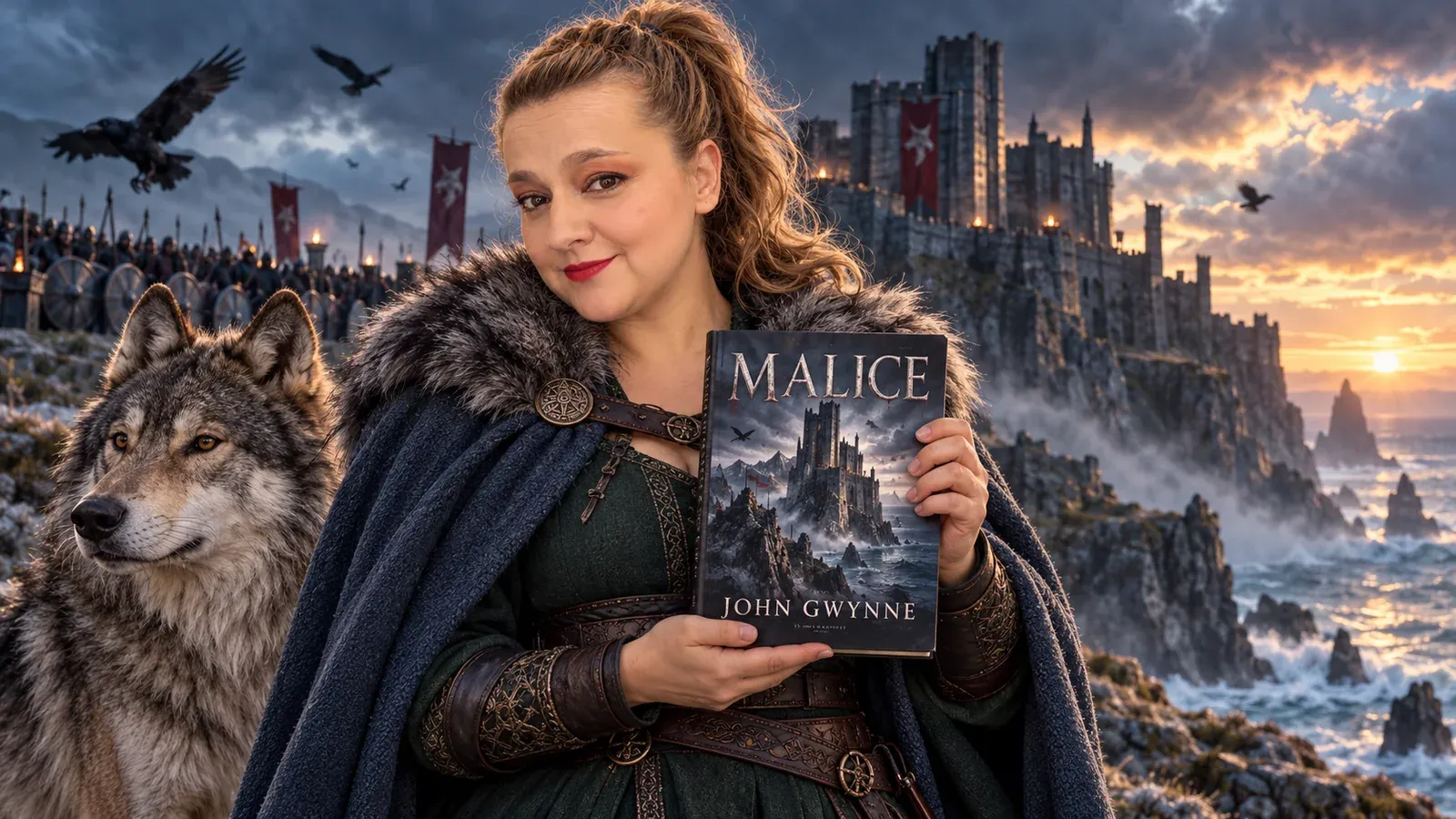
John Gwynne
Malice
Malice: Corban wanted to be a warrior and inherited a badly managed war between gods
A prophecy promises a Bright Star and a Black Sun. While powerful men decide which title flatters them best, a boy, a giant wolf, and several families get stuck with the bill.
November 21, 2026
Want more like this? Join the Readers Club and get one of my books for free.
Share
My books
Books by Yenny Astrid Londoño







About the author
Yenny Astrid Londoño
Yenny Astrid Londoño is a Colombian author and entrepreneur, founder of Anchetas Medellín. She writes about real life with sarcasm, irony and smart humor, turning everyday situations, mistakes and imperfect relationships into stories that readers can laugh at and recognize themselves in.

A free book from me
Get a free book from me
Subscribe and get Sobreviviendo a mis muertos in full as a PDF.
After that, I'll only write when I have something worth telling you.
Also available: Read this review in Spanish →