
Book review
Divine Rivals by Rebecca Ross:
Romantic fantasy, gods at war and a typewriter that turns professional rivalry into something much more intimate. This is my spoiler-light review of Rebecca Ross’s Divine Rivals, the first book in Letters of Enchantment. Iris is writing while the world falls apart, and Roman competes with her while having no idea what to do with tenderness.
By Yenny Astrid Londoño · October 27, 2026 · 6 min read
Share
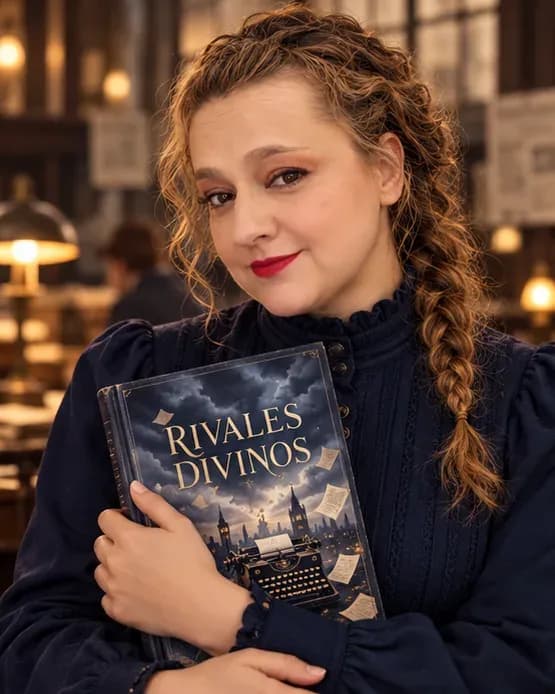
The Book
Divine Rivals
by Rebecca Ross
More reviews by Rebecca Ross →
4 out of 5 stars
Iris, Roman and the correspondence hold up a warm and appealing romantic story.
Iris writes while the world is coming apart
Iris Winnow is a young journalist trying to hold on to her work and her family while a war between gods reshapes the world around her. Her brother is missing at the front, and her letters to him become part of how she manages the uncertainty. Iris has aims beyond falling in love; she wants to write, to do useful work and to keep the people she cares about from disappearing into a conflict she cannot control.
That balance is one reason the character works for me. Her story does not pause her job and her family life so a romance can take over the page. She has a vocation, a grief and a practical reason to keep moving. The book makes room for tenderness without pretending the war politely waits outside the newsroom.
Roman competes with her and has no idea what to do with tenderness
Roman Kitt is Iris’s rival at the newspaper. He wants the same professional opportunity and has a sharp edge that makes their competition feel real before the romance gets involved. Their relationship begins with ambition and irritation, not with a narrator insisting they are soulmates before they have exchanged a meaningful sentence.
Roman becomes more interesting when he steps outside the role of rival. He has his own uncertainty and a tenderness he does not know how to show without making it awkward. The chemistry works because their private correspondence lets them encounter one another differently from the way they do at work. There is a warmth to the relationship that I liked, though the book can underline its emotional meaning more than once.
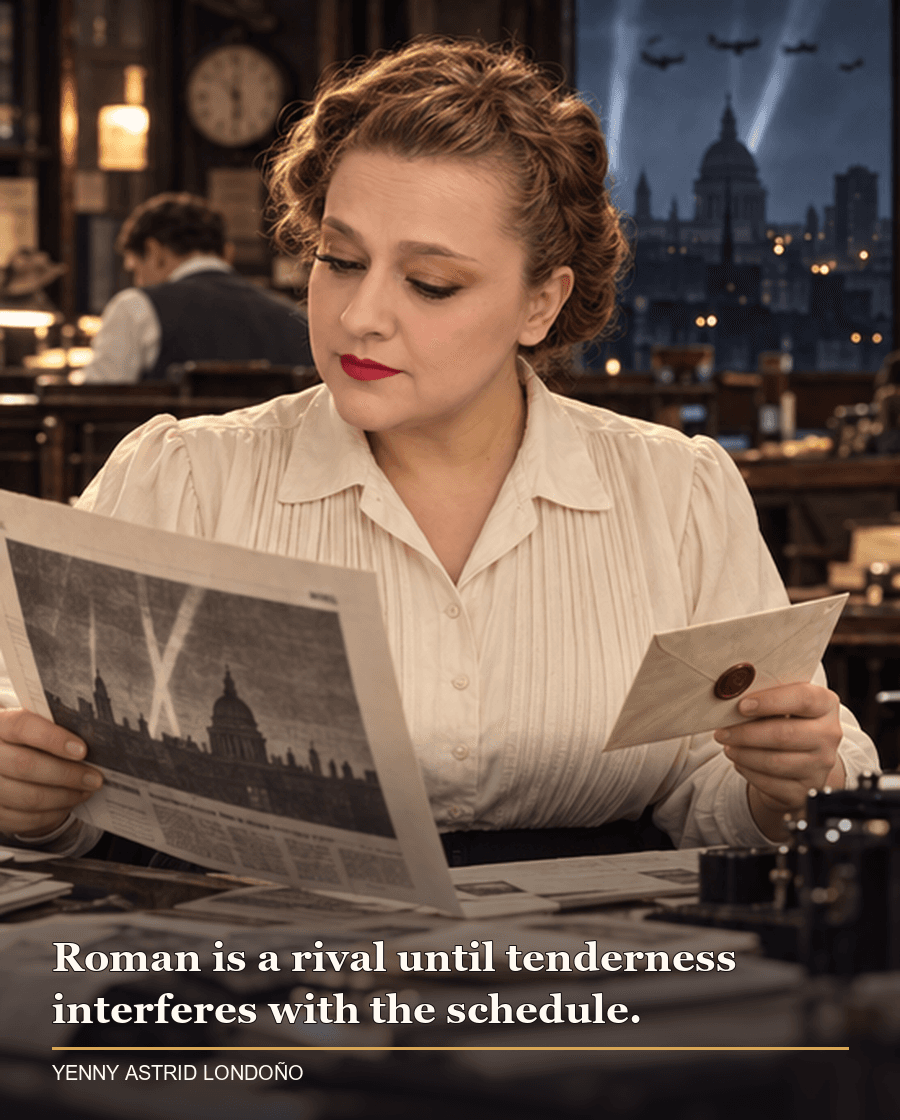
The typewriter opens an impossible channel
The magic typewriter lets letters reach someone they should not be able to reach. It is an irresistible premise if you love stories where words arrive exactly where they need to—through a mechanism nobody in the office technology department knows how to repair.
The letters slow the relationship down in a way that helps it. Iris and Roman can write what they might hesitate to say face to face. The correspondence reveals their differences, the things they hide and the choices they make about what to share. It also creates a magical convenience: the book uses a supernatural channel to solve barriers to intimacy quite quickly. I found the letters moving, even when I could see the machinery doing its job.
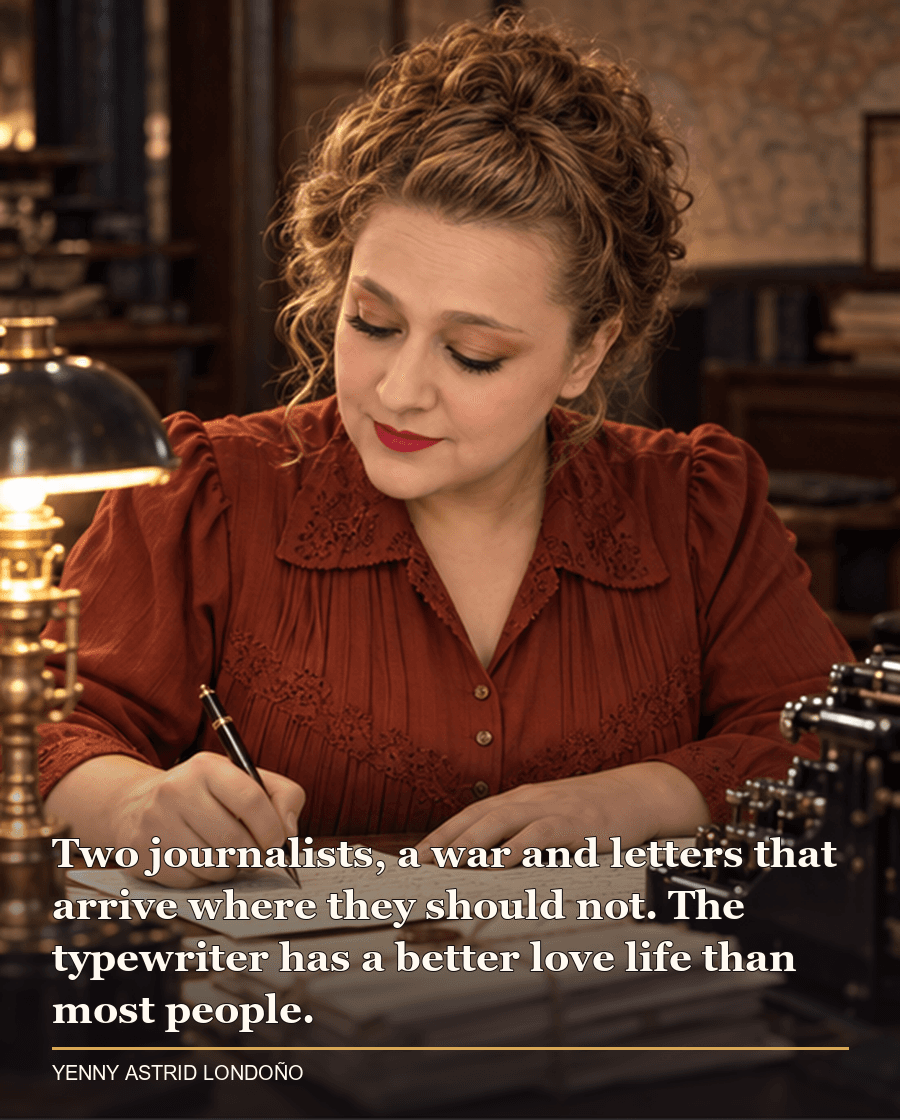
The war of the gods reaches ordinary lives
The conflict between the gods matters most when it presses into the characters’ lives. Iris and Roman do not experience war as a distant headline; it affects their family, their work and their sense of what might still be saved. The story shows that the front line is not the only place where people resist. Reporting on the danger and giving the public a way to understand it can be its own act of courage.
I expected the war to receive more development because of how much importance it carries. We know it is brutal and that the gods are involved, but some political and strategic implications remain at the edge of the picture. I wanted more context about how different territories experience the conflict and what it means to be a journalist in the middle of a divine war.
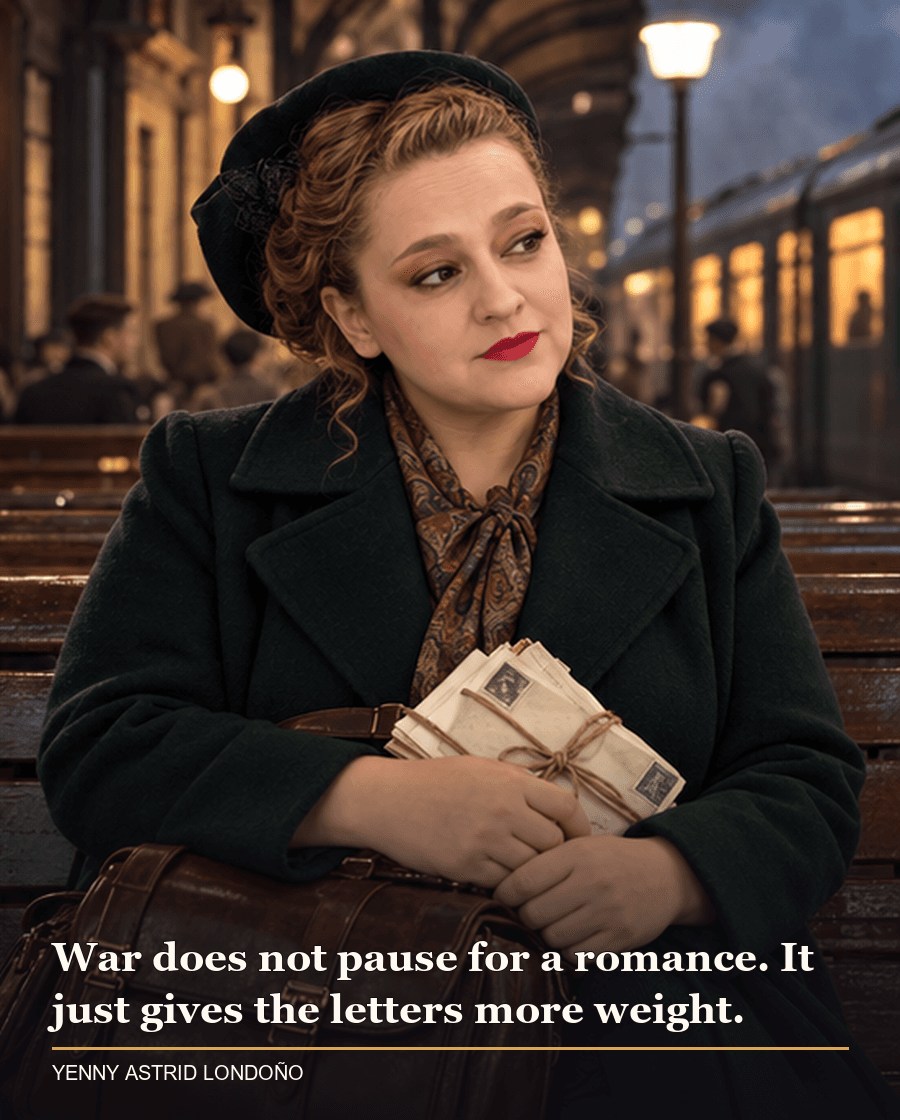
The newspaper gives their rivalry somewhere to happen
The newsroom grounds the relationship. Iris and Roman are not only two people exchanging emotional letters in a vacuum; they have careers, deadlines and a competition that affects their future. Their professional tension gives the romance a starting point and lets Iris remain a person with work to do.
The setting could have offered even more. Journalism during a war raises questions about who controls information, what risks a reporter should take and how much truth the public can bear. The book gestures toward those questions, and I wanted to stay with them longer. There is potential here for more than a charming office rivalry with a supernatural typewriter.
The tone is poetic, and sometimes pours itself another cup
Ross writes with a soft, melancholy atmosphere that suits letters, distance and a war that keeps pulling people apart. The prose makes small gestures feel meaningful. At its best, that gentleness gives the story a voice distinct from a more action-driven fantasy.
Sometimes it repeats the emotion after I have already understood it. A letter can land hard without the novel stopping to remind me several more times that words matter. The romance remains warm, and Iris and Roman’s correspondence is the strongest thread. The war itself is the part I wished had more space and sharper edges.
What I did not like
The war is less developed than I expected given how important it is. We know it is brutal and tied to the gods, but some political and strategic implications remain outside the frame. I wanted more about how the conflict affects different territories and what working for a newspaper means during a divine war.
The romance convinced me, but its emotional progress depends on a very convenient magical coincidence and correspondence that crosses barriers to intimacy quickly. The prose sometimes insists on the melancholy and significance of a letter after I have already felt the impact. And the book ends as the first half of a duology, leaving several important lines for the next volume. The hook works; I still felt that some threads had not fully settled.
My verdict: one letter can change the shift
Divine Rivals blends letters, journalism and war fantasy in a soft, melancholic voice. Iris has aims beyond romance; Roman gains depth once he steps out of his rival role; and the letters let their relationship grow with care. The magical typewriter is an irresistible hook for readers who love a story where words find the person they need, even if the mechanism should probably be investigated by somebody with a toolkit.
The characters and their correspondence hooked me more than the divine war, which I wanted to see developed further. If you want romance with atmosphere, two journalists and a fantasy that puts love inside a larger conflict, it is a lovely entry. If you want military strategy, detailed magic and a closed ending, save those expectations for another book. I do want the sequel; I need to see what they do when they can no longer hide behind the typewriter.
Who should read it
Read it if you enjoy romances built through letters, protagonists with a vocation and war settings that leave room for tenderness. If you want a battle fantasy full of maps and strategy, the heart gets more pages than the general staff. Sometimes one letter does more for a relationship than an entire newsroom full of people competing for a column.
My rating
4 out of 5 stars. Iris, Roman and their letters hold up this warm romantic story. I take off a point for a war that remains underdeveloped, prose that sometimes repeats its emotion and an ending that reserves a lot for the sequel. One letter can change a shift; I just wanted more of the conflict that keeps interrupting it.
Frequently asked questions
Is Divine Rivals the first book in a series?
Yes. It opens Rebecca Ross’s Letters of Enchantment duology and is followed by Ruthless Vows.
What is Divine Rivals about?
It follows journalists Iris Winnow and Roman Kitt as they compete at work and begin exchanging letters through a magical typewriter during a war between gods.
Who are Iris Winnow and Roman Kitt?
They are rival journalists whose professional competition develops into an intimate correspondence.
Is Divine Rivals romantic fantasy?
Yes. It combines a central romance with fantasy, a war between gods and a historical-inspired setting.
Do I need to read Ruthless Vows next?
Yes, if you want the full story. Ruthless Vows continues and concludes Iris and Roman’s duology.
What themes does Divine Rivals explore?
It explores grief, family, journalism, ambition, communication and tenderness during wartime.
Who would enjoy Divine Rivals?
Readers who like letter-based romance, a gentle atmosphere, characters with professional goals and fantasy that leaves space for emotion.
The Book
Divine Rivals
by Rebecca Ross
Get the bookIf you buy through this link, Yenny earns a small commission and you pay the same price.
Keep reading
If you liked it, keep going

Lauren Roberts
Reckless
Reckless by Lauren Roberts: a romantic chase where both people know trust is a bad idea
The competition is over, but Paedyn and Kai are nowhere near safe. She is on the run, he is hunting her, and they both have reasons not to trust the person they want. This is my spoiler-light review of Lauren Roberts’s Reckless, the second book in the Powerless trilogy, where romantic tension travels through a world outside the palace and the political questions are still waiting for a fuller answer.
October 28, 2026

Rebecca Ross
Ruthless Vows
Ruthless Vows by Rebecca Ross: a war, a reporter without his memories and letters that still find their way
The war has consequences, Roman has lost the memories that explain his life, and the letters still find a way through. This is my spoiler-light review of Rebecca Ross’s Ruthless Vows, the second and final book in Letters of Enchantment. It continues Iris and Roman’s story by asking whether loving someone means recovering an older version of them or meeting the person they decide to become now.
October 27, 2026
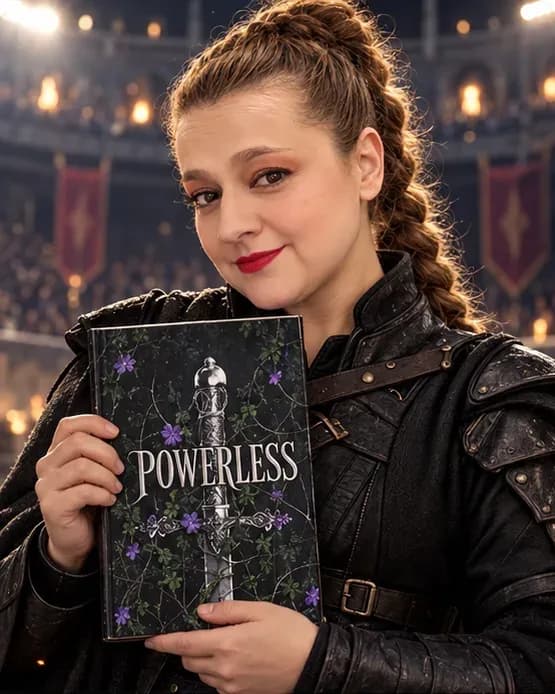
Lauren Roberts
Powerless
Powerless by Lauren Roberts: a girl without powers in a kingdom that wants her erased
A deadly competition, a kingdom that treats difference like a crime and a protagonist who has to pretend in order to stay alive. Paedyn Gray is an Ordinary in a world that worships powers, and the crown would prefer her off the map. This is my spoiler-light review of Lauren Roberts’s first Powerless novel: a fast romantic fantasy that knows its audience and makes the tension part of the plot.
October 27, 2026
Want more like this? Join the Readers Club and get one of my books for free.
Share
My books
Books by Yenny Astrid Londoño



About the author
Yenny Astrid Londoño
Yenny Astrid Londoño is a Colombian author and entrepreneur, founder of Anchetas Medellín. She writes about real life with sarcasm, irony and smart humor, turning everyday situations, mistakes and imperfect relationships into stories that readers can laugh at and recognize themselves in.

A free book from me
Get a free book from me
Subscribe and get Sobreviviendo a mis muertos in full as a PDF.
After that, I'll only write when I have something worth telling you.
Also available: Read this review in Spanish →