
Book review
Ruthless Vows by Rebecca Ross:
The war has consequences, Roman has lost the memories that explain his life, and the letters still find a way through. This is my spoiler-light review of Rebecca Ross’s Ruthless Vows, the second and final book in Letters of Enchantment. It continues Iris and Roman’s story by asking whether loving someone means recovering an older version of them or meeting the person they decide to become now.
By Yenny Astrid Londoño · October 27, 2026 · 6 min read
Share

The Book
Ruthless Vows
by Rebecca Ross
More reviews by Rebecca Ross →
4 out of 5 stars
The correspondence, Iris's development and Roman's path held me to the end.
The book begins with consequences, not a comfortable reset
Ruthless Vows does not restart the story from a peaceful place. The war has moved the characters and altered what is possible for them. Iris and Roman are separated by circumstances that cannot be solved by one heartfelt conversation, and the novel begins with the pressure of everything the first book left in motion.
That continuation is part of its appeal. The story treats the relationship as something affected by work, family, danger and memory, not as a romance floating above the world. Iris remains a journalist with responsibilities, and the war continues to affect ordinary people who need to understand what is happening.
Roman wakes on the other side without the story that explains him
Roman wakes with amnesia, a device that creates emotional distance between him and Iris. He no longer has the history that would explain their bond, and the novel has to make him encounter the relationship again without pretending the old version of him is waiting just beneath the surface.
That premise can be moving. It also makes the plot’s mechanism visible. The story needs to delay the moment when Roman remembers, so it gives them scenes of closeness and disconnection that can become repetitive. I wanted the story to move faster—not because I am impatient with grief, but because some turns kept returning to the same wound.
Iris and Roman meet in letters before they meet in ordinary life
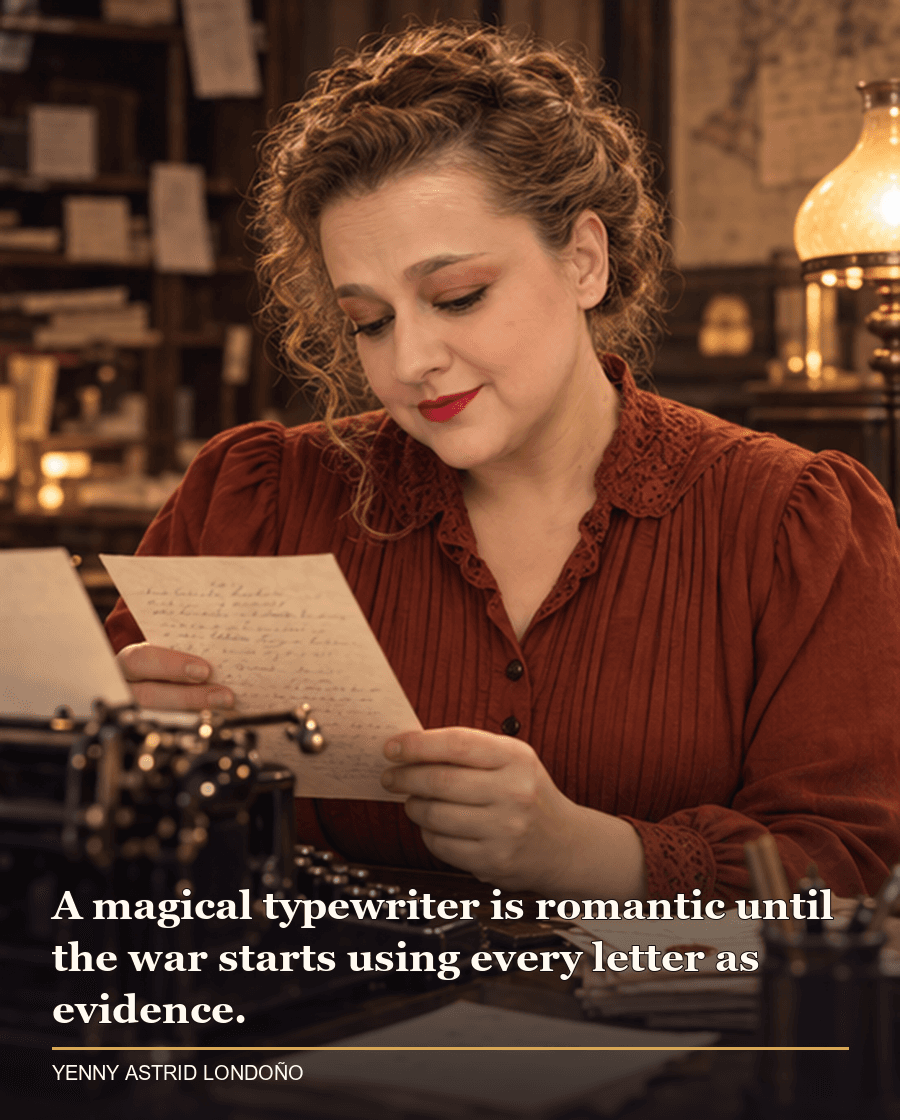
The correspondence remains the best part of the book. Letters let Iris and Roman reveal differences, choose what to share and build intimacy before the world allows them to be together in a straightforward way. The magical typewriter is still a strong idea because it makes the words concrete: they travel through a channel that should not exist, but here we are.
The letters also preserve Iris’s agency. She has family, work and convictions beyond the romance. She reports on the war and has to decide what to tell people. Roman is not the only person with a story; the relationship grows through what both choose to write and what they leave unsaid.
Dacre offers protection with a very long bill
Dacre’s power and promises complicate the conflict. His offers of protection come with a cost, and the characters must decide what they are willing to trade to survive. The supernatural forces grow in scale, though the book does not always make their strategy easy to see. Some of Dacre’s moves feel more like an ominous threat than a clear plan.
That uncertainty contributes to the mood, but I wanted more explanation of how the magic and the stakes fit together. When a god is involved, I expect some scale. I do not need a diagram in the appendix; I would like to know what the danger can do and what a character’s choices might change.
Reporting on the war is a way to resist
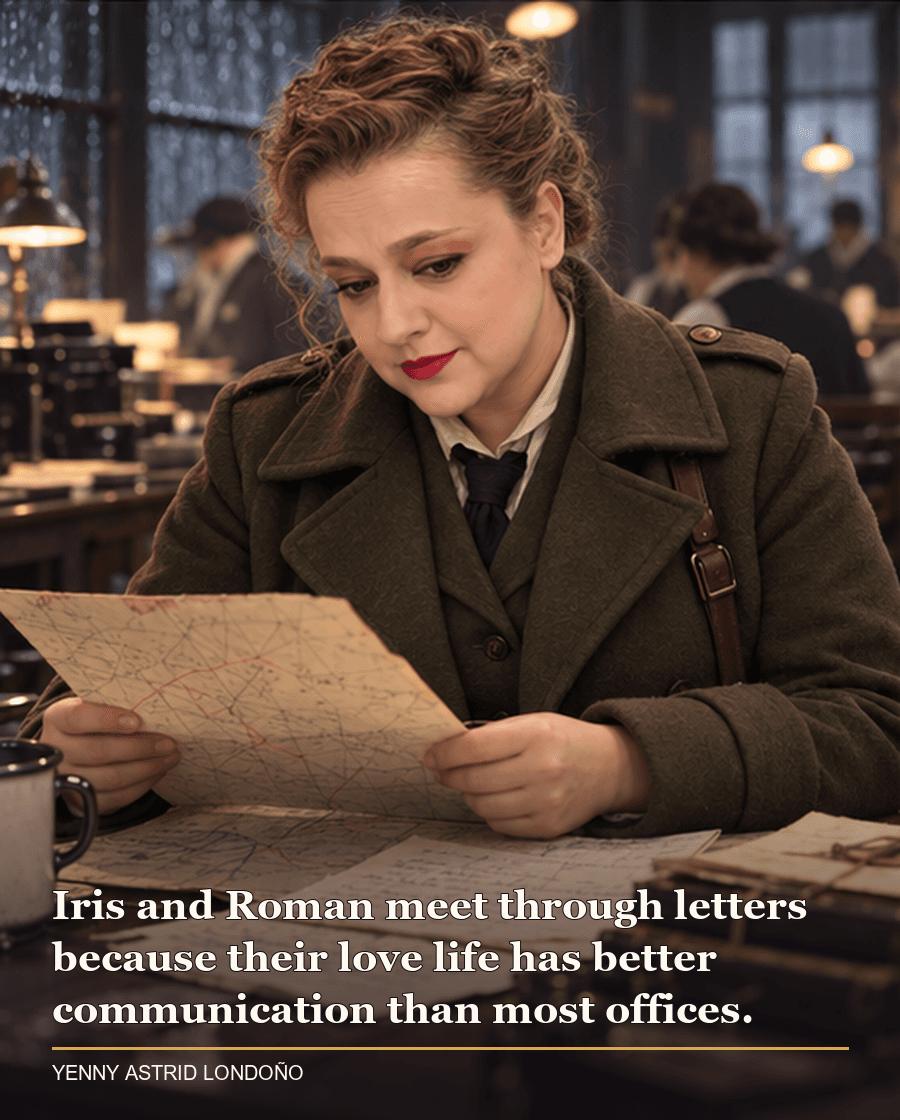
The story treats journalism as more than a job Iris happens to have. Reporting can help people understand the danger around them and decide what to do. That makes her work part of the resistance, even when she is not on the battlefield.
The novel grows in scale while keeping that idea. Public knowledge matters because people cannot respond to a threat they are not allowed to see. I wanted the wider conflict to be more clearly developed, but I liked that Iris’s reporting contributes to the story instead of being abandoned when the romance gets dramatic.
The sequel changes scale without losing all its tenderness
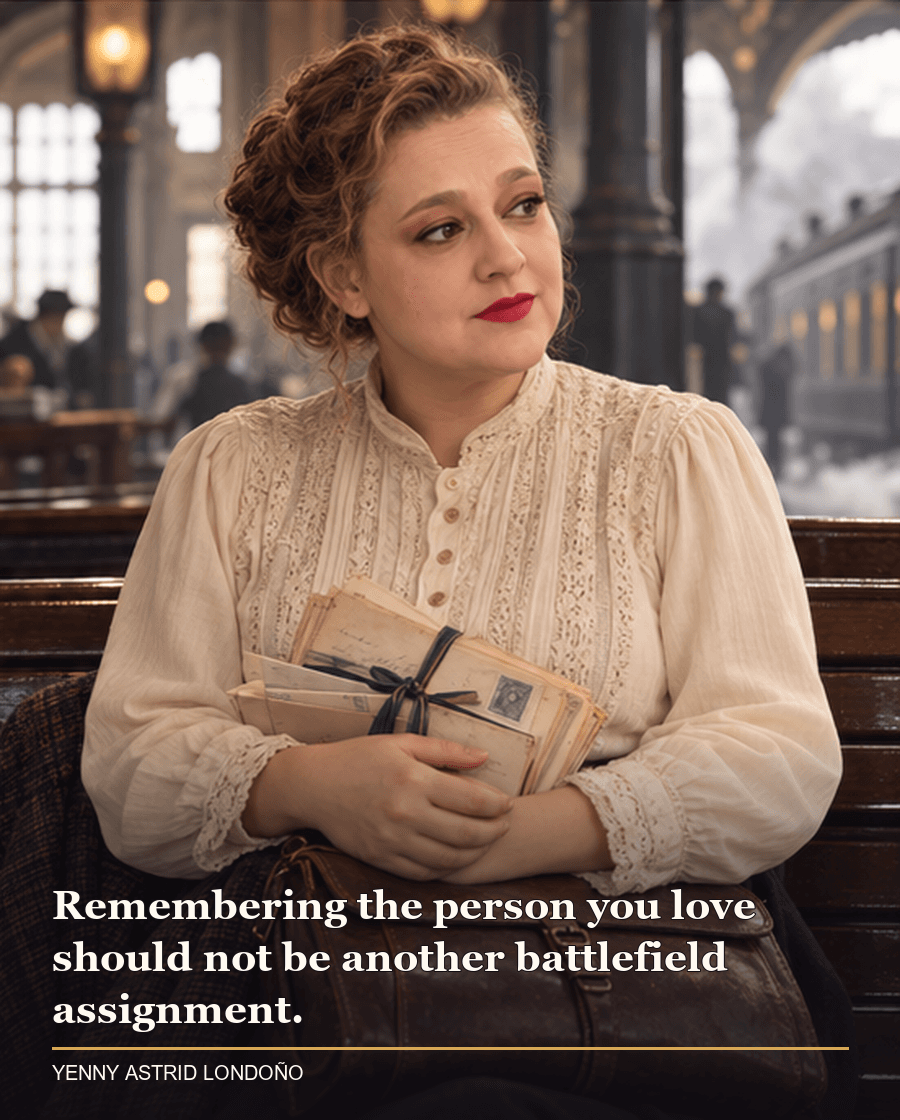
The first novel made the letters and professional rivalry central. This sequel has to carry more of the war and the consequences of the gods’ involvement. It has emotional scenes, family connections and a relationship reshaped by the question of what memory does to identity.
Some supporting characters still remain subordinate to the central couple. And the ending must resolve both fantasy stakes and emotional ones. That means several passages speed up where I wanted them to breathe. I liked the general resolution; there were moments when I wanted one more scene instead of another chapter ending placed at the exact point where I would keep suffering.
What I did not like
Roman’s amnesia is effective at creating distance, but sometimes I could see the mechanism at work. Iris and Roman have already built a connection, and the story needs to delay his recovery of that history. The resulting scenes are emotional, though the frustration can become repetitive. I wanted progress, not because grief should be rushed, but because some passages insist on the same ache.
The war grows in scale without always becoming clearer. The supernatural forces and their consequences could use more explanation, and Dacre’s actions can feel like threats without a visible strategy. Supporting characters remain in the protagonists’ shadow. The duology’s ending carries many emotional and magical questions, so some scenes speed up when they could breathe. I liked the overall ending, but I sometimes wanted one more scene instead of a cut at exactly the point designed to make me suffer.
My verdict: letters survive memory
Ruthless Vows develops Iris and Roman’s relationship after war and lost memory separate them. The letters remain the book’s best device: they sustain the romance, expose differences and let each character choose what to reveal. Iris stays a protagonist with a job, family and convictions. The story expands the gods’ role and turns journalism into a tool for helping people understand the danger.
Not every piece lands equally. Memory loss can prolong the tension, the war needs more development and some magical rules stay dim. Even so, the novel closes a duology with heart and an idea I keep thinking about: loving someone is not recovering their old version but discovering who they choose to become when life has rewritten all their pages. If that person also sends letters, please appreciate the effort; these days nobody writes even “I got here” with punctuation.
Who should read it
Read it after Divine Rivals if you want to finish the story with more letters, difficult choices and romance during a war. Do not start here; the relationship and several tensions depend on the first book. If you like romantic fantasy where words have a physical weight, there is plenty to find. If you expected a military treatise on gods, the front may feel underdeveloped.
My rating
4 out of 5 stars. The correspondence, Iris’s development and Roman’s journey held me through the ending. I take off a point for the repetitive amnesia plot, a war that is less developed than promised and magical explanations that remain blurry. The letters survive memory; I wanted the wider conflict to be just as clear.
Frequently asked questions
Is Ruthless Vows a sequel to Divine Rivals?
Yes. It is the second and final novel in Rebecca Ross’s Letters of Enchantment duology and continues Iris and Roman’s story.
What is Ruthless Vows about?
It follows Iris and Roman after war and memory loss separate them, while their correspondence and the conflict between gods continue.
Who are Iris and Roman in this sequel?
They are journalists and lovers facing separation, changed memories and new choices about their relationship.
Do I need to read Divine Rivals first?
Yes. Ruthless Vows continues the characters and conflicts introduced in the first novel.
Does Ruthless Vows conclude Iris and Roman’s story?
Yes. It is the final book in the duology and brings their central story to a conclusion.
What themes does the novel explore?
It explores memory, identity, wartime reporting, family, love and the choice to know someone as they are now.
Who would enjoy Ruthless Vows?
Readers who enjoyed Divine Rivals and want its story of letters and romance brought to a conclusion amid a larger conflict.
The Book
Ruthless Vows
by Rebecca Ross
Get the bookIf you buy through this link, Yenny earns a small commission and you pay the same price.
Keep reading
If you liked it, keep going

Lauren Roberts
Reckless
Reckless by Lauren Roberts: a romantic chase where both people know trust is a bad idea
The competition is over, but Paedyn and Kai are nowhere near safe. She is on the run, he is hunting her, and they both have reasons not to trust the person they want. This is my spoiler-light review of Lauren Roberts’s Reckless, the second book in the Powerless trilogy, where romantic tension travels through a world outside the palace and the political questions are still waiting for a fuller answer.
October 28, 2026
Lauren Roberts
Powerless
Powerless by Lauren Roberts: a girl without powers in a kingdom that wants her erased
A deadly competition, a kingdom that treats difference like a crime and a protagonist who has to pretend in order to stay alive. Paedyn Gray is an Ordinary in a world that worships powers, and the crown would prefer her off the map. This is my spoiler-light review of Lauren Roberts’s first Powerless novel: a fast romantic fantasy that knows its audience and makes the tension part of the plot.
October 27, 2026

Leigh Bardugo
Six of Crows
Six of Crows by Leigh Bardugo: an impossible heist and six people who cannot work together without threats
Six thieves, one impossible job and a plan whose first rule is apparently “do not kill your teammates before we get inside.” This is my spoiler-light review of Leigh Bardugo’s Six of Crows, a fantasy about criminal skill, complicated loyalties and people who learned to survive by trusting nobody—including the people they need beside them.
October 29, 2026
Want more like this? Join the Readers Club and get one of my books for free.
Share
My books
Books by Yenny Astrid Londoño



About the author
Yenny Astrid Londoño
Yenny Astrid Londoño is a Colombian author and entrepreneur, founder of Anchetas Medellín. She writes about real life with sarcasm, irony and smart humor, turning everyday situations, mistakes and imperfect relationships into stories that readers can laugh at and recognize themselves in.

A free book from me
Get a free book from me
Subscribe and get Sobreviviendo a mis muertos in full as a PDF.
After that, I'll only write when I have something worth telling you.
Also available: Read this review in Spanish →