
Book review
The Hobbit by J. R. R. Tolkien:
Bilbo Baggins likes comfort, good meals and not being disturbed before dinner. Then Gandalf and a company of dwarves arrive and decide he is exactly the person they need for a dangerous journey. This is my spoiler-light review of Tolkien’s The Hobbit, a classic adventure about courage, greed and the inconvenience of having a life-changing Tuesday.
By Yenny Astrid Londoño · October 26, 2026 · 7 min read
Share
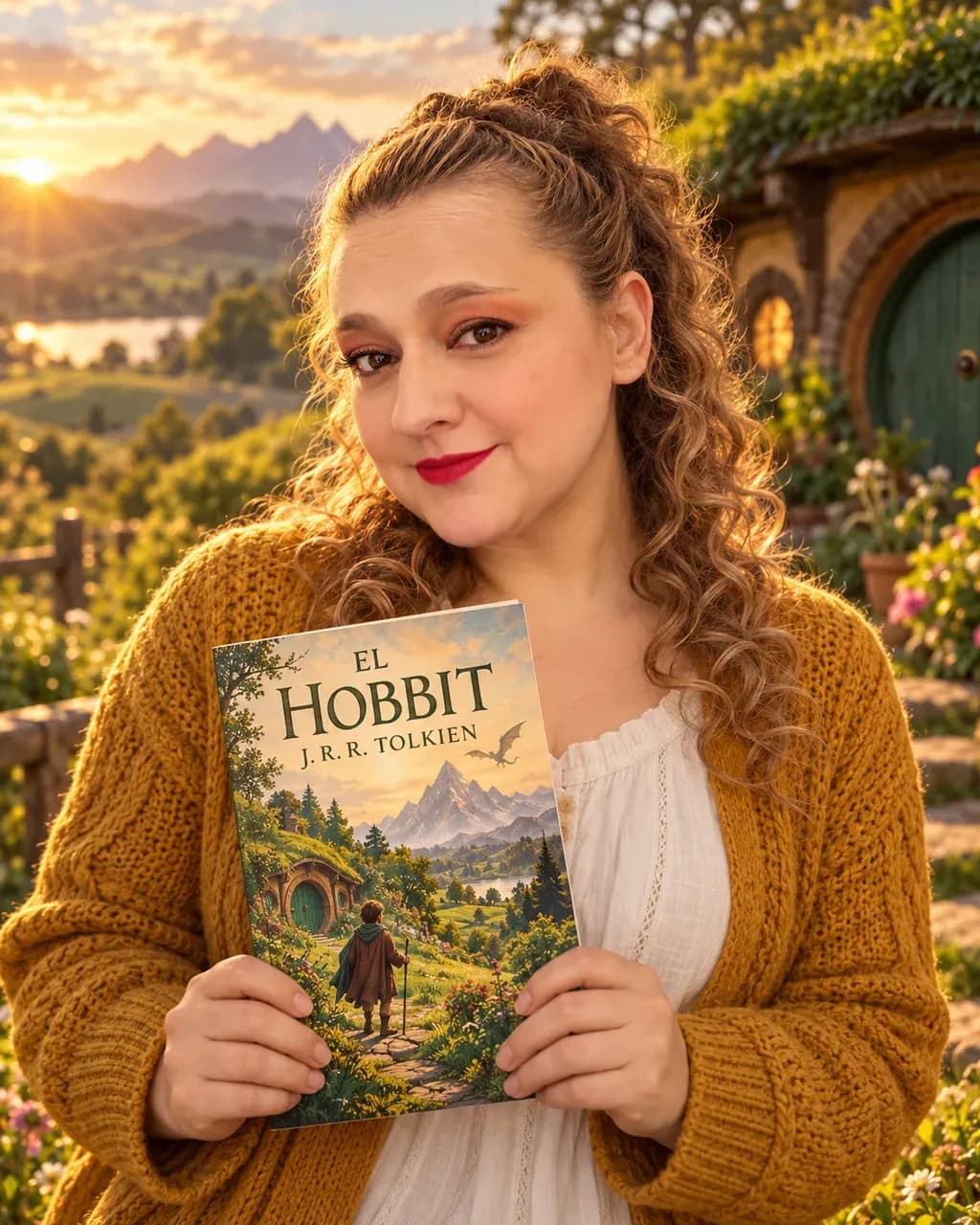
The Book
The Hobbit
by J. R. R. Tolkien
More reviews by J. R. R. Tolkien →
4.5 out of 5 stars
Bilbo, the narrator's humor and the imagination of the journey still work.
Bilbo likes his home and has no plans to become an adventurer
Bilbo is a hobbit with a comfortable home, a full pantry and no obvious desire to go anywhere dangerous. Gandalf’s arrival changes the shape of his day, and a company of dwarves turns up with a plan to reclaim a lost home and treasure from a dragon. They want a burglar. Bilbo would like to know why everyone is so confident that this is his career path.
His reluctance is part of the pleasure. The novel does not begin with a hero who has been waiting his whole life to swing a sword. Bilbo likes his routines. He also discovers that comfort is not the only thing he wants. The adventure brings out capacities he did not know he had, without pretending that bravery means never wishing you were back in your own chair.
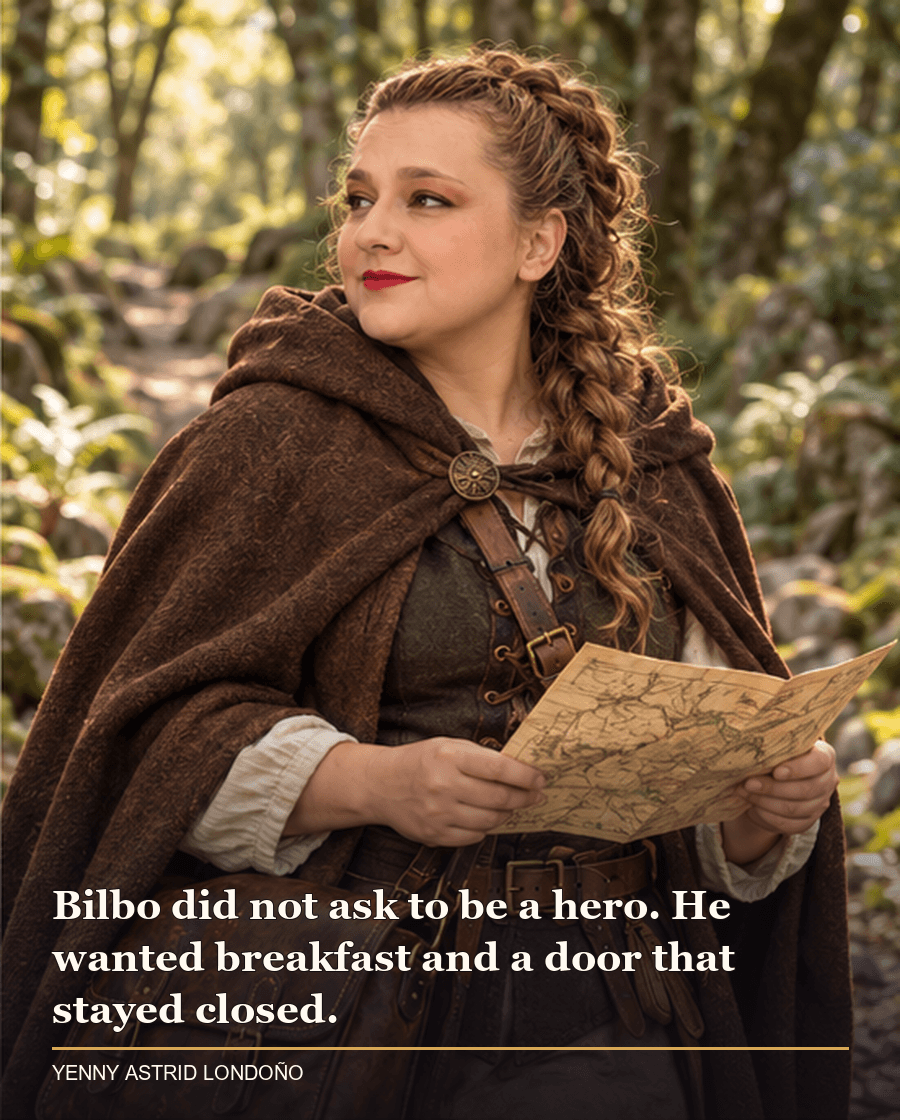
The dwarves are a company, and also a logistical challenge
The dwarves arrive as a group with a shared purpose and a lot of names. They are not all developed equally in this first book, but their presence gives the journey a collective feel. They are trying to recover a home taken from them, not simply chase a pile of gold because shiny things exist.
Their confidence in Bilbo is funny because it is not always matched by evidence. They need a burglar, they have found a burglar, and the burglar would like to ask whether anyone checked his references. The company’s plans often depend on Bilbo noticing a solution when the supposedly more prepared people have run out of ideas. He is not the strongest person in the room; he is frequently the one paying attention.
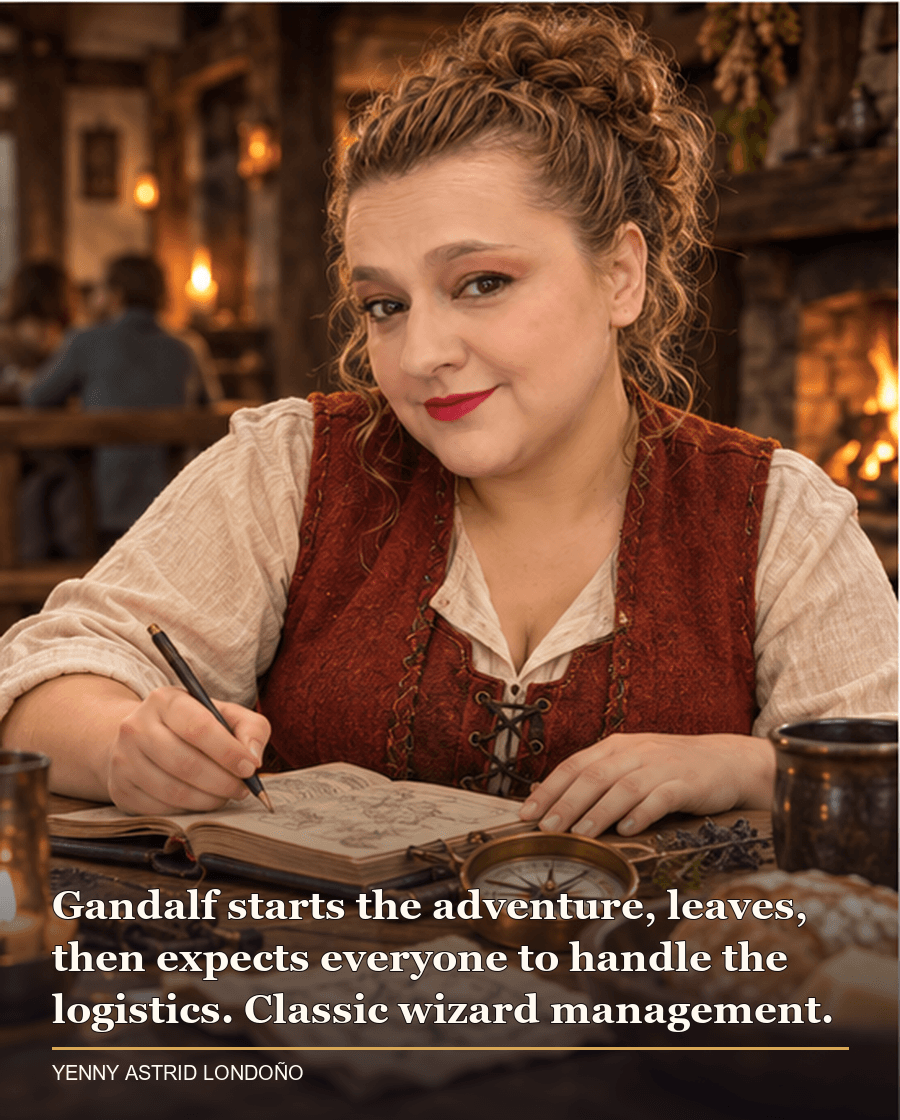
Gandalf has the power to start the trouble and leave
Gandalf sets the adventure in motion, then disappears often enough to remind everyone that the company must survive without its most powerful guide. He knows more than he tells, which helps create a sense that the world is much larger than Bilbo can see. It also leaves the reader with the familiar question: if the wizard knows so much, why is the rest of the group doing this with a map and a questionable amount of planning?
His absence makes Bilbo’s growth more visible. The hobbit has to decide what to do without an adult stepping in to provide the correct answer. That is a useful setup for a coming-of-age story, even if the adults involved have a habit of putting Bilbo into danger and then trusting him to improvise.
The road keeps turning into another problem
The company’s route is made of encounters that test their judgment and courage. Trolls, goblins, a strange creature in a cave, giant spiders and a dragon are not just a parade of fantasy creatures. Each episode shifts what Bilbo understands about danger and about the people traveling with him.
The episodic structure makes the book easy to follow. One problem closes and another opens, often with a new place or a different kind of threat. Readers who want a single tightly woven plot may notice the series of adventures. I enjoyed the sense of movement, although there are moments when the story feels like a very determined tour guide saying, “And now, for our next hazard.”
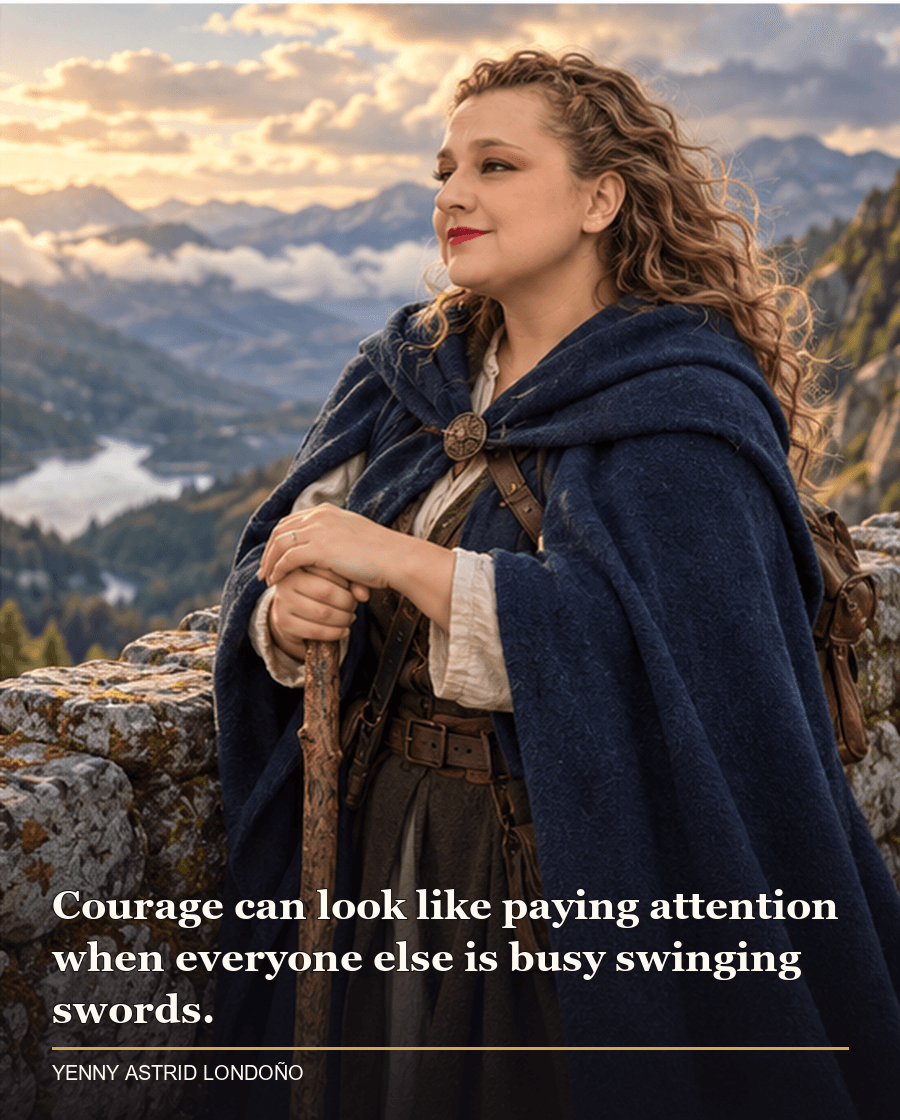
Bilbo’s courage looks more like paying attention than acting fearless
Bilbo changes through observation, quick thinking and the decisions he makes when the company is stuck. He does not suddenly become a warrior. He learns how to use what he has, and sometimes that means being the person who notices a detail nobody else saw.
That version of courage is one of the book’s strongest ideas. A person can be frightened and still choose what to do next. Bilbo’s practical instincts matter because the adventure cannot be solved by strength alone. He often thinks about home, food and comfort, which makes his bravery feel attached to the life he is risking rather than to an abstract idea of heroism.
Treasure changes the way people see one another
The company’s goal is tied to home and loss, but treasure also has the ability to distort judgment. The closer the story moves toward its central prize, the more it asks what people believe they are owed and what they are willing to defend. Gold can represent security, memory and power; it can also become the one thing people will not share.
That shift makes the adventure more than a search for a dragon’s hoard. It asks what happens when the goal becomes more important than the relationships that helped the group reach it. The book is not subtle about every moral lesson, but the tension between need and greed gives the final stretch real weight.
Tolkien tells the story like somebody who knows the road
Tolkien’s narrator has a playful, conversational tone. He speaks to the reader, makes little asides and lets the story feel like it is being told by someone who knows what is waiting around the next bend. That voice gives the book warmth and makes the fantasy accessible, even when its world is full of unfamiliar creatures and names.
The style also reflects its age. Some descriptions and rhythms may feel old-fashioned to readers used to contemporary fantasy. The book does not race; it pauses to explain, joke and linger. I liked being told a story with a clear voice. I did not need every aside, but it is part of the charm rather than a mistake hidden in the text.
A classic adventure, not a miniature version of the movies
The novel is shorter and lighter in tone than The Lord of the Rings, and it follows Bilbo rather than the fate of the whole world. Its stakes grow, but the storytelling keeps a fairy-tale quality. That makes it a good introduction to Middle-earth, although readers who arrive expecting the cinematic scale of the films may be surprised by how intimate and episodic it feels.
I prefer to let the book be what it is: a story about one reluctant hobbit discovering that the world is larger than his pantry and that he can matter outside his front door. The adventure is important, but the change in Bilbo is the reason I want to follow it.
What I did not like
Some episodes move quickly, and a few members of the company remain more like a group than a set of fully distinct characters. The playful narrator can also tell the reader what to think just after the scene has already made its point. I wanted a little more room for some moments to land without a verbal wink.
The episodic shape is charming, but it can make the middle stretch feel like one more obstacle after another. If you need every scene to advance a tightly linked mystery, this structure may feel loose. I was happy to travel with Bilbo; I simply did not love every stop on the itinerary equally.
Who should read it
Read The Hobbit if you want a classic fantasy adventure with humor, a reluctant hero, a memorable narrator and a clear sense of wonder. It works for readers new to Middle-earth and for anyone who wants to see the beginning of Bilbo’s story before moving on to the larger saga.
If you prefer darker fantasy, a fast contemporary pace or a large cast with deep individual arcs, this may feel gentler and older than you want. The book’s pleasure is in the journey and in watching a home-loving hobbit discover that courage can look like noticing what everyone else missed.
My rating
4.5 out of 5 stars. Bilbo’s gradual change, the narrator’s warmth and the story’s mix of humor and danger make this a classic I still enjoy. I take off half a star for a few fast transitions, a company whose members are not equally developed and a middle stretch that sometimes feels episodic. I would still go with Bilbo. I would just ask the dwarves to explain the plan before they start packing.
Frequently asked questions
What is The Hobbit about?
Bilbo Baggins joins Gandalf and a company of dwarves on a journey to reclaim their home and treasure from the dragon Smaug.
Should I read The Hobbit before The Lord of the Rings?
It is a good place to begin. It introduces Bilbo and Middle-earth, and it comes before the events of The Lord of the Rings.
Is The Hobbit a children’s book?
It was written as a children’s fantasy, but its humor, themes and world continue to appeal to adult readers.
Is The Hobbit part of a trilogy?
No. It is a standalone novel that takes place before The Lord of the Rings.
Is The Hobbit similar in tone to The Lord of the Rings?
It is generally lighter, more playful and focused on Bilbo’s adventure, while The Lord of the Rings has a broader and more serious conflict.
Who is the main character in The Hobbit?
Bilbo Baggins is the central character, a hobbit who begins the story preferring a quiet life at home.
Who would enjoy The Hobbit?
Readers who enjoy classic fantasy, fairy-tale narration, a reluctant hero and an adventure that mixes humor with danger.
The Book
The Hobbit
by J. R. R. Tolkien
Get the bookIf you buy through this link, Yenny earns a small commission and you pay the same price.
Keep reading
If you liked it, keep going
J. R. R. Tolkien
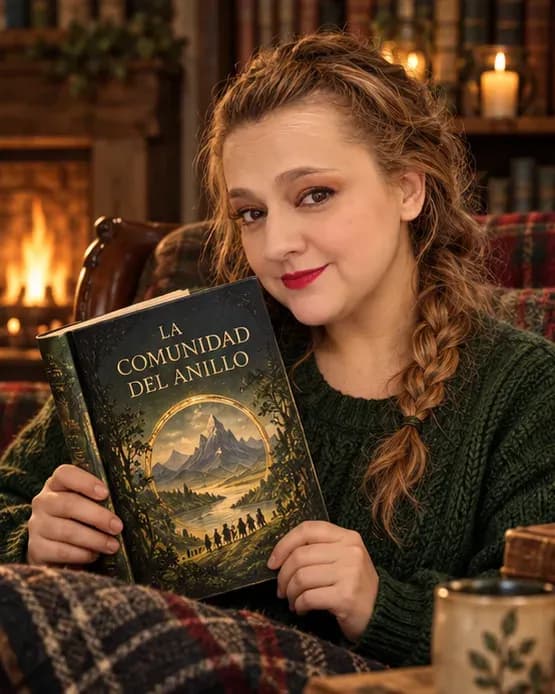
The Fellowship of the Ring
The Fellowship of the Ring by J. R. R. Tolkien: a dangerous mission and far too many people trusting a ring
An epic journey, friendship and a piece of jewelry that should come with a warning label. Here is my spoiler-light review of the first part of The Lord of the Rings. If you only know the films, the book takes longer to walk, talk, sing and tell you the history behind each place. Tolkien is not trying to get you to Mordor by taxi; first he wants you to understand why arriving matters.
October 27, 2026
Tomi Adeyemi
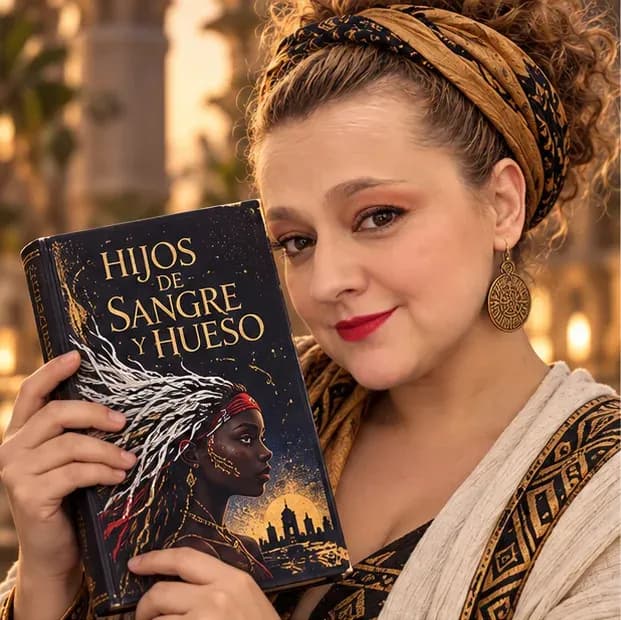
Children of Blood and Bone
Children of Blood and Bone by Tomi Adeyemi: when magic returns, power refuses to hand it back quietly
This is an epic fantasy about magic taken away, political violence and a young woman deciding what to do with a power she barely understands. Zélie’s world has a strong identity, and the magic does not sit quietly in the corner while the palace makes decisions. Here is my spoiler-light review of Tomi Adeyemi’s first Legacy of Orïsha novel.
October 27, 2026
Scott Lynch
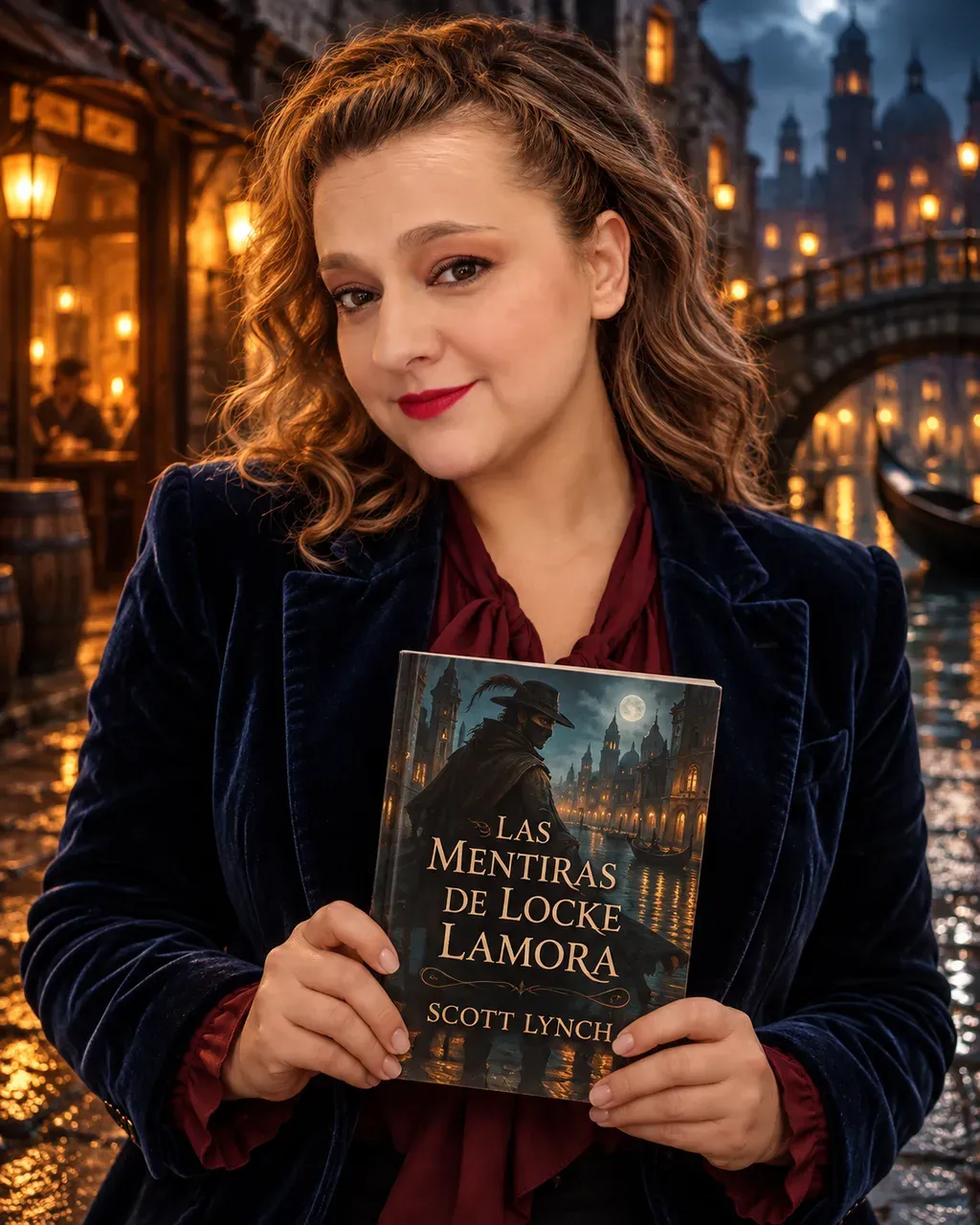
The Lies of Locke Lamora
The Lies of Locke Lamora by Scott Lynch: robbing the rich works until someone worse shows up
Crime fantasy, cons and a city where talent attracts trouble. Locke Lamora and the Gentlemen Bastards make their living by taking money from the rich—until a more dangerous player changes the rules. This is my spoiler-light review of Scott Lynch’s first Gentleman Bastards novel: a clever caper whose humor does not make its violence pretend.
October 27, 2026
Want more like this? Join the Readers Club and get one of my books for free.
Share
My books
Books by Yenny Astrid Londoño



About the author
Yenny Astrid Londoño
Yenny Astrid Londoño is a Colombian author and entrepreneur, founder of Anchetas Medellín. She writes about real life with sarcasm, irony and smart humor, turning everyday situations, mistakes and imperfect relationships into stories that readers can laugh at and recognize themselves in.

A free book from me
Get a free book from me
Subscribe and get Sobreviviendo a mis muertos in full as a PDF.
After that, I'll only write when I have something worth telling you.
Also available: Read this review in Spanish →