
Book review
The Lies of Locke Lamora by Scott Lynch:
Crime fantasy, cons and a city where talent attracts trouble. Locke Lamora and the Gentlemen Bastards make their living by taking money from the rich—until a more dangerous player changes the rules. This is my spoiler-light review of Scott Lynch’s first Gentleman Bastards novel: a clever caper whose humor does not make its violence pretend.
By Yenny Astrid Londoño · October 27, 2026 · 6 min read
Share

The Book
The Lies of Locke Lamora
by Scott Lynch
4 out of 5 stars
The urban world, the dialogue and the relationship within the group delighted me.
Camorr is a city that teaches you to look twice
Camorr is full of canals, powerful families, criminal agreements and people who know that information can be worth more than a sword. The city feels alive because its streets and hierarchies affect how the characters move. It is not a generic fantasy backdrop with a few thieves placed on top; the place has its own rules, and the rules are usually enforced by whoever can afford to enforce them.
The setting gives the novel an urban-fantasy feel without turning magic into the only thing worth noticing. Money, reputation and access are practical forms of power. A person can survive by understanding who owns a building, which gang controls a neighborhood and what a polite conversation is hiding. Camorr has mud, money and a frankly refreshing lack of honesty.
Locke is not the most dangerous swordsman on the block
Locke Lamora is a thief, a planner and a professional liar. His greatest weapon is not physical strength; it is his ability to convince people to look at the wrong part of the story. He can talk himself into trouble almost as quickly as he can talk himself back out of it, which is a talent I respect in fiction and do not recommend for real life.
He is also convinced enough of his own cleverness to make the reader wonder when the plan will finally meet someone smarter. That confidence is part of the fun. Locke can persuade us even when he is getting ahead of himself, and the novel knows the difference between a brilliant con and a man who has mistaken charm for invincibility.

The Gentlemen Bastards have a history before the heist
Locke’s crew is not a collection of employees assembled for one job. The Gentlemen Bastards have a past, training and a loyalty built through years of living and working together. Their insults are part of how they communicate; so is the fact that they know when to show up for one another.
That history makes the group’s chemistry one of the book’s strengths. The banter is funny because it comes from familiarity, not because every character has been handed the same joke. Their loyalty is rarely announced as a sentimental speech. It shows up in the way they plan, argue and keep trying to protect each other even when the plan has already started catching fire.
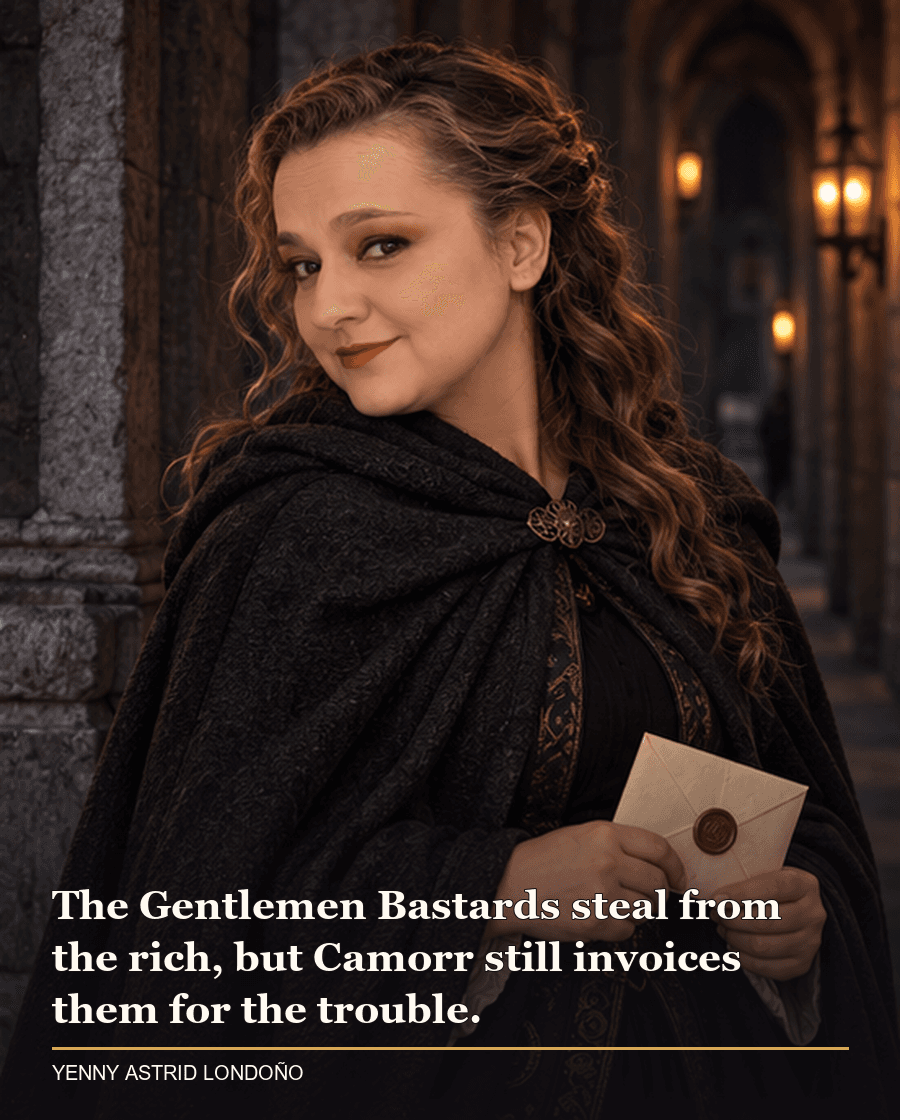
Two timelines build the con
The book moves between Locke’s past and the present-day scheme. The flashbacks show how he became the person he is and how the crew learned its trade. In the present, the con gives the story an urgent question: can the Bastards keep control of a plan whose risks are growing around them?
The structure makes sense, and the past provides details that change how we understand the present. But the cuts do not all arrive at the right moment. Some flashbacks deepen the characters; others lower the tension just as the current plot has put an urgent question on the table. If you take long breaks while reading, there are also enough names, places and bargains to make returning feel like opening a folder with six files called “final-this-time.”
A perfect con knows the difference between luck and skill
Locke’s plans depend on reading people and building a performance around what they expect to see. The heist is entertaining because the novel gives the tricks a logic: a disguise, a rumor or a false identity only works when someone has considered how the target will respond.
The problem is that a plan is only perfect until another person makes a decision Locke did not predict. The story understands that, and the risks change the tone. A con can be funny, elegant and then suddenly very dangerous. The switch is one reason the book stays lively, though it can also make its later violence feel sharper than someone arriving for the jokes might expect.

The voice is playful; the violence is not pretend
Lynch’s narration is witty and nimble. The characters can trade insults while taking a complicated plan apart, and the city gives the dialogue plenty of targets. Humor makes the group feel close, but it does not turn danger into a harmless game.
The violence becomes more prominent in the second half and changes the temperature of the story. I do not think the book needs to soften that shift. I do think readers who came for clever robberies and banter should know that the tone gets harsher. The novel can be funny and cruel in the same chapter; it is not asking permission to switch.
What I did not like
The pacing can stumble around the flashbacks. Some chapters add useful history; others lower the tension just when the present has raised an urgent question. The structure has a purpose, but not every interruption felt equally well timed. Camorr also has many names, places and agreements. If you leave the story for a while, coming back can feel like opening a folder full of files named “final-final.”
The violence in the second half is harsh and changes the tone sharply. It may surprise readers who came for the humor and criminal plans. Some supporting characters are more defined by what happens to Locke than by their own desires. And although the protagonist’s intelligence is part of the appeal, the book can seem so in love with the elegance of a con that it explains one more time after I was already convinced.
My verdict: Camorr gets the last word
The Lies of Locke Lamora mixes crime fantasy with a gang of con artists who love each other through insults, plans and loyalty they rarely say out loud. Camorr has character, the schemes are entertaining, and Locke can convince us even when he is convinced of too much. The novel won me over with its voice and its crew; it lost me a little with a few pacing breaks and violence that arrives with force.
This is not a story about heroes resolving a prophecy because that is what was written. It is about people trying to get by in a city where money rules, information matters and perfect plans last until someone more ambitious notices them. If you like clever heists and characters with chemistry, Camorr opens the door. Check whether someone is following you on the way out.
Who should read it
Pick it up if you enjoy fantasy with cons, living cities and characters who talk as if every sentence could help them escape an ambush. If you want constant magic or an even tone throughout, the book may throw you. Locke has a plan for everything except the moment Camorr decides to improvise.
My rating
4 out of 5 stars. The urban world, dialogue and the crew’s relationship charmed me. I take off a star for interruptions to the pace, the sharp turn toward harsher violence and explanations that take longer than they need to. Locke has a plan for most things; the city is where his confidence goes to be tested.
Frequently asked questions
What is The Lies of Locke Lamora about?
Locke leads the Gentlemen Bastards, a gang of con artists operating in Camorr. Their schemes attract a more dangerous criminal power and change the rules they thought they knew.
Is The Lies of Locke Lamora the first book in a series?
Yes. It is the first novel in Scott Lynch’s Gentleman Bastards series.
Who are the Gentlemen Bastards?
They are Locke Lamora’s close-knit crew of thieves and con artists, trained to work together on elaborate schemes.
What kind of fantasy is the book?
It is crime fantasy with an urban setting, heists, political power and a small amount of magic compared with the focus on cons.
Is The Lies of Locke Lamora a comedy?
It has a witty voice and sharp banter, but it also includes serious and violent events, especially in the second half.
Does the novel alternate between past and present?
Yes. It uses flashbacks to show Locke’s earlier life alongside the present-day scheme.
Who would enjoy this book?
Readers who like elaborate heists, a strong crew dynamic and fantasy with a city full of criminal politics.
The Book
The Lies of Locke Lamora
by Scott Lynch
Get the bookIf you buy through this link, Yenny earns a small commission and you pay the same price.
Keep reading
If you liked it, keep going

Tomi Adeyemi
Children of Blood and Bone
Children of Blood and Bone by Tomi Adeyemi: when magic returns, power refuses to hand it back quietly
This is an epic fantasy about magic taken away, political violence and a young woman deciding what to do with a power she barely understands. Zélie’s world has a strong identity, and the magic does not sit quietly in the corner while the palace makes decisions. Here is my spoiler-light review of Tomi Adeyemi’s first Legacy of Orïsha novel.
October 27, 2026

N. K. Jemisin
The Fifth Season
The Fifth Season by N. K. Jemisin: the world breaks again, and Essun has to find her daughter
In the Stillness, the end of the world has a calendar. Essun is looking for her daughter while the ground starts breaking again, and the society that survives these disasters is much better prepared for earthquakes than for treating people humanely. This is my spoiler-light review of N. K. Jemisin’s The Fifth Season, a book that makes catastrophe political before anyone has time to call it weather.
October 27, 2026

R. F. Kuang
The Poppy War
The Poppy War by R. F. Kuang: passing the exam was the least of Rin’s problems
Military fantasy, an academy and a war that refuses to become decorative. Before my spoiler-light review of R. F. Kuang’s The Poppy War, here is the warning more useful than any synopsis: the novel includes extreme violence and scenes inspired by wartime atrocities. This is not a light adventure with pretty uniforms and battles for choosing a team from the couch. Kuang draws on twentieth-century Chinese history, and some scenes hurt because she does not turn horror into a heroic postcard.
October 27, 2026
Want more like this? Join the Readers Club and get one of my books for free.
Share
My books
Books by Yenny Astrid Londoño



About the author
Yenny Astrid Londoño
Yenny Astrid Londoño is a Colombian author and entrepreneur, founder of Anchetas Medellín. She writes about real life with sarcasm, irony and smart humor, turning everyday situations, mistakes and imperfect relationships into stories that readers can laugh at and recognize themselves in.

A free book from me
Get a free book from me
Subscribe and get Sobreviviendo a mis muertos in full as a PDF.
After that, I'll only write when I have something worth telling you.
Also available: Read this review in Spanish →