
Book review
The Poppy War by R. F. Kuang:
Military fantasy, an academy and a war that refuses to become decorative. Before my spoiler-light review of R. F. Kuang’s The Poppy War, here is the warning more useful than any synopsis: the novel includes extreme violence and scenes inspired by wartime atrocities. This is not a light adventure with pretty uniforms and battles for choosing a team from the couch. Kuang draws on twentieth-century Chinese history, and some scenes hurt because she does not turn horror into a heroic postcard.
By Yenny Astrid Londoño · October 27, 2026 · 7 min read
Share

The Book
The Poppy War
by R. F. Kuang
4 out of 5 stars
The building of Rin, the turn from academy to war and the historical conversation strike me as powerful.
Rin sees a door in the exam nobody planned to open for her
Fang Runin, known as Rin, is an orphan in a poor province, working for a family that plans to marry her off for convenience. She sees another exit: study for the Keju, the imperial exam that can get her into the academies. Her result surprises people who believe a girl from the south cannot compete with powerful families’ sons. No fairy godmother rescues Rin; an alarming amount of discipline, stubbornness and sleepless nights does.
The first section brings the energy of entering an institution where talent does not erase class rules, racism or contempt. Rin reaches Sinegard, a prestigious military academy, and learns that passing the exam does not mean everyone is prepared to see her there. The book asks an uncomfortable question about merit: what happens when a system celebrates your intelligence in theory but has already decided who deserves the classroom in practice?
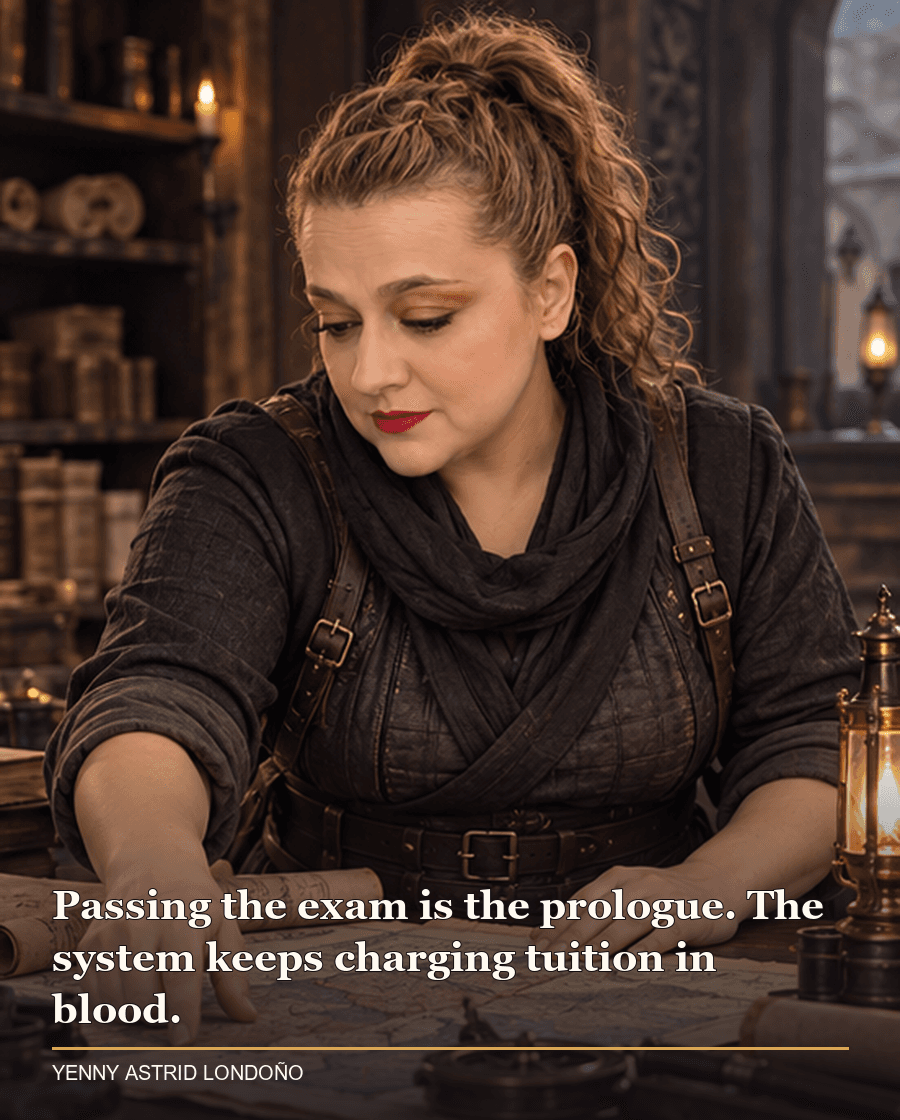
Sinegard is no refuge; it is a training ground
At first, the academy could promise a familiar story: a brilliant student, teachers, rivals and a path upward. Kuang uses that structure to show who learns to compete and who sets the rules. Rin has to study and train, but also read her classmates’ social codes and recognize when humiliation is disguised as a joke. How fun: you arrive to learn and the room gives you an intensive course in contempt.
Her relationship with Jiang, an eccentric teacher, opens access to knowledge beyond the military curriculum. The novel introduces shamanism and a connection to gods that can be powerful and dangerous. Magic is not a reward for good behavior. It has a cost and a way of seeing the world that can consume the person who uses it. Rin is not only asking how much power she can reach; she starts asking which parts of herself she is willing to give up.
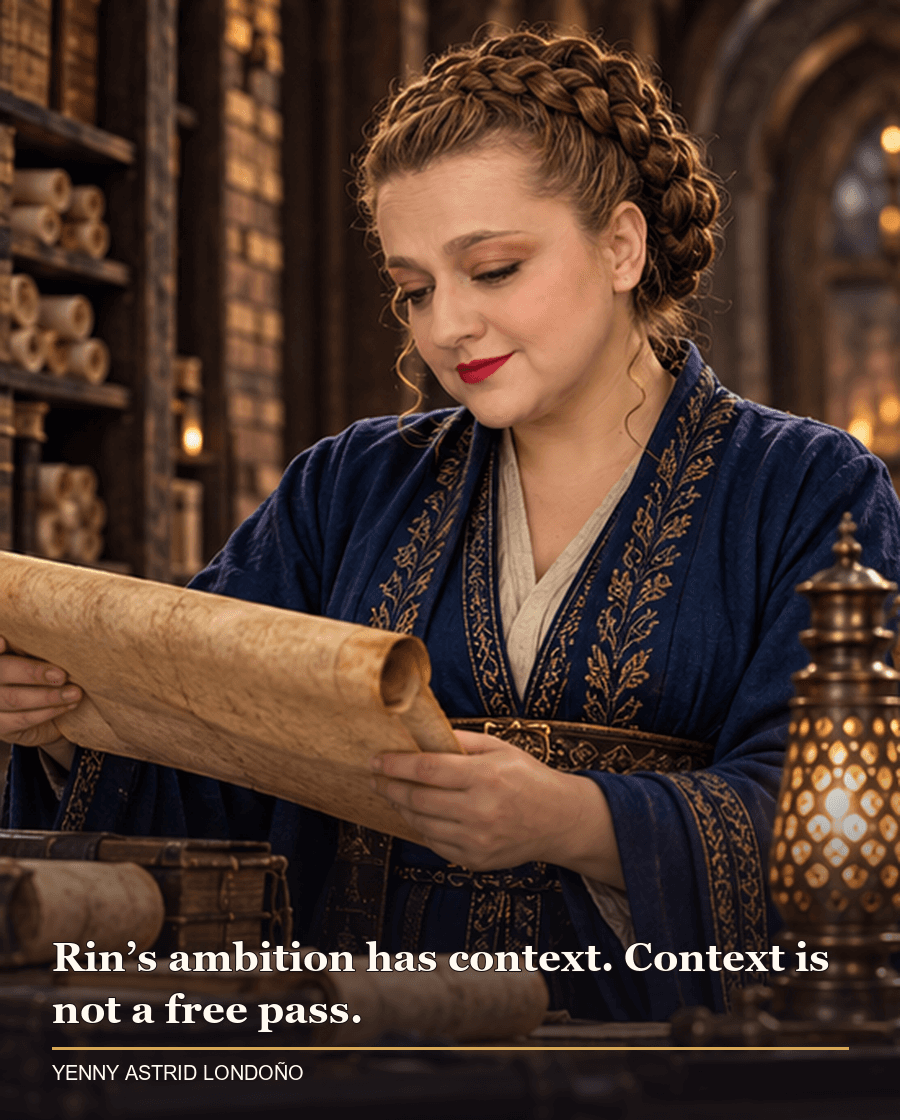
Rin’s ambition has reasons—and consequences
Rin is not written to be liked all the time. She can be brilliant, proud, impulsive and cruel. Her ambition comes from a life where almost every door was closed, but understanding where it comes from does not absolve every choice. I like that the novel does not polish her into a perfect heroine so readers can admire her without discomfort. Some decisions make sense to me and still leave a terrible aftertaste.
When war arrives, the academy’s lessons change purpose. Strategy stops being practice, and knowledge is measured by what it costs other people. Rin brings her own ideas about justice, resentment and survival into a conflict that already had a history before she understood it. Becoming a leader does not make her wise overnight. Sometimes power simply makes the damage one can do larger.
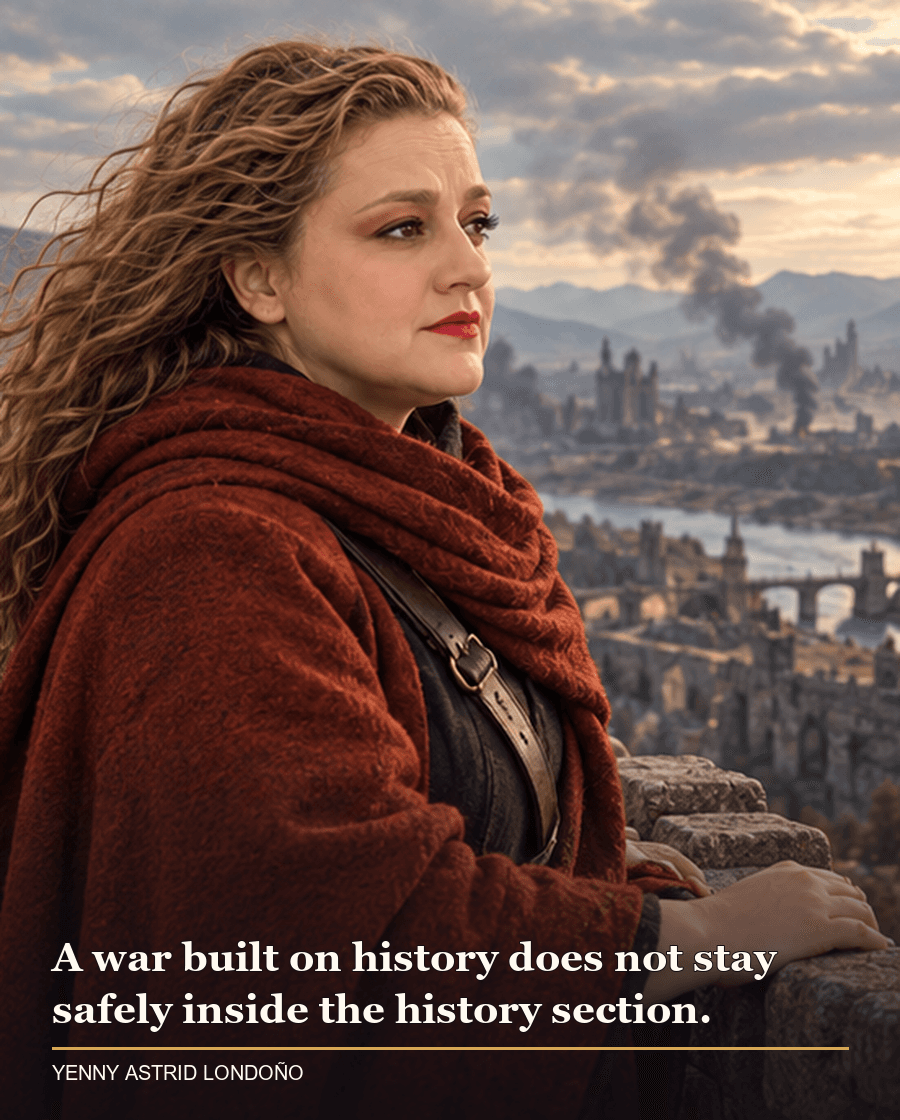
History weighs on the fantasy
The world of Nikan draws on Chinese history, and war is central to the story. Kuang does not hide the connection to invasion, nationalism, hierarchy and state violence. The first part has the structure of an academy story; later, it turns sharply toward military conflict. That shift is not a continuity mistake. It makes the school’s promise recede and leaves Rin in a reality with no classroom board to correct the answer.
The tone grows much darker. Scenes of destruction and brutality are not there to make the reader say, “How epic.” War means bodies, displacement and decisions that do not disappear when one side wins a battle. The novel asks us to face consequences that fantasy sometimes hides under layers of magic and uniforms. If you want a comforting read, save this one for another time. It is not the book; it is that some stories need you to have enough emotional room and stomach available.
The characters live inside a larger machine
Rin’s classmates are not only there to applaud her or block her way. Rivalries, friendships and differences in background show how an environment creates alliances and resentment. Some secondary characters are more defined by their job in the conflict than by an inner life of their own, but they help show that the army does not gather people on equal terms. It gathers stories the state considers useful in different ways.
Violence also changes the characters’ relationships to the gods and their own identities. Rin does not approach magic in a safe room. The connection between power and destruction becomes increasingly clear, and the novel leaves us asking whether the cost of victory can start to look like the cost of losing. I am not going to pretend I have comfortable answers; the point—and the blow—is that the book does not wrap up a clean conclusion as a gift.
The change of pace splits the novel in two
The book begins with the hunger of the academy: exams, training, teachers and a protagonist trying to prove she deserves the place she earned. Then war arrives and changes the kind of story we are reading. The transition can feel abrupt, especially if you expected to stay inside a coming-of-age academy novel. But the structure also makes clear that school was only the threshold. The world outside does not respect the class schedule.
Kuang’s prose is direct and does not perfume every scene. The book reads quickly even when its subject matter is hard, though fast is not the same as light. I appreciate that the author does not soften the horror, but some passages are so explicit that the novel can feel insistent. There are moments when I already understand the terror and the scene keeps pressing. Impact matters; repetition can wear it down.
What I did not like
The shift in tone requires readers to adjust their expectations. Someone looking for a military academy with a little magic and student competition may suddenly find a brutal war story. The change makes sense, but it is still a jolt. I would have welcomed more space in the transition, though perhaps the abruptness is intentional: war does not send a formal invitation.
Rin sometimes makes impulsive choices that move the story toward an almost announced tragedy. I understand her emotional and political reasons, but I am not always convinced by how quickly she moves toward consequences that seemed visible several pages earlier. Some secondary characters also remain in her shadow, and the graphic violence occasionally crossed for me from necessary witness into excess emphasis.
My verdict: the exam does not end when you hand in the paper
The Poppy War is an intense military fantasy about a young woman who finds an exit and ends up facing choices much larger than her desire to escape. I liked that Rin is not an easy heroine and that history continues to live beneath the magic. The academy is only the beginning; the real test is what each character does with power once war has taken the classroom rules away.
This is not a book for every day or every mood. It has violence, ambition and an abrupt change of scale. But if you want dark fantasy that looks at the cost of conflict and complicates your admiration for its protagonist, there is a lot to discuss here. I finished wanting to continue the trilogy and also to sit quietly for a while, which is not usually my plan after a book.
Who should read it
Read it if military fantasy, a complicated protagonist and difficult subject matter are what you are looking for. I would not hand it to someone hoping for a light adventure or a cozy magical academy. Rin finds an open door and walks straight into a war. You can go with her, but it helps to know that before you enter.
My rating
4 out of 5 stars. Rin’s development, the shift from academy to war and the historical conversation are powerful. I take off a star for the abrupt change in tone, some predictable choices and scenes whose graphic detail felt excessive to me. The book gives me a lot to think about, and it also made me want to close it and sit in silence before opening another one.
Frequently asked questions
What is The Poppy War about?
Rin, an orphan from southern Nikan, passes the Keju exam and enters a military academy. There she discovers a connection to shamanism as the country approaches a devastating war.
Is The Poppy War part of a trilogy?
Yes. It is the first book in the trilogy, followed by The Dragon Republic and The Burning God.
Who is Rin?
Fang Runin, called Rin, is the protagonist. She is ambitious and talented, but also impulsive and capable of morally difficult choices.
Is The Poppy War young adult fantasy?
I would not recommend it as light young adult fantasy. Although it begins at an academy, it contains graphic violence and difficult war themes.
What historical themes appear in the novel?
The fantasy draws on twentieth-century Chinese history and addresses invasion, militarism, identity, inequality and collective violence.
Is there magic in The Poppy War?
Yes. It develops shamanism and a connection to gods as dangerous powers with consequences.
Who would enjoy The Poppy War?
Readers of dark military fantasy who can handle a difficult protagonist, graphic violence and a story that changes scale after the academy.
The Book
The Poppy War
by R. F. Kuang
Get the bookIf you buy through this link, Yenny earns a small commission and you pay the same price.
Keep reading
If you liked it, keep going

Tomi Adeyemi
Children of Blood and Bone
Children of Blood and Bone by Tomi Adeyemi: when magic returns, power refuses to hand it back quietly
This is an epic fantasy about magic taken away, political violence and a young woman deciding what to do with a power she barely understands. Zélie’s world has a strong identity, and the magic does not sit quietly in the corner while the palace makes decisions. Here is my spoiler-light review of Tomi Adeyemi’s first Legacy of Orïsha novel.
October 27, 2026

Scott Lynch
The Lies of Locke Lamora
The Lies of Locke Lamora by Scott Lynch: robbing the rich works until someone worse shows up
Crime fantasy, cons and a city where talent attracts trouble. Locke Lamora and the Gentlemen Bastards make their living by taking money from the rich—until a more dangerous player changes the rules. This is my spoiler-light review of Scott Lynch’s first Gentleman Bastards novel: a clever caper whose humor does not make its violence pretend.
October 27, 2026

N. K. Jemisin
The Fifth Season
The Fifth Season by N. K. Jemisin: the world breaks again, and Essun has to find her daughter
In the Stillness, the end of the world has a calendar. Essun is looking for her daughter while the ground starts breaking again, and the society that survives these disasters is much better prepared for earthquakes than for treating people humanely. This is my spoiler-light review of N. K. Jemisin’s The Fifth Season, a book that makes catastrophe political before anyone has time to call it weather.
October 27, 2026
Want more like this? Join the Readers Club and get one of my books for free.
Share
My books
Books by Yenny Astrid Londoño



About the author
Yenny Astrid Londoño
Yenny Astrid Londoño is a Colombian author and entrepreneur, founder of Anchetas Medellín. She writes about real life with sarcasm, irony and smart humor, turning everyday situations, mistakes and imperfect relationships into stories that readers can laugh at and recognize themselves in.

A free book from me
Get a free book from me
Subscribe and get Sobreviviendo a mis muertos in full as a PDF.
After that, I'll only write when I have something worth telling you.
Also available: Read this review in Spanish →