
Book review
The Name of the Rose:
Umberto Eco's The Name of the Rose: William of Baskerville, young Adso and a deadly abbey library. My honest review, 4 out of 5 stars, lectures included.
By Yenny Astrid Londoño · October 22, 2026 · 7 min read
Share
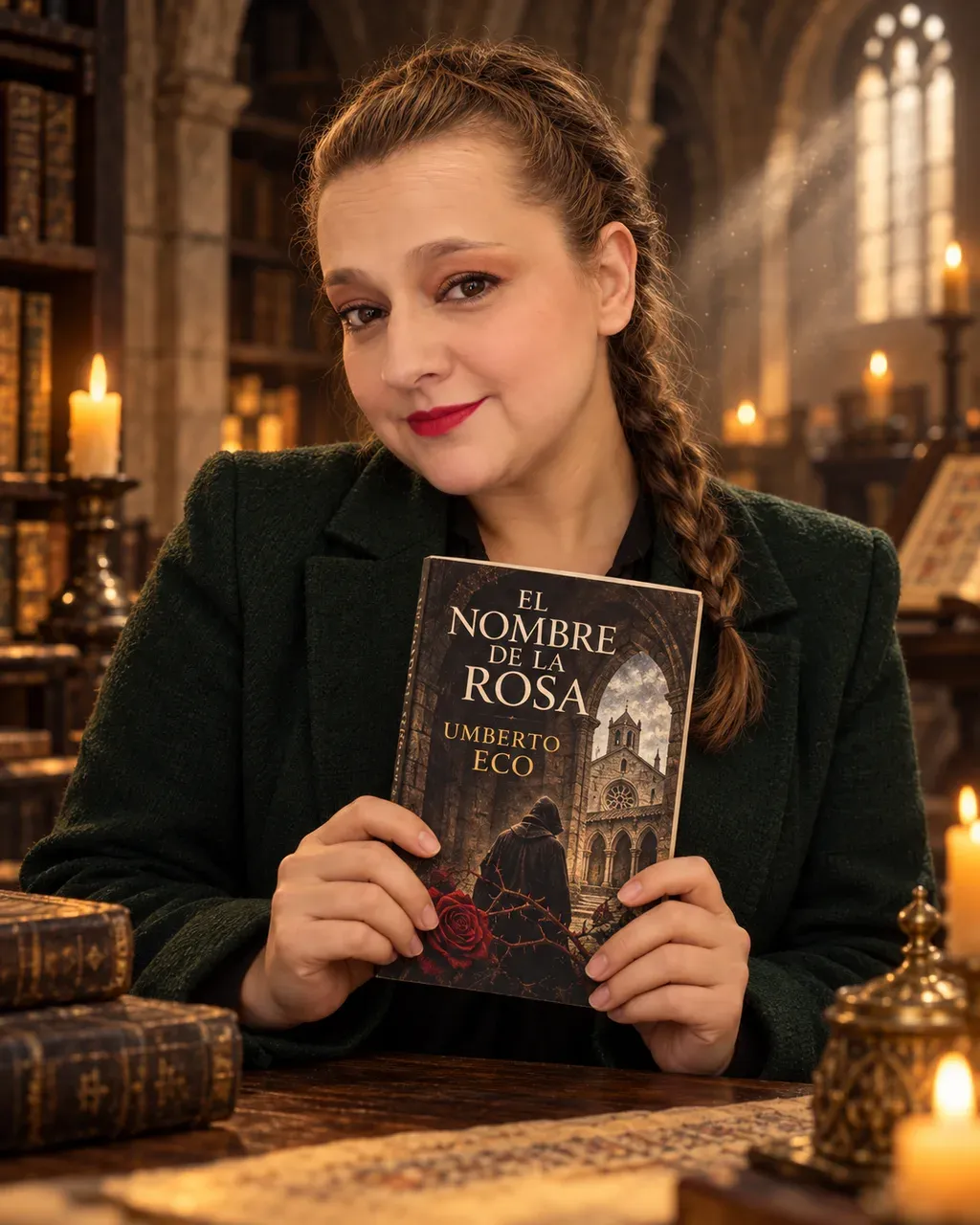
The Book
The Name of the Rose
Mystery
by Umberto Eco
4 out of 5 stars
The library, the mystery and the relationship between knowledge and power remain fascinating.
An abbey where deaths keep interrupting the argument
In the fourteenth century, William of Baskerville arrives at a Benedictine abbey with the young Adso of Melk. They are supposed to attend a religious meeting. Then a monk dies, and more deaths turn the monastery into a place where every conversation might contain a clue, a doctrine, or a threat.
This is a murder mystery, but it is also a novel about faith, poverty, power, and knowledge. There is no modern lab where an investigator solves everything by tapping a screen. William has to watch, compare stories, and interpret signs. Sometimes a debate about laughter lasts longer than a chase scene, and somehow I still want to know who is killing the monks and why.
William of Baskerville observes before he declares victory
William is curious and methodical. He studies traces, asks questions, tests ideas, and tries not to fall in love with his first theory. That does not make him infallible. What interests me is how a method built on observation works inside an institution where certain people would rather close a question than answer it.
Adso narrates from memory, and his younger perspective adds discovery and uncertainty. We see what he sees, not a complete diagram of every monk’s motives. That lets us investigate alongside him, though with this many people in habits I occasionally wanted a margin note saying, “This one is called what again?” A monastery can have excellent architecture and a terrible name-recognition system.
Adso is learning detection and the world
William and Adso form a teacher-and-apprentice pair, but the lessons are not just about finding a murderer. Adso begins to understand that faith, desire, authority, and obedience can be tangled together. He is learning how to interpret the world while watching adults disagree over who is allowed to interpret it for everyone else.
I like that Adso is not an all-knowing narrator. He remembers from a distance, and his younger self cannot understand every argument as it happens. The perspective makes this a mystery and a recollection. It also means several names and positions need attention. If you prefer a cast list you can hold in one hand, keep the one the book gives you close.
The library is a maze and a gatekeeper
The abbey’s library is both a physical labyrinth and the novel’s central symbol. It holds manuscripts, restricts access, and reflects the people who decide what can be read, who may find it, and which ideas should remain locked away. It is not a pretty room designed to make the cover look clever.
Knowledge becomes power because somebody controls its circulation. If a text can change how people understand the world, censorship can be sold as protection. Protection for whom, exactly? Eco keeps that question alive beyond the fourteenth century. The locked library is not merely a puzzle to solve; it is a system that determines who gets to know what.

A debate about laughter is also a debate about control
One of the novel’s central arguments concerns laughter and whether it belongs in religious life. It can sound like a small question beside a series of deaths, until we notice that deciding what may be funny is also deciding what may be questioned. Laughter punctures solemnity, and solemnity is very convenient for the person who would rather not be challenged.
Eco connects the argument to the mystery instead of stapling on a philosophy lecture from another book. Truth, authority, and interpretation shape the world where the monks are dying. Ideas have material consequences here: they can close a library, silence a person, or leave someone dead. A conversation is not harmless just because everyone is sitting down.
A detective story built from signs and conversations
William follows clues, but signs do not arrive with one guaranteed meaning. A footprint may point toward a route; a sentence may hide a warning; a book can become a weapon without ever being swung. The investigation asks us to observe and to remember that interpretation is not the same thing as certainty.
That is the pleasure and the challenge. Eco does not reduce the mystery to a tidy riddle followed by five minutes of explanation. The investigation keeps crossing paths with history and philosophy. If you want an airport thriller that never stops running, some conversations may feel like a queue. If you like thinking as you read, the abbey has plenty to keep you busy.
The monastery holds power as well as prayer
The abbey may seem remote, but its internal hierarchy connects to larger political and religious disputes. The monks do not argue from positions without interests; their interpretations of doctrine can protect people, threaten them, or preserve a particular order. The setting is a religious institution, but the question is who has the power to define what counts as truth.
The novel understands that knowledge does not float above politics. Who can read, teach, or decide what survives depends on actual structures and gatekeepers. Platforms change; the person insisting the public should not see a certain file because it might get confused remains remarkably well employed.
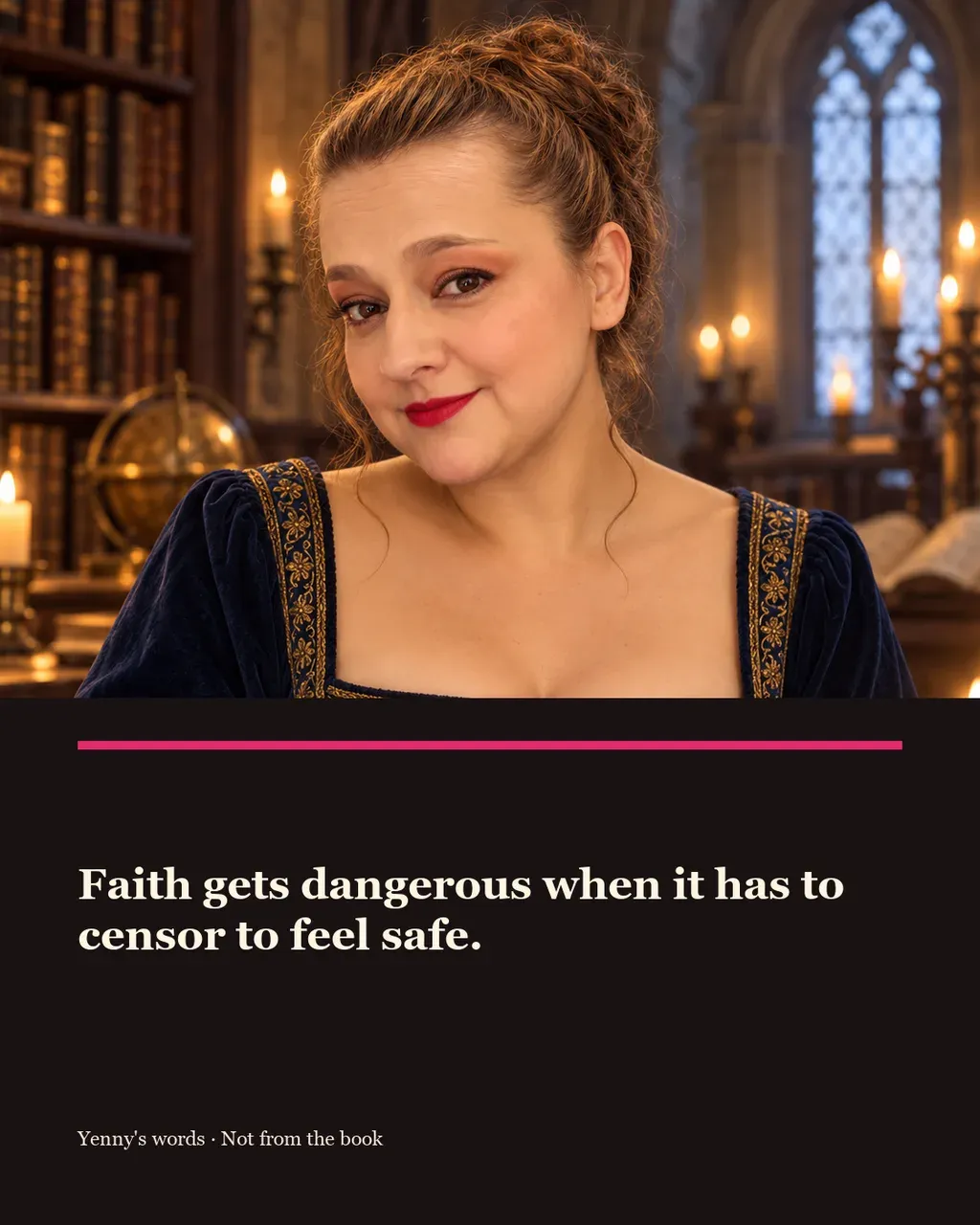
What I did not like: the mystery sometimes waits for the lecture
The book shifts between murder investigation and long theological, philosophical, and linguistic discussions. Some conversations slow the case, and medieval references can feel like a wall if you came only for a whodunit. The library is fascinating, but it does not hand over every corridor without asking for patience.
That is the trade-off. The Name of the Rose wants to be a crime story and an extended conversation about ideas. Sometimes those sides enrich each other; sometimes one asks the other to hold on while it finishes a very long point. I rate it 4 out of 5 stars: the abbey, the mystery, and the link between knowledge and power stay with me, while the uneven pace keeps me from giving it a perfect score.
Do you need to know medieval history first?
No. Curiosity helps, but the concrete mystery gives us a way into the period. Some references may send you looking things up, and you can enjoy that if you like reading with a side of research. There is no entrance exam in Latin.
I recommend the novel to readers who enjoy historical mysteries, religious and political debates, and books that leave questions behind. If you want a quick case that explains every clue and never pauses, it may feel dense. If you enjoy asking why a text frightens the people who control it, the library is worth entering.
The library stores books and power
William investigates; Adso learns; and the abbey sets rules on what its residents may read, say, and know. The novel earns its atmosphere by making those rules part of the danger. It is a thoughtful, demanding mystery, with a dry streak of humor that stops the medieval debates from turning entirely into marble statues talking to one another.

Frequently asked questions
Umberto Eco’s novel follows William of Baskerville and his novice Adso as they investigate a series of deaths at a fourteenth-century Benedictine abbey.
Yes, but it also explores faith, politics, knowledge, censorship, and the meaning of interpretation within the abbey.
No. Some context can enrich the experience, but the central investigation can be followed without a background in medieval studies.
It can be demanding because of its many characters, historical references, and long philosophical or theological discussions. It is more reflective than a fast modern thriller.
William is a curious friar investigating the deaths; Adso is his young companion and the narrator who remembers their time at the abbey.
It is both a literal maze and a symbol of who controls knowledge, access to books, and the ideas people are allowed to encounter.
Frequently asked questions
What is The Name of the Rose about?
In a fourteenth-century Benedictine abbey, William of Baskerville and his apprentice Adso investigate a series of deaths while preparing for a religious meeting.
Who are William and Adso?
William is a Franciscan friar who investigates the crimes. Adso is a young novice who accompanies him and narrates the events from memory.
Is the library a central setting?
Yes. The labyrinthine library is key to the investigation and to the book's themes about access to knowledge.
Is it a detective novel?
Yes, with a murder investigation, but it is also a historical and philosophical novel with discussions about religion, power and truth.
Is it hard to read?
It can feel dense because of its references and debates, although the mystery offers a clear narrative line. It's best read without rushing.
Do I need to read anything first?
No. It is a standalone novel and does not require knowing other works by Umberto Eco.
Is the library in The Name of the Rose real?
It is fictional. The novel places it in a Benedictine abbey in 1327 and uses its architecture to build the mystery.
The Book
The Name of the Rose
by Umberto Eco
Get the bookIf you buy through this link, Yenny earns a small commission and you pay the same price.
Keep reading
If you liked it, keep going
Carlos Ruiz Zafón
The Shadow of the Wind
The Shadow of the Wind by Carlos Ruiz Zafón: you find a book, and the whole city tells you to forget it
Daniel Sempere enters the Cemetery of Forgotten Books and chooses a novel. I have made bad purchases, but none came with a stranger determined to destroy every copy.
October 23, 2026

Adalyn Grace
Belladonna
Belladonna by Adalyn Grace: an heiress, a ghost and Death with more presence than several living people
A gothic mansion, poison and a young woman looking for answers among people hiding far too much. This is my spoiler-light review of Adalyn Grace’s Belladonna, a mystery about an heiress who can see Death and a family that could use fewer secrets and more honest conversation.
October 27, 2026

J. R. R. Tolkien
The Fellowship of the Ring
The Fellowship of the Ring by J. R. R. Tolkien: a dangerous mission and far too many people trusting a ring
An epic journey, friendship and a piece of jewelry that should come with a warning label. Here is my spoiler-light review of the first part of The Lord of the Rings. If you only know the films, the book takes longer to walk, talk, sing and tell you the history behind each place. Tolkien is not trying to get you to Mordor by taxi; first he wants you to understand why arriving matters.
October 27, 2026
Want more like this? Join the Readers Club and get one of my books for free.
Share
My books
Books by Yenny Astrid Londoño



About the author
Yenny Astrid Londoño
Yenny Astrid Londoño is a Colombian author and entrepreneur, founder of Anchetas Medellín. She writes about real life with sarcasm, irony and smart humor, turning everyday situations, mistakes and imperfect relationships into stories that readers can laugh at and recognize themselves in.

A free book from me
Get a free book from me
Subscribe and get Sobreviviendo a mis muertos in full as a PDF.
After that, I'll only write when I have something worth telling you.
Also available: Read this review in Spanish →