
Book review
The Secret of Secrets:
Dan Brown's The Secret of Secrets: Robert Langdon, Katherine Solomon, Prague and noetic science. Fun machinery, shaky bolts. Review, 4 out of 5.
By Yenny Astrid Londoño · October 21, 2026 · 7 min read
Share
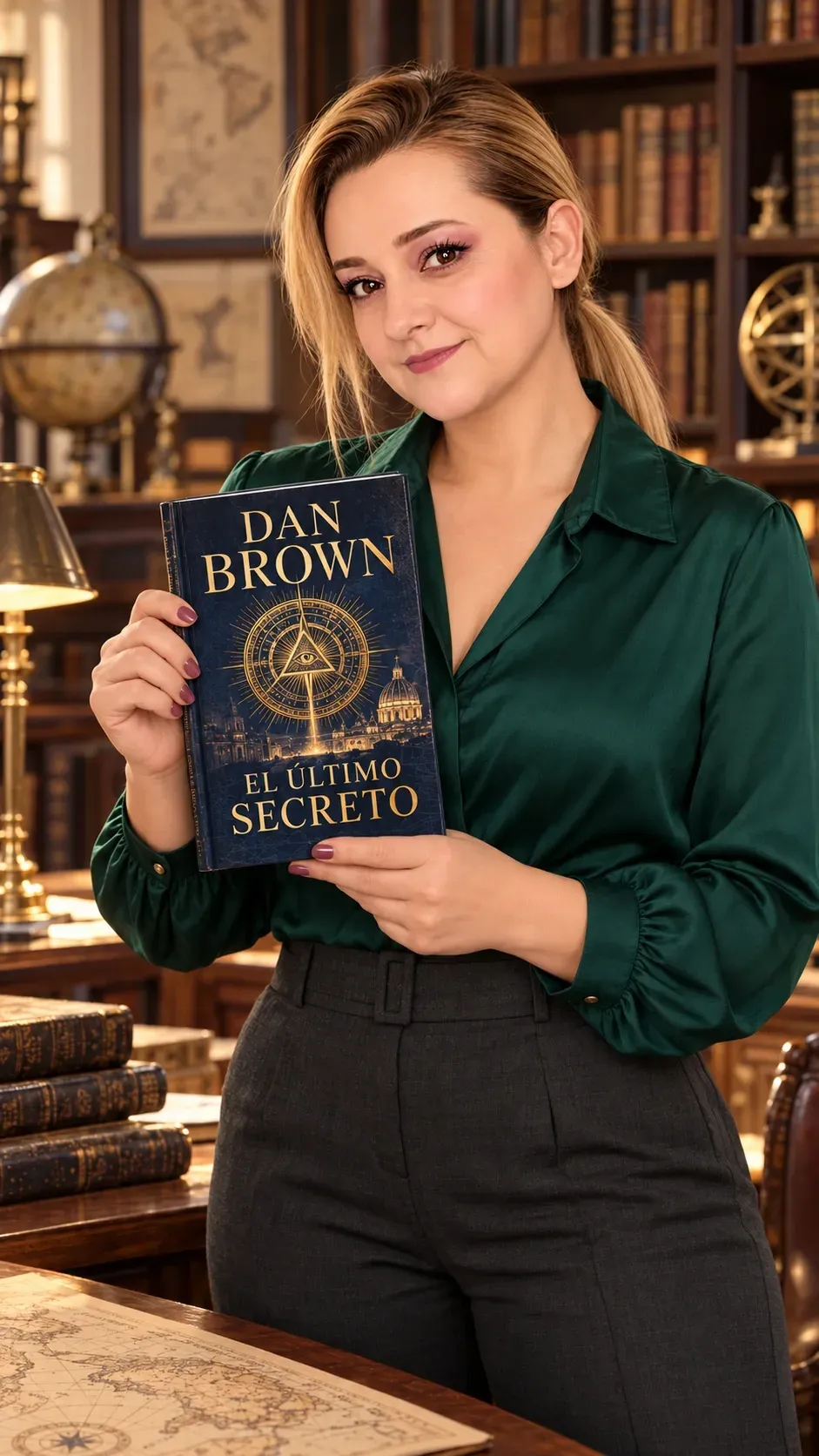
The Book
The Secret of Secrets
Mystery
by Dan Brown
4 out of 5 stars
There is an important manuscript, a death and a disappearance that turn the visit into a chase.
Langdon arrives in Prague, and the mystery opens several doors
Robert Langdon travels to Prague to accompany Katherine Solomon to a conference on noetic science. A manuscript, a death, and a disappearance turn the visit into a chase. Dan Brown knows how to combine a city full of history, a scientific secret, and everyone’s favorite professor of symbols. I do not need proof that he can write a hook; he has done that many times. I want to know how much of the momentum is discovery and how much is the same trick dressed for Prague.
Brown understands the “one more chapter” engine. A threat arrives just as someone is about to explain something, and a fresh clue sends the characters through another door. It works. It is also visible once you have read several Langdon adventures. The reader can enjoy the machinery and still notice its bolts.
Katherine Solomon deserves more than being the reason for a chase
Katherine’s disappearance sets Langdon moving. It is an efficient premise, but it makes me raise an eyebrow: when a brilliant woman studies a subject that could reshape conversations about consciousness, I want the story to value her work and ideas, not only her usefulness as the person the hero has to recover.
Noetic science explores experiences and questions about the mind that sit near the boundary of research, philosophy, and more disputed claims. That makes it especially important to distinguish evidence from fascination. A theory is not automatically silly because it is ambitious, and it is not automatically proven because it sounds astonishing. A good conspiracy thriller can play with uncertainty without selling speculation as established fact.
Prague cannot just be a wallpaper of bells and monuments
An old city is ready-made for suspense: towers, archives, lanes, and legends. Prague gives Brown architecture where every door seems to hide another story. But a place does not become a character because the narrator lists its landmarks. It must affect what people know, fear, and can do.
I enjoy erudition when it changes how I understand a scene. I get tired when danger pauses so a professor can deliver an impromptu guided tour. There is a difference between traveling through a novel and attending a sightseeing lecture interrupted by threats. We can enjoy the game without mistaking a fictional conspiracy for a historical claim. Prague can be mysterious without putting a secret society under every stone.
Consciousness, faith, and the temptation of a total answer
The big idea is what we know about consciousness. The subject touches all of us and resists easy answers. What is the mind beyond brain activity? What should we do with experiences people describe as transcendent? Who decides which questions are legitimate? Fiction can explore all of this freely; what it should not do is borrow scientific vocabulary to make a literary revelation sound like academic consensus.
Brown is good at promising that one final piece will change the meaning of what came before. That promise is entertaining and addictive. It also increases the chance of disappointment: no last-page twist can settle the human condition. The thriller can resolve its conflict; consciousness may remain an open question. I prefer to judge the book by the quality of its questions, not by an inflated claim that the ending will transform philosophy.
A dangerous manuscript is not the same as a developed idea
The missing manuscript drives the adventure. Everyone seems to know it could change the board, and the promise pushes the chase forward. I like the device when the contents earn all that anxiety. If the revelation arrives smaller than the internal marketing campaign, it feels like we ran through an entire city for a light show.
A claim that changes how we understand consciousness should face questions: how was the information obtained, who could verify it, and what other explanations exist? A novel does not need a dissertation in every chapter. It can still show intelligent characters who do not accept an idea just because ancient symbols and mortal danger wrapped it in expensive paper. Knowledge also needs responsible circulation; publishing a claim has consequences, and certainty can require correction.
What I did not like about the Dan Brown mechanism
Brown writes chapters that make you say “one more” until morning. The problem is that I start recognizing the mechanism: the interruption before an explanation, the expert who withholds a fact for three scenes, and a twist that requires everyone to be extraordinarily well-timed. Those devices can be effective and visible at once.
I especially lose patience when pace outruns character. Katherine should not become a prize to retrieve, and secondary characters should not exist only to hand over a clue or take a hit. With a premise about the human mind, treating people as interchangeable pieces feels almost rude. I also want the novel to show where a technical fact ends and its invention begins. Curiosity and skepticism fit perfectly well in the same chair.

My verdict: keep your brain at the table
I recommend it to readers who want a puzzle adventure with symbols, chases, and arguments about the limits of knowledge. It may also appeal to people who want a fictional Prague built like a riddle. I would not choose it as a source for learning noetic science or as an intimate novel about grief or Katherine’s identity.
I rate The Secret of Secrets 3.5 out of 5 stars. The premise promises an absorbing ride, but I deduct for familiar shortcuts and the tendency to confuse the aura of science with the work of proving a claim. Dan Brown knows how to close a door just as we are walking through it. I keep entering, but I no longer leave my brain at reception.
Between science, faith, and spectacle
The book’s secret matters because it raises a conversation about real questions, not because a thriller can settle them in one final reveal. I like a theory that sends me looking for context afterward. I do not need the story to sell it as indisputable evidence while someone is running through the next hallway.
If you have read other Robert Langdon adventures, you will recognize the fast pace, cultural riddles, and scholarly detail mixed with pursuit. Here the central theme is consciousness. The mystery may keep you turning pages; the more useful question is what we mistake for knowledge when a claim arrives with enough spectacle.
Frequently asked questions
Robert Langdon travels to Prague for a conference with Katherine Solomon. A death, her disappearance, and a manuscript connected to her research turn the visit into a mystery involving consciousness and hidden knowledge.
The novel introduces its own central conflict. Earlier books add context about Langdon, but the mystery is presented as an adventure readers can follow on its own.
Katherine is a researcher whose work on consciousness is central to the conflict. She is more than the person Langdon is trying to find; her ideas matter to the novel’s premise.
The main action is set in Prague, whose history and architecture feed the novel’s symbols, puzzles, and secret passages.
The novel blends research, hypotheses, and fiction. A specific claim should be checked against independent scientific sources; a suspense plot is not evidence.
I rate it 3.5 out of 5 stars. I enjoyed the puzzle-adventure engine, while deducting for familiar devices and the blur between scientific language and proof.
Frequently asked questions
What is The Secret of Secrets by Dan Brown about?
Robert Langdon travels to Prague to attend a conference by Katherine Solomon on noetic science. After a death, Katherine disappears, and a manuscript linked to her research becomes central to the mystery.
Do I need to read the other Robert Langdon books?
The premise of this installment sets up its main conflict. Knowing the character and Katherine adds context, but the mystery is designed to be followed as its own adventure.
Does Katherine Solomon appear in the novel?
Yes. She is a researcher and her work on consciousness is key to the conflict. It's best not to reduce her to 'the missing woman' when talking about the book.
Where does The Secret of Secrets take place?
The main action is set in Prague, whose history and architecture feed the game of symbols and secrets.
Is the noetic science in the book proven science?
The novel mixes investigation, hypothesis and fiction. To evaluate a specific claim you need independent scientific sources; suspense is not proof.
Does it have the same style as The Da Vinci Code?
It shares with other Langdon novels the fast pace, cultural puzzles and the mix of erudition and chase. The thematic focus here revolves around consciousness.
The Book
The Secret of Secrets
by Dan Brown
Get the bookIf you buy through this link, Yenny earns a small commission and you pay the same price.
Keep reading
If you liked it, keep going

Adalyn Grace
Belladonna
Belladonna by Adalyn Grace: an heiress, a ghost and Death with more presence than several living people
A gothic mansion, poison and a young woman looking for answers among people hiding far too much. This is my spoiler-light review of Adalyn Grace’s Belladonna, a mystery about an heiress who can see Death and a family that could use fewer secrets and more honest conversation.
October 27, 2026
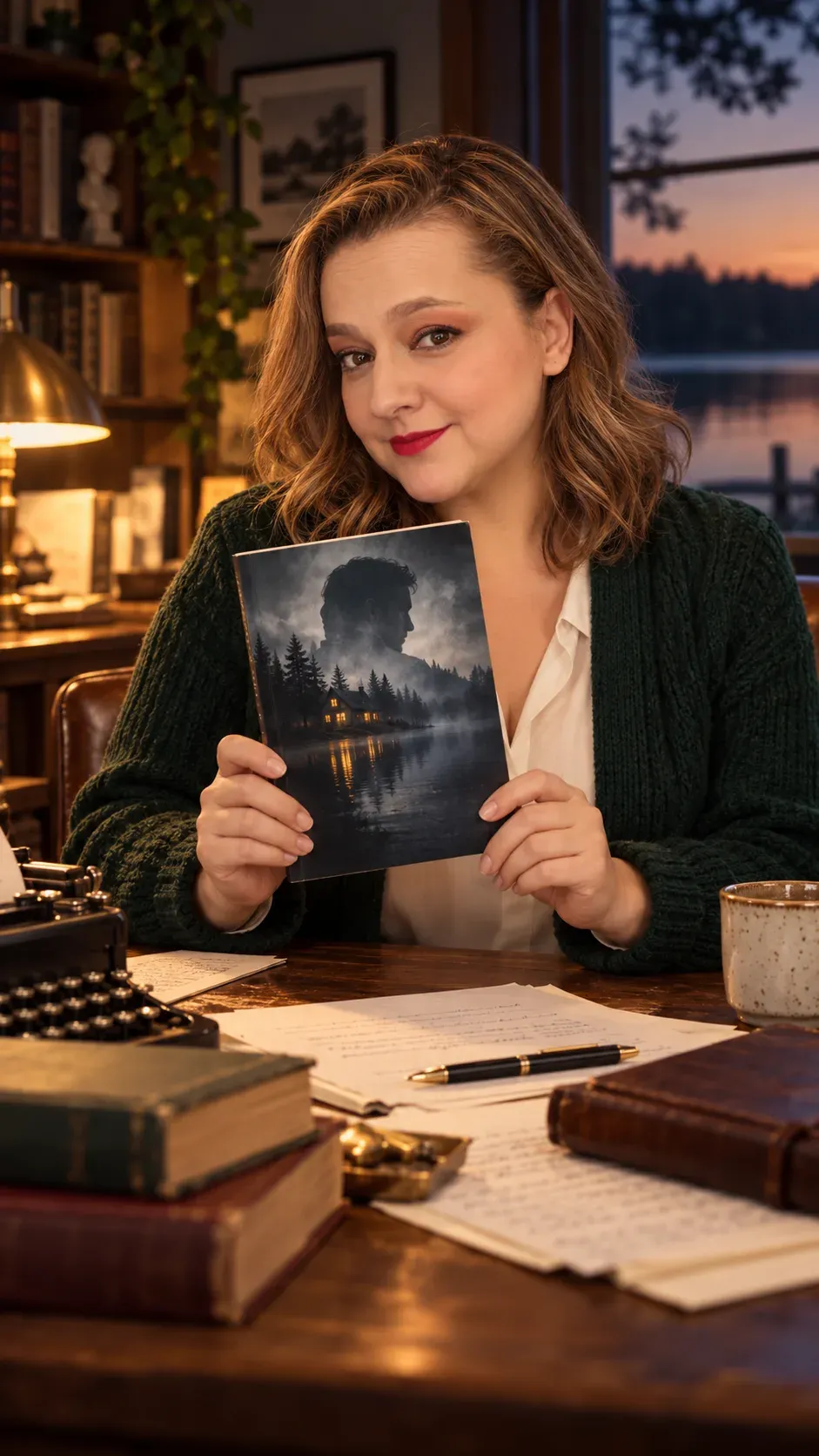
Joël Dicker
The Truth About the Harry Quebert Affair
The Truth About the Harry Quebert Affair by Joël Dicker: the writer looking for a book finds a body
Marcus Goldman has a book deadline, a serious case of writer’s block and a mentor with a body buried in his garden. The universe has a dark sense of humor, and apparently very little respect for an author’s calendar.
October 24, 2026
Carlos Ruiz Zafón
The Shadow of the Wind
The Shadow of the Wind by Carlos Ruiz Zafón: you find a book, and the whole city tells you to forget it
Daniel Sempere enters the Cemetery of Forgotten Books and chooses a novel. I have made bad purchases, but none came with a stranger determined to destroy every copy.
October 23, 2026
Want more like this? Join the Readers Club and get one of my books for free.
Share
My books
Books by Yenny Astrid Londoño



About the author
Yenny Astrid Londoño
Yenny Astrid Londoño is a Colombian author and entrepreneur, founder of Anchetas Medellín. She writes about real life with sarcasm, irony and smart humor, turning everyday situations, mistakes and imperfect relationships into stories that readers can laugh at and recognize themselves in.

A free book from me
Get a free book from me
Subscribe and get Sobreviviendo a mis muertos in full as a PDF.
After that, I'll only write when I have something worth telling you.
Also available: Read this review in Spanish →