
Book review
The Truth About the Harry Quebert Affair by Joël Dicker:
Marcus Goldman has a book deadline, a serious case of writer’s block and a mentor with a body buried in his garden. The universe has a dark sense of humor, and apparently very little respect for an author’s calendar.
By Yenny Astrid Londoño · October 24, 2026 · 7 min read
Share

The Book
The Truth About the Harry Quebert Affair
by Joël Dicker
4 out of 5 stars
The three-timeline investigation and the conflict between mentor and student have a lot of hook.
A writer without a book and a mentor with a body in the garden
Marcus is a successful young writer whose first novel brought fame and whose next one refuses to show up. He turns to Harry Quebert, his former professor and mentor, in the hope that a few days together will get him unstuck. Instead, human remains are found on Harry’s property, and the case connects him to Nola Kellergan, a teenager who vanished years earlier. Marcus goes from asking how to write another book to asking whether the man who taught him to write may be a killer.
The structure keeps moving among present-day investigation, the past and Marcus’s memories of Harry. That gives the mystery several layers: what happened to Nola, what Harry is hiding, and how much of Marcus’s loyalty is affection versus a writer’s need for a story.

Nola is not just the dead girl in an important man’s story
The book’s premise risks making Nola a mystery to solve and a reason for men to write. I kept wanting the novel to resist that. Her life cannot be reduced to the question of whom she loved or what Harry remembers about her. A victim deserves more than becoming the plot device that gives a writer a career boost.
The relationship between Harry and Nola is presented as romantic, but her age and the imbalance between them make that framing difficult to accept without questions. A love story label does not make a power difference disappear. The book is stronger when it lets the reader feel that discomfort instead of asking us to admire a tragic romance and move on.
This is not a small footnote to the mystery. Nola was fifteen, while Harry was her adult teacher. The book can show tenderness and still leave us asking what an adult owed a child in that situation. I do not need fiction to turn into a courtroom transcript, but I do need it to notice the unequal ground under the romance. Calling it forbidden or tragic is not the same as examining who had the power to choose and who had to live with the consequences.
Marcus investigates his mentor and himself
Marcus enters the case with a conflict of interest large enough to need its own lawyer. He wants the truth, but he also wants Harry to be innocent. He is investigating a person who shaped his life and the career he is trying to save. That makes each clue personal, and it raises a useful question: is Marcus looking for justice, a story, or permission to keep loving his mentor?
His writing process becomes part of the plot. Sometimes that is clever; sometimes the book reminds us about the book inside the book so often I wanted to invoice it for editorial consulting.
Three timelines make truth arrive out of order
The shifts between 1975, 2008 and Marcus’s earlier life keep revising what we think we know. A detail that looked settled becomes suspicious once the next version appears. I enjoy a mystery that makes me update my theory, and this one knows how to leave a hook at the end of a chapter.
The trade-off is repetition. The investigation circles the same people and statements, and some revelations arrive with the rhythm of a television cliffhanger. The book is long, and not every turn needed a drumroll.
A small town knows plenty and says almost nothing
Somerset is full of neighbors who remember Nola, Harry and the summer when everything changed. The community’s silence makes the case feel larger than one man’s secret. People protect reputations, old loyalties and their own version of the past. A town can look charming from the road while keeping a whole archive of things nobody wants to mention at dinner.
That is where the mystery gets its social texture. Everyone has an explanation ready, and almost everyone has a reason not to be the first person to say it out loud. A small town is not automatically close-knit; sometimes it is a group chat where everyone has seen the message and nobody wants to be the one who forwards it to the police.

Writing about a victim is still a form of using her
Marcus turns the investigation into a book, which may help people pay attention to Nola’s case. It may also turn her into material for his career. The difference is not solved just because his motives include affection, loyalty or a desire to tell the truth. A writer can care about a person and still make choices that place the writer at the center.
That tension interested me more than another round of “which suspect is lying?” The novel knows that stories have authors, but it also asks whether authors owe anything to the people whose lives become the story. Nola cannot consent to the book Marcus is writing about her. If he wants to honor her, he has to do more than find a shocking answer.

Clues can mislead; language can do it too
The case depends on what people remember and how they describe it. A detail can be true and still leave the wrong impression. A confession can explain one action while hiding another. The three timelines let the book keep changing the reader’s understanding, but they also remind us that a polished story is not necessarily an honest one.
Marcus is a writer, so he is especially vulnerable to believing that a good narrative has to be the truth. It does not. A neat beginning, middle and ending can make an ugly set of facts easier to accept, but ease is not evidence. The book is best when it lets us notice that gap instead of treating each new revelation as a magic trick.
What I did not like
The novel sometimes risks using Nola to fuel the careers and emotional crises of the people who write about her. The romantic framing of a relationship with a substantial age and power imbalance also needed more scrutiny. And with all its timelines, clues and reversals, the book occasionally repeats itself when a sharper edit would have done the job.
Who should read it?
Read it if you enjoy long mysteries, unreliable memories, small-town secrets and a story that keeps changing its shape. If you need a brisk thriller or do not want to read about the exploitation of a teenage girl, this may be a difficult fit.
The case is called Harry; the victim was Nola
That distinction is what I wanted the novel to keep in view. Harry may be the headline, the mentor and the man everyone is discussing. Nola is the person whose life was taken. The mystery works best when it remembers that the answer is not the only thing owed to her.
My rating
4 out of 5 stars. The three-timeline investigation and the conflict between student and mentor have real pull. I take off a star for a mystery that sometimes uses the victim as fuel for the prestige of the people writing about her. Nola deserves more than one great twist. Marcus’s loyalty to Harry keeps the investigation emotionally active, and the town gives the past enough voices to resist a simple answer. The book’s length is not a problem on its own; it becomes one when the repetition makes the same suspicion circle back without adding a new angle. I stayed with it because the question of who gets to tell Nola’s story is more complicated than the question of who gets the last chapter.
Frequently asked questions
What is The Truth About the Harry Quebert Affair about?
Writer Marcus Goldman investigates his mentor Harry after a body is found on Harry’s property and linked to Nola Kellergan, who disappeared years earlier.
Who is Nola Kellergan?
She is the young woman whose disappearance and death lie at the center of the case.
When does the story take place?
The novel moves among the summer of 1975, the 2008 investigation and Marcus’s memories of his own past.
Is it the first Marcus Goldman novel?
Yes. It introduces Marcus and his relationship with Harry; later books return to him.
Is the book very long?
Yes. It is a substantial novel with several timelines, many suspects and a series of reversals.
How old was Nola when she died?
She was fifteen when she disappeared in 1975. That context matters when considering the power imbalance in her relationship with Harry.
Do I need to read another book first?
No. You can start with this title without knowing any other story by Joël Dicker.
The Book
The Truth About the Harry Quebert Affair
by Joël Dicker
Get the bookIf you buy through this link, Yenny earns a small commission and you pay the same price.
Keep reading
If you liked it, keep going
Adalyn Grace
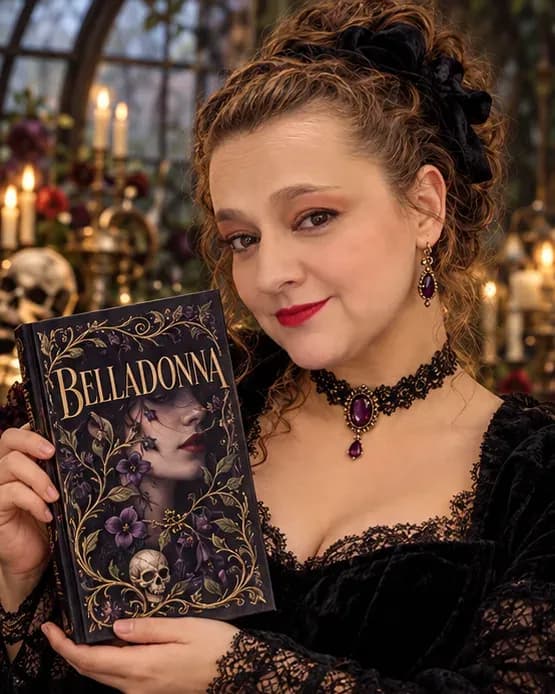
Belladonna
Belladonna by Adalyn Grace: an heiress, a ghost and Death with more presence than several living people
A gothic mansion, poison and a young woman looking for answers among people hiding far too much. This is my spoiler-light review of Adalyn Grace’s Belladonna, a mystery about an heiress who can see Death and a family that could use fewer secrets and more honest conversation.
October 27, 2026

Carlos Ruiz Zafón
The Shadow of the Wind
The Shadow of the Wind by Carlos Ruiz Zafón: you find a book, and the whole city tells you to forget it
Daniel Sempere enters the Cemetery of Forgotten Books and chooses a novel. I have made bad purchases, but none came with a stranger determined to destroy every copy.
October 23, 2026
Umberto Eco
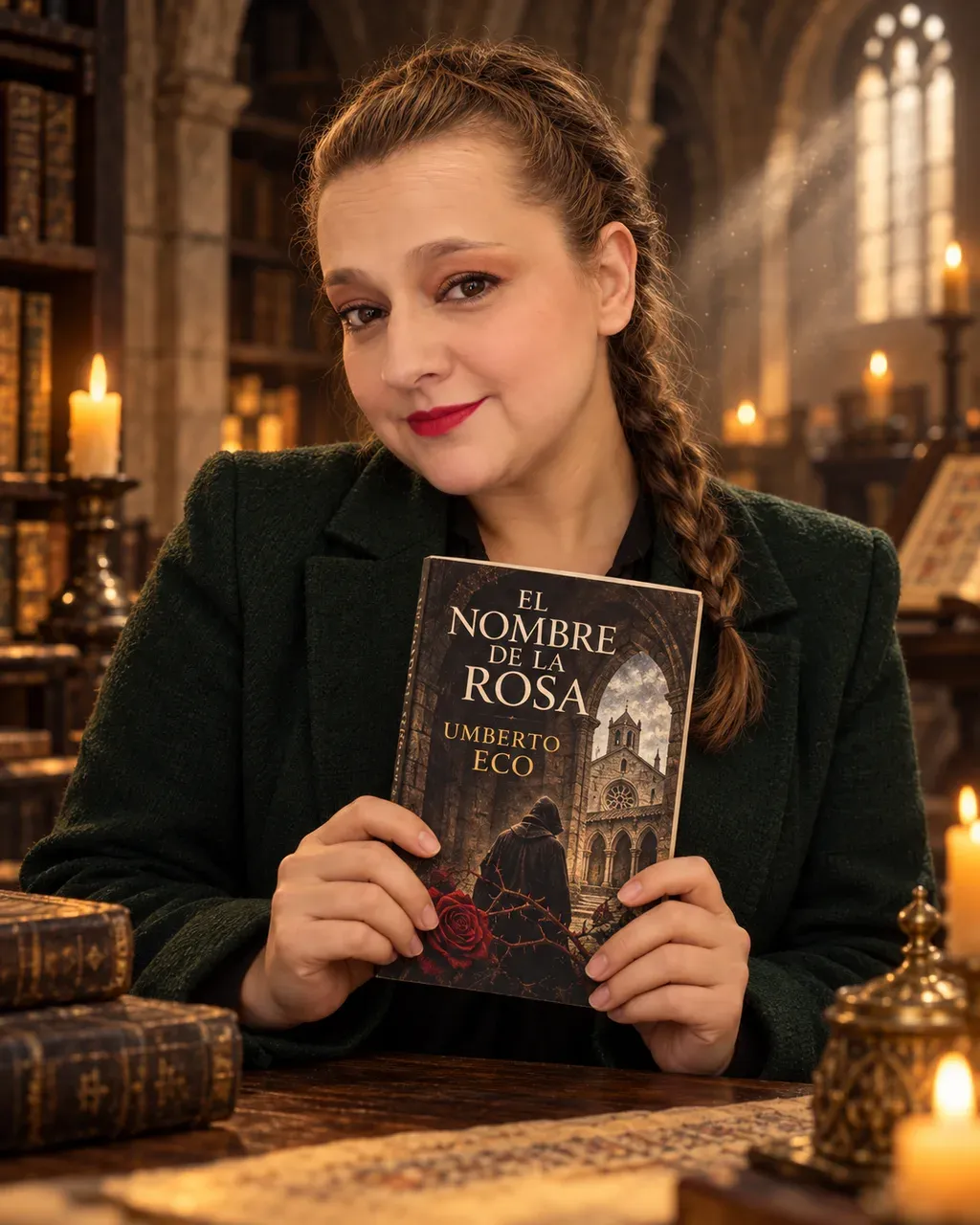
The Name of the Rose
The Name of the Rose: a monastery, a detective and a library that doesn't want readers
Umberto Eco's The Name of the Rose: William of Baskerville, young Adso and a deadly abbey library. My honest review, 4 out of 5 stars, lectures included.
October 22, 2026
Want more like this? Join the Readers Club and get one of my books for free.
Share
My books
Books by Yenny Astrid Londoño



About the author
Yenny Astrid Londoño
Yenny Astrid Londoño is a Colombian author and entrepreneur, founder of Anchetas Medellín. She writes about real life with sarcasm, irony and smart humor, turning everyday situations, mistakes and imperfect relationships into stories that readers can laugh at and recognize themselves in.

A free book from me
Get a free book from me
Subscribe and get Sobreviviendo a mis muertos in full as a PDF.
After that, I'll only write when I have something worth telling you.
Also available: Read this review in Spanish →