
Book review
The Vegetarian:
Han Kang's The Vegetarian: Yeong-hye stops eating meat, and her husband and family try to take control of her body. My honest review, 4 out of 5.
By Yenny Astrid Londoño · October 21, 2026 · 7 min read
Share
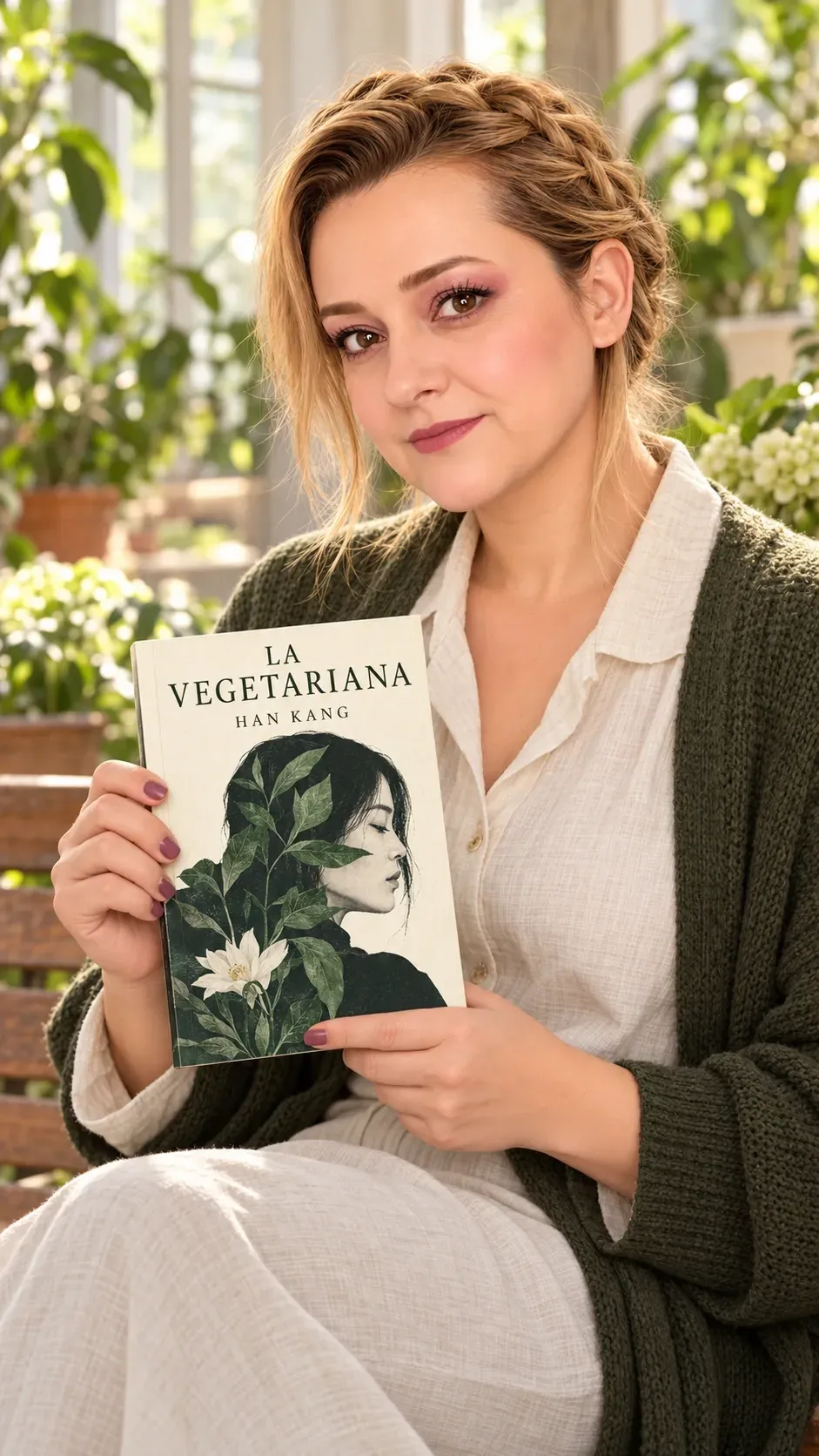
The Book
The Vegetarian
Literary fiction
by Han Kang
4 out of 5 stars
In another book that could be the start of a heavy family argument and a personal search.
A refusal that makes everyone else show their hand
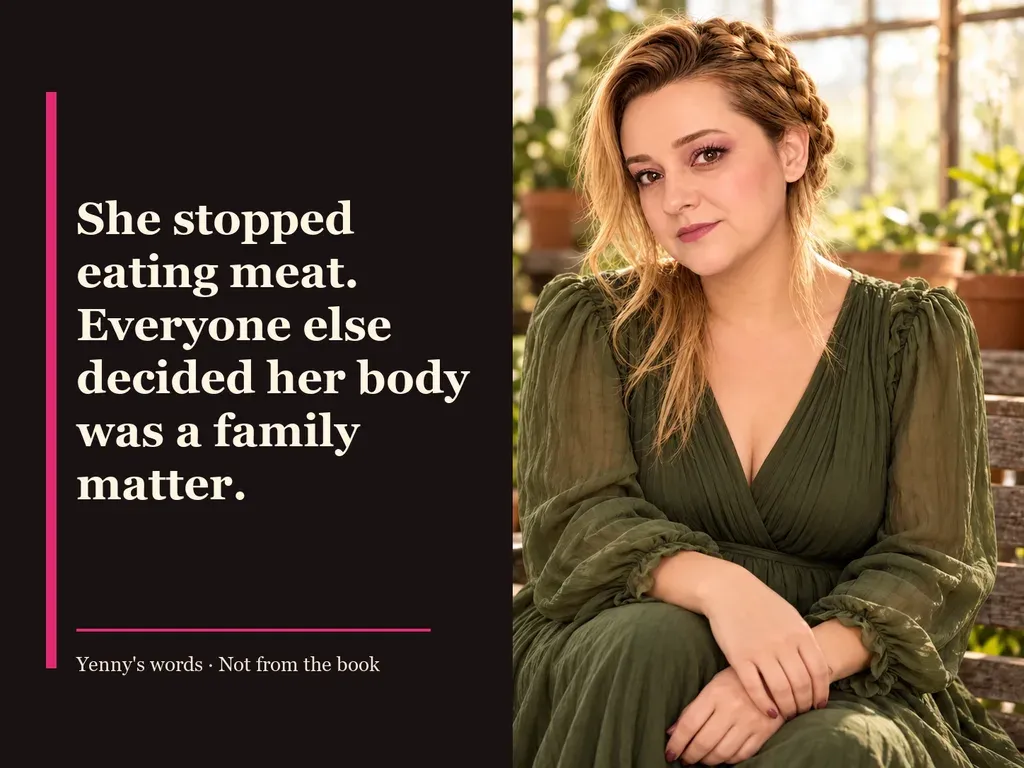
Yeong-hye stops eating meat after a series of nightmares. On paper, that sounds like a private decision. In The Vegetarian, her husband and family treat it as a public emergency, a shame, a provocation, and eventually a reason to take control of her body. The book’s opening makes it clear that the conflict is not simply about food. It is about who gets to decide what a woman may do when the people around her dislike the answer.
Her husband’s point of view is especially revealing because he remembers choosing her for how ordinary and convenient she seemed. He does not describe a great love story interrupted by a crisis; he describes a woman he expected to fit neatly into the life he had already planned. When she refuses, he takes that refusal personally. Some people hear “no” and immediately start searching for a translator who will turn it into “convince me.” The novel knows exactly how dangerous that habit can become.
The family calls force “care” and expects gratitude
The pressure does not stay inside the marriage. Yeong-hye’s family tries to pull her back into what they consider acceptable, and the language of concern becomes tangled with shame and control. A family can be worried about someone and still violate that person’s limits. Good intentions do not magically make coercion gentle; they only make it easier for the person applying pressure to believe they are the hero.
Han Kang lets us watch other people interpret Yeong-hye rather than giving us a complete explanation from her own interior voice. That decision can be frustrating, but it also makes us feel the trap: everybody has a theory about her, and almost nobody asks what it means to listen when there may not be a tidy answer. The book does not hand the family a gold star for being frightened. Fear may explain their reaction. It does not give them ownership.
Three parts, three points of view, and one missing center
The novel unfolds in three parts shaped by the perspectives of Yeong-hye’s husband, her brother-in-law, and her sister In-hye. Each section changes the angle but does not give us a simple key to Yeong-hye. We see what she means to other people, what they want from her, and what they cannot accept. The form makes absence feel deliberate: the person at the center is also the person others keep converting into a symbol.
That structure is one reason the book stays with me. It also creates a real tension. Yeong-hye risks becoming a surface for everyone else’s interpretation, including ours. I do not want to pretend that distance is automatically brilliant just because a novel is literary. Here, I think the distance is productive and uncomfortable, but I still feel the cost of not hearing her more directly. A reader can admire the choice and remain bothered by what it withholds. Both things can be true; we do not have to make every book pass a personality test before discussing it.
The body is not a metaphor anyone gets to own
The book’s body imagery is startling, and the men around Yeong-hye often view her body through their own needs: as a wife to manage, an object of desire, or material for an artistic project. That is a lot of people turning one woman into whatever is convenient for them. The novel makes the difference between looking and respecting impossible to ignore. Seeing someone clearly is not the same as seeing them as a person.
The plant imagery can tempt readers to call Yeong-hye’s transformation a beautiful escape. I would be careful with that. Her experience is painful, isolating, and physically dangerous. Reading it as a feel-good poster about “being true to yourself” would flatten the suffering and make it useful to everyone except the person going through it. A symbol can be powerful without becoming advice. Sometimes a story’s image is there to make us sit with a limit, not to hand us a motivational caption for Monday morning.
What I did not like
My main reservation is the distance between Yeong-hye and the reader. I understand how the form creates the book’s point, but at times I wanted more space for her as a person beyond the men and relatives interpreting her. That absence can expose how little they listen; it can also leave her vulnerable to becoming a mystery for us to solve. I do not want her opacity packaged as “mysterious woman” any more than I want it packaged as an inspirational rebellion.
The novel also refuses to explain every symbol or motivation. I respect that refusal, but some passages left me wanting a sharper emotional connection. I give The Vegetarian 4.5 out of 5 stars: its structure and precision in showing bodily control are formidable. I hold back half a star because the very distance that makes the novel unsettling can also keep Yeong-hye just beyond reach. It is a deliberate frustration, and still a frustration.
How to read the symbols without turning Yeong-hye into a puzzle
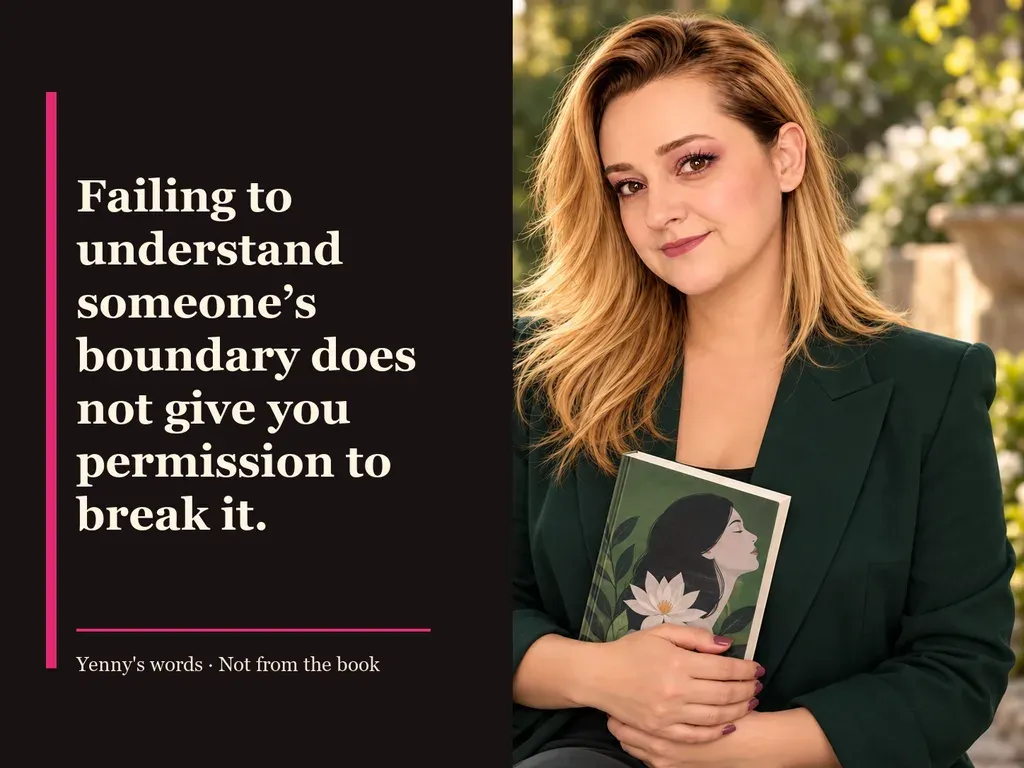
The book invites interpretation, but interpretation should not become a license to announce what Yeong-hye “really means” as if she were a crossword clue. Her refusal can be read through bodily autonomy, violence, gender, family expectations, and a wish to escape ordinary human life. The novel keeps those ideas in tension. It does not reduce itself to a single statement about vegetarianism, and it is not a simple diagnosis disguised as fiction.
I would read the symbols alongside the concrete behavior in the story: who decides, who touches, who pressures, who gets to tell the version that sounds reasonable. That keeps the conversation grounded. The most useful question is not only why Yeong-hye changes, but why the people around her need her to return to the version they understood. The book has no obligation to make their discomfort more important than her boundary. Neither do we.
Who should read The Vegetarian?
I recommend it to readers who enjoy compact, unsettling fiction that trusts silence and structure, and who are ready to discuss consent and family control without expecting a tidy recovery arc. It is a short book with a long aftertaste. If you want a gentle story about changing your diet, this is spectacularly not that. The title is a doorway; the room behind it is much more troubling.
Han Kang leaves me with a question sharper than “Why did Yeong-hye stop eating meat?” Why do the people around her need to force her back into place before they can feel comfortable again? The answer is not simple, but the question is useful far beyond this novel. It follows us into families, relationships, workplaces, and every place where concern starts demanding obedience as its price.
Frequently asked questions
Yeong-hye stops eating meat after disturbing dreams, and her decision triggers increasingly coercive reactions from her husband and family. The novel explores bodily autonomy, control, and the way others interpret her.
No. Food refusal begins the conflict, but the novel focuses more broadly on autonomy, family power, violence, and the body.
The three sections are shaped by the perspectives of Yeong-hye’s husband, her brother-in-law, and her sister In-hye. This structure keeps Yeong-hye partly at a distance.
It can suggest transformation, escape, and rejection of ordinary human life, but the novel does not reduce the image to one fixed meaning or present Yeong-hye’s experience as an easy solution.
I give it 4.5 out of 5 stars for its form and its unsettling treatment of bodily control. My reservation is the distance between Yeong-hye and the reader.
It is brief but emotionally unsettling, with family coercion, bodily distress, and disturbing imagery. Readers seeking a gentle food-centered story should know that the novel goes somewhere much darker.
Frequently asked questions
What is The Vegetarian by Han Kang about?
Yeong-hye stops eating meat after a series of nightmares. Her decision provokes increasingly violent and possessive reactions from her family, and the novel explores her body, her desire for transformation and the gaze of others.
Is it a book about veganism?
Not mainly. Her refusal to eat meat sets the plot in motion, but the focus is on bodily autonomy, family violence and the wish to escape certain ways of life.
Who narrates The Vegetarian?
Its three parts approach Yeong-hye through other people: her husband, her brother-in-law and her sister In-hye. That formal choice is key to the reading.
Why doesn't Yeong-hye tell the whole story in her own voice?
The novel puts the reader before the interpretations of those around her. That distance reproduces the difficulty, and sometimes the refusal, of really listening to one another.
Does The Vegetarian have disturbing scenes?
Yes. It contains family coercion, physical violence, sexuality and psychological suffering. Check it before giving or recommending it blindly.
Did Han Kang win the Nobel Prize in Literature?
Yes, she received the Nobel Prize in Literature in 2024. That recognition may attract new readers, but it does not make the novel a comfortable read.
The Book
The Vegetarian
by Han Kang
Get the bookIf you buy through this link, Yenny earns a small commission and you pay the same price.
Keep reading
If you liked it, keep going

Leigh Bardugo
Six of Crows
Six of Crows by Leigh Bardugo: an impossible heist and six people who cannot work together without threats
Six thieves, one impossible job and a plan whose first rule is apparently “do not kill your teammates before we get inside.” This is my spoiler-light review of Leigh Bardugo’s Six of Crows, a fantasy about criminal skill, complicated loyalties and people who learned to survive by trusting nobody—including the people they need beside them.
October 29, 2026

Lauren Roberts
Reckless
Reckless by Lauren Roberts: a romantic chase where both people know trust is a bad idea
The competition is over, but Paedyn and Kai are nowhere near safe. She is on the run, he is hunting her, and they both have reasons not to trust the person they want. This is my spoiler-light review of Lauren Roberts’s Reckless, the second book in the Powerless trilogy, where romantic tension travels through a world outside the palace and the political questions are still waiting for a fuller answer.
October 28, 2026

Rebecca Ross
Ruthless Vows
Ruthless Vows by Rebecca Ross: a war, a reporter without his memories and letters that still find their way
The war has consequences, Roman has lost the memories that explain his life, and the letters still find a way through. This is my spoiler-light review of Rebecca Ross’s Ruthless Vows, the second and final book in Letters of Enchantment. It continues Iris and Roman’s story by asking whether loving someone means recovering an older version of them or meeting the person they decide to become now.
October 27, 2026
Want more like this? Join the Readers Club and get one of my books for free.
Share
My books
Books by Yenny Astrid Londoño



About the author
Yenny Astrid Londoño
Yenny Astrid Londoño is a Colombian author and entrepreneur, founder of Anchetas Medellín. She writes about real life with sarcasm, irony and smart humor, turning everyday situations, mistakes and imperfect relationships into stories that readers can laugh at and recognize themselves in.

A free book from me
Get a free book from me
Subscribe and get Sobreviviendo a mis muertos in full as a PDF.
After that, I'll only write when I have something worth telling you.
Also available: Read this review in Spanish →