
Book review
Behind Her Eyes:
The boss, his wife and a friendship that complicates desire. Intimacy offers versions of David and Adele that never quite coincide.
By Yenny Astrid Londoño · October 8, 2026 · 10 min read
Share

The Book
Behind Her Eyes
Psychological suspense with supernatural elements
by Sarah Pinborough
4 out of 5 stars
The hard part will be working out how much of each thing they are letting her see.
There are enough ordinary ways to make a mess of your life without sleeping with your married boss and becoming friends with his wife. Louise manages both. The trouble is that this is not merely an affair waiting to explode.
David is a psychiatrist. Adele seems like the perfect wife. Louise gets close to each of them and hears versions of their marriage that refuse to fit together. The closer she gets, the less certain she can be about whose story she has entered.
What keeps me reading is the difference between intimacy and truth. A confession can make you feel chosen; it doesn't prove that the person chose honesty. Pinborough pushes that distinction beyond the limits of a strictly realistic domestic thriller, and I think readers deserve to know that before the famous ending arrives.
Louise has a life before David shows up
Louise is a single mother who works as a secretary. She isn’t sitting around waiting for a man to give her life meaning; she has responsibilities and precious few chances to let her guard down. That difference matters.
You can know you are doing something complicated and still want a piece of what that complication offers. Being seen, feeling desired, getting out of a routine for a moment where all decisions have practical consequences. I don't need to absolve each choice to recognize the need that moves it.
I'm also not interested in making her the intruder who ruins a perfect couple. The couple already has a history before she arrives. Louise's involvement needs to be examined, but she can't bear everything the other two decided to hide.
That leaves the reader in an uncomfortable position. We can judge Louise and still try to understand her. Both require paying attention to what she wants and what she knows, instead of slapping on a label that shuts down the conversation.
David is still Louise’s boss after office hours
Louise and David don’t meet on equal footing. He is her boss, and that authority doesn’t disappear when their conversations turn intimate. If anything, it becomes easier to overlook.
I'm interested in looking at that mix because romance usually presents inequality as a detail that attraction manages to overcome. But the job still has pay, expectations and consequences. The person who can evaluate your performance can also influence what you are encouraged to ask.
David offers a professional image that should inspire confidence. Once again, knowledge about the human mind doesn't guarantee transparency in one's life. Understanding how someone works can also help you better choose what to show them.
I read his control over Adele and Louise's questions without rushing a sentence. The novel needs us to try to interpret behavior from partial information. The risk is in confusing this lack of information with proof that everything must be innocent. Not knowing yet doesn't force you to calm down.
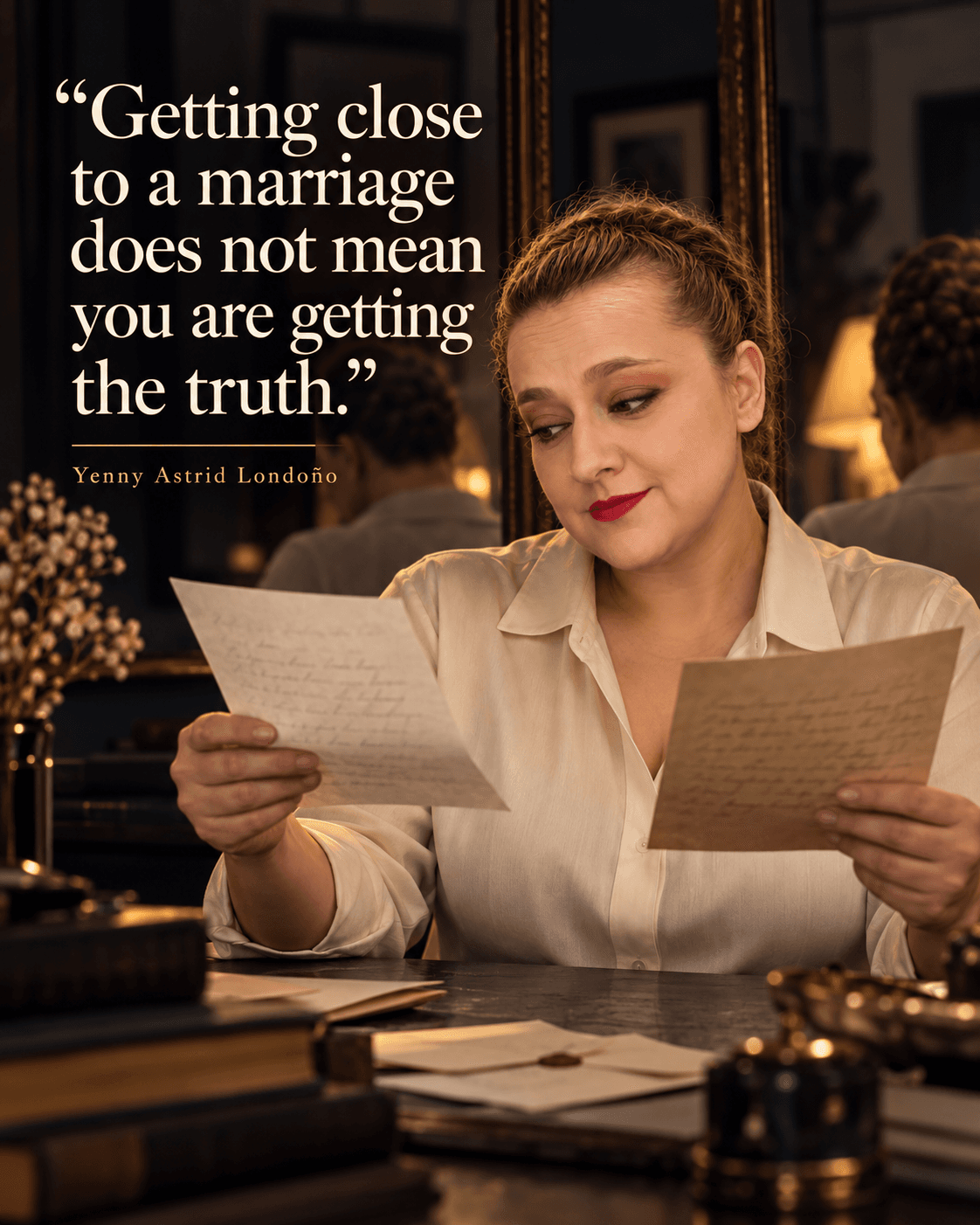
Befriending Adele makes a bad situation personal
Becoming friends with David’s wife changes Louise’s position. She is no longer just hiding an affair with David; she is also growing close to the person that affair could hurt. Now she has to maintain different versions of herself in front of two people who are married to each other.
Friendship can bring real affection and preserve a function within a plan. That possibility seems more interesting to me than immediately deciding that every kind gesture is a trap. Human relationships can be contradictory without becoming non-existent.
Adele offers access to a part of her privacy. Louise receives this closeness as an opportunity to understand. The book forces us to ask who controls access and how much someone can learn when the door is opened in a very chosen way.
There is a form of power in appearing to be the most vulnerable person in a conversation. The other lowers his defense, feels an obligation to help and stops checking certain movements. That doesn't make every person who needs support suspicious. It makes it necessary to distinguish a need from the authority that someone is trying to obtain through it.
Three accounts of one marriage make us work
A couple seen from the outside always has parts we don’t know. Behind Her Eyes uses that blind spot to make each explanation unstable. A detail can feed one suspicion, then take on a different meaning when someone else speaks.
I like this device because it shows how much we fill in with our own imagination. We see control and look for a victim; we see charm and look for a reason to trust. The novel takes those quick judgments and complicates them.
But there is a requirement that I don't want to abandon: the versions must be related to the facts. A thriller can fool me without treating coherence as optional. Surprise wins when I can go back to a scene and recognize what was already there.
The triangle also makes the reader want partial solutions. If one relationship seems true, perhaps the other is explained as an obstacle. That desire may oversimplify Adele or David. Pinborough finds space in what we are willing to discard in order to preserve a story we love.
The supernatural turn changes the deal
It is worth saying before recommending it: this novel is not limited to the possibilities of a realistic domestic thriller. There is an important supernatural component. I point this out without explaining how it participates in the outcome.
For me, knowing this allows us to enter with fairer expectations. A reader can accept identities, lies, and manipulation, and still not want the solution to use any other type of rules. That preference doesn't show that he did not understand the book. It shows that I was expecting a different experience.
I am interested in the audacity of expanding the terrain of the story. My reservation is in what this expansion asks of the accumulated credibility. If a story gets me to look at all the relationships logically, the change needs to have left some possibility of reading.
I'm not going to turn that reservation into a description of the twist. The last revelation is part of the experience and telling it here would reduce the journey to verifying an answer that you already know. I prefer to point out the type of pact that the novel proposes and let you decide if you want to enter.
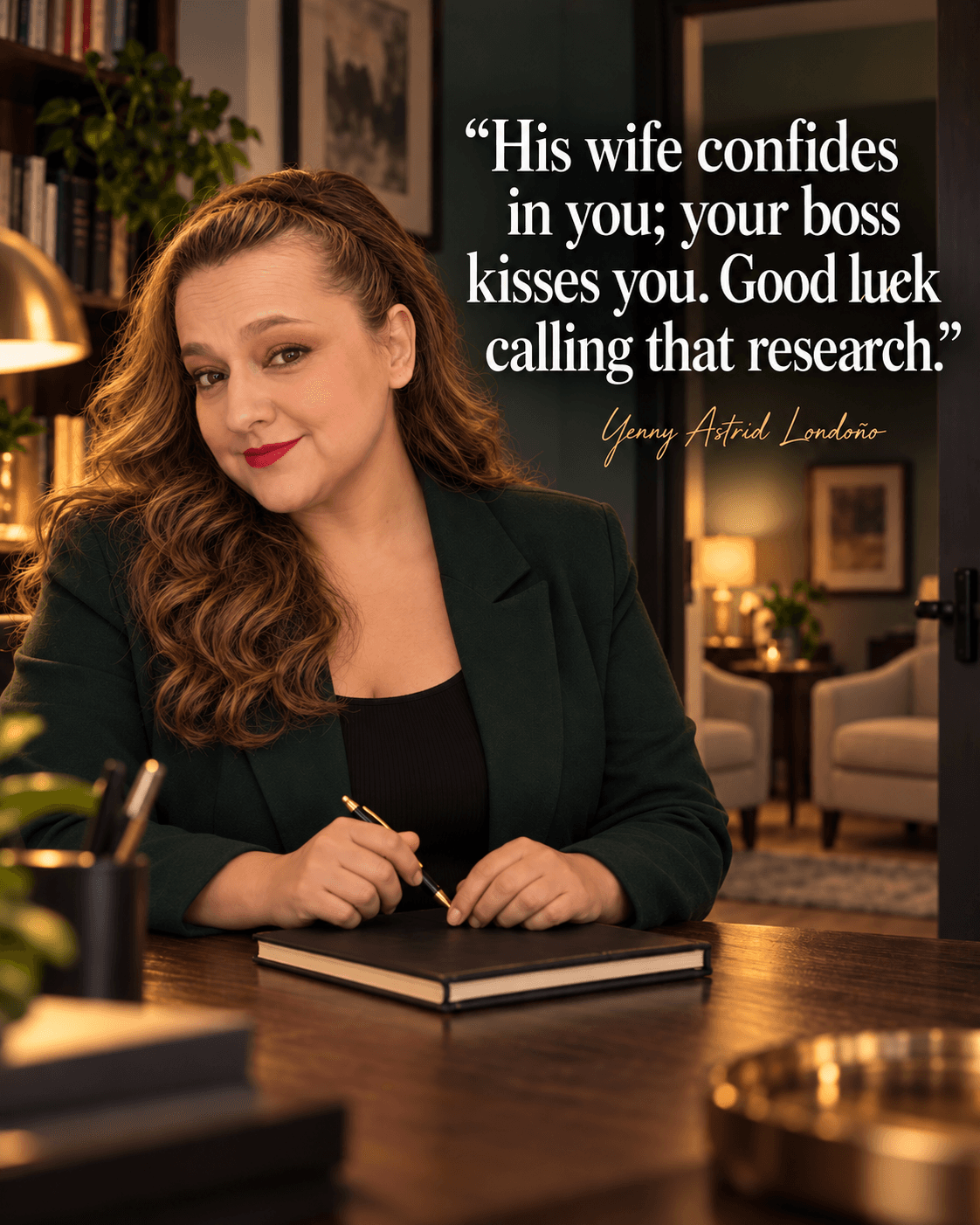
What did not work for me in Behind Her Eyes
My biggest objection is to the deal I thought I was making as a reader. The opening looks like a relationship thriller: a boss, his wife and a woman who gets involved with both of them. That setup teaches us to look for motives, contradictions and lies within a familiar logic. The supernatural element changes the rules. I won’t explain how it works, but I will tell you it’s there, because whether you accept that shift can make or break the experience.
I don't mind a story that crosses genres. It bothers me to feel that my work as a reader loses importance because the explanation requires rules that I was not using when suspecting. A surprise can be enormous and still leave a discomfort other than fear: wondering if the book and you were playing the same game. That is the reason why I wouldn't recommend it to all fans of psychological thrillers.
I also resist the triangle when Louise's life begins to organize itself around figuring out someone else's marriage. Her relationship with David and Adele produces tension, but she has a previous existence and responsibilities of her own. I want them to continue weighing. A protagonist becomes more interesting when the connection complicates a life, and less when it seems to replace it completely.
Mystery alone doesn’t make a character profound. Adele holds our attention because her behavior can be read in different ways. What I’m weighing is whether those readings deepen her character or merely set up the final mechanism. The book gives us plenty to argue about, including what this device adds and what it takes away.
Intimacy and access are not the same
Louise enters a relationship that already existed before her. David and Adele have a shared history, habits and conflicts that are not understood from a first impression. Approaching each one can give you information and also compromise your judgment. If someone offers you confidences, you are not necessarily receiving the full picture: you are receiving what that person decides to tell you.
The novel allows us to look at this selection without concluding that all closeness is false. A friendship can contain affection and calculation. A desire can be sincere and have consequences that the person who feels it doesn't want to examine. It is precisely this mixture that makes Louise's journey uncomfortable. You don't have to choose between a clean truth and an obvious lie. He has to act while he is still performing.
The workplace relationship adds another kind of power. David isn’t just an attractive man; he is also Louise’s boss. That matters even when the story moves toward intimacy. Pretending their relationship exists outside that hierarchy would erase part of what’s at stake.
My reading also compares the information Louise seeks with the information she prefers to keep. Which version favors desire? Which one allows you to maintain the friendship? What question threatens to break both? The interest is not in punishing her for getting involved, but in observing the cost of wanting to keep two incompatible relationships working.
Who should read it, and who should skip it?
I would recommend it to anyone who accepts that a seemingly domestic story introduces elements that change its genre. If you like stories where intimacy becomes manipulable and you enjoy discussing afterwards whether the ending was well prepared, here's a conversation for you. My rating doesn't require that we all come to the same conclusion about the twist.
If you want strict realism and a purely psychological or criminal explanation, I’d warn you before you buy it. That’s not a minor matter of taste; it changes what counts as a clue and what you expect the book to explain. “It’ll leave you speechless” doesn’t help you make that choice. Telling you the story includes a supernatural turn does.
To discuss it without spoiling it, I would separate two questions: how relationships work and what rules the resolution uses. You can highly value the first part and discuss the second. You can also enjoy both. What I wouldn't do is reduce the discrepancy to someone not understanding the ending. A reader can understand a proposal perfectly and still not want to sign it.
My rating is 4 out of 5
I give it four stars for the manipulated intimacy, the contradictory versions and a bet that dares to take the triangle into another terrain. There is more conversation than the question of who is fooling who. It also matters why Louise needs to believe each person at different times.
The star I left out corresponds to my reservation about the rule change. The surprise can be memorable and at the same time ask for acceptance that not everyone will enjoy. I prefer to acknowledge that cost rather than sell the ending as an obligation to be dazzled.
I would recommend it to anyone who enjoys psychological suspense and is willing to welcome a supernatural element. If you have already seen the series, the reading changes because you know part of the route; the book continues to offer the voices and decisions with its own time.
Louise comes in because someone attracts her and someone else needs her.
The difficult thing will be to understand how much of each thing you are being allowed to see.
Frequently asked questions
Is it just a realistic thriller?
No. The story includes a significant supernatural element. It’s useful to know that going in, without giving away the twist.
Are the novel and the series the same experience?
They share the basic story, but this review focuses on Sarah Pinborough's book.
Do you reveal the ending?
No. I preserve the decisive turn and the resolution.
What function does the triangle between Louise, David and Adele have?
It puts Louise between two versions of the same marriage and mixes desire, trust and dependence. David is also her boss, so his authority adds pressure to choices that would already be difficult outside work.
What might frustrate you about Behind Her Eyes?
The supernatural component changes what you can expect from the explanation of the mystery. If you go in looking for an exclusively realistic solution, that decision may weigh more on you than the surprise. I also question how much space Louise retains outside of the triangle.
Is it still worth reading if I already know the twist?
The surprise loses some of its punch, but you can still watch how the story manages competing versions and builds trust. Whether that’s enough depends on how much you enjoy the narrative game itself, beyond the final reveal.
The Book
Behind Her Eyes
by Sarah Pinborough
Get the bookIf you buy through this link, Yenny earns a small commission and you pay the same price.
Keep reading
If you liked it, keep going

Javier Castillo
The Snow Girl
The Snow Girl: Kiera disappears and everyone moves on except her parents
Javier Castillo's The Snow Girl: Kiera vanishes at a New York parade and a tape reopens the case five years later. My honest review, 4 out of 5.
October 22, 2026
John Katzenbach
The Analyst
The Analyst: a birthday threat, fifteen days and a therapist who has lost control
John Katzenbach's The Analyst: a psychoanalyst gets fifteen days to find out who is threatening him. My honest review of this thriller.
October 22, 2026

Juan Gómez-Jurado
The Patient
The Patient: the President on the operating table and a daughter nobody can trade
Juan Gómez-Jurado's The Patient: a neurosurgeon, a President on the table and a kidnapped daughter in sixty-three hours. My honest review.
October 22, 2026
Want more like this? Join the Readers Club and get one of my books for free.
Share
My books
Books by Yenny Astrid Londoño



About the author
Yenny Astrid Londoño
Yenny Astrid Londoño is a Colombian author and entrepreneur, founder of Anchetas Medellín. She writes about real life with sarcasm, irony and smart humor, turning everyday situations, mistakes and imperfect relationships into stories that readers can laugh at and recognize themselves in.

A free book from me
Get a free book from me
Subscribe and get Sobreviviendo a mis muertos in full as a PDF.
After that, I'll only write when I have something worth telling you.
Also available: Read this review in Spanish →