
Book review
The Crystal Cuckoo:
My review of The Crystal Cuckoo: Cora Merlo, a donor's family, Steelville and the questions a new heart cannot answer.
By Yenny Astrid Londoño · October 8, 2026 · 9 min read
Share
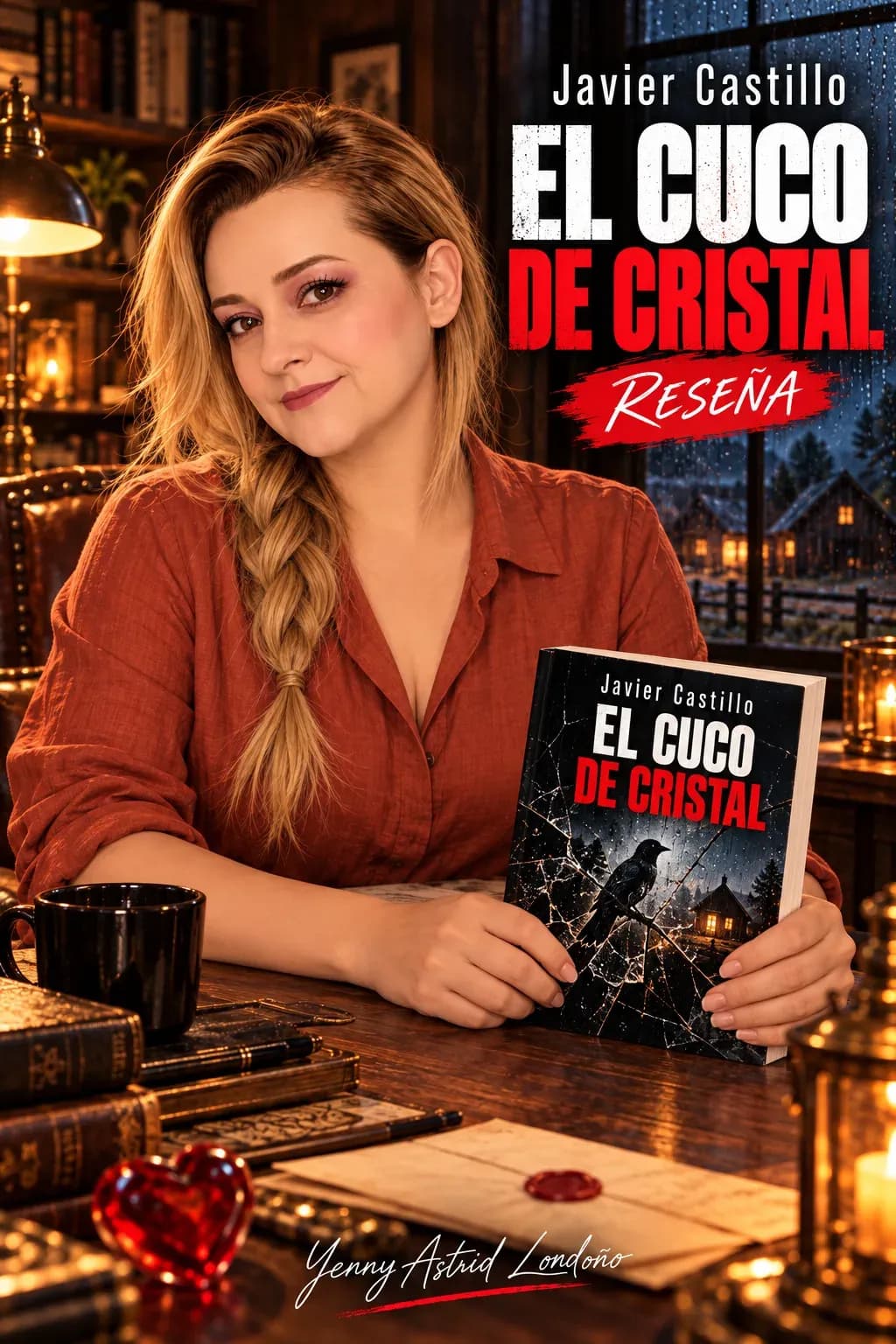
The Book
The Crystal Cuckoo
Mystery thriller
by Javier Castillo
More reviews by Javier Castillo →
3.5 out of 5 stars
I give it four stars because the link between a life saved and another life lost gives the mystery an emotional reason to exist.
Cora moves from caring for patients to needing care
Cora knows a hospital from the professional side. Then she has to experience it as the person who cannot choose whether she needs help. Medical knowledge can explain a procedure without removing the fear of undergoing it. There is a small arrogance in imagining that understanding a treatment protects us from what it feels like in our own body.
I like that change in position. Cora does not stop being competent because she becomes a patient, and she does not have to react with inspirational gratitude every morning to retain her dignity. Recovery can include anger, doubt and the difficulty of describing what has been lost as well as what has been saved. Steelville's mystery reaches a woman whose life is already being reorganized. She is not an investigator who happens to have a convenient reason to visit. She carries an intimate connection to someone she never knew.
Cora is a doctor who suddenly must trust other people with her body and her future. That reversal gives the transplant more force than a convenient mystery device. Recovery is not a cinematic cut from surgery to adventure; it changes her energy, her dependence and the questions she can bear to ask. I wanted the story to remember that she is a person recovering from a crisis before it sends her into somebody else's unfinished family history.
Charles's mother grieves; Cora still has a life to live
A transplant joins two stories without making the people in them need the same thing. Cora may wish to understand who Charles was. His mother may need to preserve something of her son. Both impulses deserve care; neither gives one woman ownership of the other. An invitation can be kind and still come loaded with hopes no guest could satisfy.
I would distinguish gratitude from debt. Cora can acknowledge a gift and listen to a family's memories. She cannot be expected to become Charles, fill his place or make her continued life proof that his death has been compensated. A life saved remains the life of the person living it. That difference gives even a polite conversation an edge, and the novel is more interesting when it lets both women have needs that do not fit together neatly.
Charles's mother has every reason to want to meet the woman who received his heart. Cora has every reason to decide how much of that relationship she can carry. Sympathy for the mother's loss cannot turn into an obligation for Cora to replace a son, absorb his memories or perform gratitude on command. A donated organ is a gift of life, not a lease on the recipient's identity. That boundary is where the emotional mystery becomes interesting to me.
Steelville has an official version before Cora asks anything
A close community is useful to a mystery because knowledge lives in relationships as much as in documents. Neighbours remember who asked a question, which family would be hurt by an answer and what version of the past has become acceptable to repeat. Nobody has to call a formal meeting to arrange a silence. People learn which subject makes everyone uncomfortable and begin discussing the weather instead.
Cora arrives without knowing those boundaries. She can ask where locals stopped asking years ago; she can also mistake good manners for access to the truth. I do not assume every peaceful street hides a conspiracy. I want the book to show exactly who benefits from silence and what speaking would cost. A pretty landscape cannot certify its residents' conduct. If it could, finding a place to live would be a lot easier.
Steelville's closed ranks make the usual small-town greeting sound like a test: who are you, who brought you, and what have they already told you? I would listen to the answers as carefully as Cora does. A collective story can survive for years without everyone sitting down to agree on the lie. People only need to repeat the comfortable version and learn which questions make the room go quiet.
The missing baby makes the visit everybody's business
The disappearance in a park changes the scale of Cora's stay. Her private effort to understand Charles now shares space with a family looking for a child. That event brings urgency, but it should not function merely as a lever to push Cora toward the next clue. The missing baby has a present of their own; the people searching are not supporting cast in the donor's history.
The child cannot tell an investigator what happened. Others must offer memory, observation and the parts they are willing to say aloud. A soothing explanation and useful information are not necessarily the same thing. As uncertainty spreads, hospitality changes too. Steelville can welcome a visitor and still have things it wants protected. Cora's first reason for coming no longer explains everything she encounters.
The baby's disappearance prevents the visit from remaining a private search for a donor's past. Cora arrives with one question and finds a community dealing with another, more immediate terror. The connection creates suspense, but it also demands care. A missing child cannot exist solely to increase the mysterious atmosphere around a transplant. I wanted every new revelation to make the town's behavior more legible, not just add another red string to the board.
The heart is a bond, not a case file
It is tempting to say Cora inherited Charles's nightmares along with his heart. It makes a dramatic caption and a sloppy reading. An organ does not transfer evidence, motives or memories. The emotional connection is strong enough without pretending biology has become a supernatural narrator.
Cora has reasons to ask who Charles was and what happened around him. The answers must come through people, testimony and choices about what to disclose. The older mystery needs to alter our understanding of the present rather than simply keep information in reserve until the last possible chapter. I want Cora's curiosity to matter in a life she will continue living, not turn her recovery into an unpaid internship solving everyone else's secrets.
What did not work for me
The opening assembles a lot of extraordinary events: a heart attack, a transplant, a donor's mother, an invitation and a baby's disappearance. It is gripping, but it requires the reader to accept a strong coincidence very quickly. I needed the link between Cora's recovery and the crime to earn its emotional weight, not merely move the plot efficiently.
The secretive-town premise is familiar too. “Everyone knows something” is not characterization; it is a trailer line. I wanted specific costs of silence and distinct reasons for each person to withhold an answer. I also resist treating the heart as a complete narrative inheritance or the missing child as an intensifier for Cora's visit. The donor's family, Cora and the people searching for the baby all need to remain people rather than parts of one elegant mechanism.
The novel sometimes pushes its revelations so quickly that coincidence and emotion have to share a very small doorway. A surprising link can deepen a story; too many links can make an entire town feel assembled for one visitor's investigation. I also wanted Cora's medical recovery to keep its limits when the plot became impatient. The reserve does not cancel the book's pull. It explains why I enjoyed the ride while occasionally asking who had signed the permission slip for all these connected secrets.
Gratitude, grief and the right to go on living
Charles's mother can be grateful that somebody survived and still grieve the son who did not. Cora can be grateful and still need distance. Neither woman is wrong for having a life that does not resolve the other's pain. That is the relationship I found more valuable than an abstract slogan about second chances.
The move from New York to Steelville reinforces Cora's vulnerability. She leaves a professional world she knows and enters a community whose information flows through unwritten rules. Being a doctor helps her understand parts of her recovery. It does not give her access to a town's memory. Ask who gets to tell Charles's life: his mother, a neighbour, a friend, a person who knew him years ago. Their stories may differ without one conveniently containing every answer. The quality of those voices matters more to me than a twist announced with dramatic music.
Who should read it, and what to expect
I recommend The Crystal Cuckoo to readers who enjoy old secrets, a community that must be learned and a protagonist emotionally involved in the investigation. It is a standalone; you do not need the Miren Triggs novels. The relationship between survival and grief gives Cora a reason to travel that is more than a plotting excuse.
If you want a meticulous medical novel or a story focused mainly on rehabilitation, adjust expectations. The transplant opens the door; the mystery occupies most of the house. I would mention the missing baby before handing it to somebody sensitive to child disappearance. After reading, I would ask whether Cora was seeking to know Charles, justify her survival or learn how to live with what she received. Those are not the same task.
My rating: 3.5 out of 5 for a second chance with strings attached
I give it four stars because the link between a life saved and another life lost gives the mystery an emotional reason to exist. My reservations are the pileup of coincidence and the danger that the mechanism absorbs Cora's recovery and the missing child's urgency. I wanted the town's silences to have names and costs.
Cora received something that allowed her to continue. Now she wants to understand a story. Those needs beat very close together, but they are different. The heart can keep her alive. Deciding how she lives is still her work, and I would rather not have every grateful person in Steelville issue instructions for it.
Four stars for a story whose most affecting question survives the puzzle: how do you accept a second chance without letting other people define what you owe them for it? I wanted a few twists to breathe longer, and I would have guarded Cora's own life more carefully against the donor family's gravity. The heart keeps beating in her chest. It does not transfer ownership of the person carrying it.
Frequently asked questions
Is the protagonist called Cora or Clara?
In the novel, she is Cora Merlo. This review follows the book rather than changes made in an adaptation.
Is The Crystal Cuckoo part of the Miren Triggs series?
No. It can be read independently.
Do you reveal the ending?
No. The responsible person's identity and the resolution remain unspoiled.
What starts Cora's investigation?
A heart transplant makes her curious about the donor and brings her into his family's orbit. That does not mean she inherits his memories as a medical fact.
What are your main reservations?
The premise asks for a great deal of coincidence, and I wanted Cora's recovery, the town and the missing child to keep weight beyond moving the mystery forward.
Who is the book for?
Readers who like an independent mystery with community secrets and a protagonist drawn into an older history. Those demanding everyday plausibility may find the setup too intense.
The Book
The Crystal Cuckoo
by Javier Castillo
Get the bookIf you buy through this link, Yenny earns a small commission and you pay the same price.
Keep reading
If you liked it, keep going
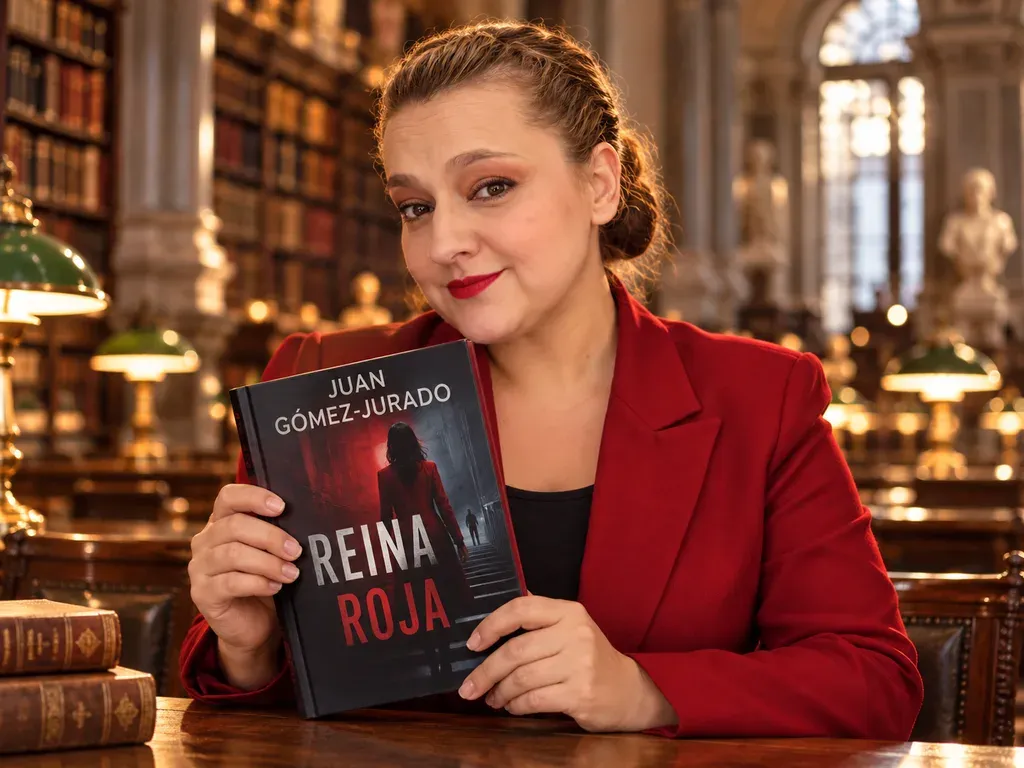
Juan Gómez-Jurado
Red Queen
Red Queen by Juan Gómez-Jurado: Antonia Scott sees everything except a reason to leave her apartment
Antonia Scott has no badge, no official job and an intelligence powerful enough to make a room uncomfortable. Jon Gutiérrez arrives at the wrong door and gets pulled into a case involving wealth, power and people who believe money can buy silence. It can buy quite a lot. It cannot always buy good judgment.
October 26, 2026
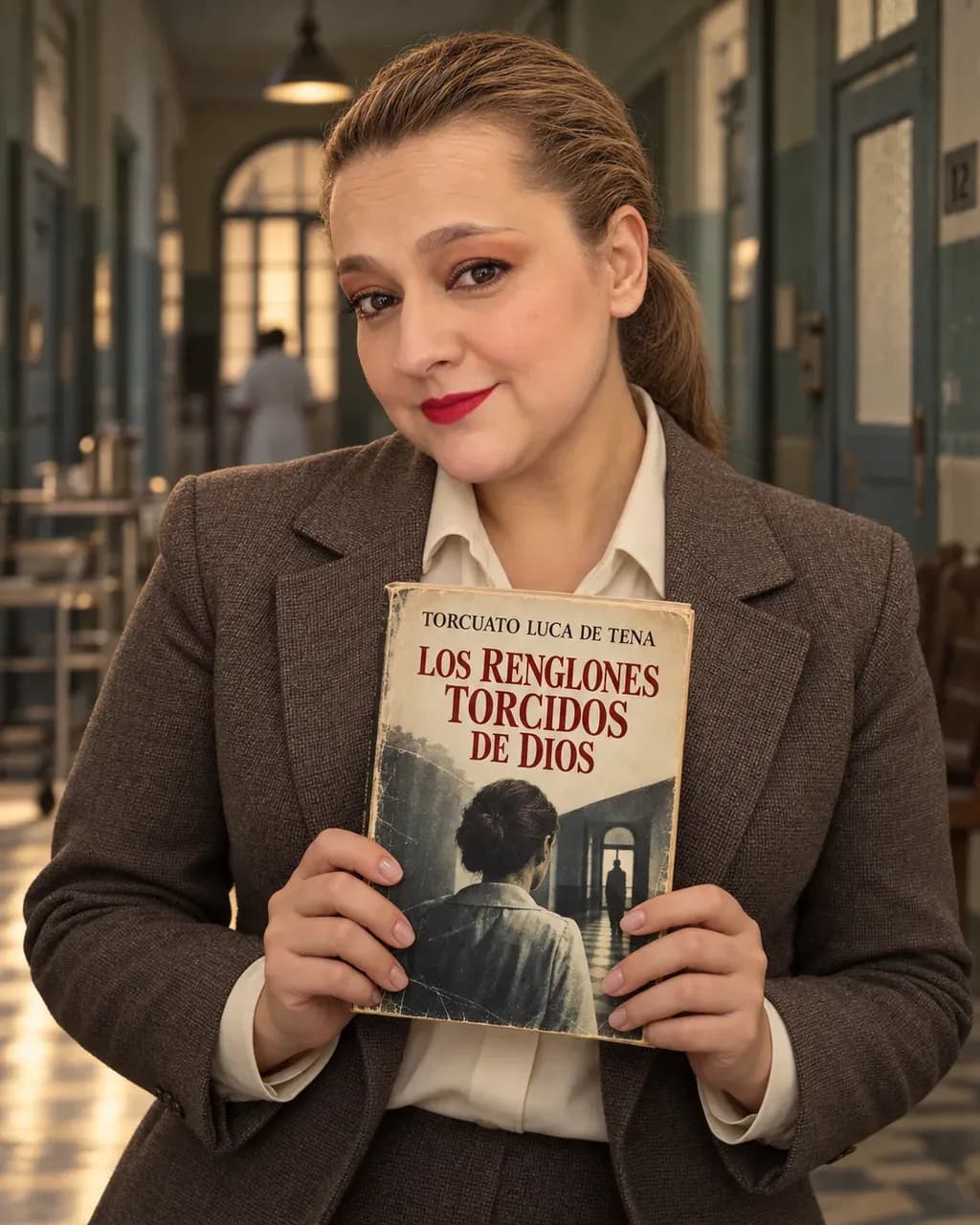
Torcuato Luca de Tena
God's Crooked Lines
God's Crooked Lines by Torcuato Luca de Tena: who gets to decide who is sane?
Alice Gould enters a psychiatric institution with a story of her own. The hospital has another version. That is where the novel starts asking a question institutions would rather keep in their paperwork: who gets to name someone sane, and what happens when the person holding the file is wrong?
October 26, 2026
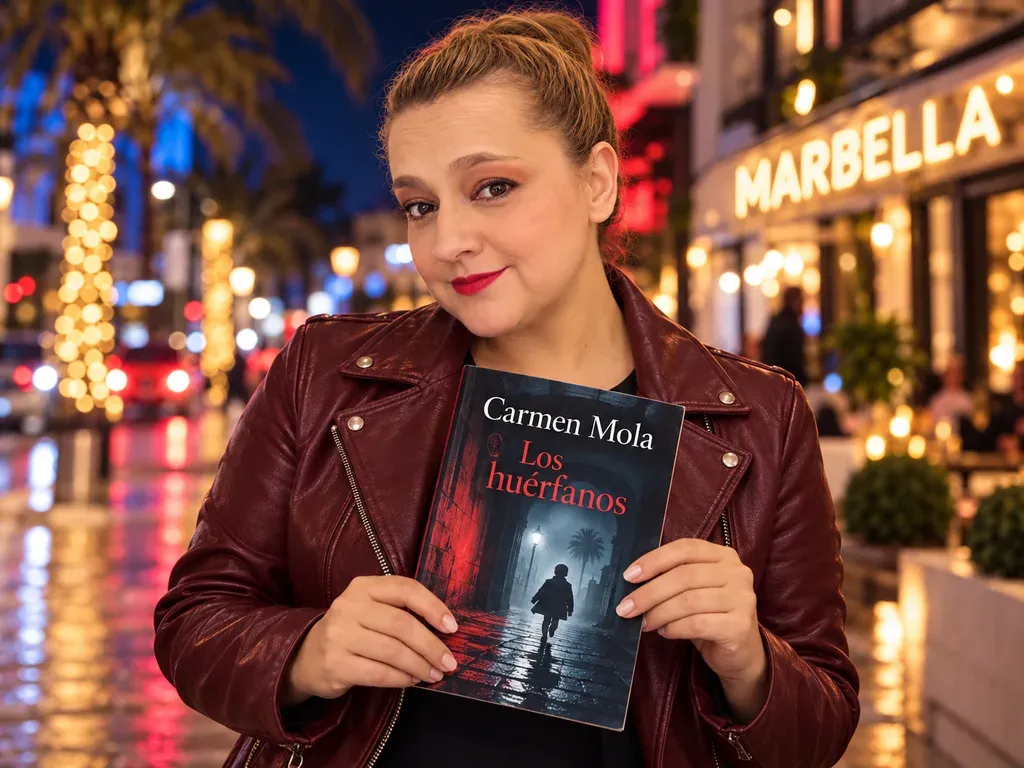
Carmen Mola
The Orphans
The Orphans by Carmen Mola: abandoned children grow into crime bosses. What a hell of a career path
Three children meet in Belfast, build a family out of survival and grow into adults who have learned how to make money from crime. Years later, a case pulls Laura Pastor and her family into a world where loyalty is real, but so are the bullets. The title sounds sad; the career path is considerably worse.
October 25, 2026
Want more like this? Join the Readers Club and get one of my books for free.
Share
My books
Books by Yenny Astrid Londoño



About the author
Yenny Astrid Londoño
Yenny Astrid Londoño is a Colombian author and entrepreneur, founder of Anchetas Medellín. She writes about real life with sarcasm, irony and smart humor, turning everyday situations, mistakes and imperfect relationships into stories that readers can laugh at and recognize themselves in.

A free book from me
Get a free book from me
Subscribe and get Sobreviviendo a mis muertos in full as a PDF.
After that, I'll only write when I have something worth telling you.
Also available: Read this review in Spanish →