
Book review
God's Crooked Lines by Torcuato Luca de Tena:
Alice Gould enters a psychiatric institution with a story of her own. The hospital has another version. That is where the novel starts asking a question institutions would rather keep in their paperwork: who gets to name someone sane, and what happens when the person holding the file is wrong?
By Yenny Astrid Londoño · October 26, 2026 · 6 min read
Share
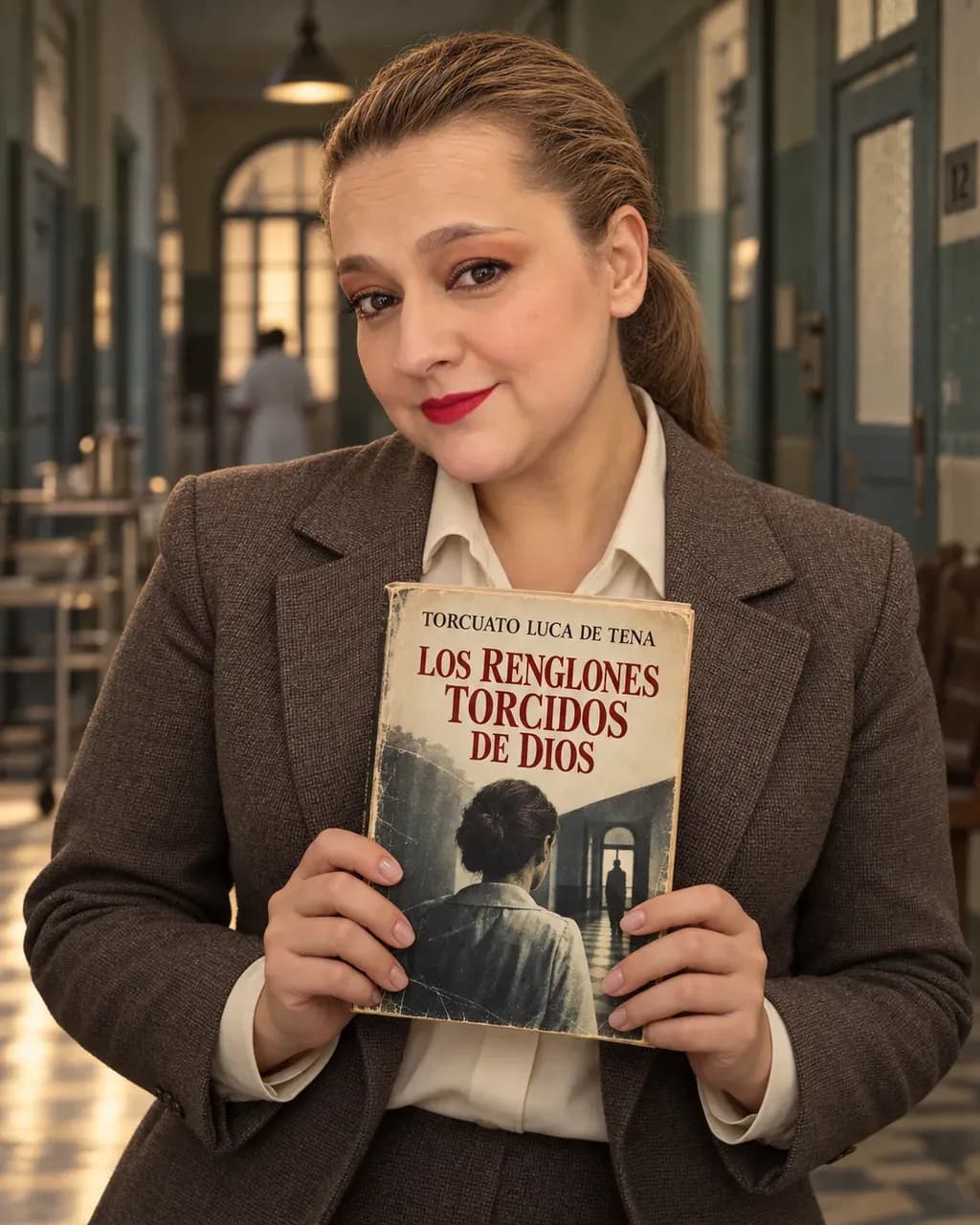
The Book
God's Crooked Lines
by Torcuato Luca de Tena
4.5 out of 5 stars
Alice's ambiguity, the closed institution and the debate over who gets to define sanity remain very effective.
Alice arrives with one story; the hospital has another
Alice says she is there to investigate a crime. The institution’s records suggest she may be a patient who needs treatment. The gap between those versions becomes the engine of the book. We have to pay attention to what she says, what the doctors write down and what each person benefits from believing.
That setup is still gripping because a closed institution controls more than the doors. It controls access to the patient, the official story and the language used to describe behavior. When Alice is labeled, every action can be read through that label. A refusal becomes a symptom; a clear explanation can be dismissed as proof that she is clever enough to hide the truth.
The first question is who holds the key
The locked ward makes power visible. Alice may be intelligent and persuasive, but she cannot simply leave to settle the argument. The people outside decide when to listen and what counts as evidence. That imbalance gives the mystery its pressure: the reader is trying to judge Alice while knowing that she does not control the conditions under which she is judged.
A file is not a person
Medical records can help staff care for someone. They can also turn a complicated life into a few lines that follow a person from room to room. The novel shows how much authority a diagnosis or a note can carry, especially when the patient has limited power to challenge it.
I do not read this as a guide to modern mental-health care. It is a novel from another period, with language and assumptions that can feel dated today. But the question about who gets believed remains uncomfortable. A file can preserve what happened; it can also make one interpretation look like the only possible truth.
An investigation inside an investigation
Alice’s stated purpose gives the book a second mystery: she says she is looking into a crime, while the hospital asks whether that mission is real or part of her condition. The reader has to test both explanations. I like that the novel does not hand us a simple answer every time Alice sounds convincing. Confidence is not proof, and a medical label is not proof either.
That double structure can make the reader feel clever for a moment and then catch us using the same shortcuts as the characters. If Alice is articulate, does that prove she is well? If she is angry, does that prove she is ill? The book keeps asking whether our judgment comes from what she does or from the category we have already put her in.
Patients are not a parade of oddities
The other residents shape Alice’s experience of the institution. They are not just strange encounters brought in to make the place look dramatic. Each person has a life beyond the way staff or visitors interpret them. Still, some portrayals belong to their era and can feel like the book is using illness as spectacle. That is one reason a modern reader may need to keep a critical distance while reading.
The institution offers routines that can support people, but the same routines can also take away choices. That contradiction is important. Care and control can occupy the same hallway, which means “the hospital says so” cannot be the end of the conversation. People living inside the system need more than a label and a locked door; they need to be heard as people.
Naming someone changes what people hear
Once a person has been called unstable, the same words can stop carrying the same weight. The novel is sharpest when it asks whether the people with authority are listening to Alice or merely fitting her into a category. A label can clarify a need; it can also become a convenient way to stop asking questions.
That is not the same as saying every diagnosis is wrong or every clinician is acting in bad faith. The novel is more useful when we keep the question specific: what evidence is being considered, whose account is missing, and can the person challenge the decision? Those are questions about power as much as medicine.
The sanatorium turns into a stage for control
The institution is an effective setting because it limits movement, information and privacy. Alice cannot step out to check a fact or ask the world to verify her version. The people around her decide what reaches the outside and when. That makes every small exchange carry more weight than it would in an ordinary mystery.
The closed setting also risks making patients into scenery for Alice’s puzzle. I wanted the book to keep their lives visible, not only their usefulness as clues. A story can center one person without pretending the others stop being human when she leaves the room.
What I did not like
Some explanations slow the suspense, and parts of the institution’s portrayal feel dated. The book sometimes leans on old-fashioned ideas about mental illness that deserve scrutiny rather than automatic acceptance. That does not erase its central question, but it changes how I read certain scenes.
A classic that still starts an argument
This novel has lasted because its uncertainty does not end when the file closes. Alice enters the institution; doubt enters with her. The book asks how much of our judgment comes from evidence and how much from the person who gets to control the story.
Alice enters the institution; doubt enters with her
I recommend it if you enjoy mysteries that ask you to examine your own judgment. Just remember that a classic can be gripping and still carry assumptions we should question. The book has not stopped arguing; it has merely left the room.
My rating
4.5 out of 5 stars. Alice’s ambiguity, the closed institution and the argument over who gets to define sanity remain effective. I take off half a star for explanatory stretches and period details that have not aged well. This is a book that keeps asking questions at the dinner table after you have closed it.
Frequently asked questions
What is God's Crooked Lines about?
Alice Gould enters a psychiatric institution, saying she is investigating a crime. The staff believe she may need treatment, and the novel keeps the conflict between those accounts alive.
Who is Alice Gould?
She is the central character whose reason for entering the institution becomes the book’s main uncertainty.
Is it a psychological thriller?
It is a psychological mystery and institutional suspense novel, driven by shifting explanations and limited access to the truth.
Does the book quickly reveal whether Alice is telling the truth?
No. The uncertainty is central to the reading experience.
Does it portray mental health in a modern way?
No. It reflects its period and includes ideas readers may find dated; it is worth approaching critically.
Are there difficult scenes?
The setting, confinement and discussions of mental illness may be difficult for some readers.
Is Alice pretending to be ill to investigate?
That is one of the possibilities the novel asks the reader to consider; I will not spoil its resolution here.
The Book
God's Crooked Lines
by Torcuato Luca de Tena
Get the bookIf you buy through this link, Yenny earns a small commission and you pay the same price.
Keep reading
If you liked it, keep going
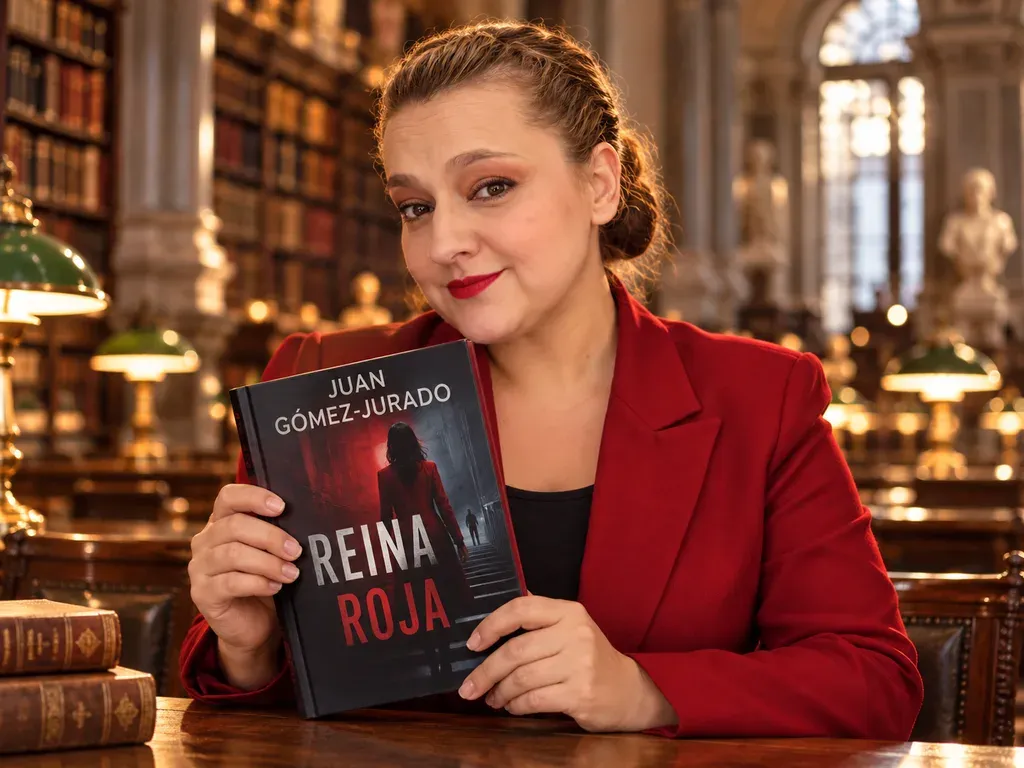
Juan Gómez-Jurado
Red Queen
Red Queen by Juan Gómez-Jurado: Antonia Scott sees everything except a reason to leave her apartment
Antonia Scott has no badge, no official job and an intelligence powerful enough to make a room uncomfortable. Jon Gutiérrez arrives at the wrong door and gets pulled into a case involving wealth, power and people who believe money can buy silence. It can buy quite a lot. It cannot always buy good judgment.
October 26, 2026
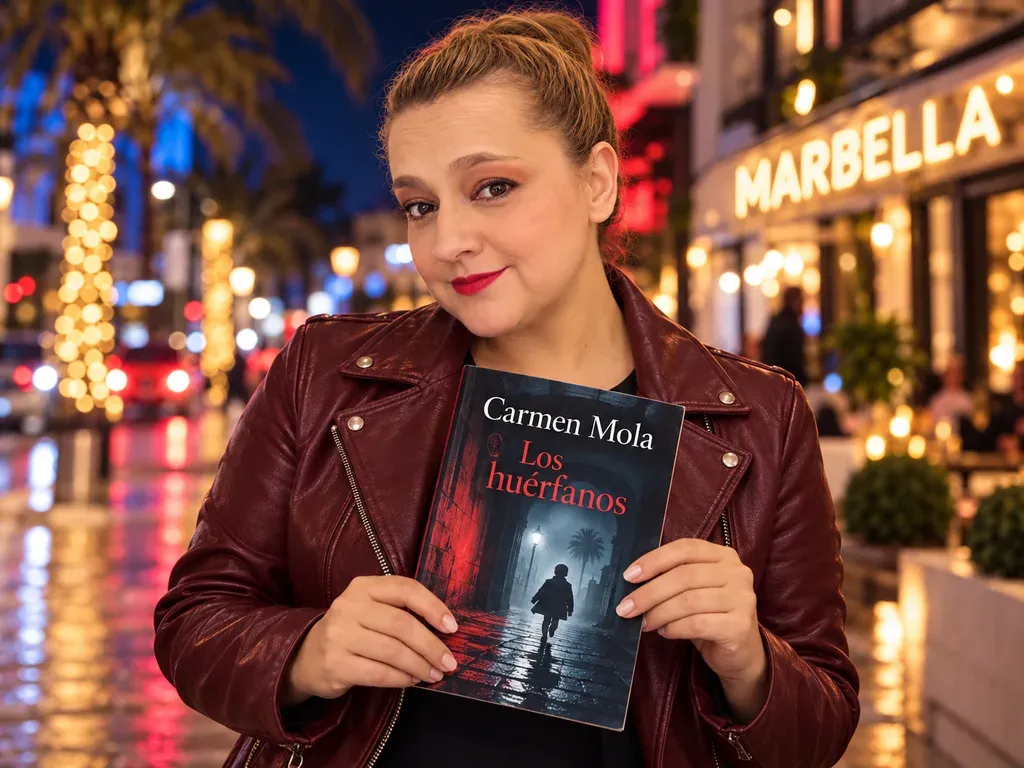
Carmen Mola
The Orphans
The Orphans by Carmen Mola: abandoned children grow into crime bosses. What a hell of a career path
Three children meet in Belfast, build a family out of survival and grow into adults who have learned how to make money from crime. Years later, a case pulls Laura Pastor and her family into a world where loyalty is real, but so are the bullets. The title sounds sad; the career path is considerably worse.
October 25, 2026
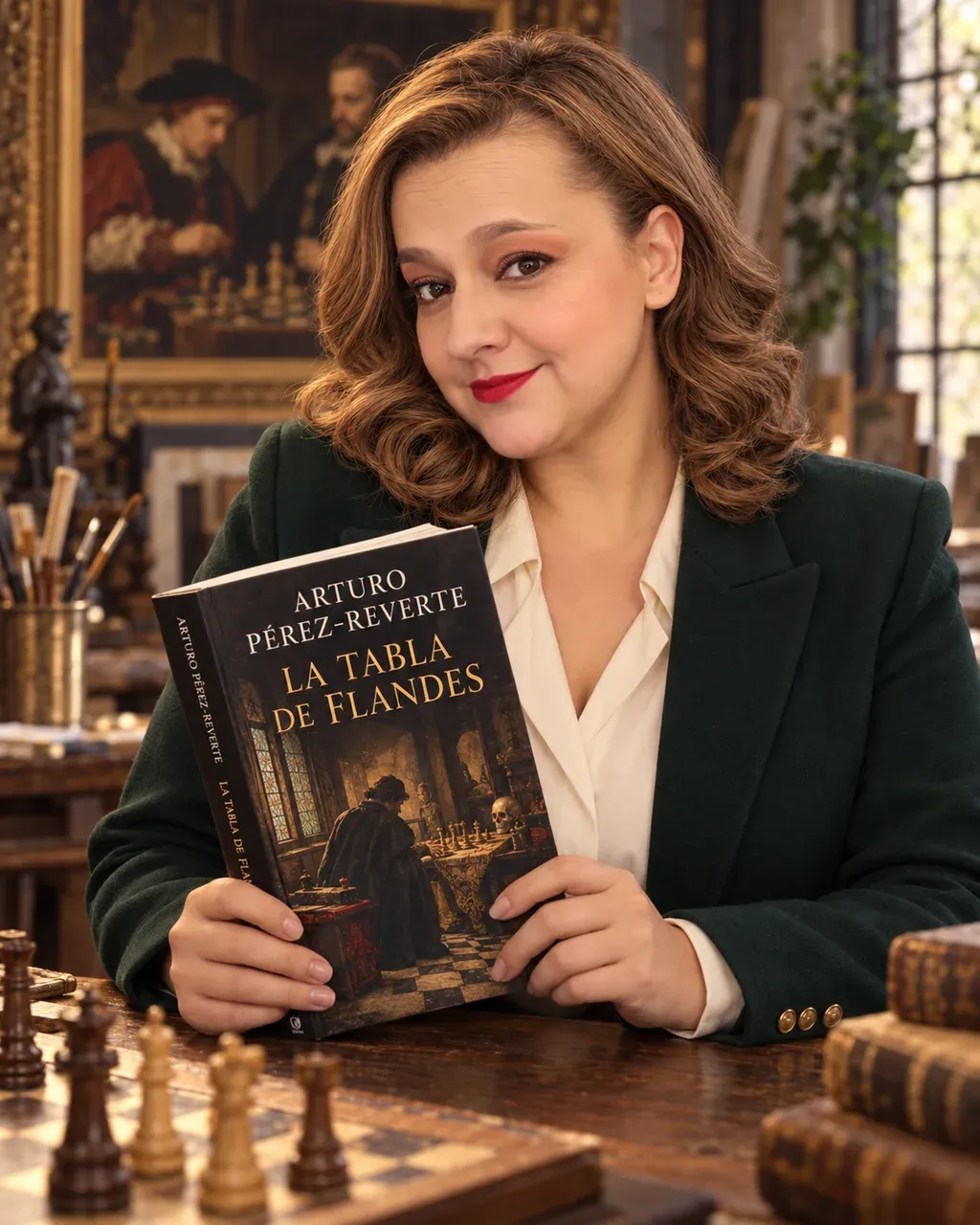
Arturo Pérez-Reverte
The Flanders Panel
The Flanders Panel by Arturo Pérez-Reverte: a painting, a chess game and far too many suspects
My review of The Flanders Panel, by Arturo Pérez-Reverte: an art-and-chess mystery in which restoring a painting becomes an invitation to investigate an old murder. What could possibly go wrong?
October 23, 2026
Want more like this? Join the Readers Club and get one of my books for free.
Share
My books
Books by Yenny Astrid Londoño



About the author
Yenny Astrid Londoño
Yenny Astrid Londoño is a Colombian author and entrepreneur, founder of Anchetas Medellín. She writes about real life with sarcasm, irony and smart humor, turning everyday situations, mistakes and imperfect relationships into stories that readers can laugh at and recognize themselves in.

A free book from me
Get a free book from me
Subscribe and get Sobreviviendo a mis muertos in full as a PDF.
After that, I'll only write when I have something worth telling you.
Also available: Read this review in Spanish →