
Book review
Puppet Master:
My review of Miyuki Miyabe's Puppet Master: a Tokyo crime, a TV call and a killer who knows how to use an audience.
By Yenny Astrid Londoño · October 9, 2026 · 9 min read
Share
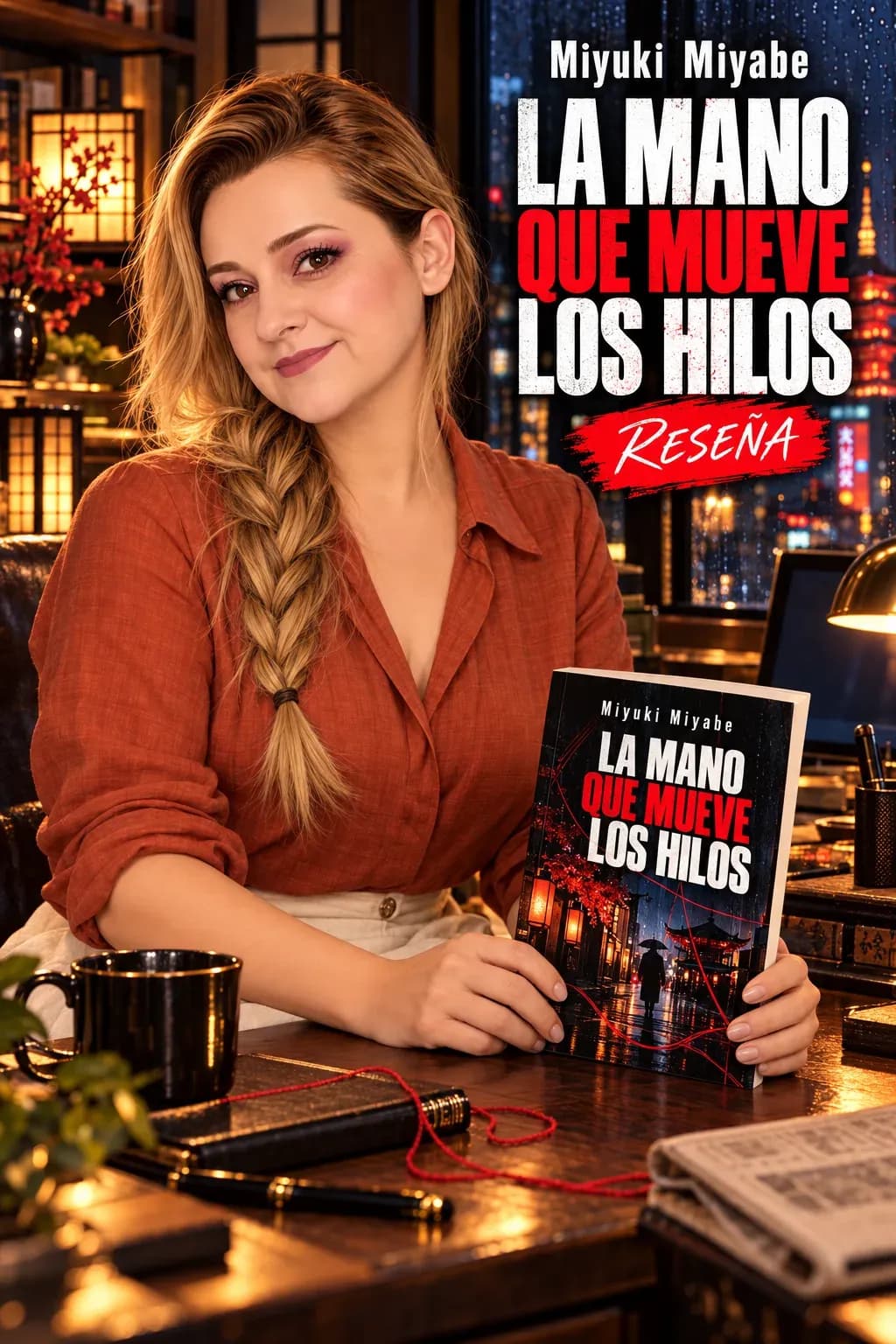
The Book
Puppet Master
Japanese crime fiction
by Miyuki Miyabe
4 out of 5 stars
I give it 4 out of 5 for a mystery that understands what happens after a crime becomes a media event.
The first discovery belongs to a person, not a headline
A human remain can become an image, a clue and a news item almost immediately. Each label has a use. The word most easily lost is person, because it forces us to imagine a life before arranging our curiosity about the death. The opening is powerful because the park was an ordinary place where people expected to walk, rest or bring children. The discovery conscripts them into an event they never chose to witness.
The violence spreads beyond the moment the criminal acted. Somebody finds the arm, somebody may recognize it, and somebody receives information they were not ready to hear. None of that means investigators should keep silent. It means reporting and exhibiting are different decisions. An image may serve a public interest and still be used in a way that adds unnecessary suffering. I want that distinction kept alive when the narrative's machinery gets exciting.
The discovery of a body part is designed to seize attention, and I refuse to let the design finish the job. Someone lived in the body before it became evidence and a camera-ready image. Miyabe's premise lets me ask how quickly the victim disappears behind the performance of the criminal. If the reader can describe the stunt in detail but cannot remember what was taken from a person, the publicity strategy has worked on us too.
A call to television changes the size of the crime
The anonymous caller chooses a recipient and a moment. This is not merely a tip. It is an attempt to create a scene in which the criminal's voice matters and other people adapt their conduct to it. That desire for an audience tells me more than a clever clue ever could. Attention becomes part of the harm.
Television has reach, deadlines, competitors and a duty to verify. Somebody who understands that mixture can use urgency to push a newsroom into his preferred sequence. I do not want the lazy version of this discussion in which all journalists are parasites or every broadcast is justified by the public's right to know. Ask what is aired, when, after what checks and for whose benefit. Those are harder questions. They are also the ones that make the novel worth discussing after the shock of its opening wears off.
Calling a television station changes the audience of the crime. The killer is no longer communicating only with police; he is choosing a public stage, a rhythm and an image. A newsroom must decide what to show while knowing that silence and sensationalism both have consequences. I am suspicious of the comforting idea that simply broadcasting everything counts as transparency. Attention is a resource, and the person who gets to command it may be the last person who deserves it.

Families receive a carefully managed version too
A family member cannot close a news clip and return to an untouched life. Every announcement lands inside an absence they are already trying to understand. Public information can offer hope, destroy it or expose something they needed time to process privately. Police investigators may need to withhold an unverified fact just when a family most desperately wants an answer.
The manipulator can exploit the mismatch. A family asks, the police hold back, the broadcaster interprets and the audience begins to decide. Information stops traveling as help and starts functioning as leverage. I do not want the relatives reduced to expressions of the killer's cruelty. They have memories and choices outside his production. If the book keeps them in sight, it is less likely to admire the man who designed the spectacle merely because his plan is complicated.
Families do not receive a case as a set of neutral facts. They receive news through official language, reporters' questions and strangers who have already formed an opinion. Every carefully managed announcement can protect an investigation while leaving loved ones to learn parts of their grief from a screen. That double pressure matters more to me than another clever message from the culprit. A television audience can switch channels; the family has to live through the coverage.
The audience knows less than it thinks
Watching from a distance creates an odd confidence. We receive selected facts, fill in the gaps and then argue as if our explanation could survive five direct questions about what we actually know. Miyabe places that habit inside the crime's development. Notoriety alters what people fear, desire and believe possible. The murder begins producing behaviour around its telling as well as around the original event.
Familiarity with an image is not a relationship with the person in it. Nor does following every report make the viewer a participant in the investigation. I even distrust my own respectable phrase, “I just want the truth.” Sometimes I do. Sometimes it is a tidy way to explain why I am still consuming another person's suffering when the next image will teach me nothing useful. This novel makes that uncomfortable question worth asking.
Investigators must take authority away from the speaker
A criminal voice can sound all-knowing because it chooses which fact to present and when. The police do not have that advantage. They must connect records, verify statements and consider that some apparently helpful detail was supplied to send them in the wrong direction. I find that work more interesting than a contest between two theatrical geniuses.
An assertion should stop commanding the room merely because it was delivered impressively. The title invites us to look for the hand behind visible events. I also want to see the people who loosen its grip: the investigator who checks a detail, the relative who recognizes a contradiction and the journalist who refuses to air what cannot be supported. If the manipulator directs absolutely everyone until the final page, the story risks granting him the very grandeur it claims to question.
The investigators have to resist the story the speaker wants them to tell. That sounds simple until the speaker supplies the most dramatic material and the public starts asking the questions he chose. Following evidence means accepting a slower, less photogenic account. I like crime fiction that makes that work visible. The person who controls the headline should not automatically control the truth, even if the headline is very good at filling a studio hour.
What did not work for me
My first reservation is practical. The Spanish edition with ISBN 9791387640934 is sold as volume one. I would not hand that particular book to someone and promise that the entire work resolves inside its covers. Edition design and storytelling are separate choices, but a reader has to pay for both. Before buying, check the volume information and whether the rest is available in the edition you want.
The wider cast of victims, relatives, investigators and media also requires attention. That scope is a strength, but it asks more orientation than a single-detective thriller. Narratively, I resist a manipulator so capable that everyone else becomes his audience. And I want criticism of the press to stay precise: verification under pressure, commercial appetite and outright voyeurism are not the same behaviour. The novel's best questions get weaker if we throw them into one convenient bag labeled “the media.”
The breadth of the narrative can slow the immediate hunt, particularly if you arrive expecting a tidy trail of clues and a brisk unmasking. I sometimes wanted more room for a particular person before the lens moved back to institutions and spectacle. Still, I would rather have that demanding width than a novel that pretends the crime ends at the crime scene. My criticism is about pacing and focus, not a wish to remove the book's social questions.
The reader is part of that audience
The anonymous call expands the case beyond the scene of the crime. We are watching what other people come to believe happened. That second life can hurt families and redirect police work even when a viewer is sitting safely far away. As readers, we also want to know, guess and build a story from whatever the book lets us see.
I would separate an event, the version told about it and the public reaction. Provoking a reaction does not prove the version true. An authentic fact does not make the narrative wrapped around it complete. Manipulation often uses true information because it lends the rest of the message credibility. Who speaks because they know, and who only appears knowledgeable because they have an audience? That question is more useful than admiring the criminal's cleverness from the front row.
Who should read it, and which edition to check
I recommend it to readers who enjoy crime fiction that widens its focus to a society, not just a culprit's name. The interplay among investigation, media attention and family grief has more to offer than a quick race to an answer. Be willing to follow several perspectives and the consequences of what each group hears.
If you want a short mystery fully contained in one physical volume, check the ISBN and volume label before buying. I am not inventing a release date or availability for another volume. The book's Japanese story is set in Tokyo; do not import a television adaptation's setting into it. My question for a reading group would be when we stop seeking an answer and start asking for another scene of suffering. The boundary is not always comfortable. That is why it matters.
My rating: 4 out of 5, with no applause for the killer
I give it 4 out of 5 for a mystery that understands what happens after a crime becomes a media event. The discovery matters, but so does every decision made once somebody turns it into a public intervention. My remaining half-star is tied to balance: the machinery of manipulation must leave enough space to see the people it harms.
I am not revealing the solution. I want the reader to discover who made each decision along the way. The murderer may manage to make everybody talk about him. I would rather this review not help him keep the last word as well.
My 4.5 recognizes a book that treats the competition to narrate violence as part of the violence itself. I deducted a little for the times its scope made the human thread harder to hold. The lingering discomfort is personal: I know how easily I can watch an update, repeat its most shocking detail and mistake that for understanding. The victim does not become more visible just because millions of us have seen the headline.
Frequently asked questions
Where does the novel take place?
The book's story is set in Tokyo. Do not substitute a television adaptation's setting for the setting of the novel.
Is it connected with Copycat Killer?
The publisher identifies an adaptation titled Copycat Killer. This review concerns the Spanish book edition and does not assume the adaptation reproduces every detail.
Does this review reveal the perpetrator?
No. I discuss the beginning, media manipulation and public response while keeping the identities and final resolution intact.
Is it only a police investigation?
No. Families, broadcasters and viewers also shape how the crime is understood and experienced.
What makes it a demanding read?
Several groups and perspectives must be followed, and the book asks how each interprets the information it receives.
What is my main criticism?
I do not want the manipulator to monopolize the story or all journalists to be judged as identical. The victims must remain visible behind the spectacle.
Does the Spanish ISBN 9791387640934 contain the whole work?
That edition is identified as volume one. Check the volume information and availability for your market before purchasing.
The Book
Puppet Master
by Miyuki Miyabe
Get the bookIf you buy through this link, Yenny earns a small commission and you pay the same price.
Keep reading
If you liked it, keep going
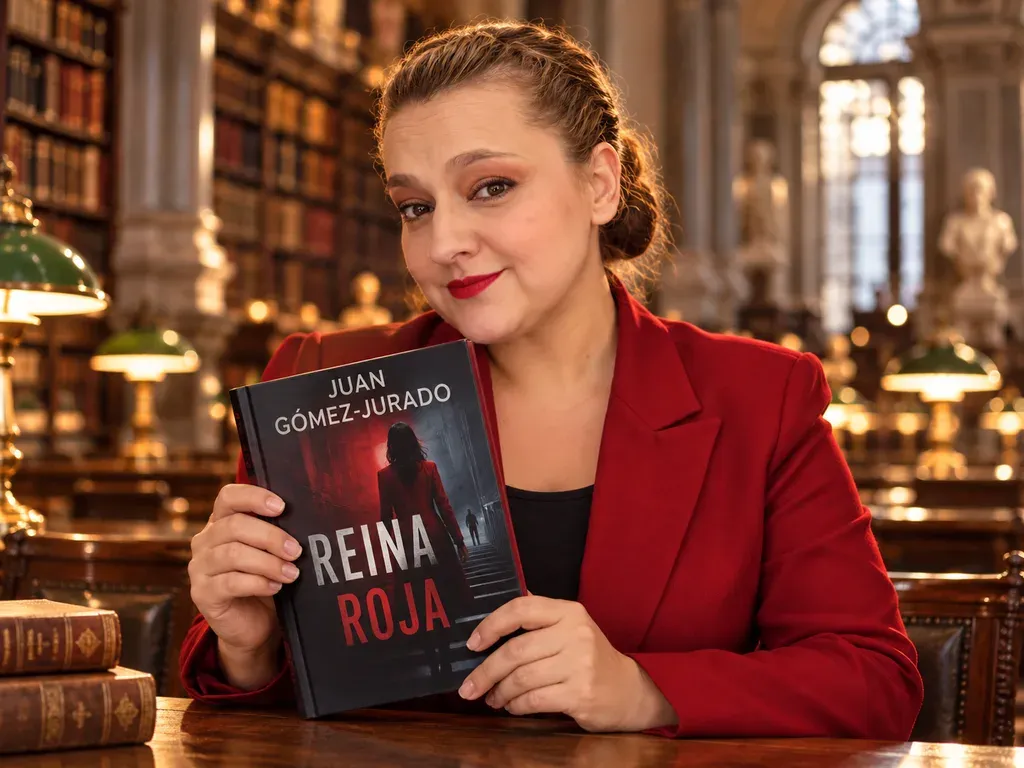
Juan Gómez-Jurado
Red Queen
Red Queen by Juan Gómez-Jurado: Antonia Scott sees everything except a reason to leave her apartment
Antonia Scott has no badge, no official job and an intelligence powerful enough to make a room uncomfortable. Jon Gutiérrez arrives at the wrong door and gets pulled into a case involving wealth, power and people who believe money can buy silence. It can buy quite a lot. It cannot always buy good judgment.
October 26, 2026
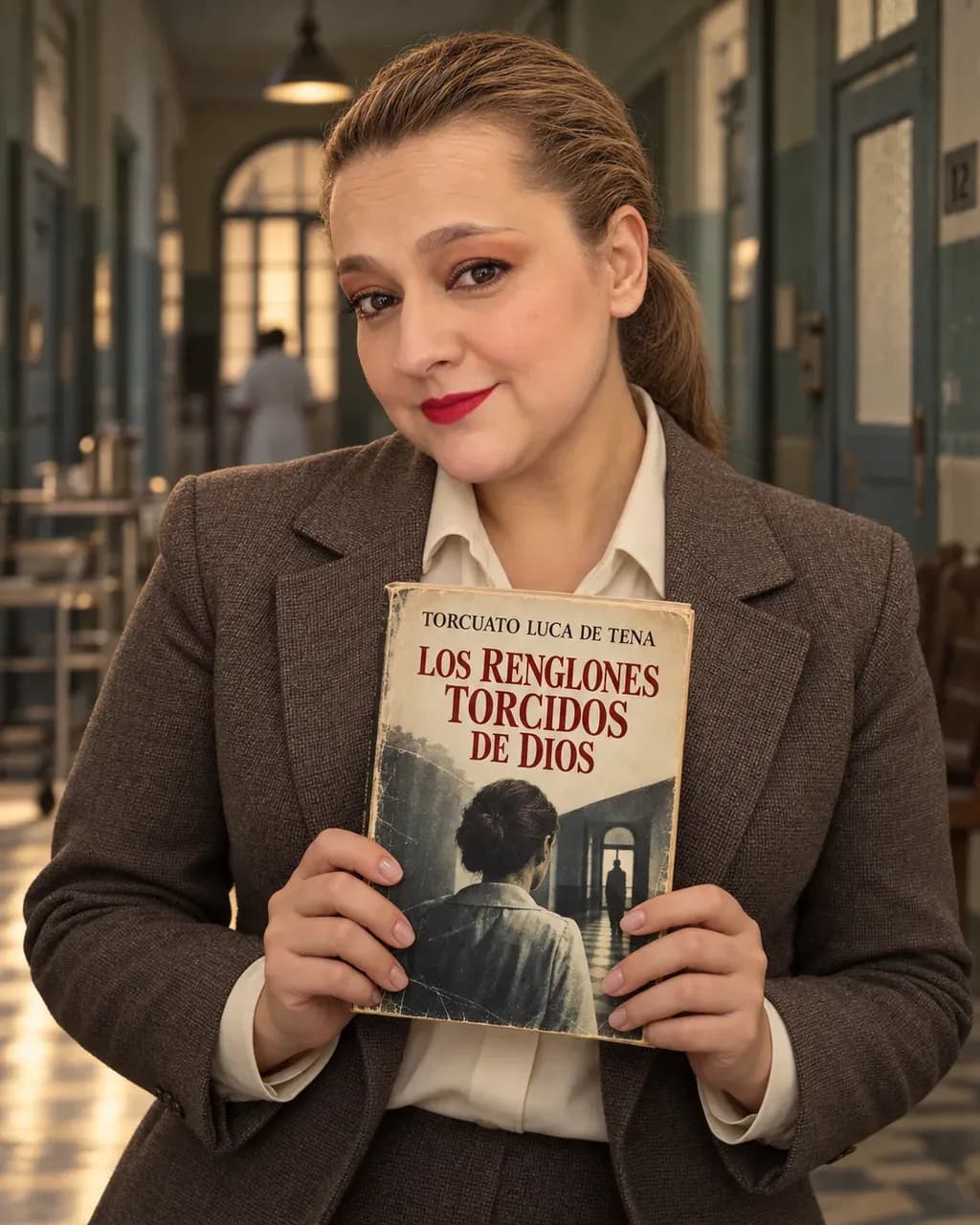
Torcuato Luca de Tena
God's Crooked Lines
God's Crooked Lines by Torcuato Luca de Tena: who gets to decide who is sane?
Alice Gould enters a psychiatric institution with a story of her own. The hospital has another version. That is where the novel starts asking a question institutions would rather keep in their paperwork: who gets to name someone sane, and what happens when the person holding the file is wrong?
October 26, 2026
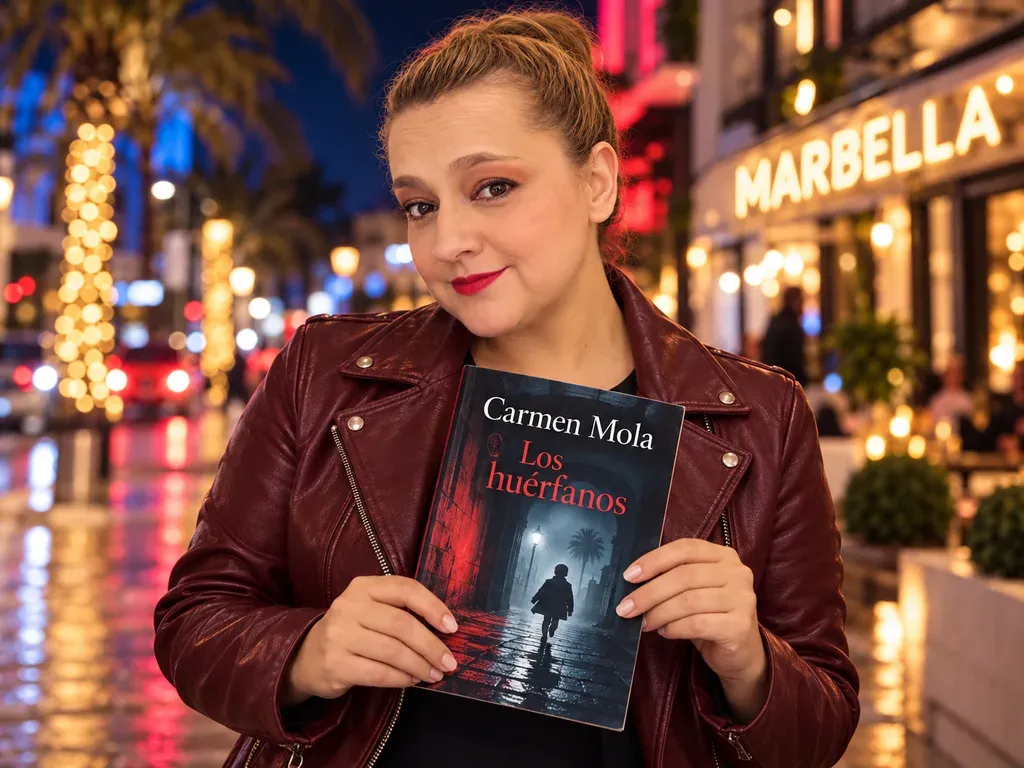
Carmen Mola
The Orphans
The Orphans by Carmen Mola: abandoned children grow into crime bosses. What a hell of a career path
Three children meet in Belfast, build a family out of survival and grow into adults who have learned how to make money from crime. Years later, a case pulls Laura Pastor and her family into a world where loyalty is real, but so are the bullets. The title sounds sad; the career path is considerably worse.
October 25, 2026
Want more like this? Join the Readers Club and get one of my books for free.
Share
My books
Books by Yenny Astrid Londoño



About the author
Yenny Astrid Londoño
Yenny Astrid Londoño is a Colombian author and entrepreneur, founder of Anchetas Medellín. She writes about real life with sarcasm, irony and smart humor, turning everyday situations, mistakes and imperfect relationships into stories that readers can laugh at and recognize themselves in.

A free book from me
Get a free book from me
Subscribe and get Sobreviviendo a mis muertos in full as a PDF.
After that, I'll only write when I have something worth telling you.
Also available: Read this review in Spanish →