
Book review
Love in the Time of Cholera:
García Márquez's Love in the Time of Cholera: Florentino, Fermina, old age and obsession, with no easy idealizations. My honest review, 4.5 out of 5.
By Yenny Astrid Londoño · October 21, 2026 · 7 min read
Share
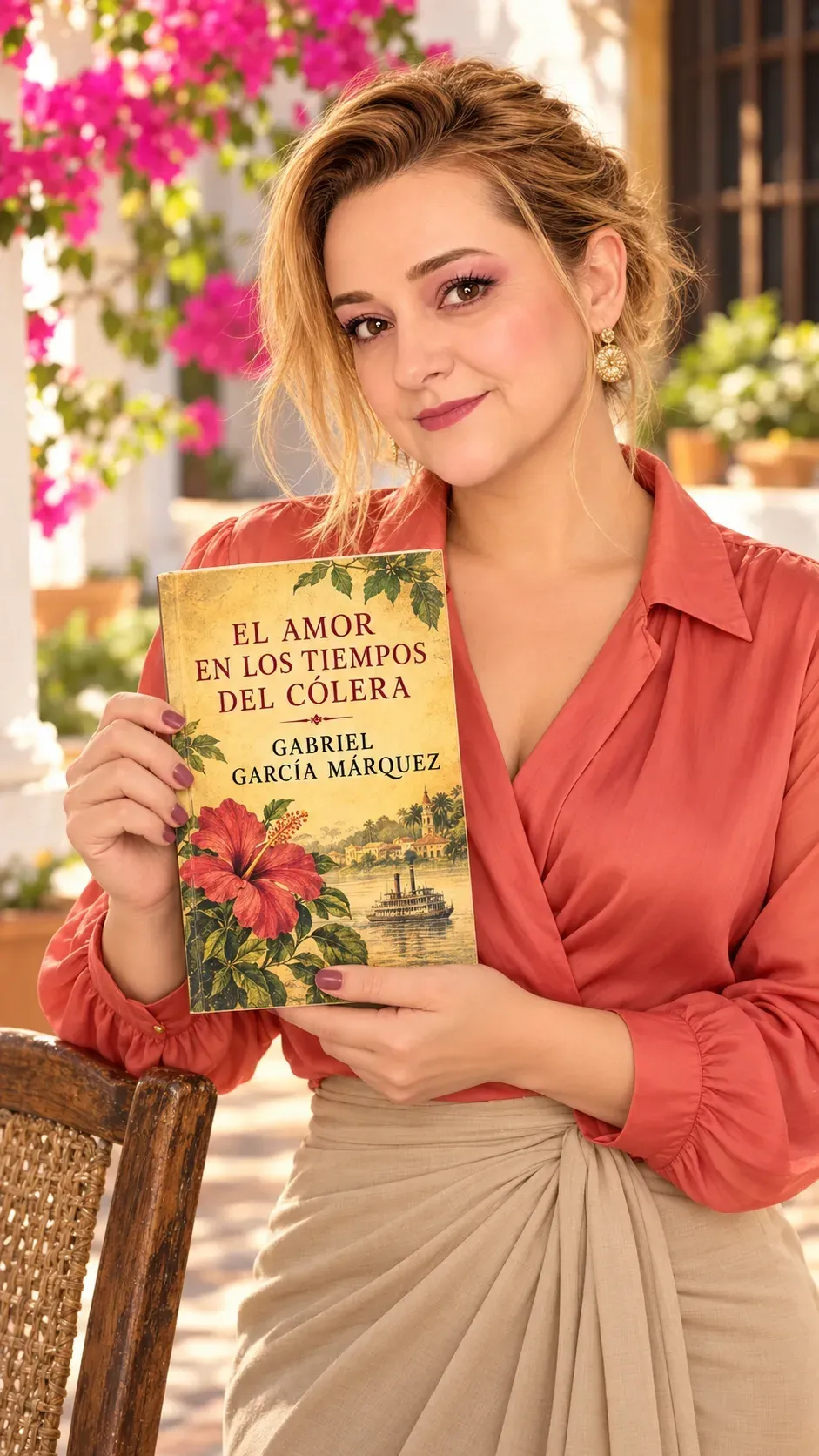
The Book
Love in the Time of Cholera
Literary fiction
by Gabriel García Márquez
More reviews by Gabriel García Márquez →
4.5 out of 5 stars
She chooses another life, marries Dr. Juvenal Urbino and grows old beside him.
A love story with a question mark attached
Florentino Ariza loves Fermina Daza for decades. She chooses another life, marries Dr. Juvenal Urbino, and grows older beside him. When the possibility of a reunion opens late in life, the romantic question seems obvious: can love survive more than fifty years? Gabriel García Márquez writes a novel far less reassuring than the postcard version of that question. I want to ask who stood in the middle of Florentino’s waiting, and why we keep calling an obsession noble when it lasts long enough.
The book is rich, funny, sensual, and sometimes deliberately unruly. It moves through memory, courtship, marriage, illness, class, and old age with the confidence of a narrator who knows the story will take as long as it takes. That confidence can be a pleasure. It can also make a reader sit there thinking, “Yes, this sentence is gorgeous, but can we talk about what this man just did?” We can admire the writing without letting the prose confiscate our judgment.
Fermina is not a reward for Florentino’s persistence
Fermina’s decision to marry Juvenal matters because she is not simply waiting in a tower for Florentino to prove he loves her enough. She builds a life, makes choices, and carries the consequences of those choices. The novel gives her wit, stubbornness, and a presence that resists the fantasy of a woman preserved unchanged for one man’s return. That is a more interesting story than “he waited, so he earned her.”
The older Fermina is not a prize ceremony for Florentino’s patience. If a person chooses another life, the choice is real, even when someone else keeps writing letters in their head for fifty years. The novel lets us watch her reconsider what she wants, but it does not make that reconsideration a debt. I am glad Fermina gets to be more than the answer to a man’s long-running question.
Florentino: romantic in his imagination, complicated in practice
Florentino turns waiting into a personal mythology. He remembers himself as the faithful lover, but his life also includes many relationships with women who are not merely footnotes to a grand romance. The gap between his self-image and his behavior is one of the most useful tensions in the book. It lets us ask whether devotion is still admirable when other people pay for the story you tell about it.
García Márquez writes desire with such seduction that a reader can admire the sentence and overlook the person left worse off by the scene. That is a literary strength and an ethical risk. I do not want to flatten the novel into a lecture about healthy relationships, but I also will not sell Florentino as a model boyfriend. If your friend described some of his behavior over coffee, you would not tell her to wait for the universe to reunite them. You would ask if she was safe and offer her something to eat.
The body and the calendar refuse to stay in the background
Old age is not a decorative final act here. The novel attends to bodies that change, marriages that become habits, illness, and the awkwardness of desire when culture insists that passion belongs only to the young. Fermina and Florentino do not step into old age as abstract symbols. They bring histories, appetites, embarrassments, and the question of whether there is still room to begin again.
The title’s cholera also carries more than one kind of meaning. Disease shapes the novel’s setting and its language of fever, but it does not simply diagnose love as a sickness. The metaphor stays unstable, which is part of its appeal. Sometimes love feels like an illness; sometimes the comparison is just a very handsome way of avoiding the fact that people make choices. The novel has room for both readings, and it is stronger when we do not force one to cancel the other.
Letters can create an idea of someone that life has to test
Letters allow people to fall in love with language, memory, and an imagined future. Florentino’s early courtship builds a version of Fermina in his mind; time changes both of them before that version can become a shared reality. The book understands that a person can love an idea sincerely and still need to meet the actual human being again. Paper will hold any fantasy you put on it. A living person may have notes.
That difference gives the novel some of its humor and its bite. Romance is not less real because it is partly imagined, but it becomes dangerous when the imagination claims authority over someone else’s life. The book keeps making us compare a grand story of eternal love with the people who have to live inside it. That is where I found more than a sweeping romance: a question about how memory edits the past until the edited version starts demanding rights.
What I did not like
The exuberance of the prose can act like a magnificent curtain in front of behavior that deserves a drier judgment. I sometimes wanted the book to leave a little more room between the charm of the sentence and the cost of the action. The novel’s treatment of persistence is deliberately ambiguous, but that ambiguity can feel too generous to the male fantasy that time eventually grants access to a woman who once said no.
The pace also asks for patience. The detours, family histories, and social scenes are part of the novel’s long view, and I would not cut them all. Still, some stretches linger after the central conversation has already made its point. I give Love in the Time of Cholera 4.5 out of 5 stars for Fermina’s presence, the treatment of aging, and the extraordinary prose. I take off half a star for the uneven rhythm and for moments when seduction can soften the consequences paid by other women.
Should you read it as a romance?
Yes, if by romance you mean a novel about desire and a relationship that changes over a lifetime. No, if you mean a clean manual for loving someone correctly. It is better approached as a classic that invites argument: about marriage, fantasy, fidelity, age, class, and the way people narrate their own motives. You do not need to admire every character to admire what the novel makes possible.
I recommend it to readers willing to move at the speed of memory and to question a story that is often presented as pure devotion. Florentino may wait half a century, but the waiting does not prove that he was always generous. That contradiction is not a flaw I want to tidy away; it is one of the reasons the book remains discussable. A classic does not become more valuable when we agree to stop disagreeing with it.
Frequently asked questions
It follows Florentino Ariza and Fermina Daza across more than fifty years, including Fermina’s marriage to Dr. Juvenal Urbino and the possibility of a late-life reunion.
No. Fermina chooses to marry Juvenal Urbino. The novel follows the consequences of that choice and the changing lives of all three over time.
It is a love story, but also a novel about obsession, marriage, aging, desire, infidelity, and the stories people tell about themselves. Calling it uncomplicated romance misses its tensions.
The novel spans more than fifty years between their early courtship and the possibility of a later relationship.
I give it 4.5 out of 5 stars for its prose, Fermina’s presence, and its treatment of age. The pace and the way persistence can be romanticized keep it from five.
Not by modern relationship standards. The novel invites readers to admire its language while also examining Florentino’s self-image and the cost of his behavior to other women.
Frequently asked questions
What is Love in the Time of Cholera about?
It follows the changing relationship between Florentino Ariza and Fermina Daza over more than fifty years, including Fermina's marriage to Dr. Juvenal Urbino and the possibility of a late reunion.
Does Fermina Daza marry Florentino?
Not at the start of her adult life. She chooses to marry Juvenal Urbino. The novel explores what that decision means for all three of them over time.
Is it a happy romance?
It has beauty and humor, but also obsession, inequality, infidelity, grief and old age. Selling it as an unqualified romance would be misleading.
Why does Florentino generate so much debate?
Because of the distance between his image as a faithful lover and the way he relates to other women. The novel lets you admire how the character is built without excusing everything he does.
Is it hard to read?
Its language is rich and its pace takes time to build an entire life. Readers who want fast plots may need patience; those who enjoy prose and characters will find plenty.
What role does old age play in the story?
A central one. The book asks whether desire and the chance to start again can exist after decades of loss, marriage and bodily change.
The Book
Love in the Time of Cholera
by Gabriel García Márquez
Get the bookIf you buy through this link, Yenny earns a small commission and you pay the same price.
Keep reading
If you liked it, keep going
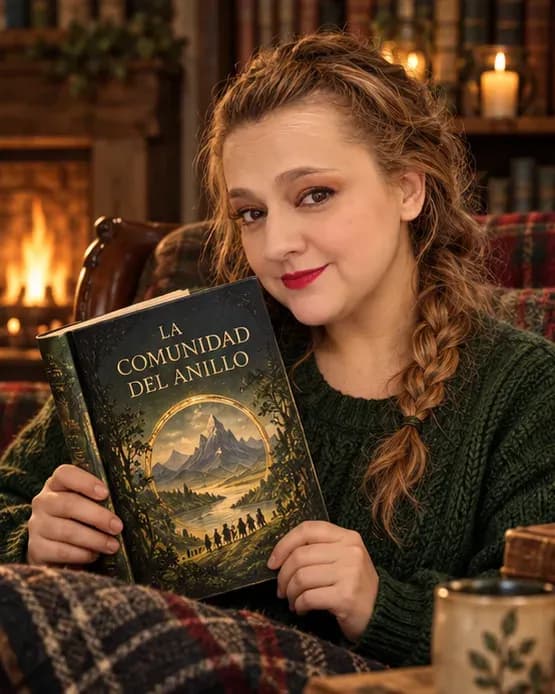
J. R. R. Tolkien
The Fellowship of the Ring
The Fellowship of the Ring by J. R. R. Tolkien: a dangerous mission and far too many people trusting a ring
An epic journey, friendship and a piece of jewelry that should come with a warning label. Here is my spoiler-light review of the first part of The Lord of the Rings. If you only know the films, the book takes longer to walk, talk, sing and tell you the history behind each place. Tolkien is not trying to get you to Mordor by taxi; first he wants you to understand why arriving matters.
October 27, 2026
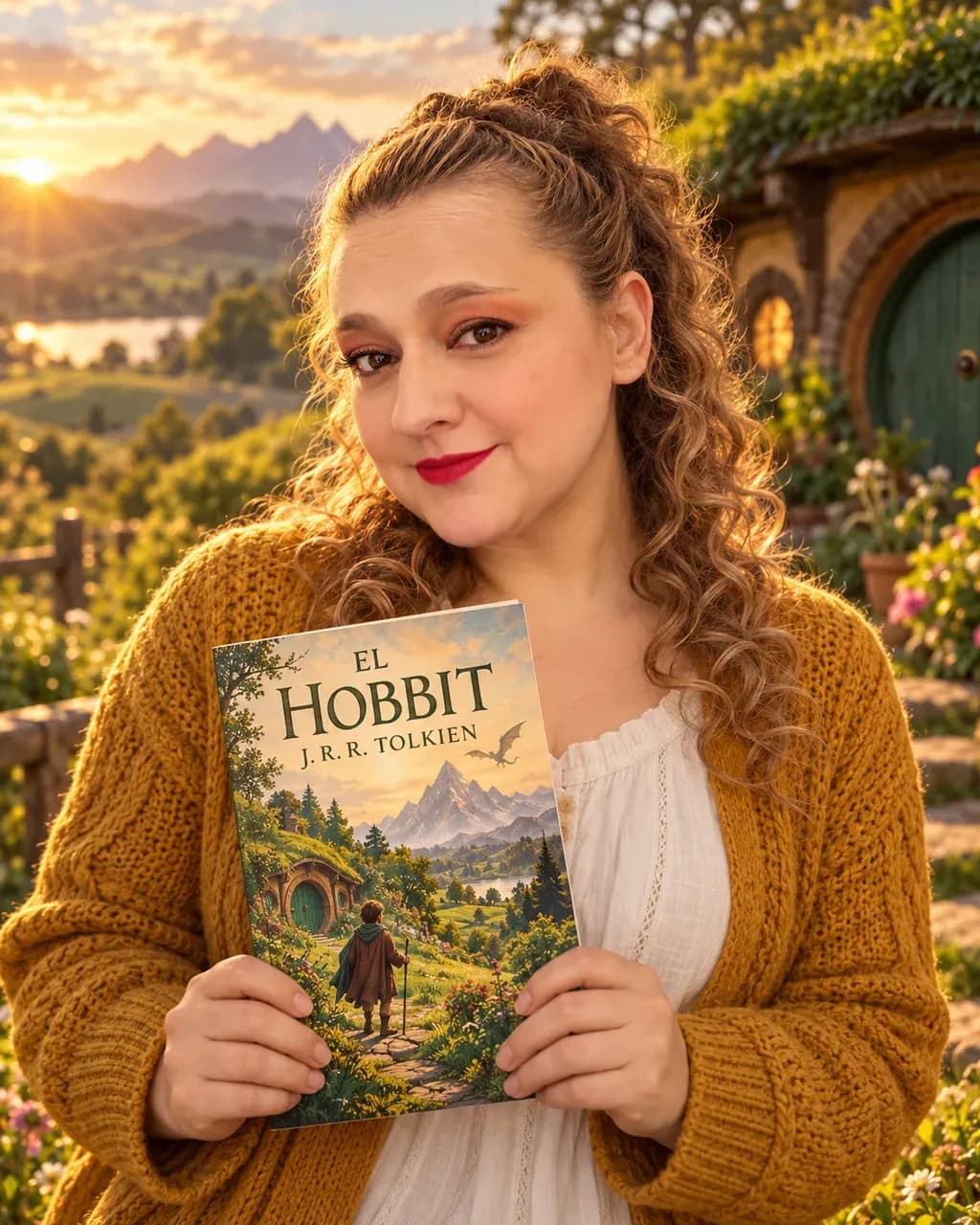
J. R. R. Tolkien
The Hobbit
The Hobbit by J. R. R. Tolkien: a quiet home, a very rude wizard and one trip that should have come with a risk form
Bilbo Baggins likes comfort, good meals and not being disturbed before dinner. Then Gandalf and a company of dwarves arrive and decide he is exactly the person they need for a dangerous journey. This is my spoiler-light review of Tolkien’s The Hobbit, a classic adventure about courage, greed and the inconvenience of having a life-changing Tuesday.
October 26, 2026
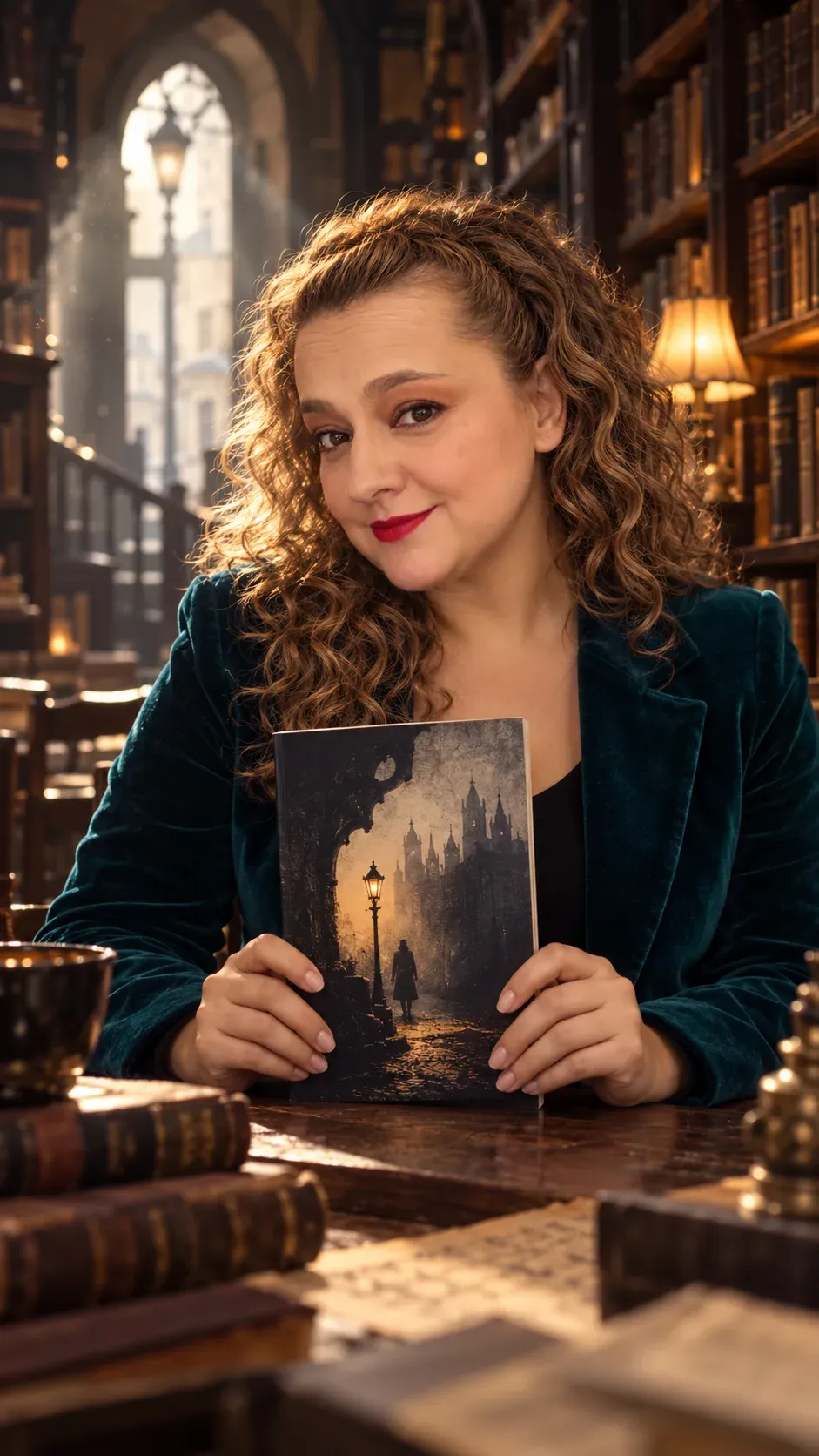
Carlos Ruiz Zafón
The Shadow of the Wind
The Shadow of the Wind by Carlos Ruiz Zafón: you find a book, and the whole city tells you to forget it
Daniel Sempere enters the Cemetery of Forgotten Books and chooses a novel. I have made bad purchases, but none came with a stranger determined to destroy every copy.
October 23, 2026
Want more like this? Join the Readers Club and get one of my books for free.
Share
My books
Books by Yenny Astrid Londoño



About the author
Yenny Astrid Londoño
Yenny Astrid Londoño is a Colombian author and entrepreneur, founder of Anchetas Medellín. She writes about real life with sarcasm, irony and smart humor, turning everyday situations, mistakes and imperfect relationships into stories that readers can laugh at and recognize themselves in.

A free book from me
Get a free book from me
Subscribe and get Sobreviviendo a mis muertos in full as a PDF.
After that, I'll only write when I have something worth telling you.
Also available: Read this review in Spanish →