
Book review
One Hundred Years of Solitude:
One family builds a town, repeats its mistakes for generations, and calls some of them tradition. Ursula spends a century trying to keep everyone alive while the Buendías keep finding new ways to misunderstand love, power, and themselves.
By Yenny Astrid Londoño · October 5, 2026 · 8 min read
Share
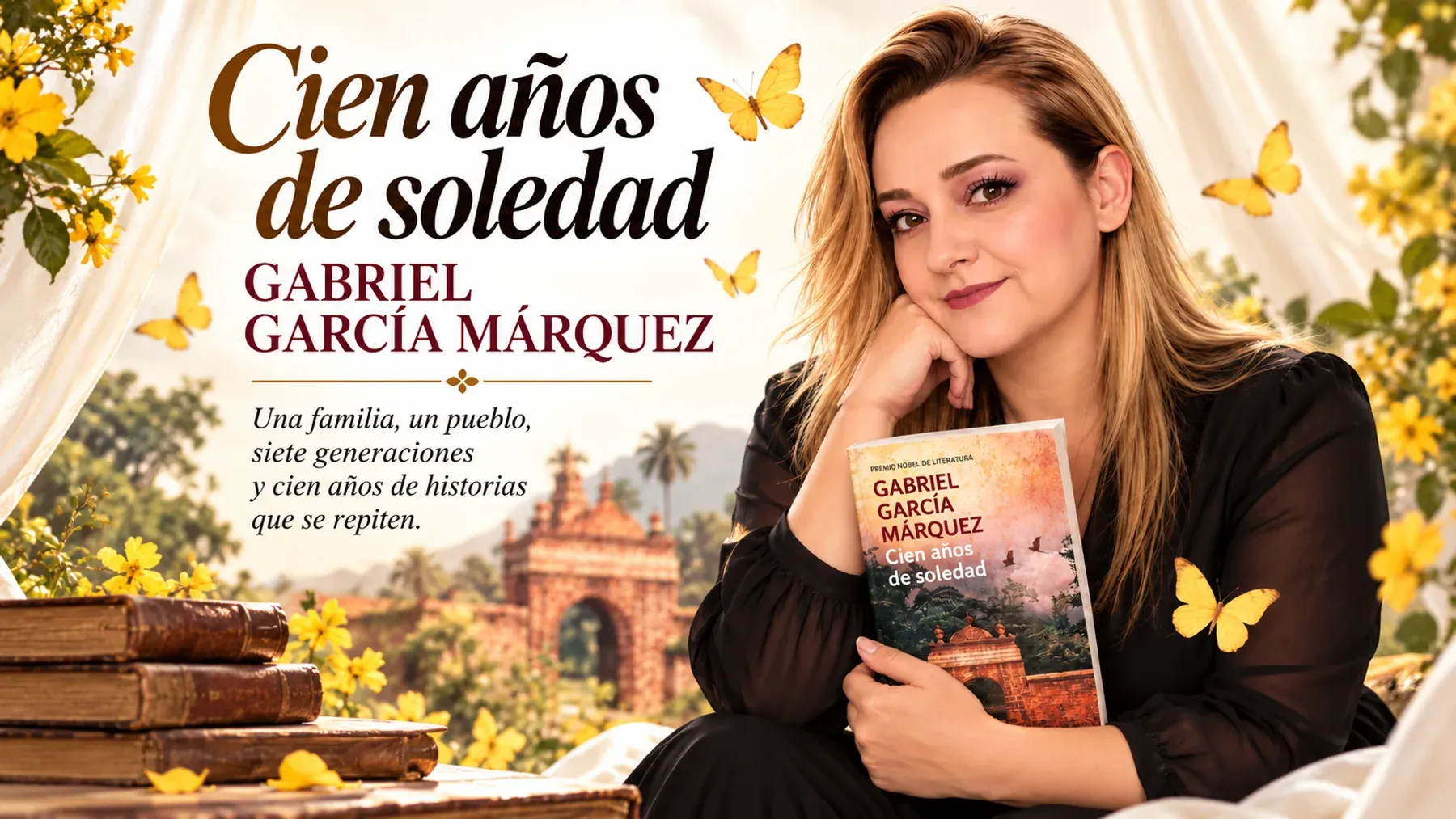
The Book
One Hundred Years of Solitude
Literary fiction / magical realism
by Gabriel García Márquez
More reviews by Gabriel García Márquez →
5 out of 5 stars
Nobody knew I had just lost an entire town.
The Buendía family begins with José Arcadio Buendía and Úrsula Iguarán, cousins whose marriage carries the fear of a child born with a pig’s tail. That fear does not prevent the family from repeating the same patterns for generations; it only gives the patterns a dramatic origin story. They found Macondo, build a home, and bring into the world a line of people whose names, desires, pride, and loneliness keep circling back on themselves.
Gabriel García Márquez’s novel is often introduced as a family saga or a landmark of magical realism. Both descriptions are true, but the family’s ordinary failures matter as much as the magical events. The Buendías inherit more than a name. They inherit stubbornness, secrecy, ambition, and the habit of mistaking repetition for fate. Úrsula sees the pattern longer than anyone else and spends most of her life trying to keep the house from becoming a museum of preventable disasters.
It starts with two cousins and a very delicate sense of masculinity
José Arcadio and Úrsula are cousins who marry despite the fear that their children may be born with a pig’s tail. Their union becomes one of the family’s defining stories, a warning passed down alongside the names. José Arcadio is proud, restless, fascinated by inventions and the outside world; Úrsula is practical enough to notice when fascination is about to become another unpaid household project.
They leave their old home and help establish Macondo, but escape does not erase the family’s fear or its habits. The town grows around the couple’s ambitions, and the family’s origin keeps shaping what later generations think they are allowed to desire. I found the beginning funny and ominous at once: a man’s pride can make a journey sound like destiny when it is also a way to avoid admitting he has made a mess.
Úrsula lives long enough to see what everyone else keeps missing
Úrsula is the family’s practical center. She works, manages money, raises children, watches grandchildren, and keeps the Buendía home running while the men around her chase wars, inventions, women, or grand theories. Her longevity gives her a view no one else gets: she sees names and behaviors repeating until the family’s history starts to look less like progress and more like a loop with decorative furniture.
She is not simply an endlessly patient mother. She argues, makes decisions, and tries to stop the family from sliding into the same mistakes. Her endurance is admirable, but it is also exhausting. Living a long time means watching people you love make the same preventable choice in a different shirt. Úrsula’s strength is not that she controls the family. It is that she keeps trying to orient them while they wander off toward the next bad idea.
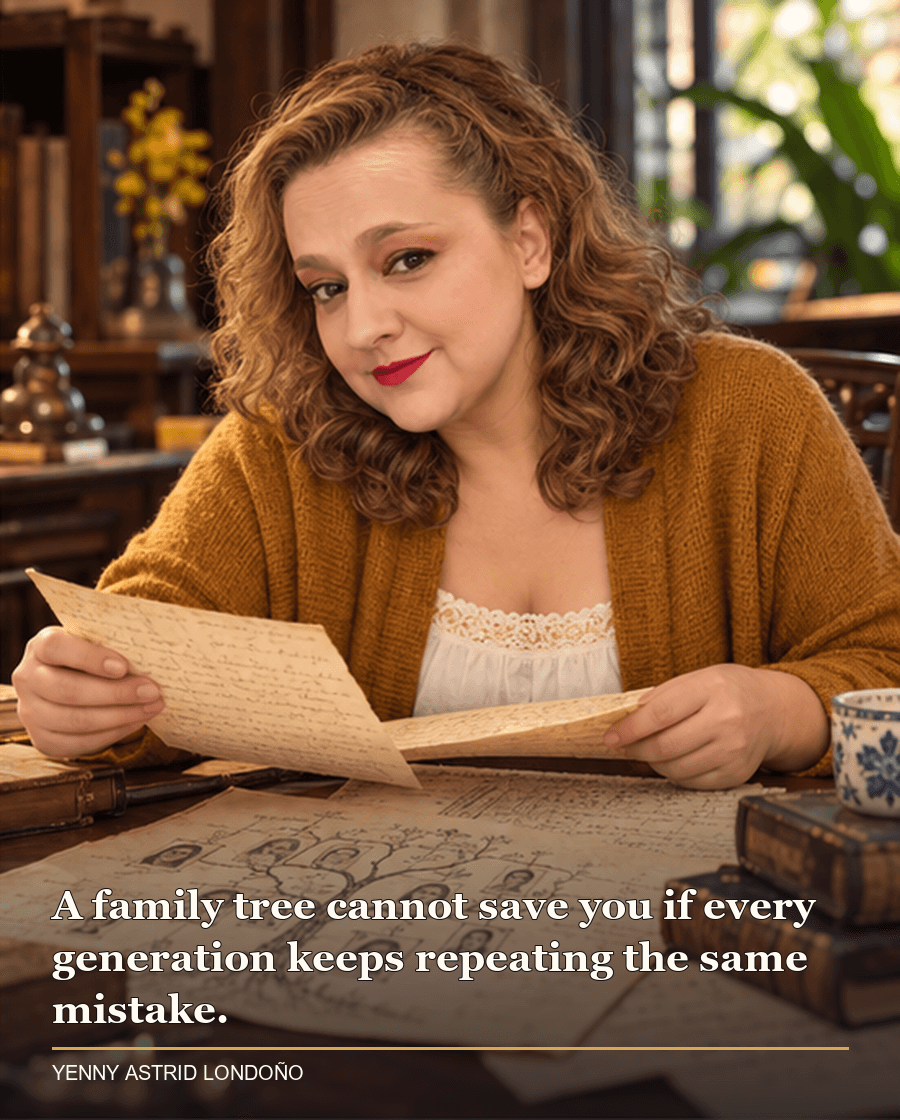
“A family tree is useful. In Macondo, it is also a warning label.” — Yenny Astrid Londoño
José Arcadio, Pilar Ternera, and Rebeca make the family harder to simplify
The early generation expands through desire, secrecy, and arrivals that change the shape of the household. José Arcadio’s relationship with Pilar Ternera, the birth of a child, and Rebeca’s entrance into the family bring new attachments and new questions about belonging. Pilar becomes more than a person the family would prefer not to discuss; she remains connected to Macondo and the Buendías across time.
Rebeca arrives with her own habits and history, and the family takes her in without ever making her fit neatly into its story. These relationships complicate the idea that blood alone determines who belongs. The family’s boundaries are both rigid and strangely porous: they fear the consequences of incest while absorbing people whose origins they cannot fully explain. The household runs on a mixture of affection, denial, and nobody asking the question that would ruin lunch.
Amaranta does not need a villain to make her life painful
Amaranta’s relationships with Pietro Crespi and other people who enter her life show how pride, jealousy, and fear can turn into a self-made prison. She is not simply cruel, nor is she a tragic innocent whose choices belong entirely to other people. She helps create the loneliness she later inhabits. That makes her frustrating and human in a way a more obedient character would not be.
Her story also pushes against the idea that love automatically improves someone. Desire can become competition; refusal can become a method of control; regret can arrive after the person has built a life around not choosing. I wanted to shake Amaranta at times, but I also understood that she is living inside the same family system that teaches people to hold on to pride longer than they hold on to tenderness. The Buendías can turn a feeling into a lifelong occupation.
Aureliano becomes a colonel before he understands himself
Colonel Aureliano Buendía begins as a young man whose life appears open to possibility. He becomes a military leader and participates in a series of civil wars that reshape his identity. As his public name grows, his private life narrows. The colonel gains a reputation, but reputation does not give him a clear understanding of what he wants or whom he has hurt.
His transformation is one of the novel’s sharpest portraits of power turning into isolation. Aureliano’s political role makes him important to history and increasingly distant from ordinary attachment. He takes part in thirty-two uprisings, and after a while even the number starts sounding like a person refusing to consider that perhaps the strategy is not working. The wars fill the calendar; they do not cure the loneliness that sent him looking for meaning in the first place.
“Thirty-two uprisings, one man. At some point even history is asking you to try a different hobby.” — Yenny Astrid Londoño
The women carry the daily life while the men collect grand stories
Arcadio, Santa Sofía de la Piedad, Remedios the Beauty, Fernanda del Carpio, and Aureliano Segundo bring different forms of power and vulnerability into the family. Some are remembered through beauty or extravagance; others are left to do the steady work that keeps the household from collapsing. Remedios the Beauty escapes the ordinary expectations placed on her in a way no one can explain, while Fernanda tries to impose respectability and order on a family that treats both as optional.
Aureliano Segundo and Petra Cotes build a life marked by appetite and abundance, while Fernanda guards status and ceremony. Their arrangement lets the novel expose the gap between how a family appears and what actually sustains it. Women are frequently expected to carry the consequences of choices men have made, then make the house look respectable enough that guests do not ask questions. Macondo is magical, but the unpaid labor is very recognizable.
The later generations inherit names more easily than understanding
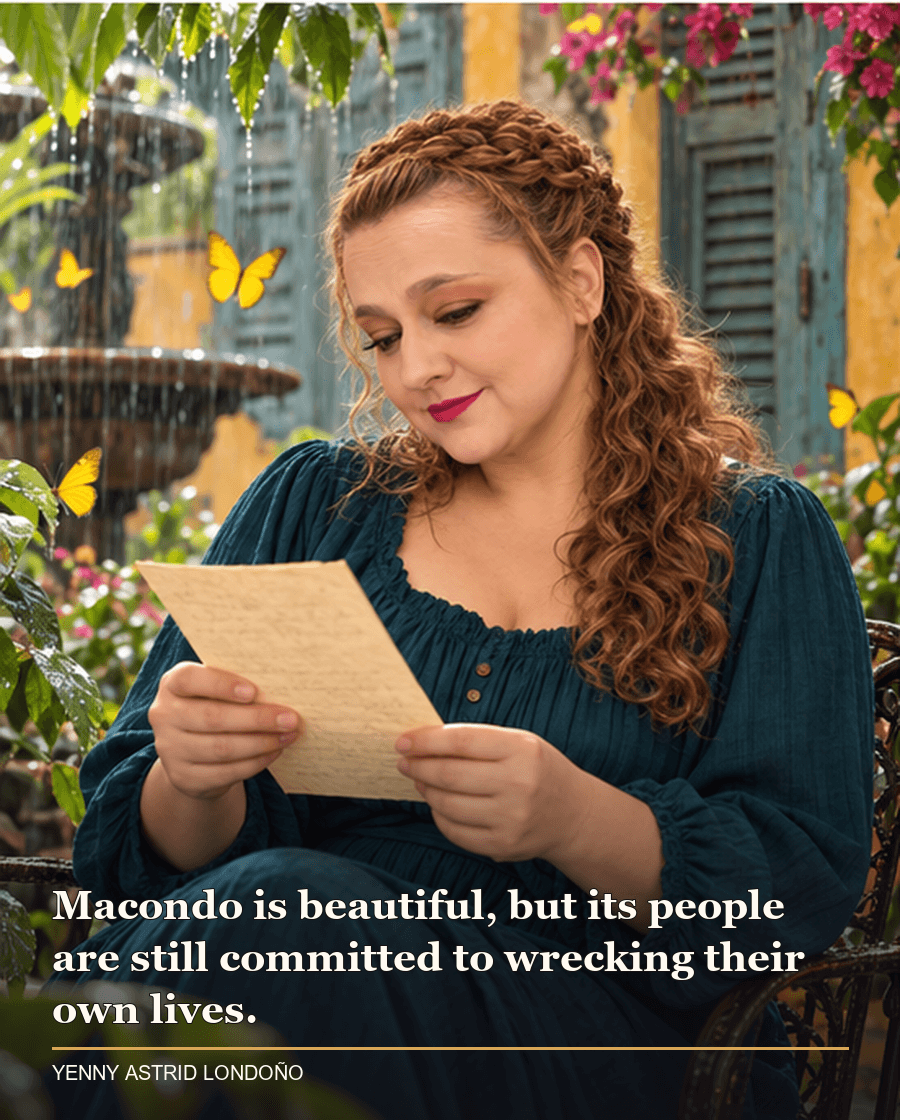
Meme and Mauricio Babilonia’s relationship brings desire into conflict with family control and social respectability. Fernanda’s response turns an affair into a crisis of status, while the story’s yellow butterflies become an unforgettable sign of Mauricio’s presence. José Arcadio Segundo, Aureliano Segundo, and the later Aurelianos inherit family names and fragments of a past that no one has explained clearly enough.
The repetition of names is not just a trick to confuse the reader, though it certainly can do that if you read too quickly. The names make the family’s patterns visible. A new Aureliano arrives carrying the echo of earlier Aurelianos, but he does not automatically understand what happened to them. The children inherit the house, the story, and the adults’ silences. Nobody seems to inherit a useful family guide with the warning “do not repeat this exact disaster.”
Melquíades leaves the truth in writing, but the family reads too late
Melquíades’ manuscripts gather the family’s history and the fate of Macondo into writing. Aureliano Babilonia eventually deciphers the text and recognizes that the family story has already been recorded. The revelation changes the meaning of the novel’s repetitions: what looked like a series of separate failures becomes a pattern moving toward its conclusion.
Macondo declines as outside forces, violence, exploitation, and the family’s own choices wear it down. The memory of the banana company massacre becomes part of the town’s history and its denial. Aureliano Babilonia’s discovery arrives too late to rescue the town or the family. The final pages make reading itself part of the tragedy: Melquíades wrote everything down, but understanding a warning in time is a different matter from eventually decoding it.
“Melquíades wrote everything down. Reading it in time would have been a separate skill.” — Yenny Astrid Londoño

My verdict: a family tree that keeps growing the same loneliness
One Hundred Years of Solitude is a family saga in which magical events sit beside recognizable human failures. The Buendías inherit names, desire, ambition, pride, secrecy, and loneliness. Úrsula tries to understand what is repeating. Her descendants keep mistaking a familiar pattern for a new beginning. Macondo rises and falls while the family builds stories around the choices it cannot admit.
I was most drawn to Úrsula’s long view, the way the women carry the household, and the repeated political and romantic mistakes that turn private life into history. The names can be challenging, and some stretches ask for patient reading, but the repetition is doing real work. The book does not say the family is doomed because of magic. It shows how people can inherit a pattern, ignore its warning, and call the next version fate. A family tree is useful. In Macondo, it is also a warning label.
Frequently asked questions
What is One Hundred Years of Solitude about?
Gabriel García Márquez follows the Buendía family across several generations as they found and inhabit Macondo. The novel blends family history, political change, magical realism, and repeated patterns of love, power, and loneliness.
Is One Hundred Years of Solitude magical realism?
Yes. The novel is a central work of magical realism, presenting extraordinary events alongside everyday life without treating them as separate worlds.
Why are there so many characters with the same names?
The Buendías repeatedly name descendants José Arcadio and Aureliano. The repetition emphasizes inherited family patterns, though keeping a family tree nearby can help readers follow the generations.
Who is Úrsula Iguarán in the novel?
Úrsula is the family’s practical center and one of its longest-lived members. She manages the household and recognizes the Buendías’ recurring habits across generations.
Does this review discuss the ending?
Yes. It discusses the family’s final generations, Melquíades’ manuscripts, and the fate of Macondo.
What did Yenny think of One Hundred Years of Solitude?
I was especially interested in Úrsula’s endurance, the women’s unseen labor, and the family’s repeated mistakes. The names demand attention, but the repetition is part of the novel’s meaning, not a decorative obstacle.
The Book
One Hundred Years of Solitude
by Gabriel García Márquez
Get the bookIf you buy through this link, Yenny earns a small commission and you pay the same price.
Keep reading
If you liked it, keep going
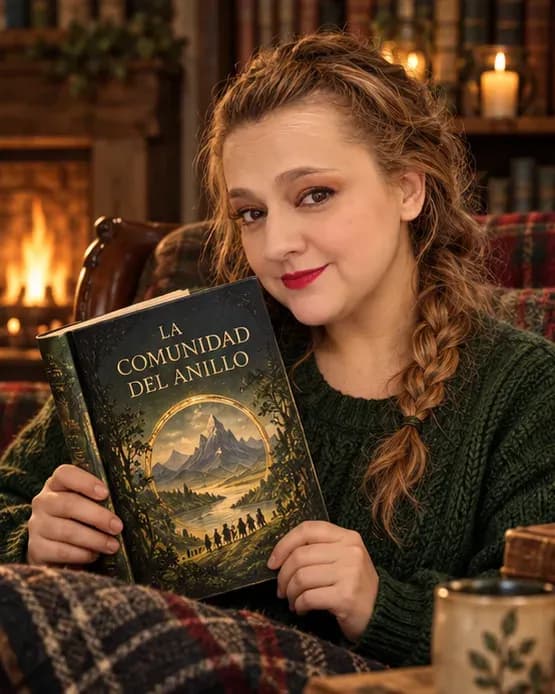
J. R. R. Tolkien
The Fellowship of the Ring
The Fellowship of the Ring by J. R. R. Tolkien: a dangerous mission and far too many people trusting a ring
An epic journey, friendship and a piece of jewelry that should come with a warning label. Here is my spoiler-light review of the first part of The Lord of the Rings. If you only know the films, the book takes longer to walk, talk, sing and tell you the history behind each place. Tolkien is not trying to get you to Mordor by taxi; first he wants you to understand why arriving matters.
October 27, 2026

J. R. R. Tolkien
The Hobbit
The Hobbit by J. R. R. Tolkien: a quiet home, a very rude wizard and one trip that should have come with a risk form
Bilbo Baggins likes comfort, good meals and not being disturbed before dinner. Then Gandalf and a company of dwarves arrive and decide he is exactly the person they need for a dangerous journey. This is my spoiler-light review of Tolkien’s The Hobbit, a classic adventure about courage, greed and the inconvenience of having a life-changing Tuesday.
October 26, 2026
Carlos Ruiz Zafón
The Shadow of the Wind
The Shadow of the Wind by Carlos Ruiz Zafón: you find a book, and the whole city tells you to forget it
Daniel Sempere enters the Cemetery of Forgotten Books and chooses a novel. I have made bad purchases, but none came with a stranger determined to destroy every copy.
October 23, 2026
Want more like this? Join the Readers Club and get one of my books for free.
Share
My books
Books by Yenny Astrid Londoño



About the author
Yenny Astrid Londoño
Yenny Astrid Londoño is a Colombian author and entrepreneur, founder of Anchetas Medellín. She writes about real life with sarcasm, irony and smart humor, turning everyday situations, mistakes and imperfect relationships into stories that readers can laugh at and recognize themselves in.

A free book from me
Get a free book from me
Subscribe and get Sobreviviendo a mis muertos in full as a PDF.
After that, I'll only write when I have something worth telling you.
Also available: Read this review in Spanish →