
Book review
Seat 7a:
Matt Krüger boards the plane with fear and a plan. A call requires him to choose between his daughter and the passengers.
By Yenny Astrid Londoño · October 8, 2026 · 10 min read
Share

The Book
Seat 7a
Psychological thriller
by Sebastian Fitzek
4 out of 5 stars
There was no way to work out in advance what another person was willing to do to his daughter.
Most people buy a plane ticket and worry about luggage. Matt Krüger buys several seats and calculates which one gives him the best chance of surviving a crash. I would be exhausted before security, and Fitzek has not even made the phone ring yet.
Matt is terrified of flying. On the flight from Buenos Aires to Berlin, someone calls to say his pregnant daughter has been kidnapped. If he wants her alive, he must bring down the plane. So much for that carefully researched survival plan.
That cruel switch is what interests me about Seat 7a. Matt was trying to save himself; now a blackmailer is forcing him to consider killing strangers. Everyone else on the plane has a life too, though none of them was invited into the decision. That is the part no seat calculation can solve.
Seats give Matt a feeling of control
Matt has organized his trip around chances of survival. Within the novel, he even reserves 7A so that no one occupies it. The gesture allows us to understand how he manages fear: he turns uncertainty into something he can order, buy or avoid.
I won't use that premise as real aviation safety data. Its function in the story is to show a man who needs to feel that he did everything possible before accepting the flight. The number matters because it contains part of his attempt to feel in control.
What interests me is that relationship with danger. Knowing that something is improbable doesn't always make it bearable. The head can understand an explanation while the body continues to wait for the catastrophe. Laughing at manias is very easy when you don't have to travel within them.
Fitzek uses that preparation so that the call destroys a fragile calm he worked hard to build. Matt hadn't stopped being afraid. He had found a way to live with it. Now that way is no longer enough.
The threat reaches two places; Matt can only occupy one
The daughter is in Berlin. Matt is inside the plane. This distance makes blackmail cruel because the information arrives without direct access to the person it needs to protect. He can't look at her, ask calmly, or check everything on his own.
The phone gives the blackmailer a terrible kind of authority. Someone speaks from another place and tries to make their words the only available version of a life. The voice needs the father to obey before it can construct another explanation.
That makes for a strong suspense device. The threat isn’t only the physical danger inside a closed space; it’s that Matt has to act on information controlled by the person trying to hurt him.
It also allows us to ask what we consider evidence when we are afraid. An explanation can be insufficient and still seem like the only thing to hold on to. That doesn't make the character stupid. It makes him vulnerable to a form of power that uses precisely his urgency.
The passengers don't disappear because Matt has a daughter
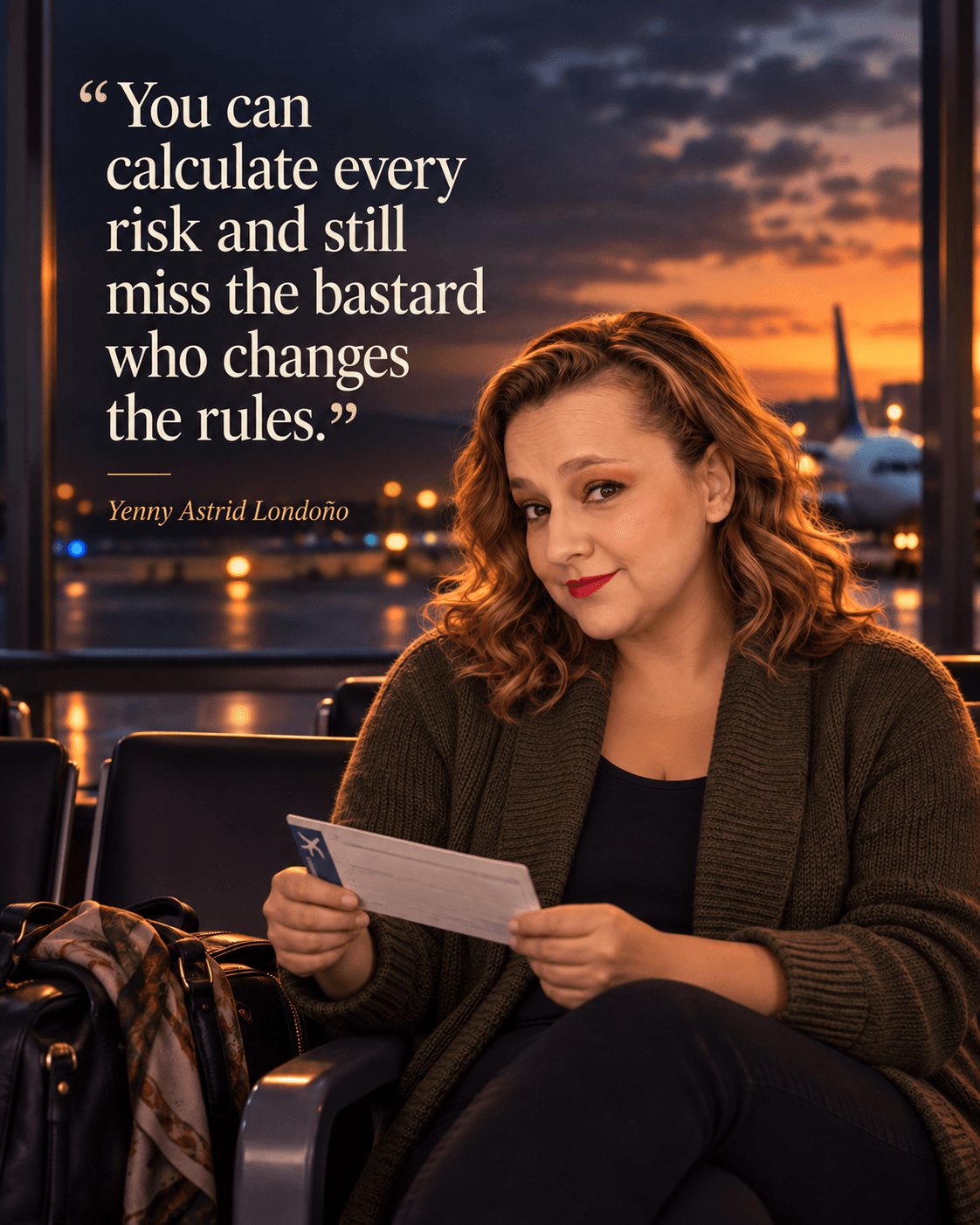
The blackmailer designs the situation around an intimate bond. He knows that Matt’s daughter matters in a way that no number can replace. But the passengers are still people, even if the protagonist doesn't know their names.
I am very interested in that difficulty. Love makes a life concrete. Distance can make others abstract. A novel like this needs to resist this simplification so that the conflict doesn't end up being an account between a loved person and a bunch of strangers.
The plane contains families, plans and bodies that don't want to die either. They don't have an equivalent voice on the call, but their silence doesn't make them any less important. The reader must keep them within the situation even when the father's fear takes center stage.
I can understand why Matt is desperate without concluding that any action is justified. That's the discomfort worth reading. Blackmail doesn't become morally legitimate because it has succeeded in placing someone in an unbearable position.
Blame begins before a decision occurs
A threat of this type attempts to make the victim believe that they will be responsible for what the criminal does next. If you don't obey, your daughter dies. The phrase removes the kidnapper from causality, as if he were a formality and the true decision belonged to the father.
That transfer seems to me to be one of the most perverse parts of the starting point. Matt receives an impossible obligation and anticipated guilt. The other doesn't just want a behavior; he wants to control the way that behavior will be understood.
We should put the person responsible back where he belongs. The threat exists because someone kidnapped and decided to use a person to harm others. The father's difficulty doesn't erase that first decision.
Fitzek can speed up the story from there, but I'm interested in not losing the difference between choosing freely and moving under duress. Pressure explains why someone acts. Afterwards it is still necessary to look at what he did, what alternatives he had and how much he could know at that moment.
A fast thriller still needs ground rules
A plane offers limited time and space that is not easy to leave. The setting already works for tension before adding a revelation. That's why I demand from the story that the complications have more than just the desire to surprise.
I enjoy an extreme premise. I don’t need a Fitzek novel to read like an airline incident report, but the characters’ actions still need to fit what the story has established about their abilities and circumstances.
Emotion wins when I understand why an option seems possible and then stops being so. It wears out when each difficulty receives a new solution that had no place in the previous situation. Adrenaline can drown out a question for a few minutes; it cannot answer it.
My reservation is in that tolerance that demands excess. The book offers a pressure experience, not a promise of serenity or an aviation manual. Going in knowing that allows you to better enjoy your bet and judge it for what you are trying to do.
What did not work for me in Seat 7a
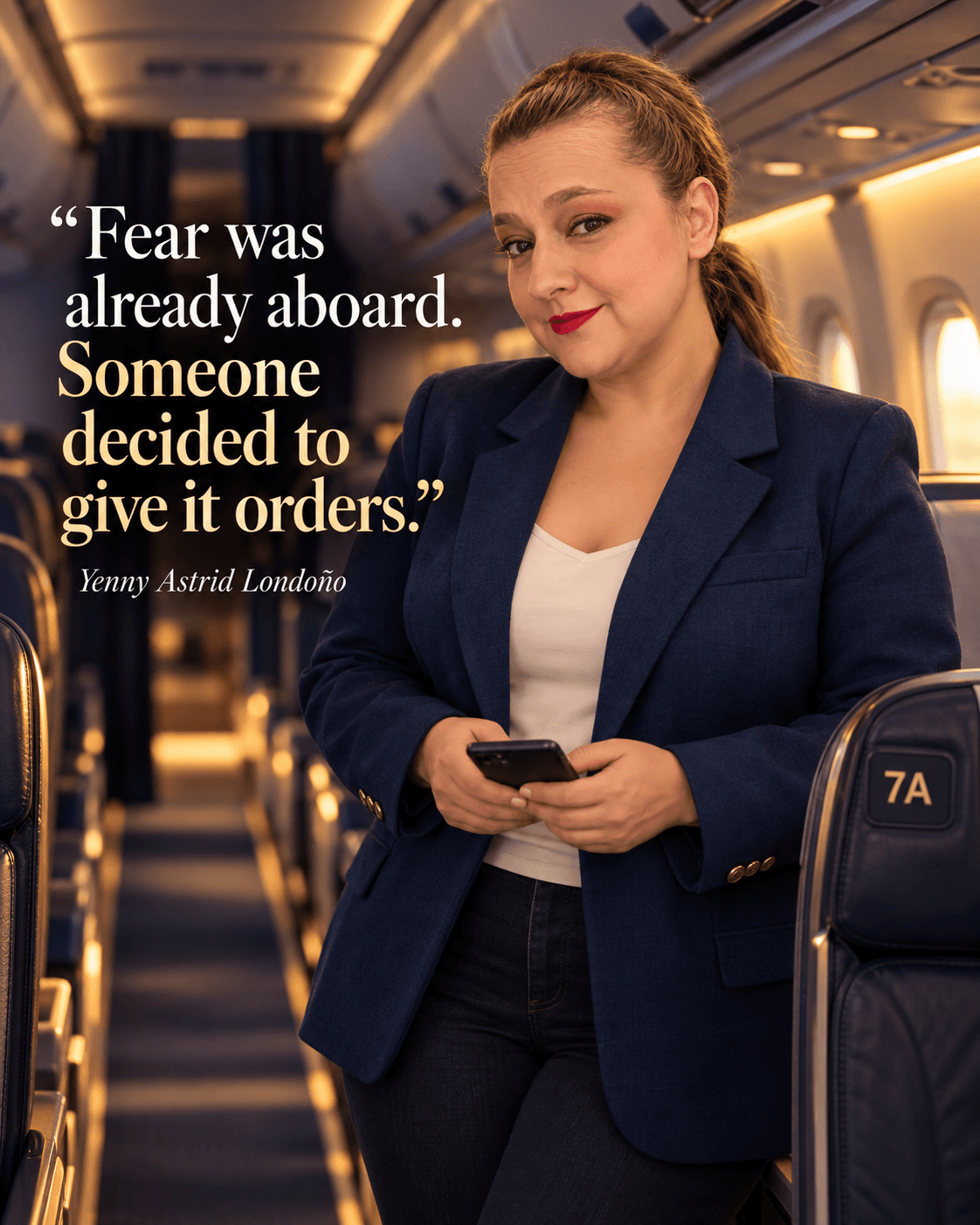
My biggest reservation is the distance between an irresistible premise and the amount of things we have to accept to sustain it. A man with a fear of flying receives a threat against his daughter and must act inside a plane. The premise is an anguish-producing machine. It also requires the reader to tolerate a high level of artifice. If you go in expecting each step to work like a real investigation, the excitement may last less than the flight.
I can accept an exceptional situation. What I ask of you is consistency within that exception. The rules that the book establishes have to continue to apply when the next surprise arrives. An obstacle shouldn't disappear just because it has done its job of making us tense. That is my measure for thrillers that accelerate a lot: that the speed doesn't erase the logic that took them there.
The threat against Matt’s pregnant daughter raises the stakes immediately, but it also piles several vulnerabilities onto one character. I want her to have a presence and a will of her own, not exist only to push Matt into action. He’s terrified for someone he loves; that doesn’t mean her life belongs to his story alone.
My last objection has to do with saturation. The fear of flying already offers tension. Add blackmail, other people's lives and limited time, and the reader almost has nowhere to breathe. For plenty of readers, that is exactly the appeal. For me, a well-placed pause can make what comes next stronger. Suspense doesn't always win by pushing harder. It works even better when it gives us a moment to grasp what might be lost.
Blackmail changes the meaning of fear
Matt tries to organize the trip through seats, calculations and manias. He is not eliminating danger; he is finding a way to endure it. The call alters that strategy because it introduces a person who knows a vulnerability and decides to use it. The threat ceases to be an abstract possibility of flight and begins to depend on a concrete will.
That change deserves attention. Before, Matt seeks to reduce a risk. Then he has to respond to someone who can change the conditions. His calculations were never designed for that. The tension comes from seeing a person forced to act outside the system they had built to feel safe. The plane concentrates the difficulty because he cannot go out to check what is happening with his daughter.
The separation between air and land also distributes knowledge. There are things Matt needs to know and can't directly observe. He receives information from others, with all the uncertainty that implies. Part of the suspense is played out in that dependency: which message he believes, what he can verify, and how much time verification costs.
I wouldn't confuse his dilemma with a moral problem that has a clean answer. A blackmailer fabricates the options so that they all cause harm. Matt is still responsible for his actions, but he is not the one who created this plot. It irritates me when we admire the criminal's engineering and then dedicate all our energy to judging whoever had to respond to it.
Who is going to enjoy this flight the most?
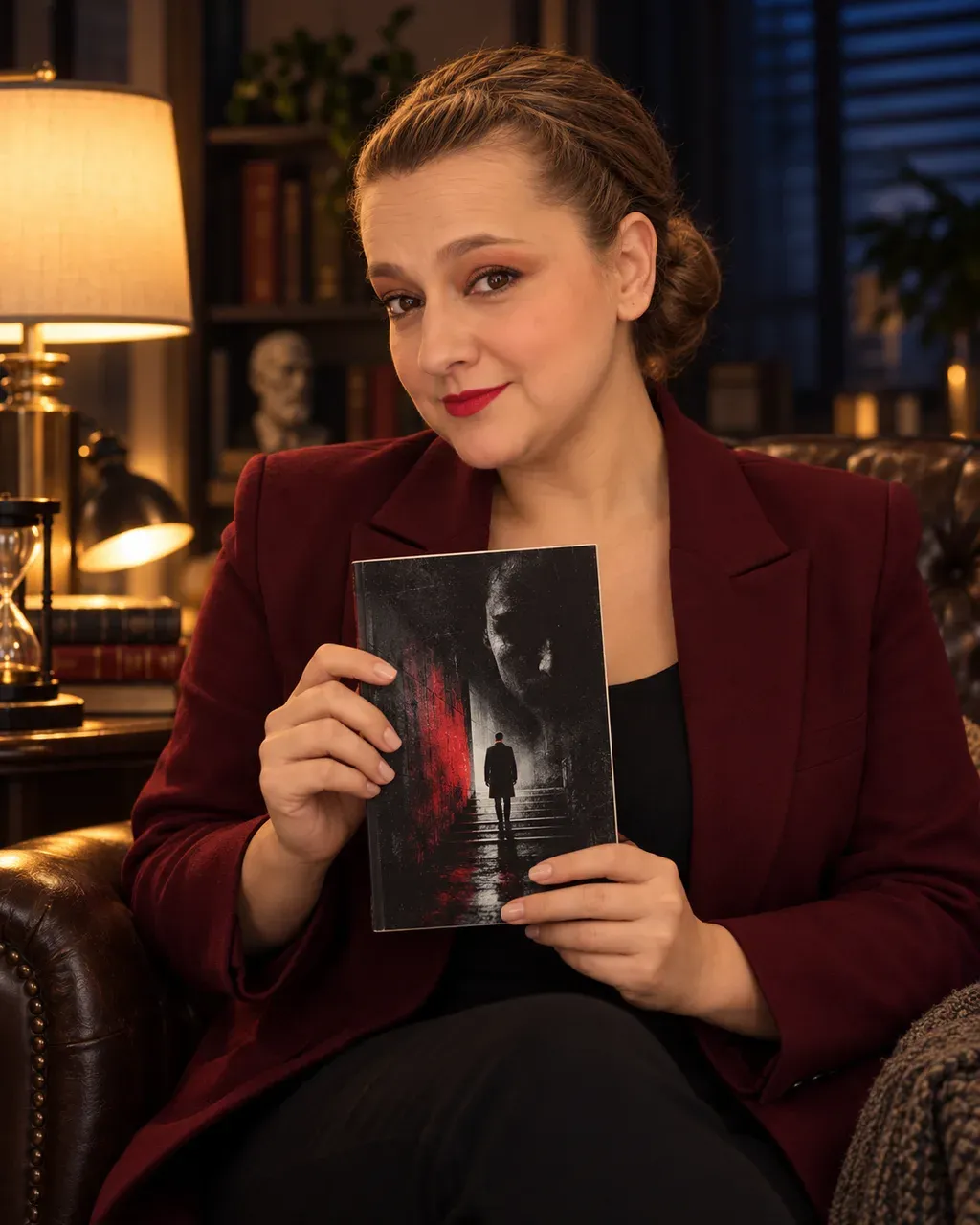
I’d recommend it if you want a high-pressure thriller and can go along with a premise turned up to eleven. Confinement is part of the engine here, and you don’t need to have read another Fitzek novel to follow the case. The cover shown with this English review is an artistic mockup.
If you want a calm narrative, tight operational realism, or little exposure to panic and family danger, I'd choose something else. I would also not happily recommend it before a flight to someone who is already having a bad time. The context in which one reads matters. A book that is very entertaining to one person may be exhausting to another.
To discuss later, I would ask what part of the anxiety comes from space and what part comes from incomplete information. If Matt were somewhere else, would the threat lose strength or simply change shape? That question helps evaluate the use of the plane without reducing the novel to a list of twists. Claustrophobia works best when we also understand what decisions it has left us out of.
My rating is 4 out of 5
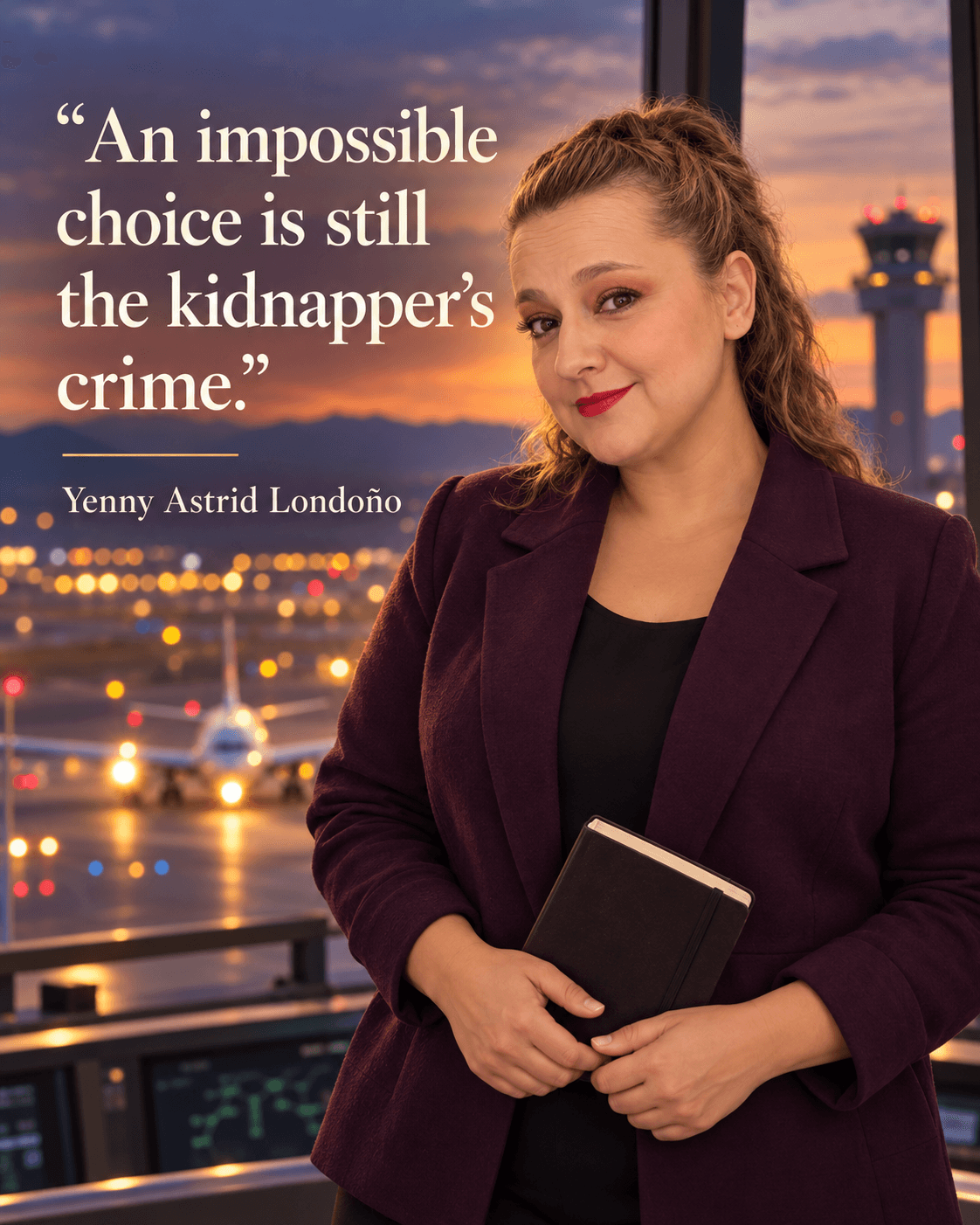
I give it four stars for setting Matt’s own fear against a threat to someone he loves. The phone call changes the meaning of the flight without changing the setting: Matt is still in his seat, but the danger is somewhere else.
The star that I left out corresponds to the requirement to accept a very extreme situation. I'm interested in coercion and the conflict between lives, but I don't want the volume of the threat to replace any question about how it works.
I would recommend it to anyone who enjoys lockdown thrillers and decisions under pressure. If you are looking for a leisurely investigation, here the experience is different. I keep the resolution because the fun is also seeing how Matt tries to get out of a condition that no one should have imposed on him.
The man had calculated where to sit so as not to die.
There was no way to calculate in advance what another was willing to do to his daughter.
Frequently asked questions
Can I read Seat 7a on its own?
Yes. You don’t need to have read another Sebastian Fitzek novel to follow this story.
Is the protagonist the pilot?
No. Matt Krüger is traveling as a passenger. The threat requires him to cause the plane to crash.
Does the review tell the ending?
No. The blackmail solution and the outcome are preserved.
What makes Matt Krüger's conflict distressing?
Blackmail pits his daughter's life against that of the passengers, while Matt is already afraid of flying. The tension arises from this simultaneous pressure and the imbalance of information between him and the person who threatens him.
Is Seat 7a realistic?
It leans into an extreme setup to keep the pressure high. If that kind of thriller hooks you, it may work; if every logistical stretch pulls you out of the story, it may be a tougher sell.
What content warnings should readers know about?
The story includes threats aboard a plane, kidnapping and danger to a pregnant woman. This isn’t a flight-safety manual; it builds an extreme situation to put pressure on Matt’s decisions.
The Book
Seat 7a
by Sebastian Fitzek
Get the bookIf you buy through this link, Yenny earns a small commission and you pay the same price.
Keep reading
If you liked it, keep going

Javier Castillo
The Snow Girl
The Snow Girl: Kiera disappears and everyone moves on except her parents
Javier Castillo's The Snow Girl: Kiera vanishes at a New York parade and a tape reopens the case five years later. My honest review, 4 out of 5.
October 22, 2026
John Katzenbach
The Analyst
The Analyst: a birthday threat, fifteen days and a therapist who has lost control
John Katzenbach's The Analyst: a psychoanalyst gets fifteen days to find out who is threatening him. My honest review of this thriller.
October 22, 2026
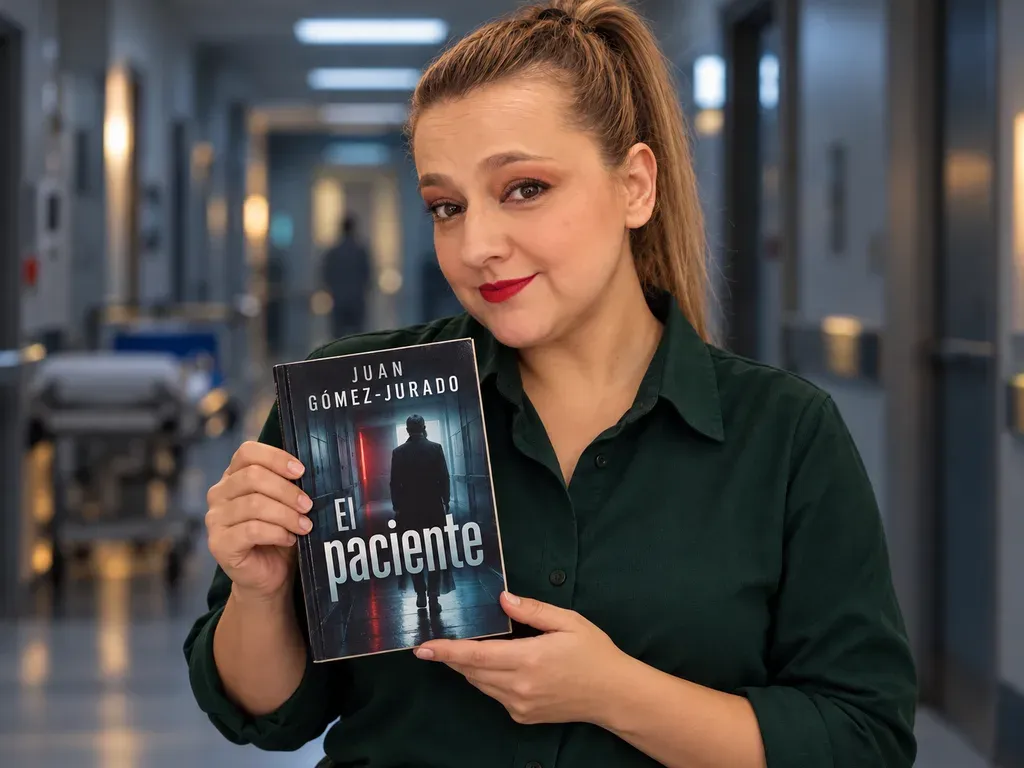
Juan Gómez-Jurado
The Patient
The Patient: the President on the operating table and a daughter nobody can trade
Juan Gómez-Jurado's The Patient: a neurosurgeon, a President on the table and a kidnapped daughter in sixty-three hours. My honest review.
October 22, 2026
Want more like this? Join the Readers Club and get one of my books for free.
Share
My books
Books by Yenny Astrid Londoño



About the author
Yenny Astrid Londoño
Yenny Astrid Londoño is a Colombian author and entrepreneur, founder of Anchetas Medellín. She writes about real life with sarcasm, irony and smart humor, turning everyday situations, mistakes and imperfect relationships into stories that readers can laugh at and recognize themselves in.

A free book from me
Get a free book from me
Subscribe and get Sobreviviendo a mis muertos in full as a PDF.
After that, I'll only write when I have something worth telling you.
Also available: Read this review in Spanish →