
Book review
All About Money:
Private detective Pascual Cordero wants to follow the rules. The rich family surrounding a suspicious death would rather know which rule can be bent without losing the inheritance.
By Yenny Astrid Londoño · October 8, 2026 · 7 min read
Share
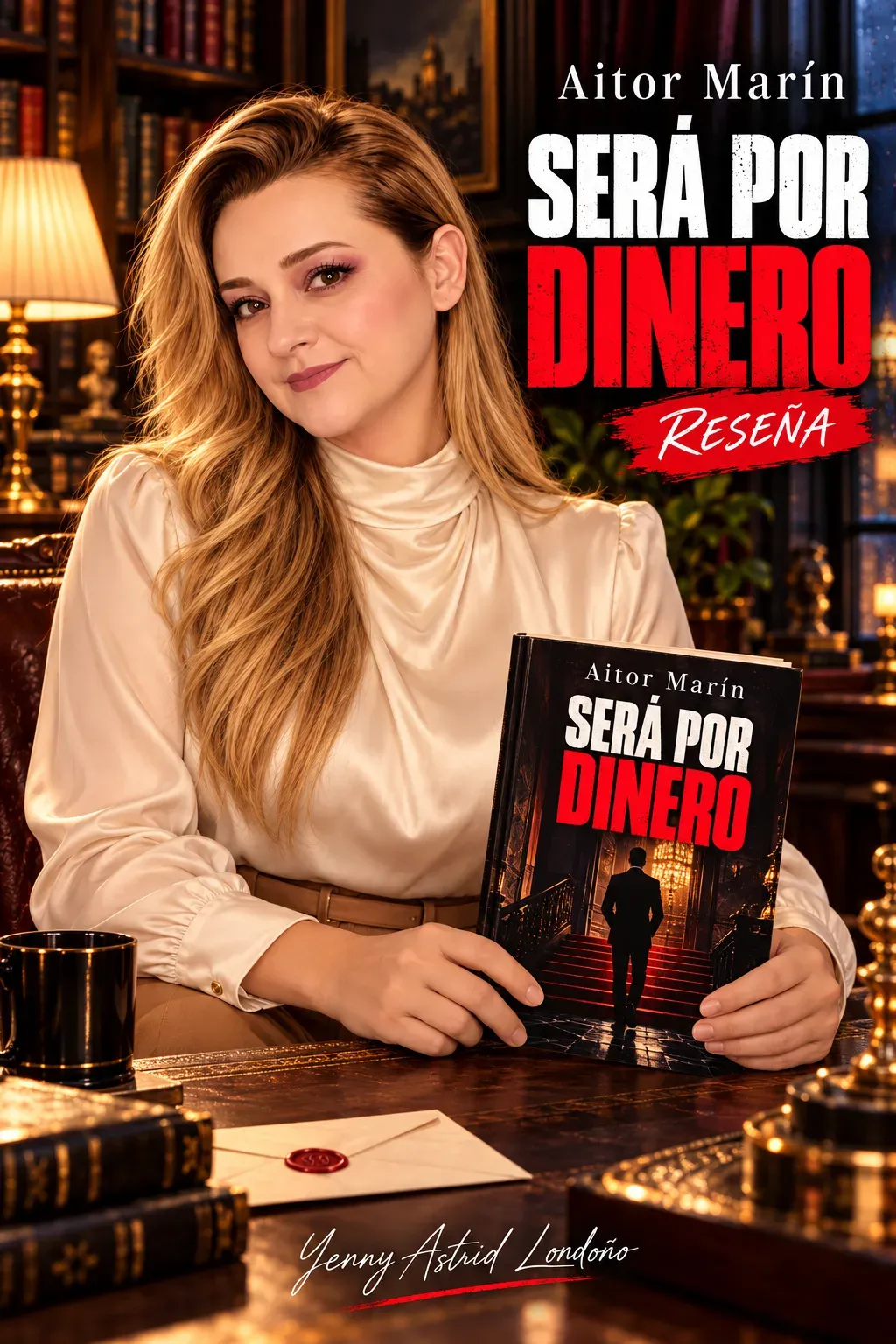
The Book
All About Money
by Aitor Marín
3.5 out of 5 stars
I think it's worth watching who changes their mind just when they are told how much they could lose.
Pascual Cordero is a private detective with an unusual professional habit: he wants to follow the rules. All of them. The case begins when Paz Carnal asks him to find a will connected to the death of a wealthy magnate. The circumstances are undignified, the family has money at stake, and the truth threatens to change who gets what. Cordero is not the swaggering detective who breaks every boundary and calls it instinct. His rigidity is its own problem.
Aitor Marín mixes crime fiction with satire, using the investigation to make privilege look less polished. The magnate’s death includes a detail that punctures his solemn image, while the will turns the explanation into a financial question. I liked that the humor does not merely decorate the plot. It exposes who considers rules mandatory and who assumes they are for everyone else.
Pascual Cordero is not trying to be the toughest man in the room
The private detective often arrives with a catalogue of vices that the genre asks us to mistake for personality. He drinks, breaks rules, insults people, and somehow gets called brilliant. Cordero complicates that model because he wants to comply with procedure. His rigid honesty makes him awkward in situations where other people expect a shortcut.
That rigidity is funny, but it is not automatically wise. A procedure can help organize action, and following it without adapting can also leave a person unable to respond to what is actually happening. Cordero’s character lets the novel laugh at that tension without concluding that honesty is stupid. If the rule-following detective looks naïve, perhaps the people around him have normalized too many little exceptions.
The magnate’s death comes with an undignified detail
The possible Viagra overdose strips the patriarch of some of the grandeur that usually follows a wealthy man’s introduction. He does not enter the story as an untouchable monument. He enters as a body, a cause of death, and a topic that makes people whisper while pretending to be respectful.
The humor lowers the powerful person from his usual stage. Wealth did not make his death elegant, and it does not stop the family from revising what his life meant according to what each person now needs. I enjoyed that opening because the absurdity does not erase the investigation; it gives the mystery a sharper social angle. Even a magnate can become a punchline when the body refuses to protect his reputation.
“The detective wants to follow the rules. The family wants to know what the rules are worth.” — Yenny Astrid Londoño
The will turns the cause of death into a business decision
The estate’s conditions introduce a strong crime-fiction incentive: if the death is treated as suspicious, the family may lose the inheritance. The truth is no longer only a moral responsibility. It has a price, and each person can calculate what the wrong conclusion might cost them.
That changes every conversation around the death. Some people need the cause to be simple; others need it to remain unclear. Cordero’s task is to find a document, but the document’s meaning can change the family’s financial future. The story makes the difference between investigating a fact and producing a version of events feel urgent. A will is paper. In a wealthy family, it can also be a weapon that speaks after the dead person cannot.

Paz Carnal deserves to be heard before we label her
Paz Carnal hires Cordero and starts the investigation. As the magnate’s lover, she occupies a social position people can simplify quickly: decide what she wants, decide what she deserves, and avoid listening to anything she says. The novel lets her request move the plot without treating her label as a complete explanation of her motives.
I prefer that. Being related to someone does not guarantee disinterest, and being a lover does not prove that every word is a lie. People can have affection, financial motives, and a version of the relationship they want to protect at the same time. Cordero has to hear the commission carefully, then keep in mind that the person paying him does not get to buy the answer.
The humor makes privilege easier to see
One effective way to write satire is to put a person who takes a rule seriously in front of someone who considers it absurd to have to follow one. The contrast can reveal power without delivering a lecture. Cordero’s discomfort gives the book a comic rhythm, but the joke also asks who benefits when everybody else treats a boundary as negotiable.
His earnestness can make him seem out of place. That is part of the humor, and also the point. If the detective looks naïve for refusing a shortcut, maybe the surrounding world has become too comfortable with small acts of dishonesty. The wealthy family’s confidence and Cordero’s rigidity do not just create comic scenes; they show different assumptions about what obligations are for.
“A suspicious death is less mysterious when everybody has a financial reason to prefer one explanation.” — Yenny Astrid Londoño

What I did not like as much
My first reservation is how easily a rich family can become a row of familiar caricatures. Greed and contempt for rules work well in satire, but I still want each person to negotiate self-interest in a distinct way. If every character is the same privileged person wearing a different jacket, the joke loses its edge.
I also wanted Cordero’s strictness to keep creating new problems rather than repeating the same gag. The idea of a detective who wants to obey every rule is refreshing, but a compulsive virtue can become a joke that no longer develops. The book is strongest when his principles force him to make a difficult choice, not when they merely make him inconvenient again.
The rule costs different people different amounts
Paz’s commission brings Cordero into a search for the will, and its contents may shift the financial benefits inside the family. A conclusion that appears neutral can affect who gains money, who loses status, and who can afford to tell the truth. The detective’s loyalty to the person paying him is not the same as obedience to that person’s desired outcome.
That distinction is one of the most useful ideas in the book. Cordero works for Paz, but he may discover something she does not want to hear. A professional can accept a commission without selling the result. The family’s wealth makes the stakes clear: rules can look like an inconvenience when you have enough money to absorb the consequences, while everyone else has to live with the decision.
Who will enjoy this mix of mystery and comedy?
I would recommend it to readers who enjoy detective fiction with satire and a protagonist who complicates the genre’s usual image of a rule-breaking investigator. The inheritance dispute gives the case a clear financial engine, and the humor keeps the mystery from becoming too solemn about a family that is busy counting the money.
If you want a dark, strictly procedural case, the comedy may feel too present. If you enjoy a detective whose honesty becomes both strength and complication, Cordero is a welcome change. The book’s best moments come when a rule-following man walks into a room where everyone else assumes rules are an optional subscription.
“If honesty looks naïve, maybe the room has become too comfortable with cheating.” — Yenny Astrid Londoño
My verdict: the detective wants a clean answer; the family wants a profitable one
All About Money combines a suspicious death, a disputed will, and a satirical look at privilege through Pascual Cordero, a detective who would rather follow the rules than perform the genre’s usual macho shortcuts. The humor works when it makes the family’s financial interests visible and lets Cordero’s discomfort expose how casually other people bend a boundary.
I liked the premise and the contrast between the detective’s principles and the family’s assumptions. Some wealthy characters feel familiar, and Cordero’s rigidity occasionally risks becoming a repeated gag. Still, the book has a useful question underneath the comedy: when the truth changes an inheritance, who is asking for an explanation and who is shopping for the one they can afford?

Frequently asked questions
What is All About Money by Aitor Marín about?
Private detective Pascual Cordero investigates a wealthy magnate’s suspicious death and a disputed will after Paz Carnal hires him. The family’s inheritance interests complicate the search for a straightforward explanation.
What is the original Spanish title of All About Money?
The Spanish publisher released the book as All About Money. An English-language rights catalogue renders the title as All About Money; I use that translation here for readability, without claiming that a separate English edition has been published.
Who is Pascual Cordero?
He is the private detective at the center of the novel. Unlike the typical rule-breaking hard-boiled investigator, he wants to follow procedures, and that commitment creates both comic and practical difficulties.
Is All About Money a comedy or a crime novel?
It combines crime fiction with satirical comedy. The investigation concerns a magnate’s death and will, while the humor draws attention to money, privilege, and rule-bending.
Does this review contain spoilers?
Yes. It discusses the death, the will, Paz Carnal’s commission, and the family’s financial motives.
What did Yenny think of All About Money?
I enjoyed the premise and Cordero’s unusual relationship with rules. Some family characters feel too familiar, and the protagonist’s rigidity can repeat its joke, but the satire makes the inheritance stakes fun to examine.
The Book
All About Money
by Aitor Marín
Get the bookIf you buy through this link, Yenny earns a small commission and you pay the same price.
Keep reading
If you liked it, keep going
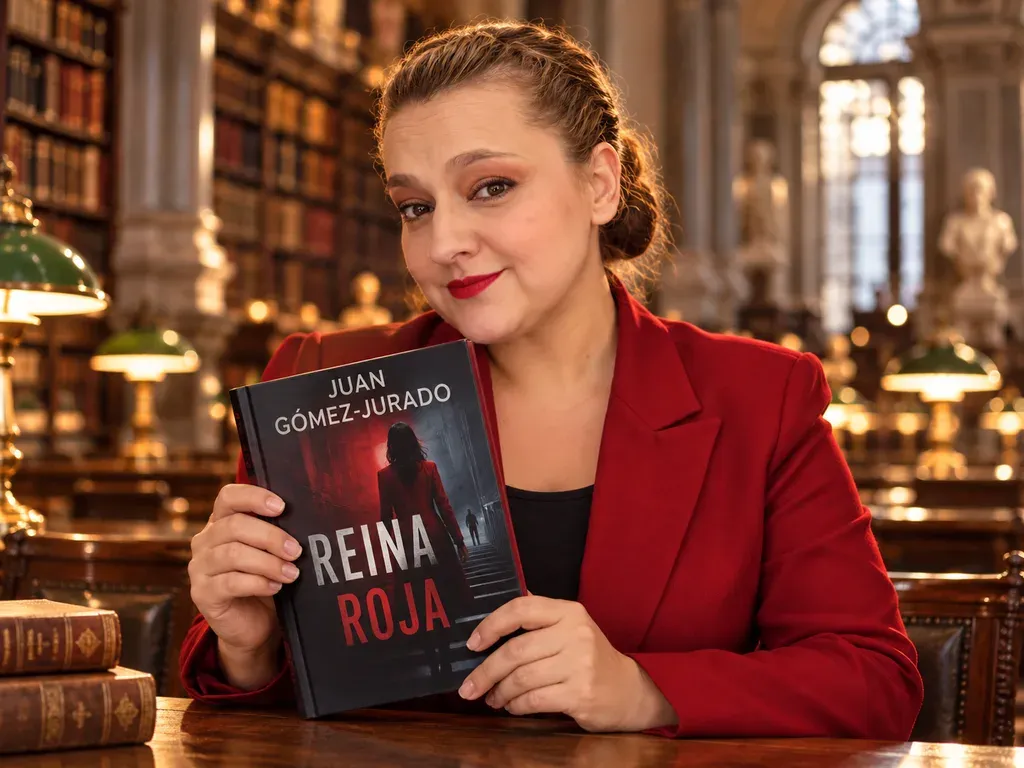
Juan Gómez-Jurado
Red Queen
Red Queen by Juan Gómez-Jurado: Antonia Scott sees everything except a reason to leave her apartment
Antonia Scott has no badge, no official job and an intelligence powerful enough to make a room uncomfortable. Jon Gutiérrez arrives at the wrong door and gets pulled into a case involving wealth, power and people who believe money can buy silence. It can buy quite a lot. It cannot always buy good judgment.
October 26, 2026
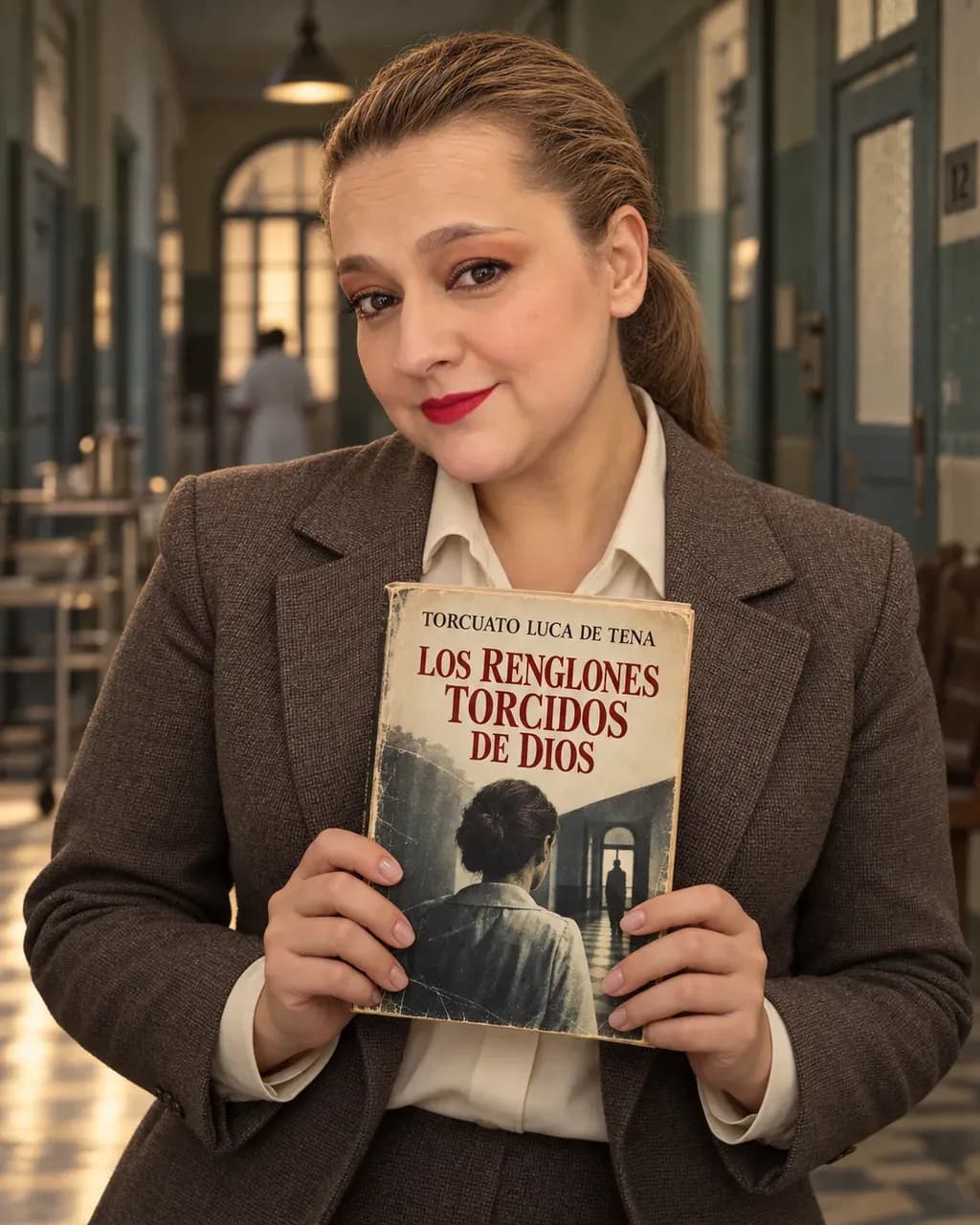
Torcuato Luca de Tena
God's Crooked Lines
God's Crooked Lines by Torcuato Luca de Tena: who gets to decide who is sane?
Alice Gould enters a psychiatric institution with a story of her own. The hospital has another version. That is where the novel starts asking a question institutions would rather keep in their paperwork: who gets to name someone sane, and what happens when the person holding the file is wrong?
October 26, 2026

Carmen Mola
The Orphans
The Orphans by Carmen Mola: abandoned children grow into crime bosses. What a hell of a career path
Three children meet in Belfast, build a family out of survival and grow into adults who have learned how to make money from crime. Years later, a case pulls Laura Pastor and her family into a world where loyalty is real, but so are the bullets. The title sounds sad; the career path is considerably worse.
October 25, 2026
Want more like this? Join the Readers Club and get one of my books for free.
Share
My books
Books by Yenny Astrid Londoño



About the author
Yenny Astrid Londoño
Yenny Astrid Londoño is a Colombian author and entrepreneur, founder of Anchetas Medellín. She writes about real life with sarcasm, irony and smart humor, turning everyday situations, mistakes and imperfect relationships into stories that readers can laugh at and recognize themselves in.

A free book from me
Get a free book from me
Subscribe and get Sobreviviendo a mis muertos in full as a PDF.
After that, I'll only write when I have something worth telling you.
Also available: Read this review in Spanish →