
Book review
The Cuckoo:
Camilla Läckberg's The Cuckoo: a present-day investigation in Fjällbacka and an old crime that keeps coming back. My honest review, 4 out of 5.
By Yenny Astrid Londoño · October 9, 2026 · 12 min read
Share

The Book
The Cuckoo
Police procedural
by Camilla Läckberg
4 out of 5 stars
The interest lies in the connection between the present investigation, the past crime and social prestige.
Two crimes connect Patrik’s present-day investigation with Erica’s research into an old death—and Fjällbacka’s talent for polishing its reputation.
El nido del cuco
Camilla Läckberg · Crime fiction and psychological thriller
Yenny’s rating: 4 out of 5 stars
Amazon affiliate link. As an Amazon Associate, I may earn from qualifying purchases.
What this review covers
The scenery in Fjällbacka is lovely. The past, meanwhile, has the social calendar of a very persistent neighbor. In The Cuckoo, Camilla Läckberg brings Patrik Hedström back to crimes in the present while Erica Falck follows a story from the 1980s. The two lines draw attention to prestige, silence, and what a community would rather consider finished.
One case involves a photographer found murdered; another tragedy is tied to the home of a celebrated writer. Erica’s investigation reaches back to the death of a trans woman decades earlier. I am keeping the connections off the page because the point is not to hand you the solution before the book does.
The setup gives reputation a job in the story. A public image can make people curious, but it can also make them protective. Once someone has spent years being admired, others may find it easier to defend the image than to ask who paid for it.
Two crimes disturb a town that knows how to look immaculate
In Fjällbacka, appearance is practically a community service. People know the landscape, the families, and the version of local history that is safe to repeat. Then two crimes make that polished surface less useful. One investigation belongs to the present; Erica's work on a death from the 1980s pulls older silences into the room.
The book's tension comes from the way those lines begin to speak to each other. A crime is not isolated simply because the town has filed it under 'long ago.' Memory has been managed by living people, and reputations have beneficiaries. A pretty harbor is allowed to be pretty; it is not entitled to an innocence award.
The contrast between an elegant celebration and the violence attached to it makes the town's public face part of the mystery. A community can be welcoming and still keep a careful list of subjects that should not be raised. The novel is interested in the labor behind that silence: who keeps it, who benefits, and who is expected to accept it as local history.
Patrik investigates people who share more than an address
A small community does not offer witnesses as neatly separated puzzle pieces. People have history with one another. They know whose dinner would be ruined by a question, which family has a name worth protecting, and what kind of story makes the entire place look bad.
That is one strength of a community mystery: a person can hesitate because the truth has consequences beyond the police interview. There is a difference between not knowing something and being unable to get anyone to say it. The investigation becomes more interesting when it recognizes both.
The local politeness can make things worse. Nobody needs to announce a conspiracy if everyone already knows which subjects make the room uncomfortable. Fjällbacka can be friendly and still have an impressive system for changing the topic.
Patrik's work is not just a hunt for the next clue. The people involved share routines, relationships, and a stake in how the town sees itself, so one question can change the social weather around him. A case in a small community is never only about distance between houses; sometimes everyone knows exactly which door not to knock on.

Erica follows a death the present still owes questions
Erica’s work on a death from the 1980s opens a line about who was remembered, who was believed, and who was allowed to disappear into a file. The victim is a trans woman, and the story asks the reader to notice how people around her understood—or refused to understand—her life.
That subject deserves more than the usual phrase about a dark past. The past is not an atmospheric object somebody stores in the attic. People made decisions then, and other people inherit the consequences now. Erica’s investigation gives the older case room to matter beyond its usefulness to the present-day mystery.
I appreciate that the novel creates a conversation between timelines. A community can claim that a matter is over while the people harmed by it are still living with what was done. Time passes. Accountability does not magically arrive with it.
Art, reputation, and the stories people keep selling
Photography and writing are not just careers attached to the victims. They point toward the gap between what gets shown and what remains outside the frame. A celebrated artist can produce beautiful work while the people around him deal with far less beautiful consequences.
The book keeps asking what a reputation makes people overlook. We like believing talent and decency arrive in the same package because it saves us from having to inspect the person. That belief is convenient, especially when admiration has already become part of the town’s economy.
I do not need every crime novel to deliver a speech about society. I do need its social questions to grow out of the people and events on the page. The Cuckoo is most persuasive when a case forces us to look at how public admiration can survive private harm.
The novel's attention to art and books adds another way people create a public identity. What gets displayed can become proof of taste and respectability, while what has been hidden remains harder to discuss. I like that this thread echoes the crimes: a community is always arranging what can be seen, and a frame does not guarantee that the whole picture is honest.
The shifts between timelines clarify—and sometimes make us wait
Moving between Patrik's present-day case and Erica's research gives the novel room to show how an old death can keep shaping what people are willing to say now. The earlier timeline is not just there to add atmosphere. It changes the questions the present can ask and gives silence a history.
The same structure can slow the reading down. Just when one line gathers momentum, the book asks us to return to the other and hold several names, motives, and dates in mind. I think the alternation earns its place when it changes our understanding; there are moments when I wanted it to stop arranging the wait so carefully and let the investigation move.
The two periods do not offer a convenient before-and-after moral. What happened earlier continues through decisions made by people still alive, and the present changes what the reader thinks the past means. I like that mutual pressure. I am less convinced when a switch arrives mainly to make us wait for information the novel has already decided not to give yet.
The old death matters because its consequences are still distributed in the present. An event does not stop shaping people just because the calendar has moved on; sometimes it has simply become too inconvenient to describe accurately. Erica's research gives the reader a way to question how history is assembled from testimony, omission, and whatever the town has decided to call settled.

What I did not like about The Cuckoo
The two investigations and timeline shifts create a lot to keep in mind. I enjoy a layered case, but sometimes the book takes its time giving the strands a clear reason to sit together. The delay may be part of the design; it still asks for patience from readers who want the central connection to arrive sooner.
Some stretches lean on the familiar promise that the past will reveal a secret. That idea can be effective, but it needs details specific to the people involved or it starts sounding like a genre trailer. I wanted the investigation to keep earning its atmosphere through concrete choices, not only ominous reminders that history is complicated.
The characters and setting kept me invested, yet I could feel the length in places. The novel had enough to say about reputation and memory that a tighter edit would have made some of its best points hit harder.
Where it sits in the Fjällbacka series
The Cuckoo returns to Erica Falck and Patrik Hedström after The Witch. Their personal lives continue, so this is not a reset button disguised as a new case. Readers who have followed the series get more context for the couple and the community, while the central investigation still has its own shape.
It is not the same cycle as The Mentalist. That series follows Mina and Vincent and is co-written by Camilla Läckberg and Henrik Fexeus. Same author does not mean same detectives, same continuity, or a literary multiverse where every investigator is secretly sharing a coffee machine.
Knowing the earlier books is useful for more than spotting familiar names. The series lets relationships accumulate, so a domestic detail or a moment of trust can carry history this novel does not need to re-explain. That continuity is a pleasure for returning readers and a small admission fee for newcomers: you can enter here, but the house was already lived in.
Who may enjoy it, and what discussion it leaves open
I would recommend it to readers who like Nordic crime fiction, recurring detectives, community secrets, and mysteries where prestige can protect people for longer than it should. It works particularly well for someone curious about how a town's public image is built and who pays for keeping it tidy.
New readers may find the domestic continuity and the two timelines demanding, and following the earlier books will make the characters' relationships richer. The question I kept after reading was not only which crimes connect, but how a community teaches itself to remember some things loudly and other things in a whisper. That is a better aftertaste than another tidy reveal.
This is a good fit if you enjoy a mystery that leaves room for the town itself to be examined. The question I kept was not only how the two crimes meet, but who has the authority to label one memory respectable and another embarrassing. Readers who want one tight line of action may find the overlapping history more patient than they prefer.
My verdict: the town’s memory has a selective setting
The Cuckoo brings Patrik and Erica back to a community where new crimes and an older death meet around status, silence, and memory. The novel works best when it treats the past as something people made and maintained, not as a spooky box that opens only when the plot needs a clue.
I give it 4 out of 5 stars. I recommend it to readers who like Scandinavian crime novels with connected cases and a community under scrutiny. It is a good choice if you want a mystery that asks who gets protected by a polished reputation. The timeline changes may require patience, and I would start with earlier Fjällbacka books if you want the full history of Patrik and Erica.
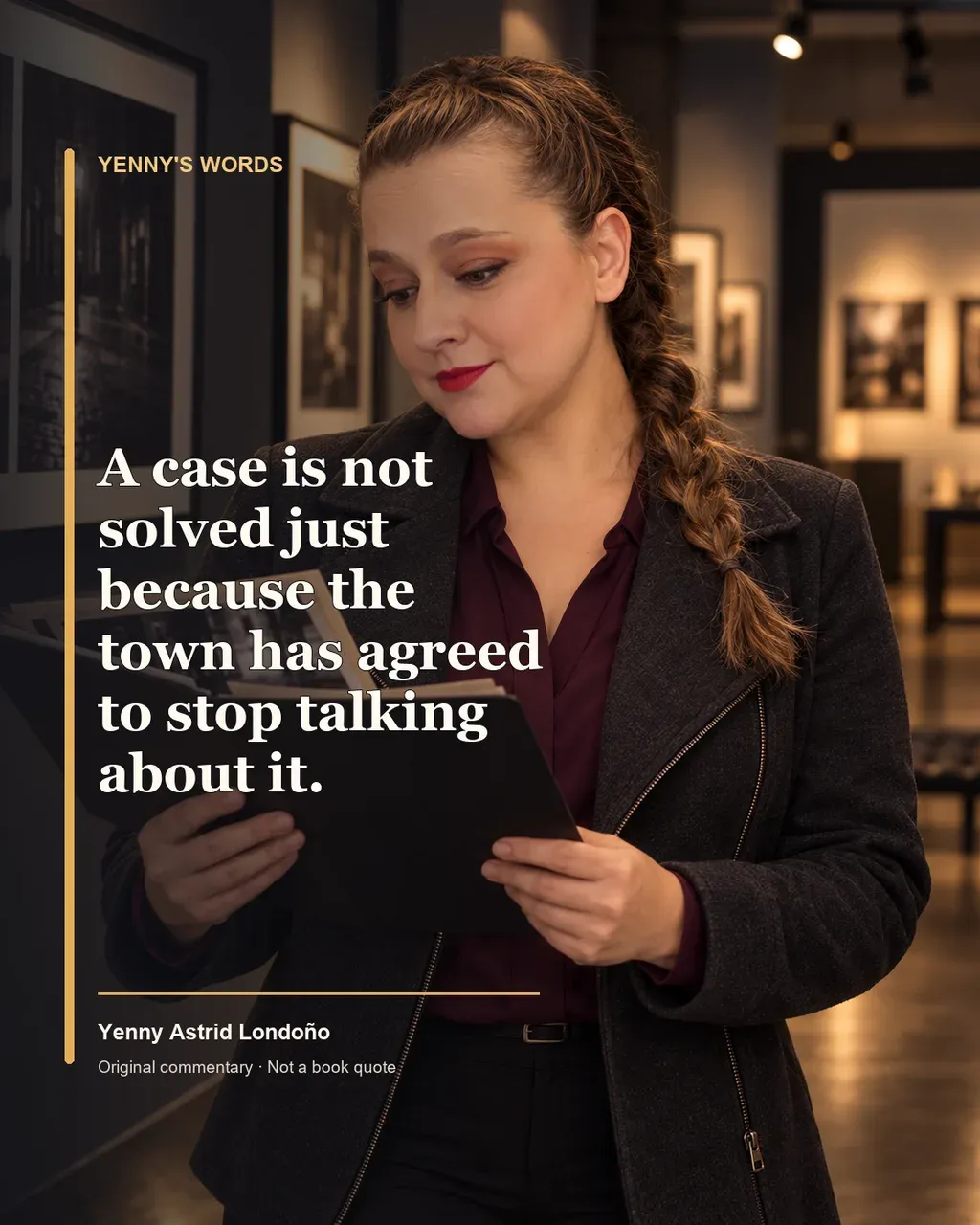
A place does not become innocent because residents have learned to speak about its old crimes in the past tense. Sometimes the past is just waiting for the next person to ask the question again.
Four stars reflects a book with a compelling argument about memory and reputation, plus a structure that sometimes asks for more patience than the payoff needs. I finished thinking about residents who preserve a lovely public image by deciding which victims belong in the past tense. Fjällbacka has pretty scenery; the scenery is not the suspect's alibi.
Frequently asked questions
Yes. It returns to Erica Falck and Patrik Hedström after The Witch. Their personal lives continue alongside the new case.
I recommend it if you want the development of the couple and the community. You can try this case first, but earlier relationships and events may matter.
No. The Mentalist belongs to the Mina and Vincent series, co-written by Camilla Läckberg and Henrik Fexeus. Sharing an author does not make the series interchangeable.
Patrik’s current investigation connects with Erica’s research into a death from the 1980s. The two timelines let the novel examine causes, silences, and consequences from more than one point in time.
No. I describe the two strands of the premise and their themes, while keeping the precise connection, identities, and ending to myself.
The domestic continuity and the combination of timelines may take patience. Readers who know the series already have more context for the returning characters.
For its tension between prestige, memory, and attention to victims. I have reservations about the number of plotlines and the risk that the older story serves only to explain the present.
For the Spanish edition, check the publisher’s book page. The editions and translations may differ by market.
El nido del cuco
Camilla Läckberg
About the author
I’m Yenny Astrid Londoño, a Colombian author and the founder of Anchetas Medellín. I write with sarcasm, irony, and humor about everyday life, without dressing it up.
The story behind the stories
From behind the pages
Stories, reviews, uncomfortable truths, and the occasional direct hit of sarcasm in your inbox. No spam and no calendar quotes.
Keep reading
© Yenny Astrid Londoño
Frequently asked questions
Is The Cuckoo part of the Fjällbacka series?
Yes. It picks up Erica Falck and Patrik Hedström and comes after La bruja. Their personal ties continue even though there is a new case.
Should I start with La princesa de hielo?
It is the recommended entry point if you want to follow the development of the couple and the community. You can try this case, but there will be earlier personal history and possible references to other books.
Is it the same series as The Mentalist?
No. The Mentalist belongs to the Mina and Vincent cycle, written by Läckberg with Henrik Fexeus. Sharing an author does not make the series interchangeable.
Why does it alternate present and past?
Patrik's contemporary investigation is linked to Erica's search into a death from the 1980s. The alternation lets the story examine causes, silences and consequences without explaining everything from a single era.
Does this review explain how the crimes connect?
No. It describes the two lines of the premise and their themes. The precise connection, the identities and the ending are kept back.
What might tire a new reader?
The domestic continuity and the combination of timelines. Reuniting with familiar characters especially benefits those who have followed the saga.
Why do I give it 4 out of 5?
Because of the conflict between prestige, memory and attention to the victims. My reservations are in the accumulation of plots and the risk that the old story works only as an explanation of the present.
The Book
The Cuckoo
by Camilla Läckberg
Get the bookIf you buy through this link, Yenny earns a small commission and you pay the same price.
Keep reading
If you liked it, keep going

Camilla Läckberg and Henrik Fexeus
The Mentalist
The Mentalist: the trick is not the only thing under suspicion
Camilla Läckberg and Henrik Fexeus's The Mentalist: Inspector Mina Dabiri and mentalist Vincent Walder against a staged murder. Review, 4/5.
October 9, 2026

Fiona Barton
The Widow
The Widow: “I didn’t know” is not a complete answer
Fiona Barton's The Widow: Jean Taylor, a journalist and the truth about a husband's crime. My honest review, 3.5 out of 5.
October 9, 2026

Carmen Mola
The Mothers
The Mothers: Elena Blanco investigates a horror in a white coat
Carmen Mola's The Mothers: Elena Blanco investigates a horror that also knows how to wear a white coat. My honest review, 4 out of 5.
October 9, 2026
Want more like this? Join the Readers Club and get one of my books for free.
Share
My books
Books by Yenny Astrid Londoño



About the author
Yenny Astrid Londoño
Yenny Astrid Londoño is a Colombian author and entrepreneur, founder of Anchetas Medellín. She writes about real life with sarcasm, irony and smart humor, turning everyday situations, mistakes and imperfect relationships into stories that readers can laugh at and recognize themselves in.

A free book from me
Get a free book from me
Subscribe and get Sobreviviendo a mis muertos in full as a PDF.
After that, I'll only write when I have something worth telling you.
Also available: Read this review in Spanish →