
Book review
The Guest List:
My review of Lucy Foley's The Guest List: Jules, Will, a remote island, competing voices and a wedding where everybody brought more than a gift.
By Yenny Astrid Londoño · October 9, 2026 · 9 min read
Share

The Book
The Guest List
Mystery and psychological suspense
by Lucy Foley
4 out of 5 stars
The Guest List earns four stars for turning a polished celebration into a test of memory, image and privilege.
The celebration has an image to protect
Jules wants the event to work. The setting, the arrangements and the public impression matter, and I understand why: people spend a ridiculous amount of time and money making one day look effortless. The trouble is that a flawless ceremony is a terrible way to measure the state of the relationships gathered inside it. A guest can compliment the flowers while carrying years of resentment to the table.
Foley uses that contradiction instead of waiting for a corpse to create all the tension. Every conversation has a social surface and something going on underneath. The island's beauty is real; so is the labour of pretending everyone belongs in the same happy picture. You can place two people in adjacent seats. You cannot make them agree about what happened years ago by printing their names on matching cards.
The wedding's perfection is work. Somebody chose the clothes, the views, the timing and the guest list so that the whole event would say something flattering about the couple. Foley lets that polished surface become evidence of what everyone has agreed not to mention. I can enjoy a beautiful island and still ask why these people need the scenery to speak so loudly for them. A flawless photograph can be a very efficient way of cropping out trouble.
Jules and Will did not arrive alone
The couple's names are on the invitation, but their histories came too. Jules has to manage the image of a marriage before it has even begun, and Will's charm makes people eager to accept the version of him that photographs well. Neither public role tells us everything about the people who have known them longer than the guests at the reception.
I am less interested in diagnosing every unpleasant person than in watching how charisma works as social credit. A confident man can behave badly and still leave others debating whether they misunderstood him. A woman organizing the event can be dismissed as controlling while she carries much of the work required to make the performance possible. Those differences do not solve the mystery, but they change how a reader weighs testimony. A good-looking couple is a lovely marketing asset and a lousy alibi.
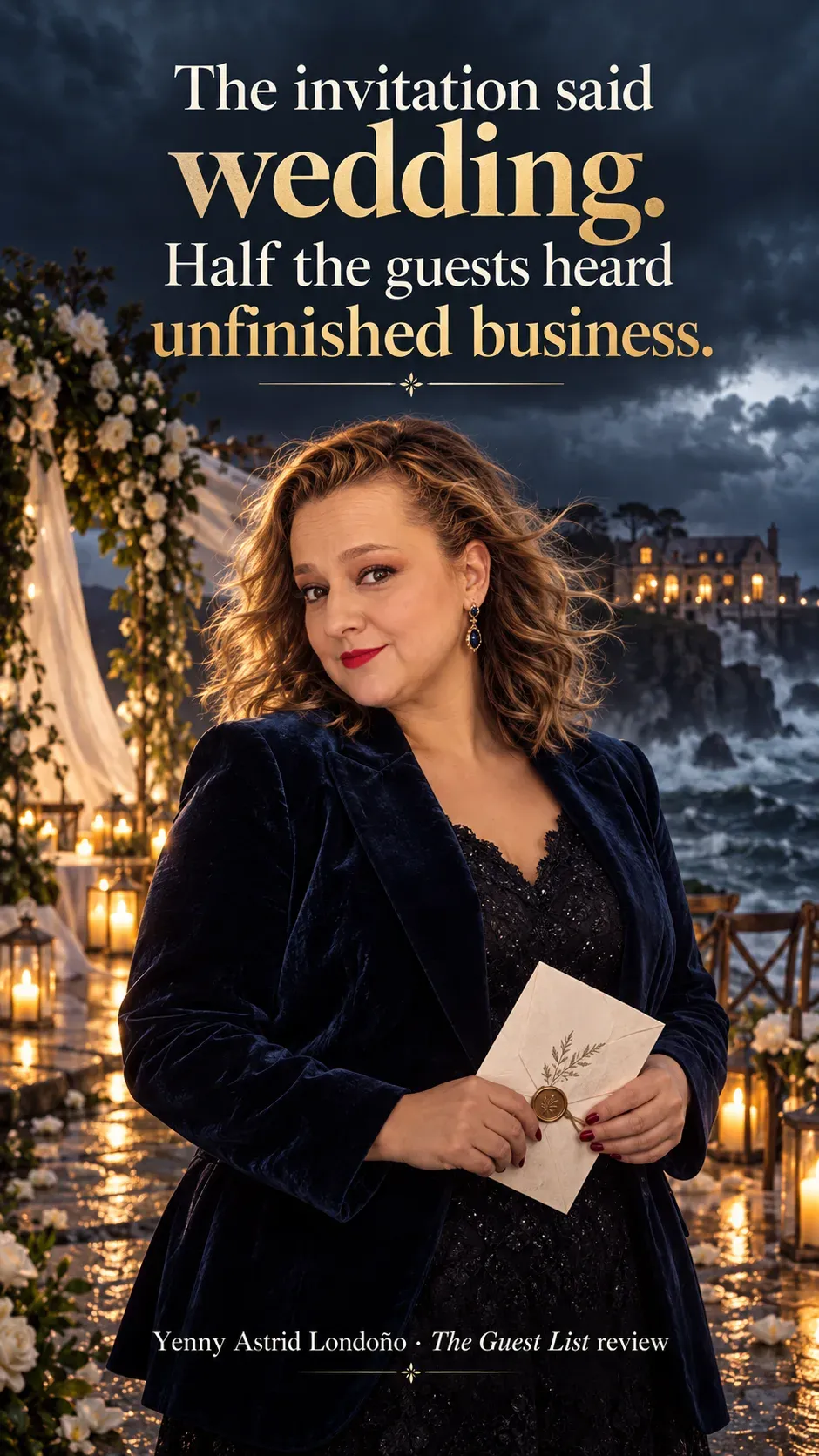
Jules and Will have to perform a public version of their relationship before a room full of witnesses who knew them in different lives. The contrast matters more than simply collecting secrets for the final reveal. Every old connection brings a private memory to a supposedly shared celebration. A wedding asks everyone to say the same happy thing at the same time; this guest list never signed that agreement.
The guests know how to behave, until they decide not to
The guest list gathers people who know fragments of one another's lives. Some know an old humiliation; others know only the acceptable anecdote it became. That uneven access makes a small exchange feel bigger than it sounds. A joke at dinner can be an invitation to laugh, a threat, or both, depending on which memory the listener brought with them.
I like a mystery that understands how groups enforce silence without needing a secret committee. People protect their standing, avoid embarrassing the host or simply prefer a comfortable story. None of that makes them innocent. It makes the cost of telling the truth visible. Foley's multiple perspectives let the reader see the distance between the public person and the private account. The distance can be more revealing than a dramatic confession.
I like the small social calculations in a gathering like this: who may joke at the groom's expense, who has to laugh, and who can say something cruel because everybody else will call it tradition. The guests do not turn suspicious only when a body appears. They have been measuring status and nursing grievances all weekend. The polite smile is just another form of crowd control, and nobody should confuse it with innocence.
The island makes leaving inconvenient and staying worse
The remote setting is doing practical work. Weather and geography narrow the exits, so a disagreement cannot always be solved by calling a cab and promising never to attend another wedding. People have to remain near the people they would rather avoid. The place also gives the celebration an air of exclusivity that starts to feel like a trap once somebody is dead.
I enjoy that reversal, though an island can become lazy thriller equipment if the book expects isolation to explain everything. The stronger pressure comes from the guests themselves: what they know, what they assume and what they would lose by saying it aloud. The storm can stop a boat. It cannot manufacture the resentments that boarded it. Foley mostly understands the difference.
Voices and timelines manage two questions at once
The narrative shifts among characters and between moments before and after the murder. We are asked not only who acted but who died. That structure can be delicious when a detail changes meaning after another voice supplies context. It also asks the reader to keep track of positions, loyalties and the timing of what was said.
I would pay attention to how each narrator describes the same social world. The confident speaker may have fewer facts than the quiet one; the person everyone calls difficult may be responding to something the room refuses to name. Foley does not need to make every voice equally likable. She needs each to give us a different reason to distrust the neat wedding story. The best turns do that rather than merely move a fact to the last possible page.
The shifting viewpoints make me revise judgments without pretending every narrator is equally reliable or equally important. Foley also makes the question of who died travel alongside the question of who could have wanted it. That structure can be playful, but it is not merely a trick with chapter breaks. Each voice exposes a different part of the same social arrangement, including the parts the wedding planners would never put on the menu.

What did not work for me
There are so many secrets that, at times, the wedding begins to look like a convention for people who should not be in the same room. A secret should alter a relationship or our understanding of a character. If it exists only to keep every guest suspicious for another chapter, the technique starts to show. I could feel the book placing some information very carefully out of reach.
I also do not mistake a cast of rich, unpleasant people for a nuanced account of guilt. Being insufferable at a reception is not the same as committing murder, however tempting it is to hand out sentences near the dessert table. When the story lets image, power and history complicate that distinction, it works. When everybody is made suspicious by withholding, I wanted more character and less stage management. Those reservations leave me at four stars rather than a perfect wedding score.
I did feel the machinery when a chapter ended exactly where a plain answer would have saved several pages. Withholding information can build tension; doing it too often makes the characters seem less like people and more like employees of the suspense department. The island gives the novel a strong reason to keep them together. I wanted a few revelations to arise from what they chose to do there, rather than from another carefully timed cut to black.
What remains worth discussing after the answer
The final reveal matters, but it should not be the only reason to read the preceding relationships. Ask who gets protected by beauty, money and social ease. Ask whose discomfort is treated as inconvenient because it threatens the celebration. Those questions survive even if you already know who is dead.
I would also look at how the event turns private experience into public performance. A wedding can bring people together while demanding that they edit themselves to keep the day intact. Foley makes that demand visible through little exchanges before the violence forces anyone to name it. We can debate the logic of a twist and still notice that the party had problems long before the body was found.
Who should accept this invitation
Readers who like ensemble mysteries, isolated locations and shifting perspectives should have fun. If you enjoyed the closed circle in The Fury, there is a related pleasure here, though the characters and tone are Foley's own. Go in without a list of suspects supplied by somebody else; identifying the victim is part of the design.
If you want one detective leading a clean procedural or a cast you can comfortably love, this is less likely to be your party. The movement between voices and times requires attention, and the social cruelty is part of the atmosphere. In Spanish, search for La lista de invitados. An earlier suggestion called the book Muerte en el río, but that is not the title of Foley's island wedding novel. No point getting lost before the ferry even leaves.
My rating: 4 out of 5, and I would check the seating plan
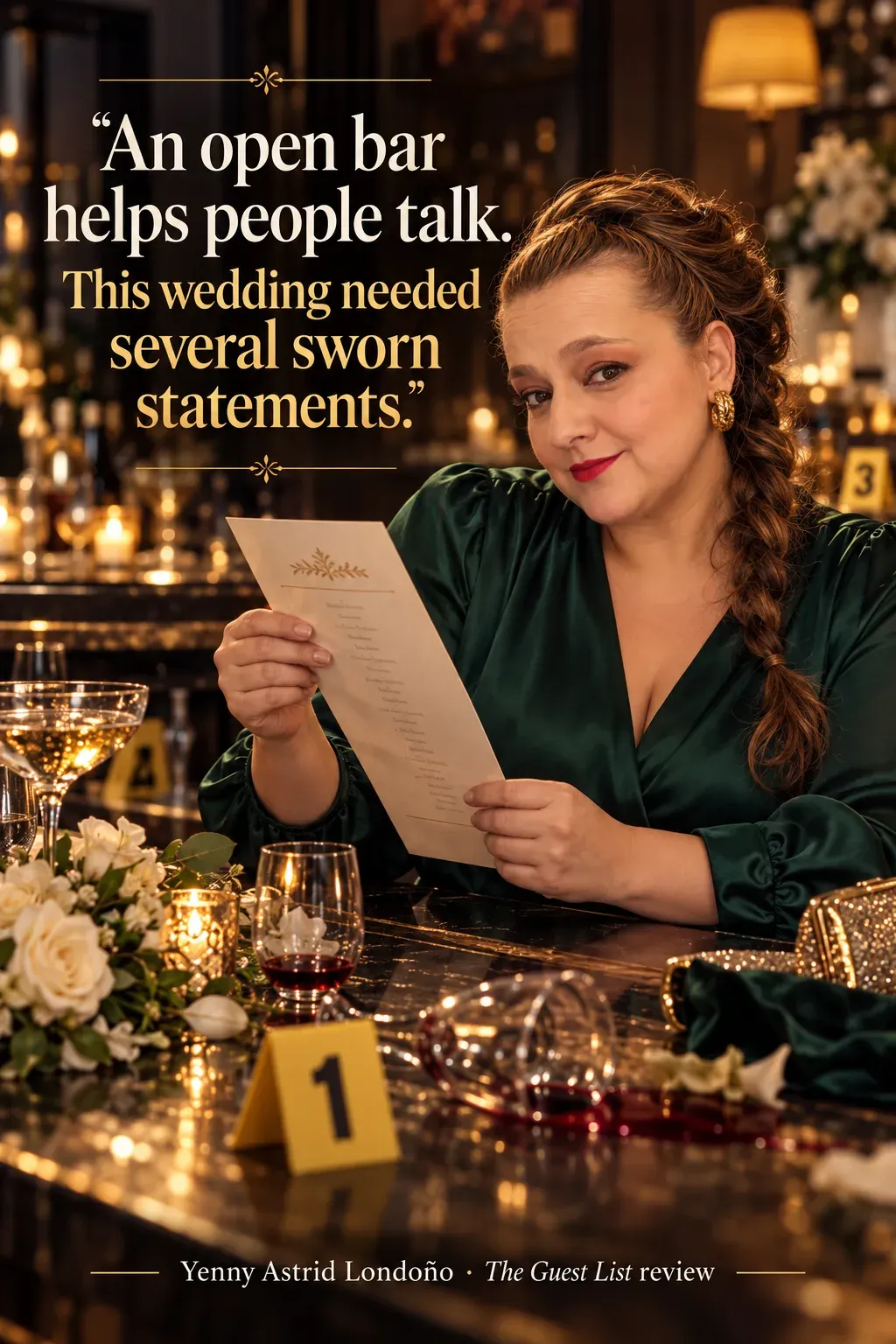
The Guest List earns four stars for turning a polished celebration into a test of memory, image and privilege. The island confines the cast, but the sharper trap is the insistence that everyone keep behaving while old harm takes a seat beside them. The double mystery gives the voices something concrete to do.
I withheld the fifth star because the pileup of secrets and the careful timing of disclosures sometimes feel more engineered than lived. Still, the novel leaves a useful question beneath the entertainment: how many people can a beautiful event ask to pretend before the photograph becomes evidence against the party? Jules planned a wedding. She got an audit of everyone who RSVP'd.
Four stars is a good night at a terrible wedding. The setting, alternating voices and accumulated resentment kept me reading, even when I could see the author moving the place cards around. What stays with me is the cost of requiring everyone to celebrate people they know too well. If a couple needs an island to control the story of their love, maybe the seating chart is not the real problem.
Frequently asked questions
Is The Guest List the same book as La lista de invitados?
Yes. La lista de invitados is the Spanish title of Lucy Foley's The Guest List. The island wedding novel is not titled Muerte en el río.
Do we know the victim from the beginning?
No. The book reveals that a murder has occurred, then keeps both the victim's identity and the killer's identity in play. I preserve both here.
Is this a detective procedural?
Not primarily. It is an ensemble mystery built from guests' accounts, relationships and the island setting, rather than a single investigator following a linear case.
Does the story use multiple perspectives and timelines?
Yes. The shifts between voices and before-and-after scenes gradually alter what each encounter means.
Is the island only decorative?
No. Its isolation limits movement and keeps the group together, although the relationships create the deeper pressure.
What annoyed me about the book?
At moments, too many secrets compete for attention and some information feels withheld for the twist. I wanted each disclosure to deepen a character, not merely extend suspicion.
Why do I give it 4 out of 5?
The wedding's public image, shifting testimony and double mystery are compelling. The engineered secret pileup keeps it from a higher rating.
The Book
The Guest List
by Lucy Foley
Get the bookIf you buy through this link, Yenny earns a small commission and you pay the same price.
Keep reading
If you liked it, keep going

Camilla Läckberg and Henrik Fexeus
The Mentalist
The Mentalist: the trick is not the only thing under suspicion
Camilla Läckberg and Henrik Fexeus's The Mentalist: Inspector Mina Dabiri and mentalist Vincent Walder against a staged murder. Review, 4/5.
October 9, 2026

Camilla Läckberg
The Cuckoo
The Cuckoo: Fjällbacka remembers what it prefers to forget
Camilla Läckberg's The Cuckoo: a present-day investigation in Fjällbacka and an old crime that keeps coming back. My honest review, 4 out of 5.
October 9, 2026

Fiona Barton
The Widow
The Widow: “I didn’t know” is not a complete answer
Fiona Barton's The Widow: Jean Taylor, a journalist and the truth about a husband's crime. My honest review, 3.5 out of 5.
October 9, 2026
Want more like this? Join the Readers Club and get one of my books for free.
Share
My books
Books by Yenny Astrid Londoño



About the author
Yenny Astrid Londoño
Yenny Astrid Londoño is a Colombian author and entrepreneur, founder of Anchetas Medellín. She writes about real life with sarcasm, irony and smart humor, turning everyday situations, mistakes and imperfect relationships into stories that readers can laugh at and recognize themselves in.

A free book from me
Get a free book from me
Subscribe and get Sobreviviendo a mis muertos in full as a PDF.
After that, I'll only write when I have something worth telling you.
Also available: Read this review in Spanish →