
Book review
The Gypsy Bride:
Two sisters, a horrifying way to die, and an inspector for whom closing the case doesn't mean she can go home at peace.
By Yenny Astrid Londoño · October 8, 2026 · 7 min read
Share

The Book
The Gypsy Bride
Noir and police thriller
by Carmen Mola
4.5 out of 5 stars
Nobody promised her she could bear what she found.
A wedding gathers a family around a promise of the future. In The Gypsy Bride, that future is interrupted before the bride can enjoy it. And the loss reaches a family that had already lived through something terribly similar.
Susana Macaya is found murdered after her hen party. Her sister Lara died seven years earlier with the same method: larvae introduced through holes drilled in the skull. The culprit of that first crime is in prison.
Elena Blanco and the Case Analysis Brigade have a concrete contradiction to solve. Someone is repeating an atrocity whose earlier explanation seemed closed.
The starting point is already brutal. Carmen Mola doesn't ring the bell to ask whether we can talk about something unpleasant. She walks in with the whole subject.
Repetition takes from the family even the calm of an answer
A daughter's death isn't resolved just because an investigation ends. Justice can establish responsibilities; it doesn't give back the life that family had before.
When another daughter appears murdered in the same way, what looked like an explanation comes under suspicion too. The family must go through a new loss. They have to look again at an answer they had been living with for years.
What interests me is that extra cruelty. Grief needs to coexist with questions, but a firm explanation can offer at least a place to rest them. Repetition takes that support away again.
The police mystery works through an apparent impossibility: if the killer is in prison, what is going on? The family's tragedy works through something less clever and more devastating: they had already lost someone, and there was still another person left to love.
It's worth keeping that difference. The puzzle may excite the reader. For the family there is no particular elegance in discovering that horror can repeat itself.
The method doesn't need my admiration to produce fear
The larvae and the drilled holes turn the crime into an image that's hard to shake. The procedure takes time, preparation and a cruelty that forces you to imagine the victim's experience.
That sets the tone. We are not facing violence mentioned in passing. The book wants the body to have presence in the reading, and there are people for whom that kind of detail will be too much.
What I'm interested in is that horror is not automatically confused with depth. A scene can be appalling and still do its job well for suspense. That isn't enough to make every detail say something about the people who suffer it.
The question I keep is how much room the sisters receive as people, beyond the way they died. If the procedure takes up everything, the victim ends up remembered for the creativity of the person who harmed her.
And that is a victory I have little interest in granting the killer, however fictional he may be. The method can carry the case without taking all the humanity of the story with it.
Elena doesn't have a personal life to decorate the file
Elena Blanco carries the disappearance of her son. That search shapes the way she exists outside her work and her relationship with the possibility of an answer.
There are many wounded literary detectives. The device can turn into a credential: a vice, a loss, a strange habit, and there you have depth on the character sheet. What interests me here is that the absence has consequences within the story.
Elena can solve things for other families while hers stays open. That imbalance carries a concrete pain. She knows what searching costs, and yet she doesn't have what she needs to close her own question.
Hope also wears you down. From outside it always sounds luminous: don't lose it, hold on to it, trust. Living for years without knowing demands another kind of endurance. Each piece of information can open a possibility, and each possibility can end up taking something else from you.
That's why Elena's life doesn't become interesting merely because it has difficult habits. I'm interested in what those habits accompany: a woman who can work while part of her existence is still waiting.
The BAC needs more than an extraordinary inspector
The team widens the investigation and keeps everything from depending on a single, brilliant figure. Zárate enters an environment where there are already dynamics, knowledge and ways of doing things.
That organization can offer a different pleasure from the theatrical killer. The work moves forward through relationships between people who don't see exactly the same thing and don't have to agree in order to produce a useful lead.
I'm interested in the group having presence, because an investigation like this requires listening, comparing and reviewing. It isn't enough for Elena to be fascinating. The victim still needs someone to do the work that a strong personality doesn't replace.
The risk of an attractive cast is turning it into a collection of quirks. Its virtue shows when those differences change the case or a relationship, when you notice what each person contributes and what conflict their way of acting produces.
That also helps sustain a series. You may want to come back for a new investigation, but you return with more appetite if you recognize the people who are going to have to face it.
The news about Elena's son offers no rest
In the end, Elena receives a video indicating that her son is alive and linked to criminal violence as a perpetrator. The finding changes completely what it would mean to find him.
Here there is a difference between answer and comfort that strikes me as powerful. The disappearance had kept a hope alive: seeing him again could mean recovering him. The new information breaks that equation.
Knowing he is alive is not enough. Now it's a matter of looking at what life he has and what he has done. The mother who wanted to find him is not automatically prepared to meet him.
That ending has force because of the cost it imposes on Elena. It also works as an opening toward the next book. Both things can coexist, but the second shouldn't swallow the first.
The news shouldn't feel only like the announcement that the saga will continue. It's a concrete destruction of the answer a mother was waiting for. The scene's interest lies in what it does to her, as well as in what it promises us.
I won't recount the later outcomes here. That search already carries enough pain within the first volume.
What I didn't like about The Gypsy Bride
Carmen Mola doesn't know the concept of “let's turn it down two notches.”
Everything has to be brutal.
Dark.
Twisted.
Painful.
And yes, it works.
But if every murder has to top the previous one, at some point we stop feeling horror and start ranking.
And I don't like that.
Also, with everything related to the Romani community you have to tread carefully.
A fictional family doesn't represent a whole people.
It seems obvious.
But given what goes around online, it's better to say so.
Solving the case doesn't switch off every question
The Gypsy Bride offers a harsh entry to Elena Blanco's series: graphic violence, an investigation sustained by repetition, and a personal life that ends up receiving something worse than the initial uncertainty.
My interest lies in the relationship between police answers and what families can do with them. My reservation appears when the impact of the procedure threatens to take up too much space in front of those who suffer.
It's also worth distinguishing the fiction about this family from any generalization about the Romani community. The title doesn't make all of its members responsible for decisions that a particular plot assigns to certain characters.
Elena investigates to understand what happened. As a mother, she searches to recover someone. The book ends up forcing her to accept that those two tasks may not lead to the same place.
She wanted to find her son.
Frequently asked questions
Is it the first Elena Blanco book?
Yes. The series starts here and continues with La red púrpura and La nena.
Who is behind Carmen Mola?
The pseudonym brings together Jorge Díaz, Agustín Martínez and Antonio Mercero.
Does the review contain a major spoiler?
Yes. It reveals what Elena discovers about her son at the end of the first book, along with the method of the murders.
What is The Gypsy Bride about?
Susana Macaya is found murdered after her hen party. Her sister Lara died seven years earlier with the same method: larvae introduced through holes drilled in the skull. The culprit of that first crime is in prison.
What didn't I like about The Gypsy Bride?
That the impact of the procedure can take up too much space in front of those who suffer, and that the ending shouldn't feel only like the announcement that the saga continues. The violence is graphic.
The Book
The Gypsy Bride
by Carmen Mola
Get the bookIf you buy through this link, Yenny earns a small commission and you pay the same price.
Keep reading
If you liked it, keep going
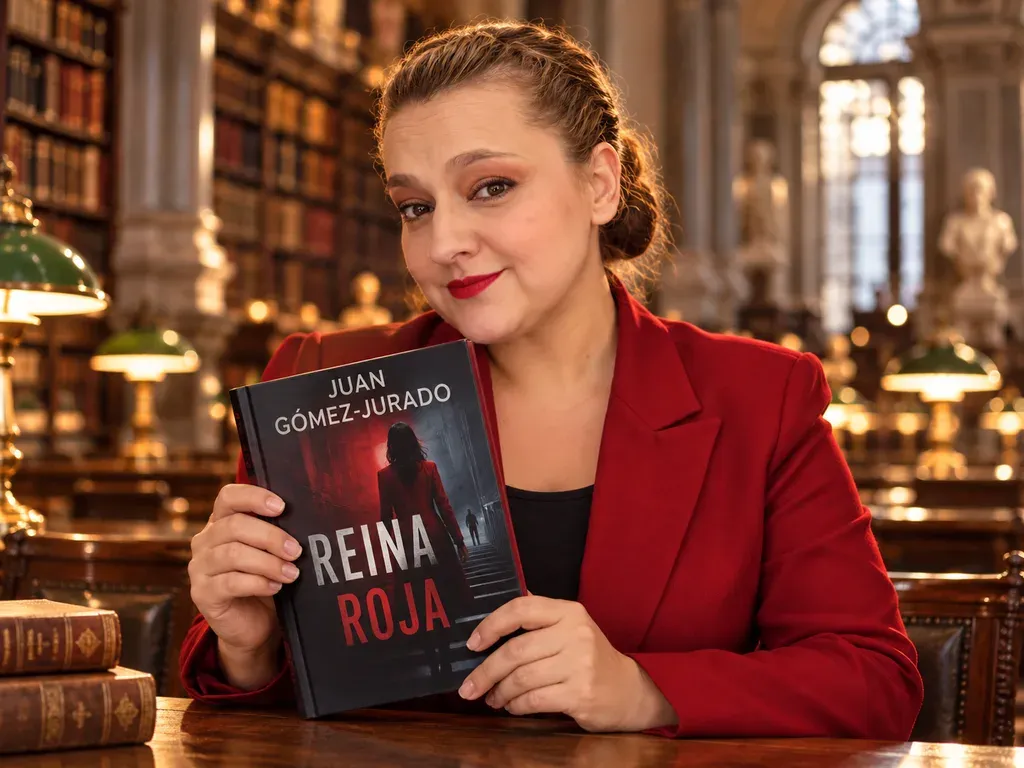
Juan Gómez-Jurado
Red Queen
Red Queen by Juan Gómez-Jurado: Antonia Scott sees everything except a reason to leave her apartment
Antonia Scott has no badge, no official job and an intelligence powerful enough to make a room uncomfortable. Jon Gutiérrez arrives at the wrong door and gets pulled into a case involving wealth, power and people who believe money can buy silence. It can buy quite a lot. It cannot always buy good judgment.
October 26, 2026
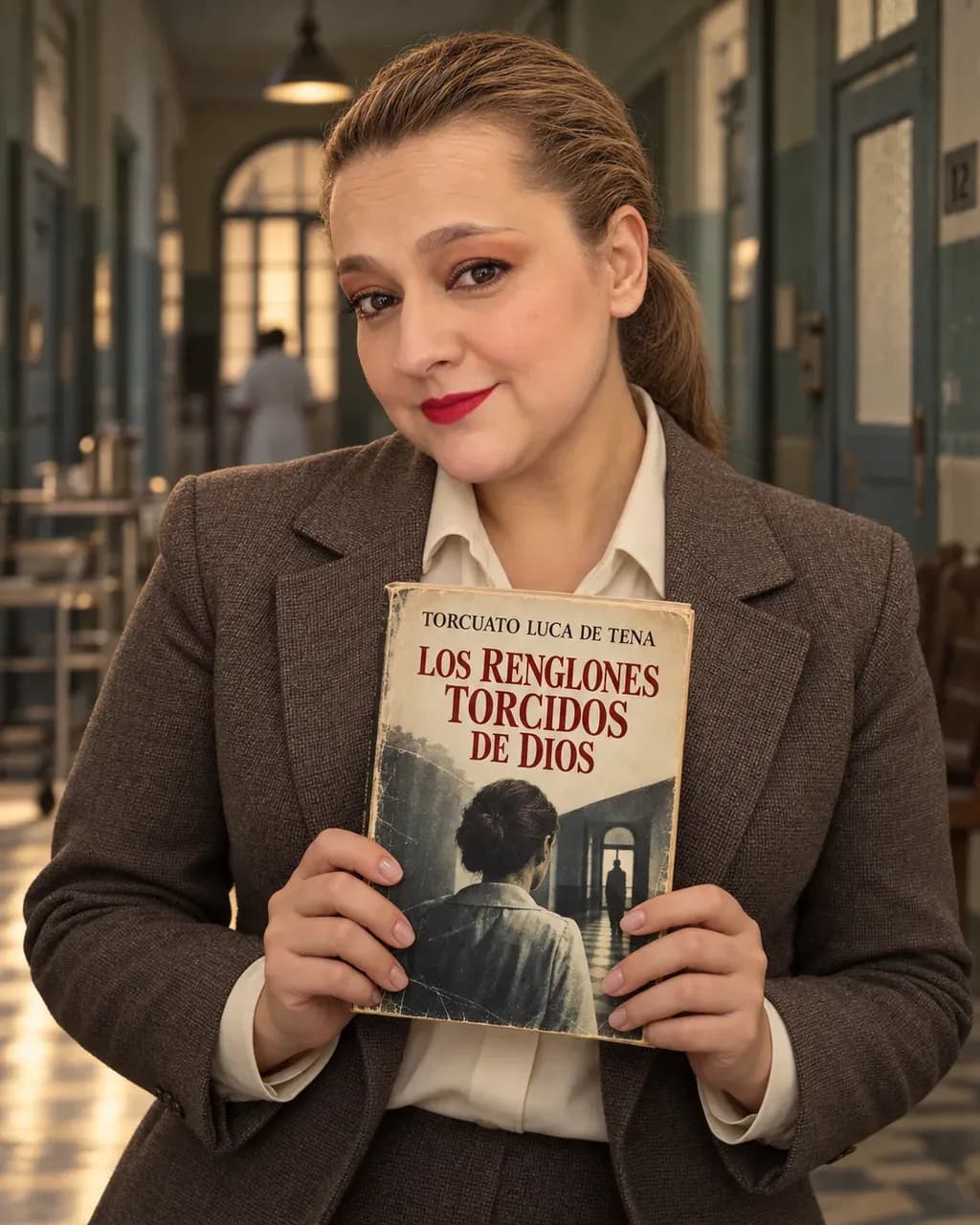
Torcuato Luca de Tena
God's Crooked Lines
God's Crooked Lines by Torcuato Luca de Tena: who gets to decide who is sane?
Alice Gould enters a psychiatric institution with a story of her own. The hospital has another version. That is where the novel starts asking a question institutions would rather keep in their paperwork: who gets to name someone sane, and what happens when the person holding the file is wrong?
October 26, 2026
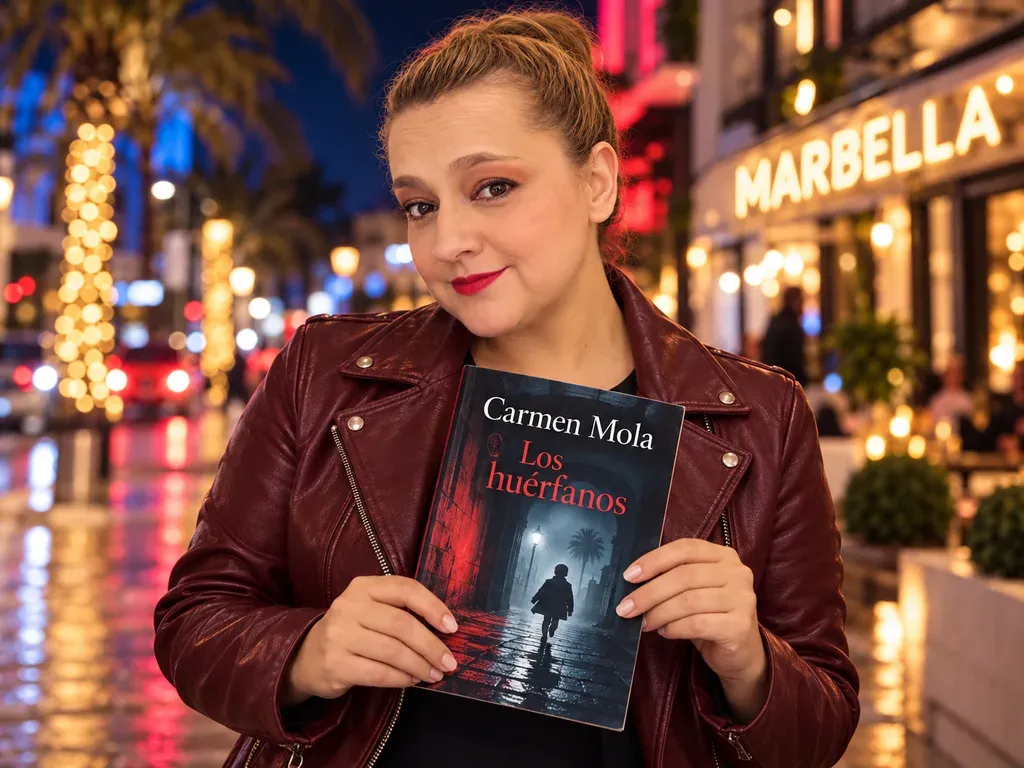
Carmen Mola
The Orphans
The Orphans by Carmen Mola: abandoned children grow into crime bosses. What a hell of a career path
Three children meet in Belfast, build a family out of survival and grow into adults who have learned how to make money from crime. Years later, a case pulls Laura Pastor and her family into a world where loyalty is real, but so are the bullets. The title sounds sad; the career path is considerably worse.
October 25, 2026
Want more like this? Join the Readers Club and get one of my books for free.
Share
My books
Books by Yenny Astrid Londoño


About the author
Yenny Astrid Londoño
Yenny Astrid Londoño is a Colombian author and entrepreneur, founder of Anchetas Medellín. She writes about real life with sarcasm, irony and smart humor, turning everyday situations, mistakes and imperfect relationships into stories that readers can laugh at and recognize themselves in.

A free book from me
Get a free book from me
Subscribe and get Sobreviviendo a mis muertos in full as a PDF.
After that, I'll only write when I have something worth telling you.
Also available: Read this review in Spanish →