
Book review
The Hour of the Wolves:
Mario Mendoza's The Hour of the Wolves: Bruno Guerrero, urban crime, loyalty and a mentor who may send the bill. My honest review, 4 out of 5 stars.
By Yenny Astrid Londoño · October 21, 2026 · 7 min read
Share

The Book
The Hour of the Wolves
Horror
by Mario Mendoza
More reviews by Mario Mendoza →
4 out of 5 stars
Bruno Guerrero grew up on the margins, learned to defend himself with his body and his head, and goes through a world where surviving demands pacts nobody would admit out loud.
Bruno Guerrero was not born to be an example
Bruno grows up outside the places where people are supposed to learn to trust: home, school, a safe street. He develops ways to read danger before it reaches him. Physical training and street intelligence help him move through the world, but they do not erase what it cost to acquire those skills. A motivational speech about “just trying harder” would be a useless tool here.
I like that Mendoza uses someone like Bruno to look at crime without turning him into a symbol. A marginal character can easily become the noble poor man waiting to be rescued, or the criminal used to make everyone else feel decent. Bruno is more complicated when we let him be someone who chooses, makes mistakes, and needs help without reducing him to any one of those things.
The mentor who opens a door may also send the bill
Prison and an encounter with a brilliant, dangerous mentor change the scale of Bruno’s choices. The uncomfortable question is not only whether he can get out, but what happens when the person teaching you how to move through the world also teaches you to accept its ugliest rules.
Loyalty can keep you standing when nobody else does. It can also become a very elegant way to put a chain around your neck. I distrust anyone who promises to save you if you stop asking questions, so this relationship gave me more to think about than a perfectly choreographed chase. The debt can be affection, fear, ambition, and gratitude all mixed together. That is precisely why it is hard to see where the line is until it moves.
The city is not a backdrop for looking dangerous
In Mendoza’s fiction, the city can determine who moves through it safely, who must explain being there, and who is available for other people to project their fears onto. The novel follows Bruno into criminal networks that expand beyond one corner. Its urban atmosphere is not a tourist postcard of hell; a dangerous alley is also somebody’s way home.
There is something specifically Colombian in the habit of calling a long-running problem an isolated case. Crime does not grow out of nowhere like a cursed mushroom. It needs money, silence, hierarchy, and people convinced that looking away counts as innocence. The novel gets more interesting when we consider how many real options Bruno had before we judge the choices he made.

Can someone leave the game without paying again?
Redemption is often sold as an individual decision: someone wakes up wanting to change, and the world, impressed by their effort, hands them a clean opportunity. That story is too simple for Bruno. Leaving a criminal network can involve debts, threats, loved ones at risk, and a past institutions refuse to forgive. None of that erases his responsibility for harm he may cause.
I want a novel to hold both truths at once: the conditions that shaped someone’s options and the damage they do afterward. If we see only the first, we treat the character like a child. If we see only the second, we pretend everyone started from the same line. Bruno can want another life without becoming a decorative version of himself designed to reassure readers who have never had to make his choices.
The reader’s comfortable seat is part of the question
We read stories about people on the margins from somewhere safer. We may want Bruno to “overcome” his past, but only if he learns to speak, dress, and think like us. That demand can disguise obedience as change. The book asks us to notice whether we are judging his choices or congratulating ourselves for never facing the same ones.
Surviving does not make him innocent. It also does not give us a morally superior seat from which to judge without looking at what narrowed his options. I do not need the novel to excuse him. I need it to let me see the difference between understanding a choice and approving it. Those are not the same transaction, however often we try to pay for both with one sentence.
What works for me, and what does not
The premise works: Bruno has skills, but he does not get the privilege of making every decision in clean conditions. I like that violence connects to structures of power instead of belonging only to eccentric individuals we can point at and then feel safe. I am interested in the conflict between wanting to belong and keeping a voice of your own.
The risk is that the charisma of the people in charge can overshadow those who pay the price. A brilliant mentor may fascinate us so much that the cruelty around him turns into decoration. More misery, more conspiracies, and more ruins do not automatically mean more truth. Sometimes one quiet conversation says more about power than three scenes designed to leave us breathless. I rate the novel 4 out of 5 stars for its ambition and morally difficult protagonist; I take off a point when the genre mistakes darkness for depth and could trust the characters more.

Is The Hour of the Wolves worth reading?
Yes, if you like Mario Mendoza’s novels that mix crime, the city, violence, and moral dilemmas. It may suit you if you prefer a debatable protagonist to someone designed to be liked. I would not pick it as light reading to switch my brain off before bed; asking a wolf to sing a lullaby would be more realistic.
If you want a classic police investigation with numbered clues and an immaculate resolution, this story is playing in another field. Its appeal is Bruno’s path and the price the city charges him. The novel contains crime, prison, and physical danger, so keep that in mind if you prefer to avoid those subjects. I came away thinking about the city that points at the wolf and rarely admits who taught it to bite.
The city points at the wolf
Bruno’s story does not make every choice innocent, and it does not let the city pretend it had nothing to do with the circumstances around him. That balance is what I value most. The question follows me past the final page: what kind of way back do we allow, and who stays outside even after doing everything we claimed to ask of them?

Frequently asked questions
Mario Mendoza follows Bruno Guerrero, a man shaped by life on the margins, prison, and a dangerous mentor as he moves through a wider criminal world. The novel explores survival, loyalty, and urban violence.
No. It has crime and suspense, but its focus is Bruno’s journey and the power relationships around him rather than a detective solving one case.
It begins in a Colombian urban landscape and expands into criminal environments across Latin America. The city functions as a social system as well as a setting.
No. The novel centers on Bruno Guerrero and can be read on its own. Readers familiar with Mendoza may recognize recurring interests in urban life and morally ambiguous characters.
Yes. Crime, prison, and physical danger are part of the story. Check a sample first if those subjects are difficult for you.
I rate it 4 out of 5 stars. Bruno and the city give the book plenty to discuss, though I wanted it to trust its characters more than its darkest effects.
Frequently asked questions
What is The Hour of the Wolves about, without spoilers?
It follows Bruno Guerrero, a man shaped on the margins who goes through prison and a wider criminal network after meeting a mentor as clever as he is dangerous. The novel uses his path to explore survival, loyalty and urban violence.
Is The Hour of the Wolves a standalone book?
The publisher presents it as a novel centered on Bruno Guerrero. You don't need to read another Mendoza title to understand its starting point. If you know his books, you'll recognize urban themes and morally ambiguous characters.
Is it a classic police thriller?
Not in the sense of an investigation led by a detective and a single enigma. It has crime and suspense, but the focus is on Bruno's trajectory and the power relations around him.
Where does the novel take place?
The story starts in a Colombian urban landscape and opens onto Latin American criminal environments. The city matters as a social system, not only as a setting.
Does it have violent scenes?
Yes. The premise includes crime, prison and physical danger. If you prefer to avoid that kind of content, check an editorial sample before buying.
What is most interesting about the protagonist?
That he combines the capacity to decide with a story of exclusion. It's not useful to reduce him to a pure hero or an automatic villain; the book invites us to look at the conditions of his choices.
The Book
The Hour of the Wolves
by Mario Mendoza
Get the bookIf you buy through this link, Yenny earns a small commission and you pay the same price.
Keep reading
If you liked it, keep going
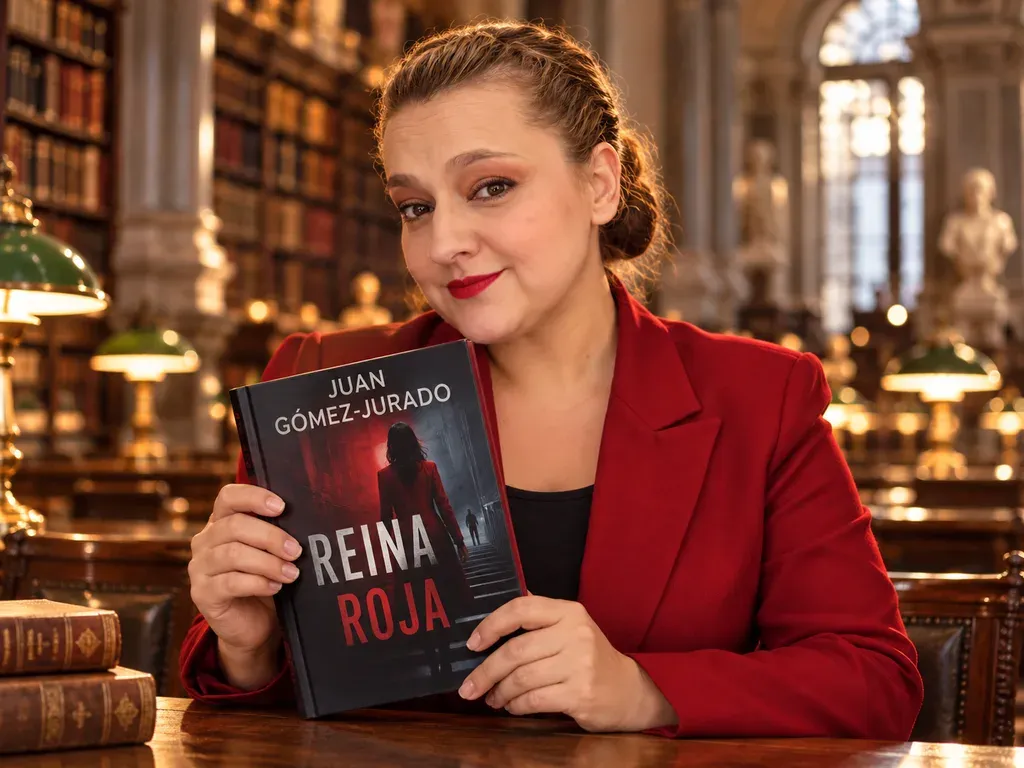
Juan Gómez-Jurado
Red Queen
Red Queen by Juan Gómez-Jurado: Antonia Scott sees everything except a reason to leave her apartment
Antonia Scott has no badge, no official job and an intelligence powerful enough to make a room uncomfortable. Jon Gutiérrez arrives at the wrong door and gets pulled into a case involving wealth, power and people who believe money can buy silence. It can buy quite a lot. It cannot always buy good judgment.
October 26, 2026
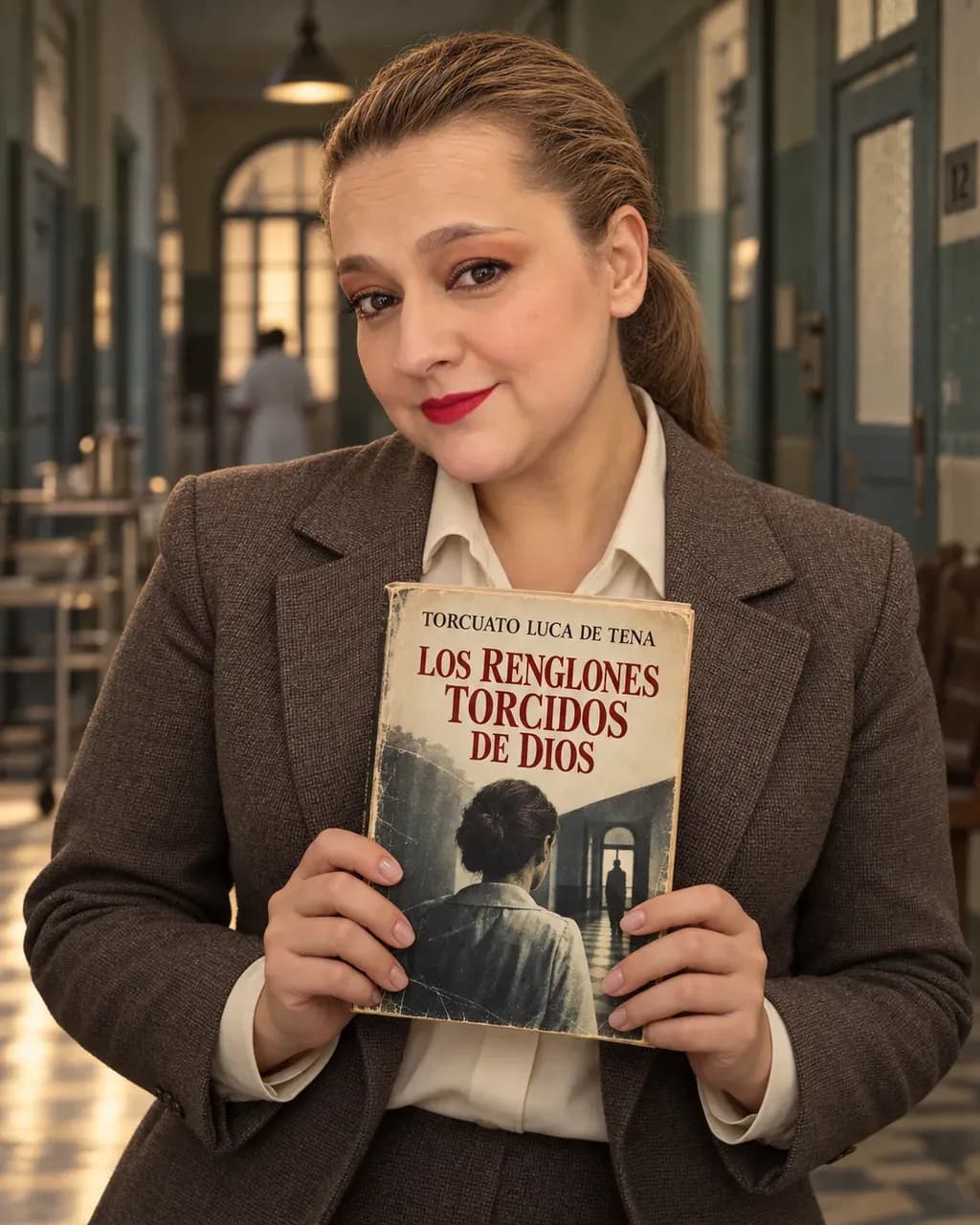
Torcuato Luca de Tena
God's Crooked Lines
God's Crooked Lines by Torcuato Luca de Tena: who gets to decide who is sane?
Alice Gould enters a psychiatric institution with a story of her own. The hospital has another version. That is where the novel starts asking a question institutions would rather keep in their paperwork: who gets to name someone sane, and what happens when the person holding the file is wrong?
October 26, 2026
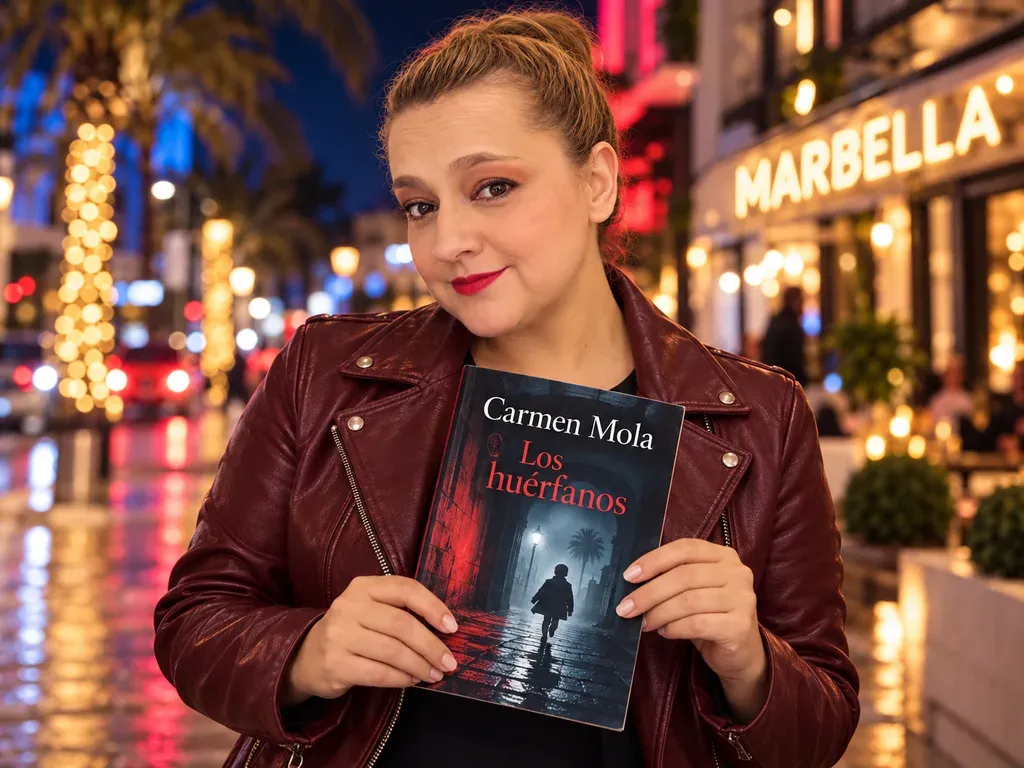
Carmen Mola
The Orphans
The Orphans by Carmen Mola: abandoned children grow into crime bosses. What a hell of a career path
Three children meet in Belfast, build a family out of survival and grow into adults who have learned how to make money from crime. Years later, a case pulls Laura Pastor and her family into a world where loyalty is real, but so are the bullets. The title sounds sad; the career path is considerably worse.
October 25, 2026
Want more like this? Join the Readers Club and get one of my books for free.
Share
My books
Books by Yenny Astrid Londoño



About the author
Yenny Astrid Londoño
Yenny Astrid Londoño is a Colombian author and entrepreneur, founder of Anchetas Medellín. She writes about real life with sarcasm, irony and smart humor, turning everyday situations, mistakes and imperfect relationships into stories that readers can laugh at and recognize themselves in.

A free book from me
Get a free book from me
Subscribe and get Sobreviviendo a mis muertos in full as a PDF.
After that, I'll only write when I have something worth telling you.
Also available: Read this review in Spanish →