
Book review
The Inmate:
Freida McFadden's The Inmate: Brooke works in a prison where her ex, Shane, serves a life sentence. A thriller about memory and charm. Review, 4 out of 5.
By Yenny Astrid Londoño · October 21, 2026 · 6 min read
Share
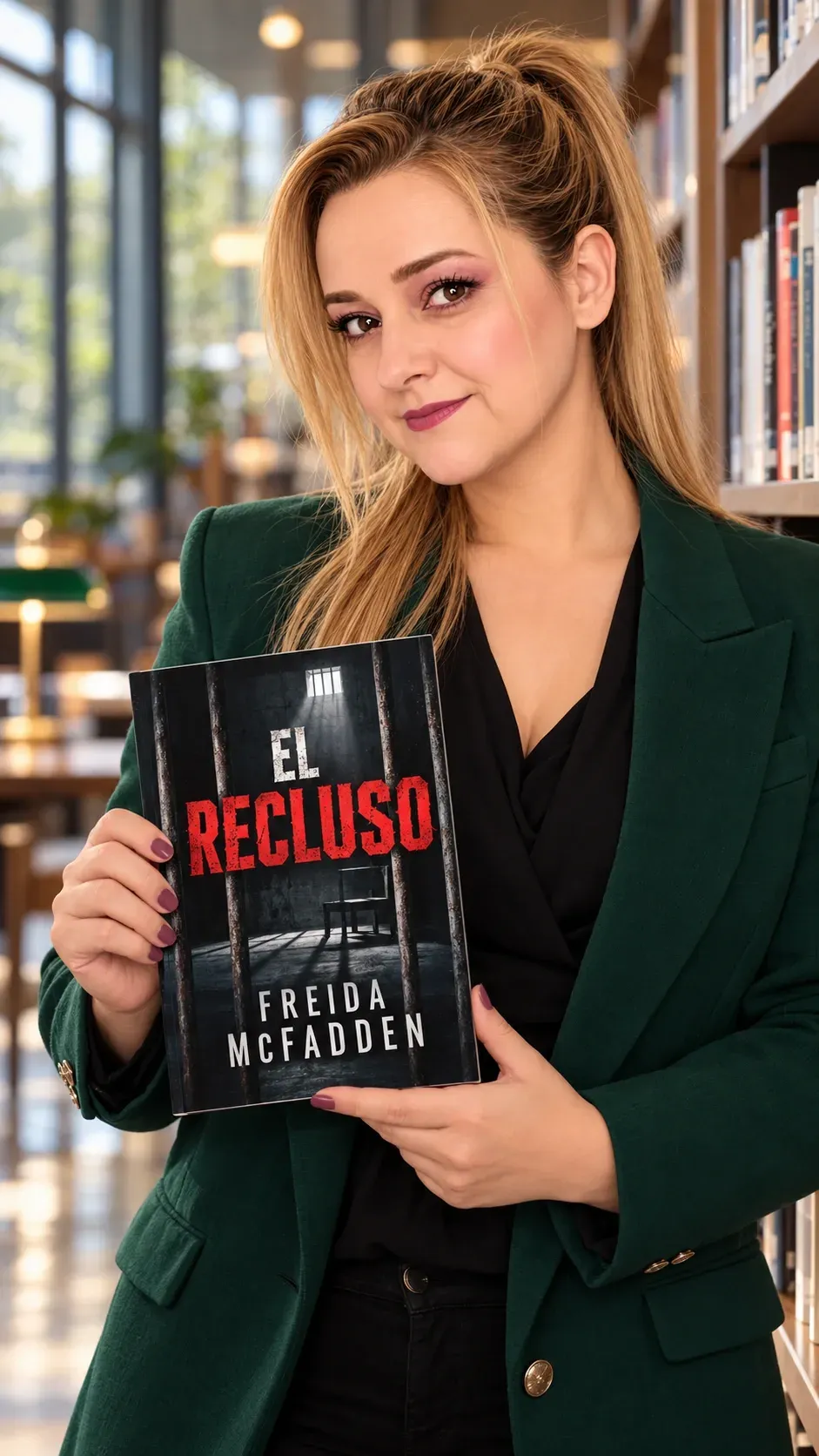
The Book
The Inmate
Psychological thriller
by Freida McFadden
More reviews by Freida McFadden →
4 out of 5 stars
Shane Nelson, her ex-boyfriend, is there, sentenced to life imprisonment for murders in which Brooke's testimony played a decisive role.
Brooke takes a job where her past has visiting hours
Brooke Sullivan accepts a nursing job at a prison. One of the inmates is Shane Nelson, her former boyfriend, serving a life sentence for murders connected to a case where Brooke’s testimony helped convict him. It is a solid thriller setup: new workplace, old history, and a man whose version of the past may not match the one Brooke remembers. Freida McFadden knows how to place a protagonist in a situation that makes “I’ll just get through my shift” sound like a very optimistic plan.
The prison changes the ordinary rules of proximity. Brooke has a professional role, but she cannot pretend Shane is just another patient. Every interaction asks what she knows, what she believes, and how much of her own memory she is willing to trust. I like that tension. It makes the past feel present without needing a haunted portrait or a suspiciously creaky staircase. Sometimes an old boyfriend is already enough of a horror setting; no need to add bats.
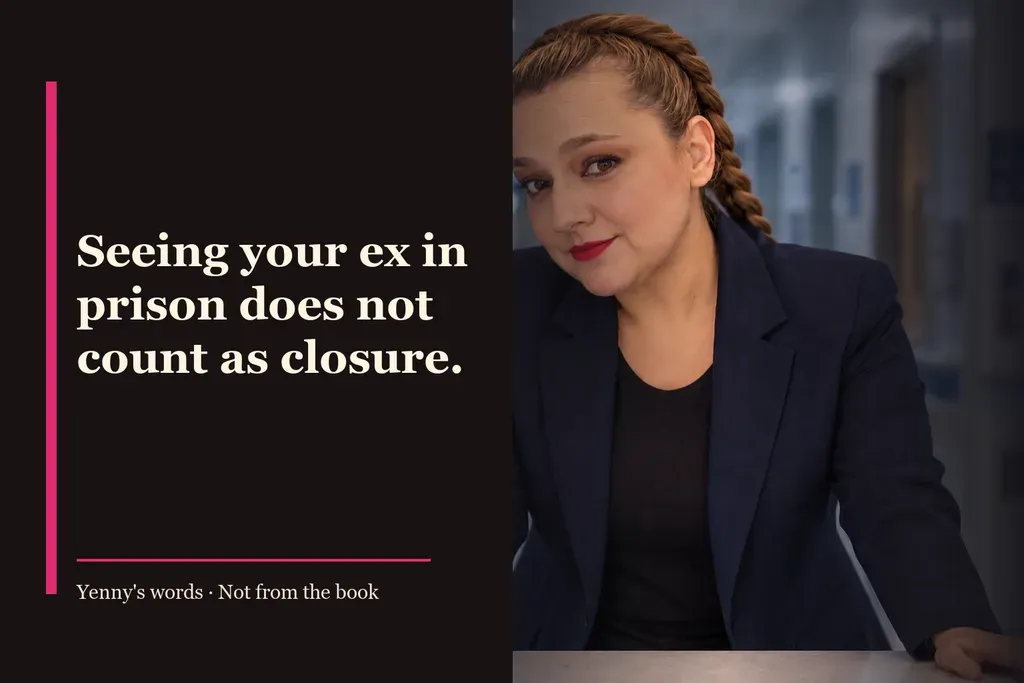
Shane’s charm does not prove he is innocent
The book depends on keeping the reader unsure about Shane, Brooke, and the story that put him behind bars. Charm can complicate our judgment, especially when a character knows how to say the sentence that makes us reconsider what we just saw. But a persuasive voice is not evidence. The novel is at its best when it asks us to notice the gap between what someone claims and what their behavior supports.
That also means Brooke’s past relationship with Shane cannot be used as a shortcut to romance. Shared history can make someone vulnerable; it does not make a manipulative dynamic healthy. I am interested in how the book plays with attraction, guilt, and memory, but I do not want the old “dangerous man is secretly sexy because he has a tragic backstory” package delivered to my door. If the relationship is meant to be troubling, let it stay troubling.
The twist is the headline, but the people need to stay in the story
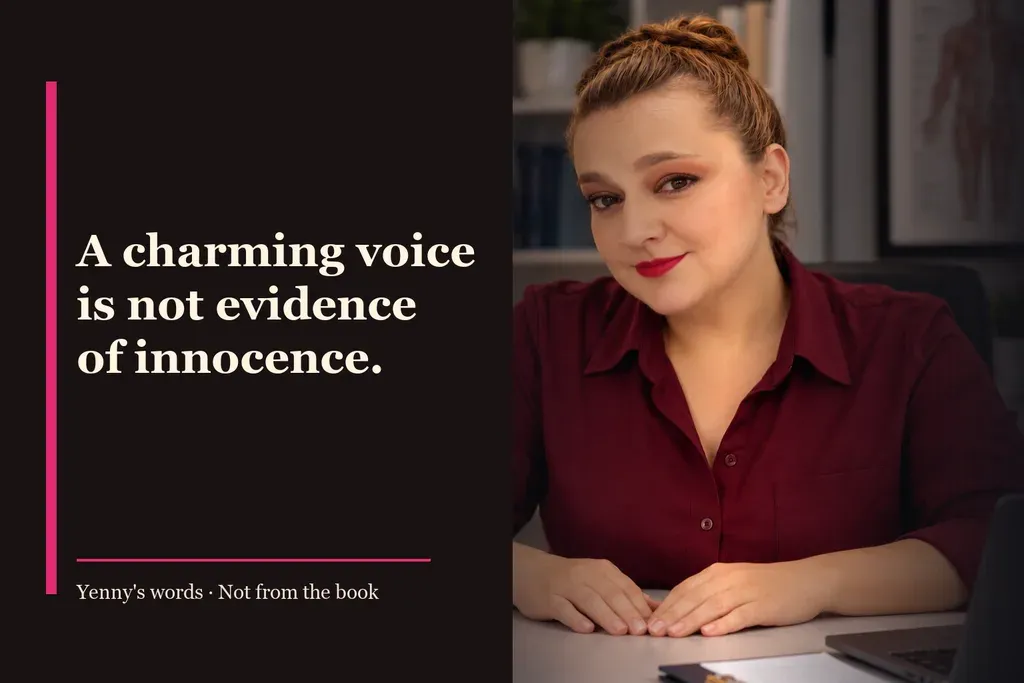
McFadden builds momentum through short chapters and shifting information. That is effective when a reveal makes earlier scenes look different. The danger is turning withholding into a habit: a fact is held back because the twist needs it, even when a believable person would have said it or acted on it sooner. Surprise is fun. The reader also wants to feel that the characters have a life beyond carrying sealed envelopes for the final chapter.
I kept asking what the suspense would look like if the mystery did not get to eat every other part of the book. Brooke’s work, her decisions, and the prison setting could carry more weight on their own. The reveal should deepen the character conflict, not replace it. A twist is a tool, not a fire alarm that excuses the story from building anything else.
A prison infirmary deserves more than being a convenient door
Brooke works in a prison infirmary, a setting that carries real ethical and professional tensions. Care takes place inside an institution built around punishment, and a nurse cannot simply pretend those conditions do not matter. The infirmary should shape what Brooke can do, what she risks, and what responsibility means when the patient is also tied to her personal history.
At times, the environment feels simplified into a way for Brooke to reach the person the mystery needs her to reach. I wanted her nursing decisions to have more force, rather than serving mainly as access to Shane. A prison is not a house with difficult locks; it is a system with rules, hierarchies, and consequences. When the novel lets that complexity into the room, the premise gets sharper. When it pushes it outside so the next clue can come in, I notice.
What I did not like
McFadden’s chapter endings are good at making me say “one more,” which is a dangerous talent when tomorrow has an alarm. That same rhythm can become formulaic. Some information feels delayed for the sake of the reveal rather than because the character would plausibly keep it to herself in that moment. It is a familiar toll in twist-driven thrillers, and I would rather the story trust its character work more often.
My other reservation is the prison setting. The infirmary could have made the conflict about care inside a punishment system more complex; sometimes it mostly moves Brooke closer to the mystery. I give The Inmate 3.5 out of 5 stars for the premise, pace, and the tension around Brooke’s memory. I take off points for reveals that can feel overly arranged and for a workplace that deserved more realism. Also, seeing your ex again does not automatically mean destiny is calling. Sometimes it means the prison has a visitor schedule.
Is The Inmate worth reading?
If you want a fast psychological thriller with competing versions of the past, chapter breaks designed to test your bedtime, and a relationship that complicates what Brooke believes, it may work for you. If you want detailed attention to prison nursing or psychological realism that always outranks a twist, you may find some seams. I would read it for Brooke’s struggle with memory and for the question of how much our present depends on a story we never examined again.
The book is a standalone thriller and does not require the reader to start with The Housemaid. Its interest lies in a different kind of trap: the possibility that the person who knows you best may also know which part of the past you most want to distrust. I had fun with the momentum, even while arguing with some of the construction. That is a perfectly respectable way to spend an evening, provided nobody asks me to call it a healthy relationship.
Frequently asked questions
Nurse Brooke Sullivan takes a job at a prison where her ex-boyfriend Shane Nelson is serving a life sentence. Brooke’s testimony helped convict him, and their reunion reopens questions about the past.
No. The Inmate is a standalone thriller and can be read without reading The Housemaid books.
Yes. It uses memory, conflicting accounts, past relationships, and twists to build suspense.
Brooke is a nurse who accepts a job at the prison where Shane, her former boyfriend, is incarcerated. Her professional role collides with their shared history.
I give it 3.5 out of 5 stars. The premise and pacing work well, while some reveals feel too arranged and the prison setting deserved more complexity.
You can. It is a separate story with McFadden’s twist-driven pace, but it has its own characters and prison-centered conflict.
Frequently asked questions
What is Freida McFadden's The Inmate about?
Brooke Sullivan starts working as a nurse in a prison where Shane Nelson, her ex-boyfriend, is serving a sentence. Her testimony helped put him there, and the reunion reopens doubts and secrets from the past.
Is The Inmate a standalone novel?
Yes. Brooke and Shane's story is presented as a thriller of its own and does not require reading The Housemaid.
Is it part of The Housemaid series?
No. It shares McFadden's taste for twists with her other books, but it has different characters and conflict.
Who is Brooke Sullivan?
The nurse who takes the prison job and must face the man she testified against years earlier.
Is there romance?
Their past relationship is important, but the book is mainly sold as a psychological thriller. The relationship should not be mistaken for a risk-free romance.
Is it very violent?
The premise includes murders and a prison setting. The intensity and content can be uncomfortable for readers who avoid crime and psychological manipulation.
The Book
The Inmate
by Freida McFadden
Get the bookIf you buy through this link, Yenny earns a small commission and you pay the same price.
Keep reading
If you liked it, keep going

Javier Castillo
The Snow Girl
The Snow Girl: Kiera disappears and everyone moves on except her parents
Javier Castillo's The Snow Girl: Kiera vanishes at a New York parade and a tape reopens the case five years later. My honest review, 4 out of 5.
October 22, 2026
John Katzenbach
The Analyst
The Analyst: a birthday threat, fifteen days and a therapist who has lost control
John Katzenbach's The Analyst: a psychoanalyst gets fifteen days to find out who is threatening him. My honest review of this thriller.
October 22, 2026
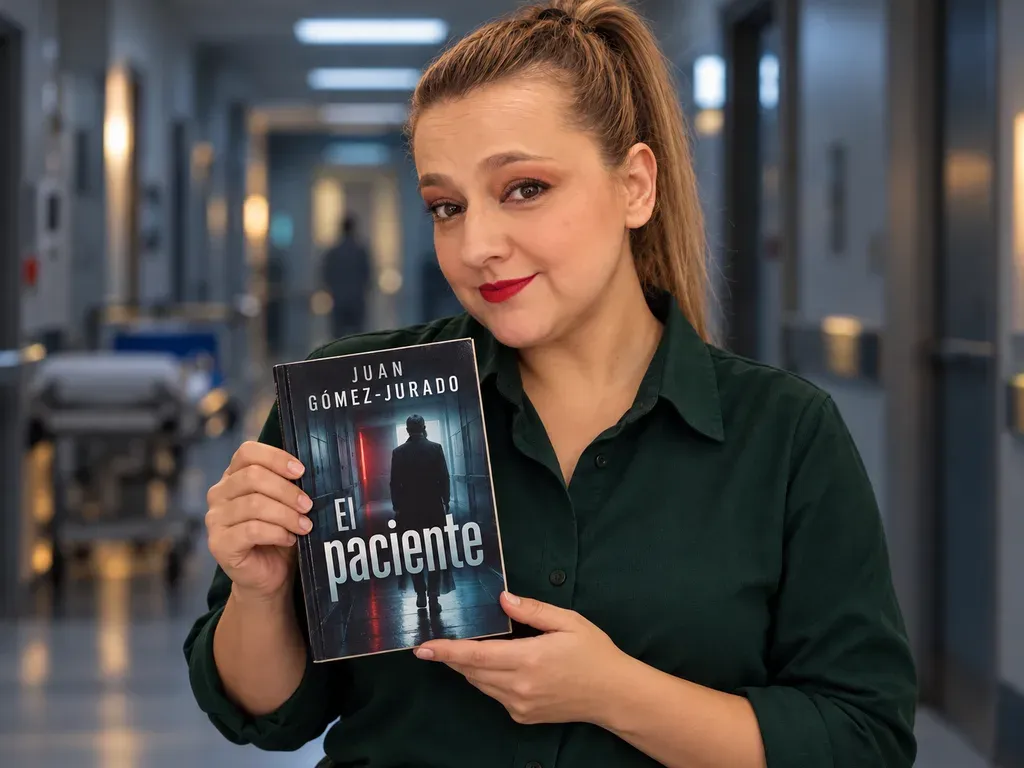
Juan Gómez-Jurado
The Patient
The Patient: the President on the operating table and a daughter nobody can trade
Juan Gómez-Jurado's The Patient: a neurosurgeon, a President on the table and a kidnapped daughter in sixty-three hours. My honest review.
October 22, 2026
Want more like this? Join the Readers Club and get one of my books for free.
Share
My books
Books by Yenny Astrid Londoño



About the author
Yenny Astrid Londoño
Yenny Astrid Londoño is a Colombian author and entrepreneur, founder of Anchetas Medellín. She writes about real life with sarcasm, irony and smart humor, turning everyday situations, mistakes and imperfect relationships into stories that readers can laugh at and recognize themselves in.

A free book from me
Get a free book from me
Subscribe and get Sobreviviendo a mis muertos in full as a PDF.
After that, I'll only write when I have something worth telling you.
Also available: Read this review in Spanish →