
Book review
The Snowman:
My review of Jo Nesbø's The Snowman: Harry Hole, missing women, a snowman at the door and the cost of turning victims into a killer's pattern.
By Yenny Astrid Londoño · October 9, 2026 · 9 min read
Share
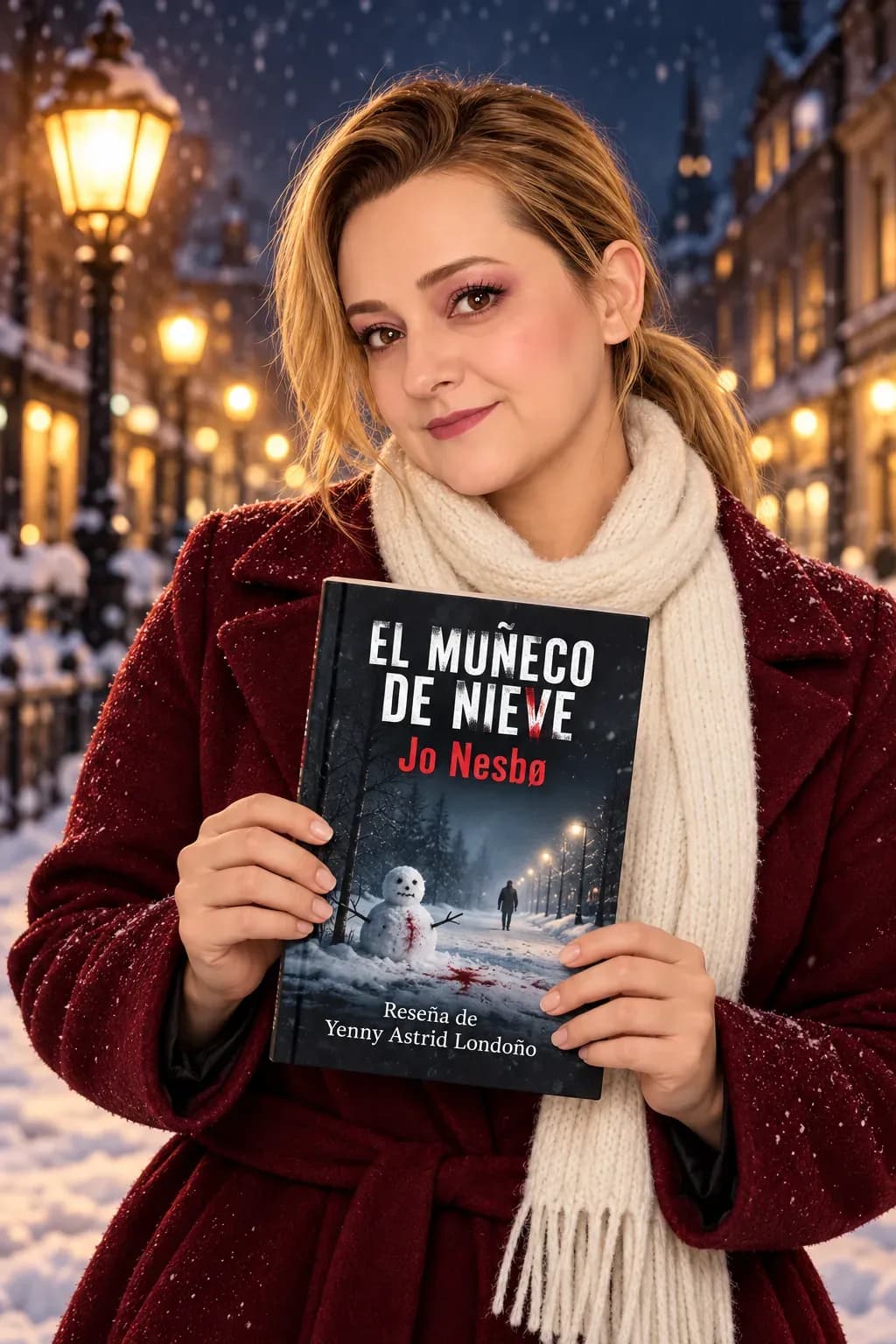
The Book
The Snowman
Nordic crime fiction and serial-killer thriller
by Jo Nesbø
4.5 out of 5 stars
I give The Snowman 4.5 out of 5.
Snow puts a threat into an ordinary routine
The snowman is effective because it belongs near family houses. It does not need to be a supernatural apparition or a grand speech from the killer. Its placement makes a familiar yard feel as if someone else has been allowed to define it. A household may still look normal through the window; the sign outside tells you normal is no longer a useful guarantee.
I value that shift more than the prop's cleverness. Crime fiction can get distracted admiring a signature and forget what the signature does to people. Here the image works when it turns attention toward the disappearances and the lives disrupted by them. It stops working for me if the murderer becomes the most fascinating person in the room merely because he learned how to build a recognizable mascot. Branding is not depth, even with snow.
A snowman is a particularly nasty choice because it belongs to ordinary childhood and to the brief pleasure of a winter day. The image does not have to invade a locked room to change the meaning of a home. Once its presence feels deliberate, a familiar yard becomes a message somebody left in plain sight. Nesbø uses that switch well: I no longer trust the decoration, the weather or the person who says it is probably nothing.
Harry recognizes a pattern but cannot organize his own life
Harry Hole sees connections others may miss. That competence gives an investigation direction, particularly when separate disappearances threaten to be treated as isolated cases. He can challenge the comfortable explanations and keep looking when a tidy answer would be easier for everyone involved.
At the same time, his personal trouble is part of the series, not a special permit to ignore his choices. I can find a damaged detective compelling without calling every self-destructive action evidence of genius. The tension is useful when it affects his judgment, relationships and work. It becomes tiresome if the book simply expects me to admire a familiar wounded-man pose. If Harry can read the danger in a stranger's house, I am allowed to ask why he finds some of his own problems so much harder to face.
Harry's ability to connect cases does not make him a model of stability. That divide gives the investigation its human weight, provided the detective's damage does not become a glamorous exemption from ordinary accountability. I can admire a sharp mind and still be tired of men whose neglected relationships are billed as the price of genius. The pattern on the case board is not the only one worth noticing.
The missing women must be more than a pattern
The investigation needs similarities among the disappearances. Readers need them too. But a list of shared circumstances can flatten the women into the killer's chosen category. I want to know what each absence does to people who knew her, and how the official response changes depending on what the woman was expected to do at home.
That is a higher standard than demanding that every victim receive a separate biography. It is a request that the book remember a person existed before she became a clue. A notorious serial killer can occupy tremendous narrative space. The women he targets do not need to become anonymous fuel for Harry's insight. The most chilling pattern is sometimes the ease with which an investigator, a neighbour or a reader starts saying “the victims” and stops picturing individuals.
Each missing woman existed before she entered Harry's pattern. That sounds obvious, yet a serial-killer plot can reduce victims to dates, locations and the clever mark left behind. I wanted their choices and circumstances to complicate the investigation, not merely decorate it. A book can be suspenseful without making the killer the most fully imagined person in every room. The snowman may be the marketing image; it should not get the last word on these lives.
Home stops being the opposite of danger
Nesbø places much of the fear near domestic routines. Winter clothes, entrances, gardens and family habits become things to inspect. That is an effective way to disturb the reader without pretending a house needs ghosts to be dangerous. The outside can come in through somebody else's knowledge of your routine.
I also like how the setting makes security feel uneven. A locked door may not help if the person posing a threat understands the relationships inside it. The snowman works as an intrusion before anyone has even crossed the threshold. Once a sign appears in a place that should belong to a family, the occupants have to ask who had the time and confidence to put it there. Nobody wants their front yard to become a message board for a killer.
The investigation works when a suspicion changes the story
Nesbø can build a clue chain that makes me revise a previous assumption. That is more satisfying than a random shock. A good red herring should show why Harry or the reader trusted the wrong explanation, not simply take up pages while the solution waits backstage. This case has enough recurring details to make interpretation matter.
The series history gives Harry relationships and habits that colour those interpretations. When he questions someone, I am watching a detective with experience and bias, not a neutral flashlight pointed at the plot. The best moments allow evidence to push against his certainty. I enjoy an investigator who notices a pattern. I trust the book more when it lets the pattern be challenged rather than treating his first instinct like a private hotline to the author.
What did not work for me
The tormented-detective material can repeat itself. Harry's difficulties matter, but repeated signs of damage do not automatically deepen him. At times I wanted the book to spend less energy re-establishing how broken its investigator is and more time making a victim's particular life visible. One familiar male crisis can take up a surprising amount of oxygen.
Some false leads feel designed to postpone rather than refine the answer. I accept misdirection in a serial-killer thriller; I expect it to leave me with a changed understanding when it falls away. I also question the genre's appetite for an iconic murderer. The snowman is a potent image, but the violence should not be treated as a stage on which a creative criminal earns applause. Those limits keep an absorbing book at 4.4 rather than five.
At times the case piles on so many turns that I caught myself admiring the puzzle instead of feeling its cost. Nesbø can manage a complicated trail, but not every detour earns the same patience. There are also moments when the women are in danger mainly to intensify Harry's story. That is a familiar bargain in crime fiction, and I am not obliged to like it just because the villain has excellent winter branding.
How to enter the Harry Hole series
The Snowman is book seven, not Harry's debut. You can follow this case on its own, but earlier books give more context for his relationships and the cost of his habits. If you are the sort of reader who hates learning personal history in the middle, start with the series beginning and work forward.
Do not mistake the case for a supernatural story because the symbol looks uncanny. This is crime fiction with an unsettling visual signature. I would also avoid plot summaries that identify how the missing women connect. The investigation earns that discovery. Knowing the outline of the case is enough to decide whether you want to spend a winter with Harry; the rest is better found in the book.
The Snowman is a Harry Hole novel, not the beginning of his career. You can follow the central investigation as a new reader, but the personal baggage is already there and will not politely introduce itself chapter by chapter. If continuity is what you read a series for, begin earlier. If you chiefly want a chilling self-contained case, you can enter here and accept that some history walked into the room before you did.
Who should read it, and what to expect
I would recommend it to readers who enjoy Nordic crime, a dark atmosphere, an experienced but difficult detective and a serial-killer investigation that asks for attention. The missing women and violence make it a poor choice for someone seeking a gentle puzzle. Its cold setting is beautiful; the harm in it is not decorative.
If you need every lead to pay off cleanly or a protagonist whose private life you never have to revisit, the series machinery may test you. I still found the central threat compelling. The useful question to take into the book is not whether the murderer has a clever signature. It is whether Harry and the narrative can keep seeing the people the signature was designed to overshadow.

My rating: 4.5 out of 5, with the yard checked twice
I give The Snowman 4.5 out of 5. The winter image, the domestic intrusion and Harry's search for a pattern create sustained tension. The case deserves its reputation among the series' better-known entries. My reservations are specific: familiar self-destruction, a few delaying false leads and the risk that the killer's iconography outshines the women who disappeared.
What remains after the final clue is the alteration of a routine. A snowman can still be made by children tomorrow. Nesbø makes it difficult to look at one without first wondering who put it there and why. That is an effective piece of suspense. I just refuse to forget the people who made the question matter.
I give it 4.4 because its atmosphere and investigative movement held me hard, with a deduction for the times the machinery overpowered the people caught inside it. The best threat here is not the cold. It is the discovery that a place you regarded as safe had already been entered, studied and turned into somebody else's sign. After closing the book, I would check the yard, then ask who had been overlooked while I stared at the snowman.
Frequently asked questions
Is The Snowman the seventh Harry Hole book?
Yes. It is the seventh novel in Jo Nesbø's Harry Hole series. This case can be followed alone, but earlier books enrich his personal history.
Is the snowman supernatural?
No. It is an ominous sign in a crime investigation, not evidence that the novel has become a ghost story.
Do I need to read the previous six books?
Not to understand the central case. Reading in order helps if you want the fuller development of Harry's relationships and struggles.
Does this review identify the killer?
No. I discuss the recurring sign, the investigation and the treatment of victims without revealing the culprit or final solution.
Is the novel very dark?
Yes. Missing women, violence and serial-killer suspense are central. I would warn readers who prefer a lighter mystery.
What did I criticize?
Some repetition around Harry's troubled persona, a few delaying false leads and the possibility that the killer's signature eclipses the women he harms.
Why do I rate The Snowman 4.5 out of 5?
Its atmosphere and investigation are gripping, but those concerns keep it short of a perfect score.
The Book
The Snowman
by Jo Nesbø
Get the bookIf you buy through this link, Yenny earns a small commission and you pay the same price.
Keep reading
If you liked it, keep going

Camilla Läckberg and Henrik Fexeus
The Mentalist
The Mentalist: the trick is not the only thing under suspicion
Camilla Läckberg and Henrik Fexeus's The Mentalist: Inspector Mina Dabiri and mentalist Vincent Walder against a staged murder. Review, 4/5.
October 9, 2026

Camilla Läckberg
The Cuckoo
The Cuckoo: Fjällbacka remembers what it prefers to forget
Camilla Läckberg's The Cuckoo: a present-day investigation in Fjällbacka and an old crime that keeps coming back. My honest review, 4 out of 5.
October 9, 2026
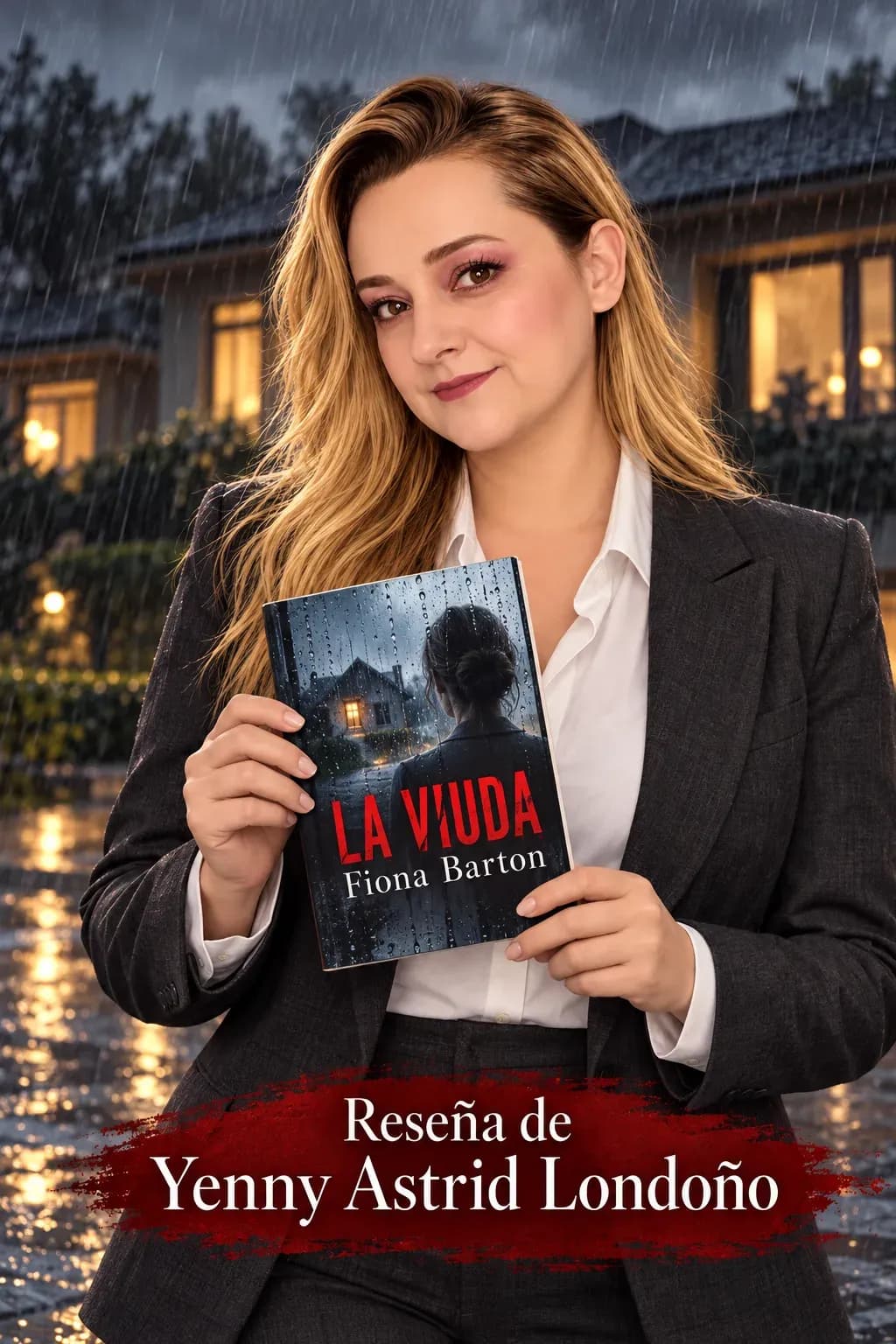
Fiona Barton
The Widow
The Widow: “I didn’t know” is not a complete answer
Fiona Barton's The Widow: Jean Taylor, a journalist and the truth about a husband's crime. My honest review, 3.5 out of 5.
October 9, 2026
Want more like this? Join the Readers Club and get one of my books for free.
Share
My books
Books by Yenny Astrid Londoño



About the author
Yenny Astrid Londoño
Yenny Astrid Londoño is a Colombian author and entrepreneur, founder of Anchetas Medellín. She writes about real life with sarcasm, irony and smart humor, turning everyday situations, mistakes and imperfect relationships into stories that readers can laugh at and recognize themselves in.

A free book from me
Get a free book from me
Subscribe and get Sobreviviendo a mis muertos in full as a PDF.
After that, I'll only write when I have something worth telling you.
Also available: Read this review in Spanish →