
Book review
The Turn of the Key:
My review of Ruth Ware's The Turn of the Key: Rowan, Heatherbrae House, cameras, care work and why a smart home can still fail the person living in it.
By Yenny Astrid Londoño · October 9, 2026 · 10 min read
Share

The Book
The Turn of the Key
Psychological suspense and domestic thriller
by Ruth Ware
3.5 out of 5 stars
I give it 3.5 out of 5 because the letter, the childcare job and the surveillance make the tension about more than identifying a culprit.
A job offer that solves one problem and creates several more
Rowan tells her story in a letter from prison after a child has died at Heatherbrae House. Knowing where she ends up does not make her decision to take the job absurd. Money matters. Housing matters. Stability matters. It is easy to mock the woman who walks into an eerie mansion when you're reading with your own rent paid and a front door you can leave whenever you please. Ware makes the offer genuinely attractive before making the price of accepting it clear.
The arrangement also turns her workplace into her bedroom. The family needs her inside its private life, but that intimacy does not give her equal authority. If a device misbehaves, a child is upset or the rules change, she is still the employee expected to adapt. People love saying she could just leave. Leaving an overnight job can mean losing income and shelter at once. That is a much less cinematic choice than running down a dark hallway, but it is the one that makes the hallway frightening.
The salary is part of the trap for me. Rowan is not answering an abstract invitation to enter a haunted house; she is making a work decision under ordinary financial pressure. It is easy to tell a fictional nanny to leave at the first suspicious sound when you are not the one who has to explain why she walked away from a job. Ware understands how a generous offer can make a person negotiate with her own alarm bells.
Heatherbrae House comes with more instructions than hospitality
The house has the bones of a Gothic mansion and the nervous system of a technology showroom. Lights, cameras and automated controls promise to remove everyday friction. They also put Rowan in a position where she must learn someone else's system while continuing to care for someone else's children. The owner can call it intuitive. The new employee can still be left guessing which button opens the door.
I do not read this as a warning that every smart home is evil. A system needs no malicious personality to become oppressive. It only needs unequal access: someone collects the data, someone else needs permission to see it, and the person most affected is asked to trust the arrangement. The home's polished appearance gives its owners another advantage. When something goes wrong, it is temptingly easy to blame the woman who just arrived with a suitcase instead of the machinery everyone has been told is foolproof.
Every clever household feature also gives somebody else a degree of control over her day. A room that obeys an app sounds luxurious until the lights, speakers and cameras turn basic comfort into a permission someone can withdraw. I kept asking who understood the system, who could alter it, and why the newest employee was expected to trust it immediately. The architecture is frightening partly because it is somebody else's set of decisions presented as convenience.
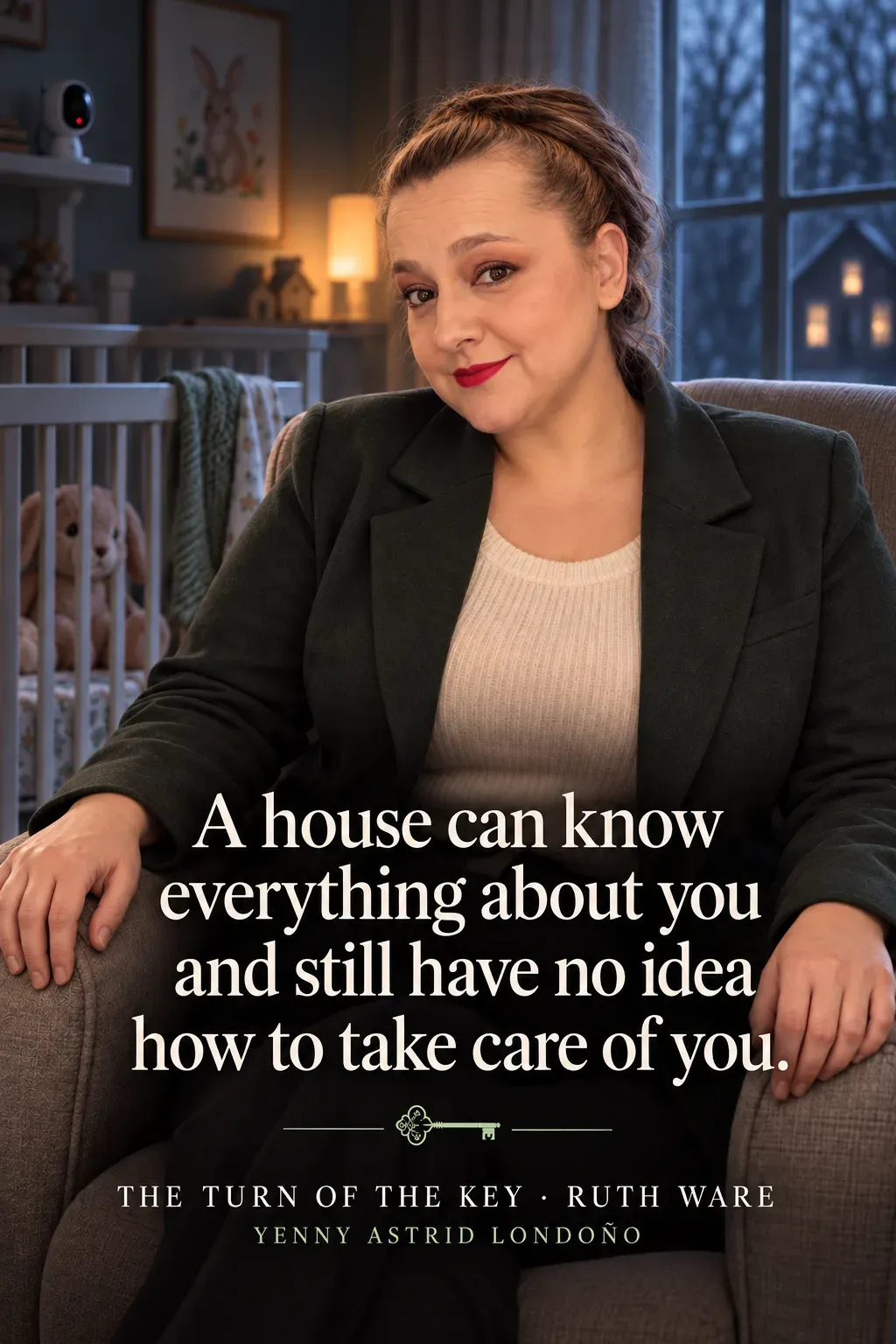
A nanny is trusted with children and doubted about everything else
Care work carries a particularly nasty imbalance. Parents hand over enormous responsibility, then may treat the person doing the work as someone who should obey without asking questions. If trouble comes, they can suddenly remember how much faith they placed in her. How convenient that trust becomes visible only when there is blame to distribute.
Rowan cannot inspect the household from a guest's safe distance. Her job requires her to read the children's behaviour, follow the adults' instructions and stay inside the house when the atmosphere becomes uncomfortable. I resist calling the children simply creepy, too. They are living under the same adult-made rules and surveillance. A clever thriller can make us afraid of what a child knows while still asking what this arrangement does to the child. Installing more cameras does not automatically count as paying more attention.
That imbalance is sharper because her job is intimate. She has to calm children, enter bedrooms and become a dependable adult, yet she does not get the authority or the information that would let her protect anyone properly. The family can call her indispensable and still treat her as replaceable. The scariest instruction in this house may be the polite assumption that a nanny should manage everything while questioning nothing.
A letter turns her defence into part of the mystery
Rowan is writing because she needs somebody to hear her version. That gives every detail a purpose and every omission a possible cost. She may be truthful and still decide what to mention first. She may minimize a mistake because she fears it will destroy her credibility. Fear can distort memory without making a person a liar. I do not grant her automatic innocence because she asks for help, and I do not treat every pause as proof of a secret crime.
The letter also has to make a stranger understand why a noise, a failed control or an odd conversation felt threatening at the time. Separately, these incidents can sound petty. Together, they can change the way someone inhabits a room. There is a painful gap between experiencing danger and proving it to people who were not there. It grows wider when the person asking to be believed is already in prison and the beautiful house still looks respectable in photographs.
Ruth Ware gives the old governess story new equipment
The title nods to Henry James's The Turn of the Screw: children, a caretaker, an unsettling house and a reader asked to decide what can be trusted. You do not need homework on James to follow Ware. The comparison simply helps show what changes when the eerie house has cameras and software as well as corridors.
A recording is not the same as an explanation. A camera may capture an action while missing the motive; a system may hold information without allowing Rowan to see it. The promise of objective evidence can even make people less willing to listen to the person standing in front of them. That is the contradiction that interests me most. We buy control and call it care, although the worker who needs care and a little room to make mistakes receives procedures instead. The advertising brochure probably had a smiling family on it. It rarely shows the employee searching for a password.
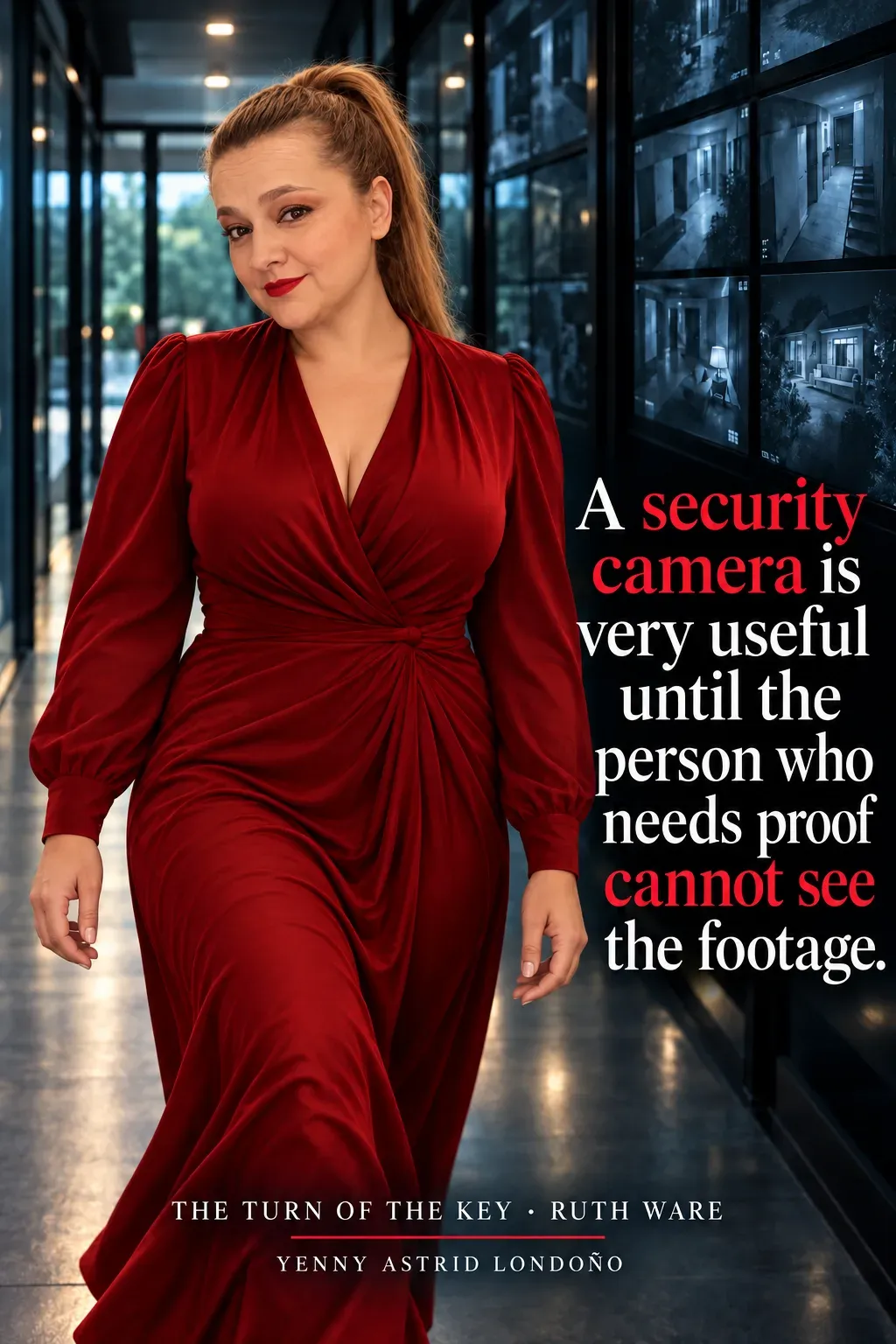
What did not work for me
The atmosphere occasionally spends too long repeating uncertainty. One strange noise can open a question; the fifth similar signal needs to change what I understand, not merely postpone an answer. I do not require a jump scare every three pages, but I do want the suspense to pay for the patience it asks of me.
I am also wary of information being held back purely to protect a twist. Rowan has emotional reasons to choose the order of her account, and that choice can be compelling. When it feels as if the plot itself is standing behind her with an editor's red pen, the effect weakens. Most of all, I wanted the novel's workplace imbalance to keep its weight. Solving a death does not automatically fix the surveillance, isolation and unequal burden that placed a live-in worker under suspicion.
My other reservation concerns how often the house has to behave conveniently for the suspense to survive. A malfunctioning device is unsettling; repeated technical trouble can start feeling like the author reaching over Rowan's shoulder to switch the power off at the best possible moment. I wanted the human decisions behind those failures to carry as much weight as the machinery. A smart home is only as interesting as the people who choose what it is allowed to notice.
What I would watch while reading
Keep track of who can verify a fact and who has to request access. That difference explains more than a vague claim that the house is haunted. I would also separate an event from Rowan's interpretation of it. A light going out is an event. Deciding why it went out requires information she may not have. Her fear matters even when her first explanation turns out to be incomplete.
Then look at the family's polished image. A house can remain gorgeous while the relationships inside it are badly organized. The useful question is not simply whether the devices work. It is who feels protected by the arrangement and who is told to carry on working while frightened. The answer often sits in the small print rather than in the ghost story.
I would keep track of who gives Rowan an instruction and who later claims she should have known better. That is more useful than counting creaks in the corridor. The book trades on the distance between what she experiences, what she can prove and what an outsider will believe. Once you read it that way, the surveillance stops being a decorative twenty-first-century ghost and becomes a problem of power and credibility.
Who should read it, and who might want another house
I would give this to someone who enjoys atmosphere, contested testimony and domestic spaces where power lives in ordinary procedures. If you like stories about workers who discover that their hosts' hospitality comes with conditions, Heatherbrae has plenty to offer. It works as a standalone. Knowing The Turn of the Screw adds a layer, not a prerequisite.
If you want constant action or a police investigation told from outside the household, adjust your expectations. We spend much of the book with Rowan's perceptions and the pressure of explaining them. The premise also involves a child's death and the narrator's imprisonment, so this is not my recommendation for a cosy nanny mystery. In Spanish, the book is Otra vuelta de llave, not La última llave; checking the title saves you from buying the wrong nightmare.
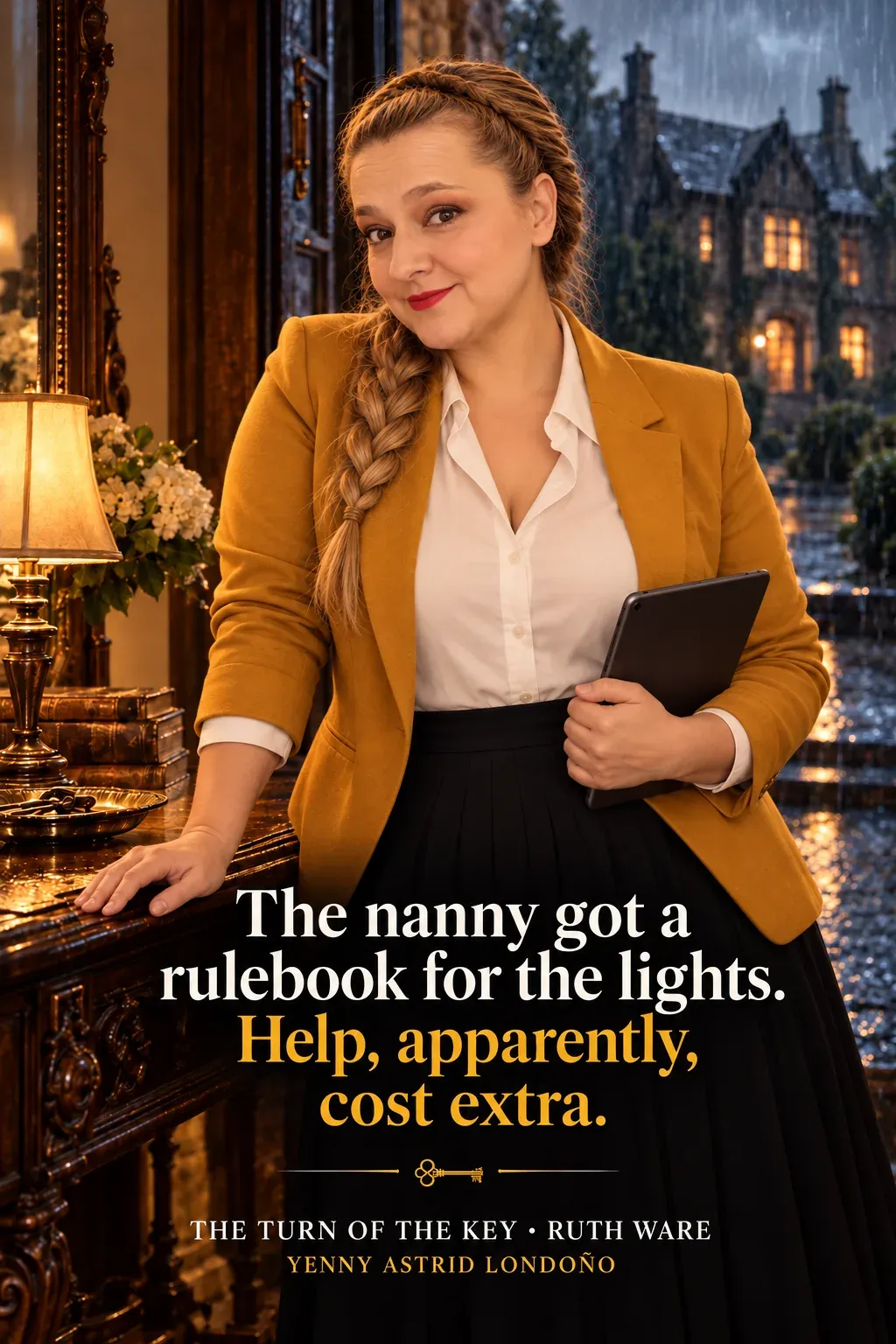
My rating: 3.5 out of 5, with the lights still on
I give it 3.5 out of 5 because the letter, the childcare job and the surveillance make the tension about more than identifying a culprit. Ware makes comfort feel conditional without changing the expensive décor. My reservations concern the time spent on recurring ominous signals and the moments when Rowan's disclosures feel too neatly arranged for suspense.
The book is strongest when Heatherbrae stops being merely a strange house and becomes a workplace with unequal control. Rowan went there for a job. The building had instructions for almost everything. What it failed to explain was how to ask for help when those instructions made everybody doubt her. An impressive amount of intelligence installed; basic human consideration sold separately.
The missing portion of the rating comes from those moments when the mechanism shows through and asks for one coincidence too many. The part I remember is not a gadget going wrong; it is Rowan trying to make a safe choice without a reliable account of what is happening. Ware makes a job offer feel like a test you were never told you were taking. I would leave Heatherbrae with my coat on and ask for my deposit back.
Frequently asked questions
Is The Turn of the Key the same book as Otra vuelta de llave?
Yes. Otra vuelta de llave is the Spanish title of Ruth Ware's The Turn of the Key. La última llave is not the title of this nanny-in-a-smart-house story.
Do I need to read The Turn of the Screw first?
No. Henry James's novella enriches the comparison about caretakers and uncertain perceptions, but Ware's plot stands alone.
Why is Rowan telling the story from prison?
She writes a letter to make someone listen after a child dies in the house. That situation belongs to the premise; the review leaves the final explanation intact.
Is the threat supernatural or technological?
The book uses Gothic unease and a technologically equipped house. I am not revealing the source of every threat, because that would cut straight through the mystery.
Are there sensitive themes involving children?
Yes. A child's death and the pressure placed on a caregiver are central to the setup. I would mention both before recommending it as light domestic suspense.
What may feel slow about the book?
The recurring signs and Rowan's uncertainty can take time to accumulate. Readers seeking constant external action may find the atmosphere more patient than they want.
Why do I rate it 3.5 out of 5?
The house, surveillance and Rowan's vulnerable work position make the suspense memorable. Repeated eerie signals and some carefully withheld information keep it below a higher rating.
The Book
The Turn of the Key
by Ruth Ware
Get the bookIf you buy through this link, Yenny earns a small commission and you pay the same price.
Keep reading
If you liked it, keep going

Javier Castillo
The Snow Girl
The Snow Girl: Kiera disappears and everyone moves on except her parents
Javier Castillo's The Snow Girl: Kiera vanishes at a New York parade and a tape reopens the case five years later. My honest review, 4 out of 5.
October 22, 2026
John Katzenbach
The Analyst
The Analyst: a birthday threat, fifteen days and a therapist who has lost control
John Katzenbach's The Analyst: a psychoanalyst gets fifteen days to find out who is threatening him. My honest review of this thriller.
October 22, 2026
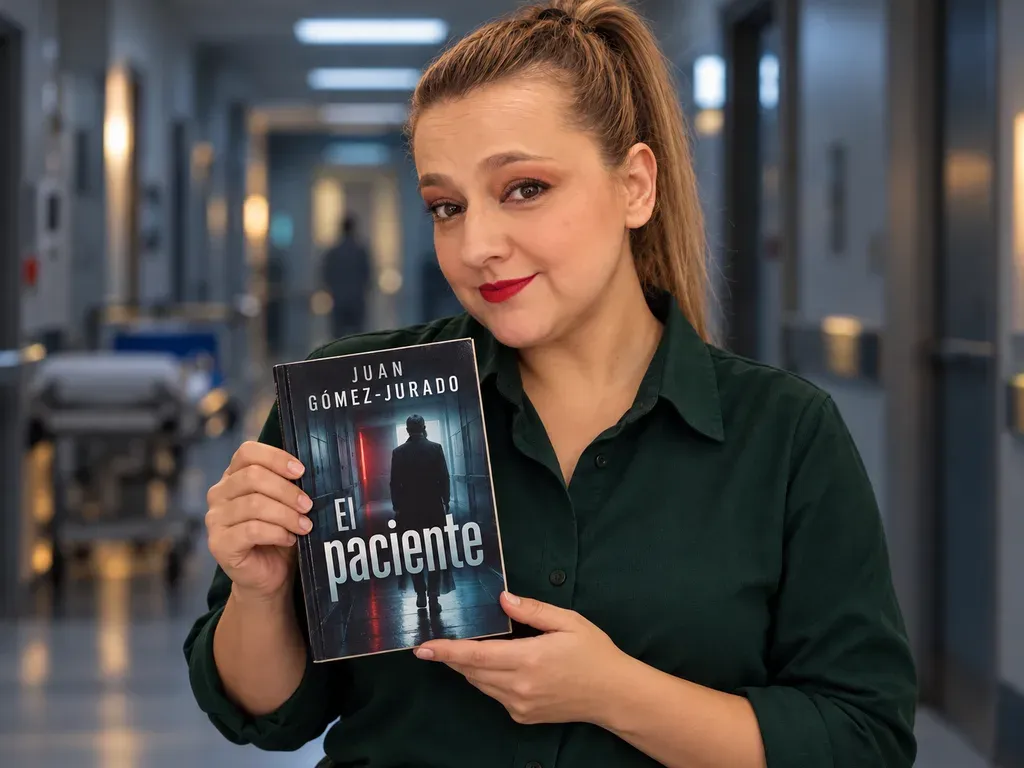
Juan Gómez-Jurado
The Patient
The Patient: the President on the operating table and a daughter nobody can trade
Juan Gómez-Jurado's The Patient: a neurosurgeon, a President on the table and a kidnapped daughter in sixty-three hours. My honest review.
October 22, 2026
Want more like this? Join the Readers Club and get one of my books for free.
Share
My books
Books by Yenny Astrid Londoño



About the author
Yenny Astrid Londoño
Yenny Astrid Londoño is a Colombian author and entrepreneur, founder of Anchetas Medellín. She writes about real life with sarcasm, irony and smart humor, turning everyday situations, mistakes and imperfect relationships into stories that readers can laugh at and recognize themselves in.

A free book from me
Get a free book from me
Subscribe and get Sobreviviendo a mis muertos in full as a PDF.
After that, I'll only write when I have something worth telling you.
Also available: Read this review in Spanish →