
Book review
Treasure Island:
Robert Louis Stevenson's Treasure Island: Jim Hawkins, a map and a crew you can't fully trust. A classic adventure, honest review, 4 out of 5.
By Yenny Astrid Londoño · October 22, 2026 · 6 min read
Share
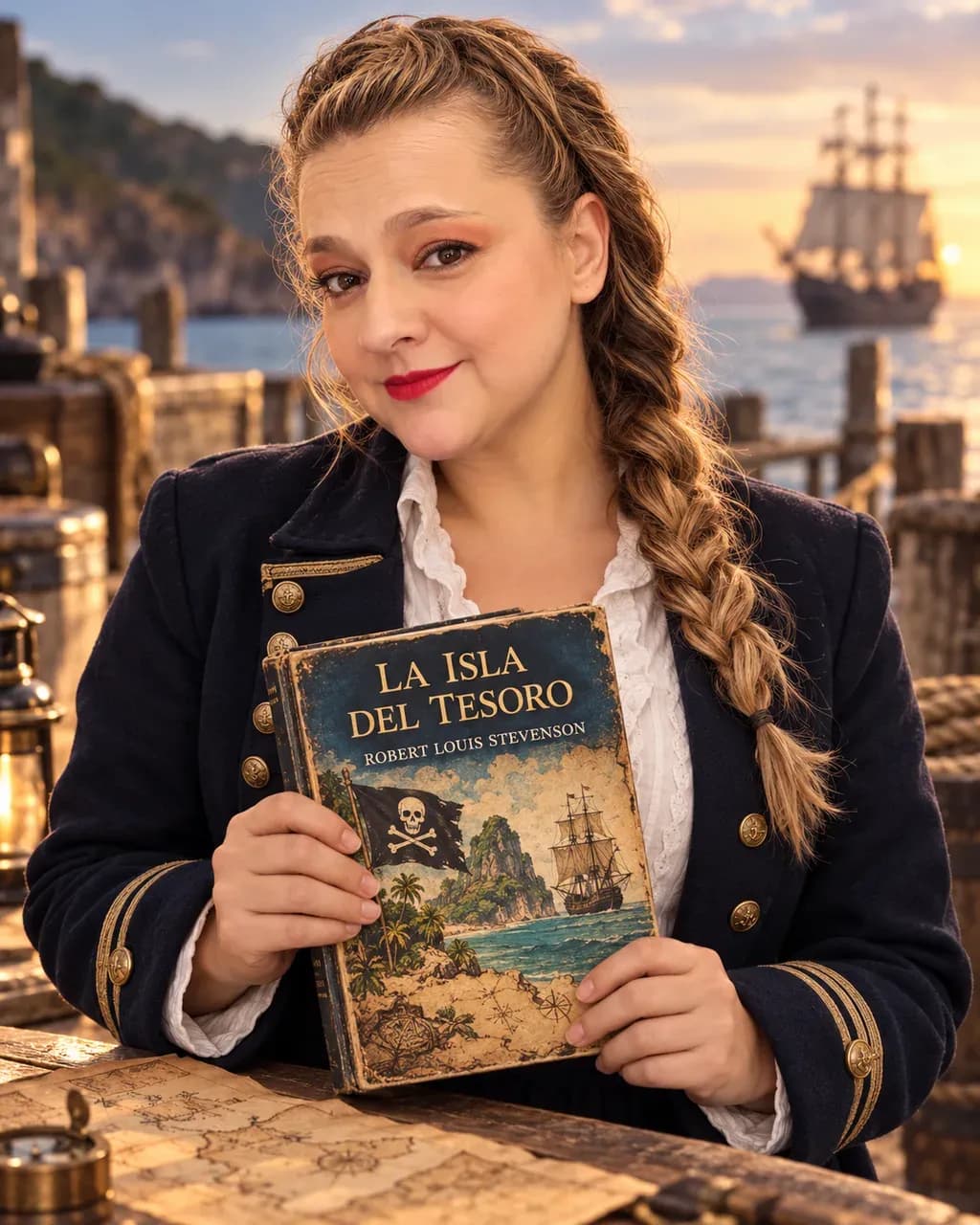
The Book
Treasure Island
Classics
by Robert Louis Stevenson
4 out of 5 stars
The adventure, Jim and Long John Silver still work very well.
A map, a ship, and the kind of plan that can go wrong
Jim Hawkins lives with his family at the Admiral Benbow inn until a suspicious guest and a chain of trouble pull him into the search for buried treasure. A map points toward an island; it does not identify who can be trusted aboard the ship. That small gap between knowing where to go and knowing who is going with you is where the adventure gets teeth.
Jim joins adults who believe they can manage the expedition. The crew includes Long John Silver, a cook so charming that suspicion has to keep checking its notes. Jim is learning as he goes, which is more believable than watching a child turn into a flawless captain between chapters. The map starts the journey. The people make it dangerous.
Jim Hawkins is brave, observant, and sometimes lucky
Jim tells the story from his own limited point of view. He notices things, takes risks, and sometimes acts before he has measured the consequences. That makes him feel like a young person in danger rather than a grown hero wearing a smaller coat. He has to decide what matters while already in the middle of it, which is how most of us learn the lessons we would have preferred to study in advance.
Because Jim does not know every plan, neither do we. That uncertainty creates suspense, though the adults around him occasionally manage to organize an entire voyage while forgetting to explain the most useful parts. His luck also arrives at convenient moments. I can accept luck in an adventure; I just notice when it starts doing the work of a planning meeting.
Long John Silver makes charm look suspicious
Silver is the character I find hardest to dismiss. He can be warm, funny, and threatening without announcing which version you are getting next. His charm does not erase his choices; it makes the distance between affection and evidence harder for Jim to manage. You can like someone and still need to look carefully at what they do. Novel idea, apparently.
Silver’s shifting place in Jim’s life gives the book an emotional tension beyond the treasure hunt. He may seem like a protector, ally, or danger, sometimes in the same stretch of conversation. The book does not flatten him into a mustache-twirling villain, and that complexity is one reason he can steal the spotlight from the boy whose eyes guide the story.

The island is not a postcard with pirates
The voyage and island give us the classic ingredients: sea, ship, map, unfamiliar ground, and a crew whose loyalty is under review. But the landscape is not merely decorative. The sea and island set real conditions; characters have to pay attention to weather, distance, food, and what they can actually survive.
The book’s nineteenth-century language and pacing show their age, but its adventure structure still works. Each new place changes who holds power, and each choice opens another problem. If you come expecting a modern thriller that races without pausing, the sailing sections may feel slow. If you want to see where many familiar pirate stories learned their compass directions, there is pleasure in tracing the route.
Treasure is the excuse; trust is the test
The treasure gives everyone a reason to board the ship, but the real question is what each person is willing to do to claim it. Some people talk about honor, some choose survival, and some treat greed as a perfectly respectable moral philosophy. Jim learns that age and authority do not automatically produce wisdom. A comforting lie, really.
The story asks us to compare words with actions. Who keeps a promise when the stakes change? Who is only loyal while loyalty is profitable? Jim gets things wrong and adjusts, which is a more useful kind of growth than magically becoming right about everyone. The book is an adventure, but its engine is the difficult business of deciding whom to trust when the consequences are already underway.
What has aged well, and what has not
Stevenson helped establish images that later pirate stories borrowed: the treasure map, the island, the divided crew, and the journey that turns a young person into someone more alert. Reading the book now lets us see how those pieces fit together, not because classics deserve automatic applause, but because this one knows how to build a clean, compelling adventure.
The male-centered cast and the conventions of its time are hard to miss. Some transitions slow the journey, Jim escapes a few dangers with generous luck, and Silver sometimes takes over the room. Those are real limits for me; they do not cancel the pleasure of the book. A classic is not a museum pass that exempts it from criticism. It is a book that still has to earn your attention, and this one earns most of mine.

Who should read Treasure Island?
Pick it up if you enjoy classic adventure, travel stories, and young characters learning to judge people under pressure. It can also work as a shared read with younger readers if the edition’s language and pace are a good fit. A clear edition helps; nobody needs a surprise vocabulary exam on every other page.
If you need contemporary prose, a woman-centered story, or relentless speed, this may not become your favorite voyage. My rating is 4 out of 5 stars: the adventure, Jim, and Silver still hold up; I take a star off for slower stretches, dated conventions, and a gender perspective that leaves most women off the ship. Read it for the journey, and keep your critical thinking aboard.
Jim learns that a map does not make anyone captain
I recommend it for the adventure, Jim’s growth, and the dangerously easy charm of Long John Silver. The book moves with the conventions of its century, yet its central question still travels well: when your safety depends on other people, how do you decide which of them deserves your trust? No parrot required.
Frequently asked questions
Jim Hawkins finds himself on a voyage to an island marked on a treasure map, where the crew’s competing loyalties turn the expedition into a fight for survival.
Silver is the charismatic ship’s cook whose charm and shifting loyalties make him one of the novel’s most memorable and difficult characters.
It can be, depending on the edition and the reader. The language reflects its nineteenth-century publication, so a modern edition or shared reading may help.
Some sailing passages are more leisurely than a contemporary thriller. The adventure builds through travel, observation, and shifting alliances rather than nonstop action.
It helped shape the adventure and pirate-story conventions that later books and films adopted, while keeping a clear story about risk, greed, and trust.
Yes, especially to readers who enjoy classic adventures and do not mind older prose. I rate it 4 out of 5 stars, with reservations about its pace and male-centered world.
Frequently asked questions
What is Treasure Island about?
Jim Hawkins finds a map that leads to treasure and sails toward an island. During the expedition he discovers that the crew has different interests and that trusting people will matter as much as finding the place.
Who is Long John Silver?
The ship's cook and one of the central characters. His charm and his ability to win others' trust contrast with the danger he represents.
Is Treasure Island suitable for young readers?
It can be, depending on the edition and the reader's sensitivity. It is a classic adventure with danger, violence typical of the genre and language from another era.
Do I need to know about pirates or navigation?
No. The novel introduces the voyage from Jim's point of view, and readers can follow the plot without specialized knowledge.
Why is it considered a classic?
The novel helped define images and conventions of pirate adventure that later became popular in books, film and television.
Does the novel have important female characters?
Female presence is limited. The story centers mainly on Jim and the men in the expedition, which reflects the conventions of its time.
Who was Captain Flint in Treasure Island?
Flint is the pirate whose treasure starts the expedition. Jim Hawkins finds the map that sets the characters on course for the island.
The Book
Treasure Island
by Robert Louis Stevenson
Get the bookIf you buy through this link, Yenny earns a small commission and you pay the same price.
Keep reading
If you liked it, keep going
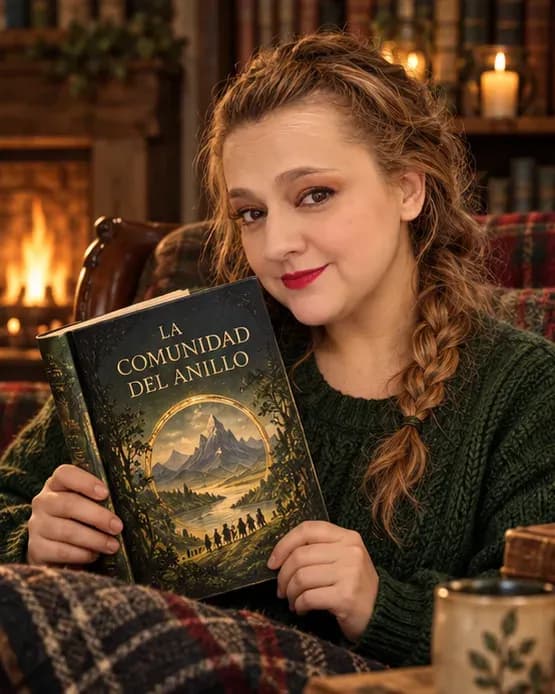
J. R. R. Tolkien
The Fellowship of the Ring
The Fellowship of the Ring by J. R. R. Tolkien: a dangerous mission and far too many people trusting a ring
An epic journey, friendship and a piece of jewelry that should come with a warning label. Here is my spoiler-light review of the first part of The Lord of the Rings. If you only know the films, the book takes longer to walk, talk, sing and tell you the history behind each place. Tolkien is not trying to get you to Mordor by taxi; first he wants you to understand why arriving matters.
October 27, 2026

J. R. R. Tolkien
The Hobbit
The Hobbit by J. R. R. Tolkien: a quiet home, a very rude wizard and one trip that should have come with a risk form
Bilbo Baggins likes comfort, good meals and not being disturbed before dinner. Then Gandalf and a company of dwarves arrive and decide he is exactly the person they need for a dangerous journey. This is my spoiler-light review of Tolkien’s The Hobbit, a classic adventure about courage, greed and the inconvenience of having a life-changing Tuesday.
October 26, 2026

Carlos Ruiz Zafón
The Shadow of the Wind
The Shadow of the Wind by Carlos Ruiz Zafón: you find a book, and the whole city tells you to forget it
Daniel Sempere enters the Cemetery of Forgotten Books and chooses a novel. I have made bad purchases, but none came with a stranger determined to destroy every copy.
October 23, 2026
Want more like this? Join the Readers Club and get one of my books for free.
Share
My books
Books by Yenny Astrid Londoño



About the author
Yenny Astrid Londoño
Yenny Astrid Londoño is a Colombian author and entrepreneur, founder of Anchetas Medellín. She writes about real life with sarcasm, irony and smart humor, turning everyday situations, mistakes and imperfect relationships into stories that readers can laugh at and recognize themselves in.

A free book from me
Get a free book from me
Subscribe and get Sobreviviendo a mis muertos in full as a PDF.
After that, I'll only write when I have something worth telling you.
Also available: Read this review in Spanish →