
Book review
Wild Animal:
Two couples, a luxury development and a robbery. Envy arrived before the police and knew the way very well.
By Yenny Astrid Londoño · October 8, 2026 · 7 min read
Share

The Book
Wild Animal
Psychological thriller and suspense
by Joël Dicker
4 out of 5 stars
Each time he finds fewer reasons to go back home happy.
A neighbor can ruin your mood without doing anything to you at all. All it takes is a house you like better than yours, arriving rested when you've spent a week in hell, and greeting his wife in a way that reminds you how long it's been since your own home greeted each other by asking whether the bill was paid.
That doesn't mean his life is better. It means you've already started comparing it with the part of yours that bothers you most.
In Wild Animal, Sophie and Arpad Braun seem an exceptional couple in the eyes of Greg and Karine. Near Geneva, admiration mixes with discomfort. Greg, a police officer, starts watching Sophie. And the novel opens with a jewelry store robbery that makes us go back over the earlier days.
The glass house doesn't show everything Greg thinks he's seeing
The architecture of this life seems built to be looked at by others. There is beauty, comfort and a couple who know how to be together in an attractive way. From outside, that invites us to complete the story with a generosity we rarely extend to our own lives.
What we don't see, we supply. If they laugh, they understand each other. If they have money, they're calm. If she hugs him, everything works. With three images we've already built a marriage that wouldn't exist that way even in the advertisement.
Dicker uses that fascination to organize Greg and Karine's entry into the Brauns' life. I'm interested in the comparison not being born from enmity. The couple can be pleasant and still produce an enormous discomfort.
Sometimes it is precisely the kindness that complicates the envy. You'd like to detest the person who reminds you of what you feel you're missing, but she insists on pouring you another glass and asking how you are. What a lack of cooperation.
The house is still attractive. The question is how much of what Greg believes he sees actually belongs to the people who live there.

Greg is a police officer, and that makes his way of looking worse
Watching Sophie doesn't become innocent just because it starts with attraction. A man can be dazzled without acquiring any rights over a woman's movements.
Greg's profession adds a responsibility. He knows tools and procedures related to observing, investigating and gathering information. When he carries that disposition over into his desire, curiosity stops looking like harmless interest.
It matters to me not to disguise that behavior as romance. We are not dealing with someone who happens to find many casual chances to see her. There is a decision to look without being seen and to know things she has not offered him.
Desire can use a beautiful vocabulary to explain itself. Conduct is better judged by watching what the man did while the explanation was getting comfortable.
Besides, Greg isn't only observing Sophie. He is comparing himself with Arpad. The desired woman forms part of a male life he also wants to represent. That mix makes the gaze more possessive: it isn't enough for him to come close to her; he also wants to occupy the place from which the other man has her nearby.
Karine deserves more attention than the role of disappointed wife
Karine takes part in the comparison from another place. The encounter with the other couple can touch insecurities about age, attractiveness and the life she feels she has lost.
I'm interested in that perspective, because it would be too simple to turn her into the domestic obstacle between Greg and his fascination. A wife doesn't become boring because the novel decides to light up another woman with more enthusiasm.
Greg's own gaze can distort what's at home. When a person is determined to desire another life, they start using the current one as proof that they have reasons. They no longer look at the person beside them; they search for defects that make their distance seem reasonable.
That doesn't mean Karine is flawless or that the marriage lacks real problems. It means Greg's desire isn't a neutral description of what's happening to them.
The book has more room for conversation when we remember that difference. Two people can be dissatisfied without a third one coming along to prove scientifically that they chose badly. Comparison offers easy explanations, and that's exactly why it's worth reviewing what it leaves out.

Sophie is not obliged to be the fantasy they built around her
Sophie concentrates desire and admiration, but the story gradually shows that her life doesn't fit inside the surface that others contemplate. The secrets change how that image should be read.
That gives back a complexity to her that Greg's fascination tends to take away. He looks at a woman and completes a destiny. She has a past, relationships and decisions that were not arranged to satisfy what he imagines.
I'm interested in reading the title through that tension without reducing it to a single explanation. The wild can appear in desire, in ambition and in the way someone acts once respectable life stops containing everything.
But there's no need to turn Sophie into an incomprehensible creature to accept that she doesn't match the woman Greg believed he had discovered. Sometimes mystery is born simply from having looked at a person with very little willingness to know her.
A seductive image can hide things. It can also make the viewer stop looking for a person and start feeding a fantasy. That second possibility says as much about the one who looks as about the one being looked at.
The robbery brings us back while appearances keep working
Dicker announces the theft and organizes part of the interest around how we get there. The question isn't only what happens in the jewelry store, but how the lives we're getting to know connect with that event.
The temporal mechanism has an advantage: a domestic scene can keep a tension the characters don't yet perceive. We know there is a crime waiting along the route.
It also demands care. The jumps and the postponed information must produce a new understanding, not merely the sense that someone is moving us to another room each time we were about to ask a question.
That's my criterion with Dicker: I enjoy an earlier piece acquiring a different meaning when a fact appears. I'm less convinced by a surprise that depends exclusively on keeping that fact hidden until it becomes impossible to go on without it.
The structure lets us see two marriages as part of a larger mechanism, but their interest shouldn't be exhausted in discovering which character fits under each balaclava. Desire and envy were already doing damage before the robbery arrived.
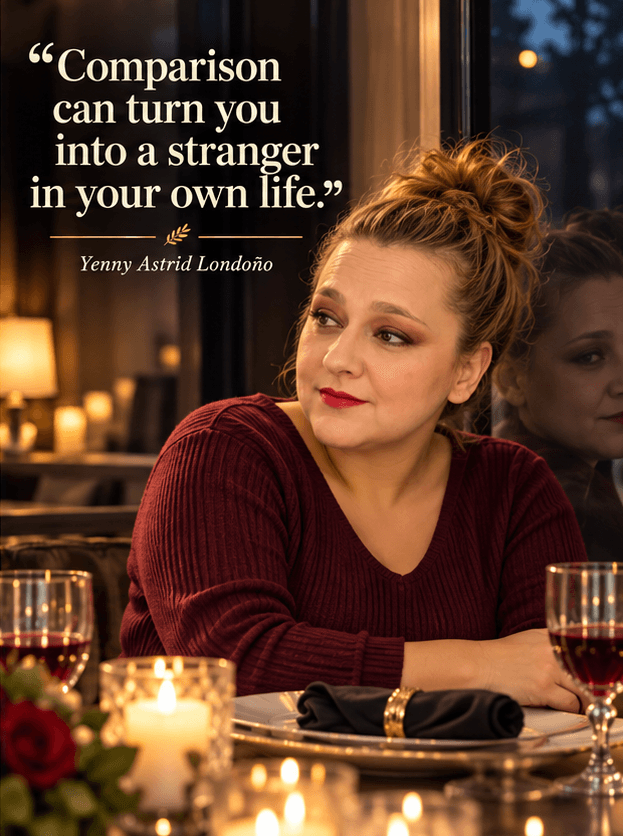
What I didn't like about Wild Animal
Dicker shows you a card, then hides it, then shows you another, and just when you think you've understood he tells you:
“Lies, this was missing.”
It's entertaining.
But there comes a moment when the book stops solving a mystery and starts playing like a child who changes the rules every time he is losing.
I enjoy being deceived.
But do it nicely.
Not by keeping the information in a drawer until you need the twist.
What Greg wants also changes what he can keep
Wild Animal offers a combination of crime and domestic life in which other people's gaze carries great weight. The comparison puts into circulation desires that the characters don't manage as well as their appearances.
Here I keep the robbery's solution to myself. I'd rather stay with the problem the story already sets up between both homes: a person can start by wanting a better life and end up damaging the one they had while they were inventing the other.
My interest lies in that process, in what Greg does with his fascination and in the information that changes the image of Sophie and Arpad. My reservation appears when the machinery of revelations threatens to make the consequences of each decision secondary.
Because the crime will have an explanation. Everyday comparison has a less showy and quite persistent kind of wear.
Greg looks toward his neighbor's house.
Each time he finds fewer reasons to go back home happy.
Frequently asked questions
Is it connected to Harry Quebert?
It's an independent novel. You don't need to know Marcus Goldman or other Dicker stories.
Is it only a novel about a robbery?
The robbery gives the plot its structure, but the relationships between the two couples and what they hide occupy a central place.
Does the review reveal the solution?
No. I comment on the surveillance and the appearances without identifying the robbers or explaining the resolution.
What is Wild Animal about?
In Wild Animal, Sophie and Arpad Braun seem an exceptional couple in the eyes of Greg and Karine. Near Geneva, admiration mixes with discomfort. Greg, a police officer, starts watching Sophie. And the novel opens with a jewelry store robbery that makes us go back over the earlier days.
What didn't I like about Wild Animal?
That postponed information sometimes feels like being moved to another room every time I was about to ask, and that the machinery of revelations can make the consequences of each decision secondary.
The Book
Wild Animal
by Joël Dicker
Get the bookIf you buy through this link, Yenny earns a small commission and you pay the same price.
Keep reading
If you liked it, keep going

Javier Castillo
The Snow Girl
The Snow Girl: Kiera disappears and everyone moves on except her parents
Javier Castillo's The Snow Girl: Kiera vanishes at a New York parade and a tape reopens the case five years later. My honest review, 4 out of 5.
October 22, 2026

John Katzenbach
The Analyst
The Analyst: a birthday threat, fifteen days and a therapist who has lost control
John Katzenbach's The Analyst: a psychoanalyst gets fifteen days to find out who is threatening him. My honest review of this thriller.
October 22, 2026

Juan Gómez-Jurado
The Patient
The Patient: the President on the operating table and a daughter nobody can trade
Juan Gómez-Jurado's The Patient: a neurosurgeon, a President on the table and a kidnapped daughter in sixty-three hours. My honest review.
October 22, 2026
Want more like this? Join the Readers Club and get one of my books for free.
Share
My books
Books by Yenny Astrid Londoño



About the author
Yenny Astrid Londoño
Yenny Astrid Londoño is a Colombian author and entrepreneur, founder of Anchetas Medellín. She writes about real life with sarcasm, irony and smart humor, turning everyday situations, mistakes and imperfect relationships into stories that readers can laugh at and recognize themselves in.

A free book from me
Get a free book from me
Subscribe and get Sobreviviendo a mis muertos in full as a PDF.
After that, I'll only write when I have something worth telling you.
Also available: Read this review in Spanish →