
Book review
Never Lie:
Tricia and Ethan are house-hunting when a storm traps them in a home that belonged to a missing psychiatrist. There are recordings in the office. Tricia listens. Of course she does. A locked house and a drawer full of secrets are not going to investigate themselves.
By Yenny Astrid Londoño · October 6, 2026 · 8 min read
Share
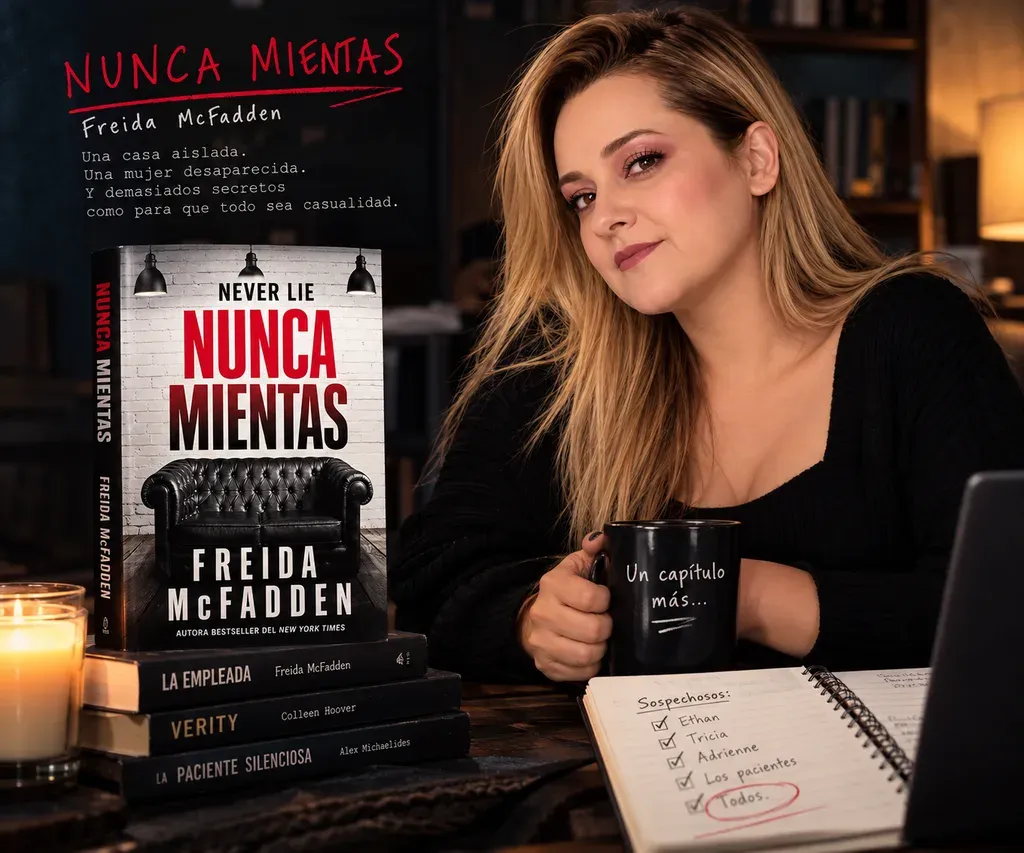
The Book
Never Lie
Psychological thriller
by Freida McFadden
More reviews by Freida McFadden →
3.5 out of 5 stars
It surprised me at first and made me distrust the mechanism afterward.
Tricia and Ethan are looking for a house when a snowstorm leaves them stranded in the isolated home of Dr. Adrienne Hale, a psychiatrist who disappeared years earlier. The house is enormous, the roads are blocked, and Adrienne’s office contains recordings of her sessions with patients. Tricia starts listening. The tapes make a missing psychiatrist less like a name in a file and more like a person whose patients may have had reasons to fear what she knew.
Freida McFadden’s hook is compact and effective: two newlyweds, a storm, a missing doctor, a house full of recordings, and a husband who seems suspicious because every thriller reader has been trained not to trust the man who asks whether you want coffee. The novel invites us to investigate alongside Tricia, and then reminds us that the reader’s confidence is just another thing a good story can manipulate.
The house is isolated, but the secrets are crowded
The storm limits where Tricia and Ethan can go, keeping the action inside a house with too many rooms and too much history. Isolation is a familiar thriller device, but here it serves a practical purpose: Tricia cannot simply leave when she finds something uncomfortable. Each new clue stays in the same building with her, and the weather gives her a reason to keep searching rather than wait for help.
The atmosphere works, though I would not give the house all the credit. Snow, locked doors, and a remote address can make a setting tense; they cannot do the plotting by themselves. What kept me turning pages was the sequence of questions: why did Adrienne disappear, what are the patients saying, and why does each tape make the house feel less like shelter?
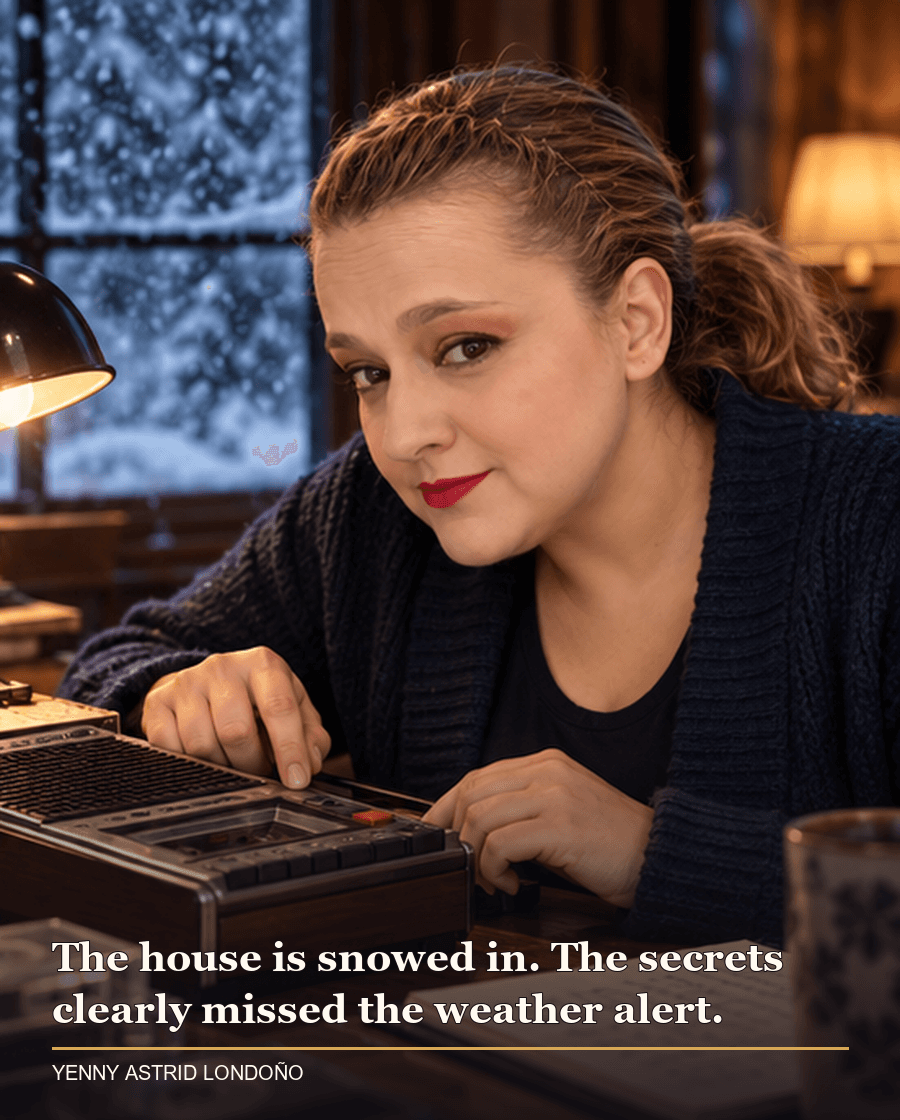
Tricia listens to tapes she has no right to hear
Adrienne recorded sessions with her patients, and those recordings remain in the house. Tricia discovers them and begins listening, despite the obvious privacy problem. Let us acknowledge that this is ethically questionable. Let us also acknowledge that if she found the word “confidential,” put everything back, and made herself a cup of tea, the novel would be six pages long.
The tapes give Tricia a way to investigate without leaving the stormbound house. Each session opens a small window into Adrienne’s work and relationships, but the recordings are partial. A patient’s story is still one person’s version of events. A confession may be honest, strategic, or both. Tricia hears fragments and tries to assemble a life from them, which means she—and we—can make a convincing theory out of very incomplete information.
““Confidential” is a warning. It is also, apparently, not strong enough to stop a thriller protagonist.” — Yenny Astrid Londoño
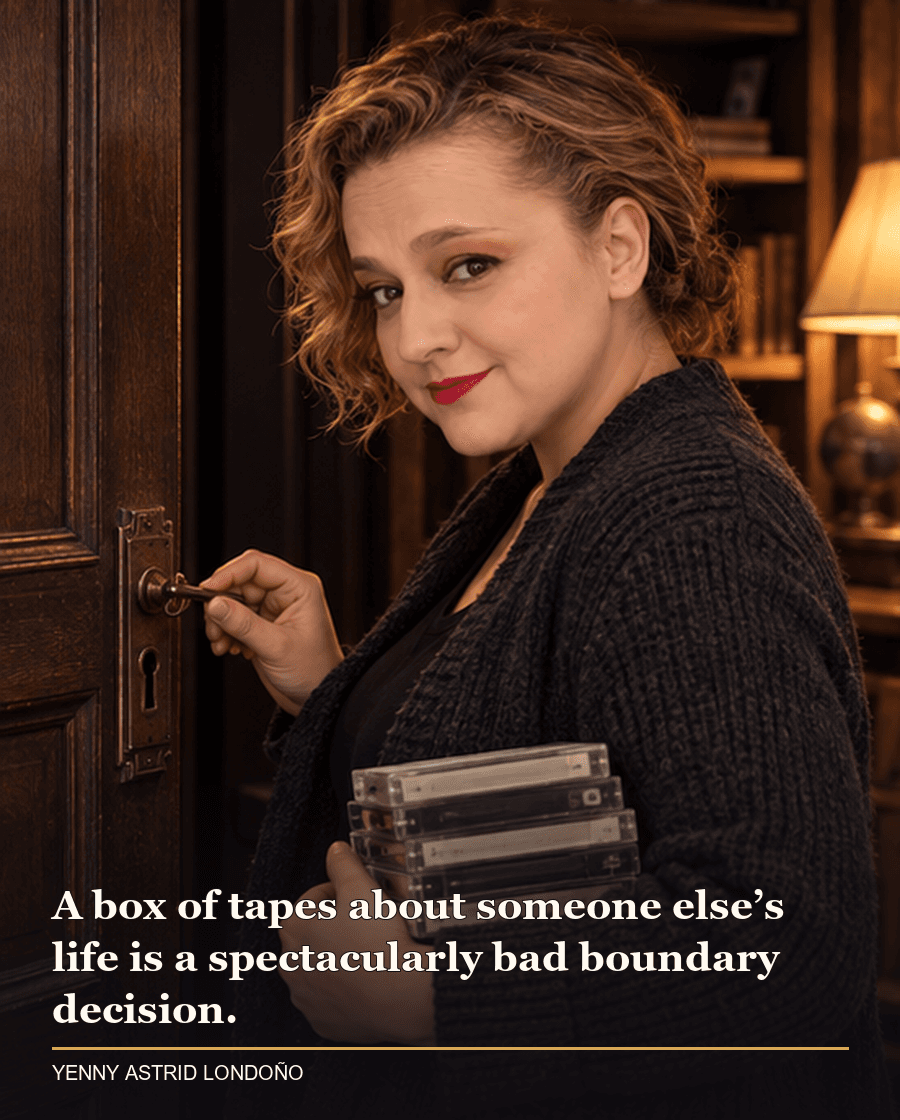
Adrienne becomes more than the missing psychiatrist
At first, Adrienne is the absent woman whose house Tricia and Ethan have entered. The recordings change that. We learn about her patients, the things they told her, and the relationships built inside the consultation room. As those stories accumulate, the question changes from “Where is Adrienne?” to “What did she know?” and then to “Who needed her not to tell anyone?”
I liked that shift. The disappearance becomes connected to a circle of people rather than a single mysterious exit. Adrienne’s profession means she collected information many people may have wanted kept private. The book is not a guide to ethical psychiatry—please do not cite it at a licensing board—but as a character, Adrienne becomes more interesting through the traces she left behind.
Tricia’s curiosity makes us accomplices
The novel places the reader inside Tricia’s curiosity. We know the tapes are private, and we keep listening because we want the next clue. That complicity is part of the fun. We condemn the violation in principle and then turn the page to see what the patient said. Very mature of us.
McFadden understands how to pace those discoveries. A recording reveals enough to change our suspect list and leaves enough unresolved to make the next one tempting. I formed theories, crossed people off, then put them back on the list. Naturally I was wrong more than once. The book knows thriller readers enjoy playing detective, especially when we have no authority, no evidence training, and a snack within reach.
Ethan is a husband, and the genre has made us suspicious
Ethan begins as Tricia’s newlywed husband, but the story gives us reasons to watch him. His calmness, questions, and silences can be read as ordinary behavior or as signs that something is off. Tricia is our point of view, so we share her growing unease. The book benefits from the reader’s prior experience with domestic thrillers: we have already learned not to trust the husband who looks too composed in a house with a secret.
That suspicion is effective because McFadden knows what readers expect. It is also where the novel risks leaning on genre reflex instead of evidence. We are encouraged to treat the ordinary as suspicious because we have been trained by earlier books. I enjoyed the game, but I also wanted to keep separating “this feels like a clue” from “this actually proves something.”
“A storm can trap two people in a house. Curiosity makes sure neither of them sleeps.” — Yenny Astrid Londoño
The book’s questionable therapy details are part of the setup
Some of Adrienne’s professional boundaries and decisions are more useful to the mystery than they are convincing as a model of psychiatric practice. The recordings themselves raise a serious privacy question, and the story uses therapy sessions as a convenient storehouse of secrets. I noticed that, especially after reading other thrillers that treat a consultation room like an unlocked confessional booth.
It bothered me less here because I was reading Adrienne as a character, not as an example of how a psychiatrist should work. Still, it is worth saying clearly: the book’s treatment of professional ethics is designed to serve suspense. If you want a realistic account of clinical practice, this is not your training manual. If you want a thriller in which every recorded conversation could contain a motive, the device does its job.
What I liked, and where the final turns have to work hard
The recordings are the strongest device because they make the reader participate in the investigation. The snowbound setting adds pressure, and the short, well-timed disclosures keep one answer from cooling before the next question arrives. McFadden has a commercial sense of pace that is not merely “short chapters.” She knows when to stop a scene before the reader has enough.
The final twists are less satisfying than the build for me. A few developments depend on withheld information and on the reader trusting the structure until it is ready to reveal what it has been saving. The house contributes atmosphere, but the story’s best work comes from the tapes and the way they keep changing who seems dangerous. I wanted more of that careful accumulation and a little less of the final sprint toward surprise.
Is Never Lie worth reading?
Yes, if you enjoy snowbound psychological thrillers, recorded confessions, and a narrator who keeps searching even when the sensible thing would be to wait for the roads to clear. It is a fast read built around a strong investigative device, with enough uncertainty to make the reader keep revising their theory.
If you need strict realism in the therapy details or prefer a mystery where every clue is fully available before the reveal, you may find parts of the book convenient. I enjoyed the tapes, Adrienne’s gradually expanding presence, and the way the story turns curiosity into a shared bad decision. Read it for the questions, not as a guide to patient confidentiality.
“The more people explain a missing woman, the more I want to know who needed her to stay missing.” — Yenny Astrid Londoño
My verdict: the storm keeps them inside; the tapes keep us listening
Never Lie is an entertaining, tightly contained thriller with an effective setup: Tricia, Ethan, a snowstorm, a missing psychiatrist, and recordings that expose pieces of Adrienne’s life. The house supplies the pressure, but the tapes give the novel its engine. Each new voice adds information and makes the reader wonder whether a confession is a clue or another performance.
I liked the pace and the way Tricia’s curiosity pulls us into the investigation. The therapy ethics are highly convenient, and the ending’s turns are not all as strong as the build. Even so, the novel delivers a satisfying snowbound mystery. I would not recommend playing private patient recordings in real life. In fiction, apparently, I am willing to spend the whole night listening.
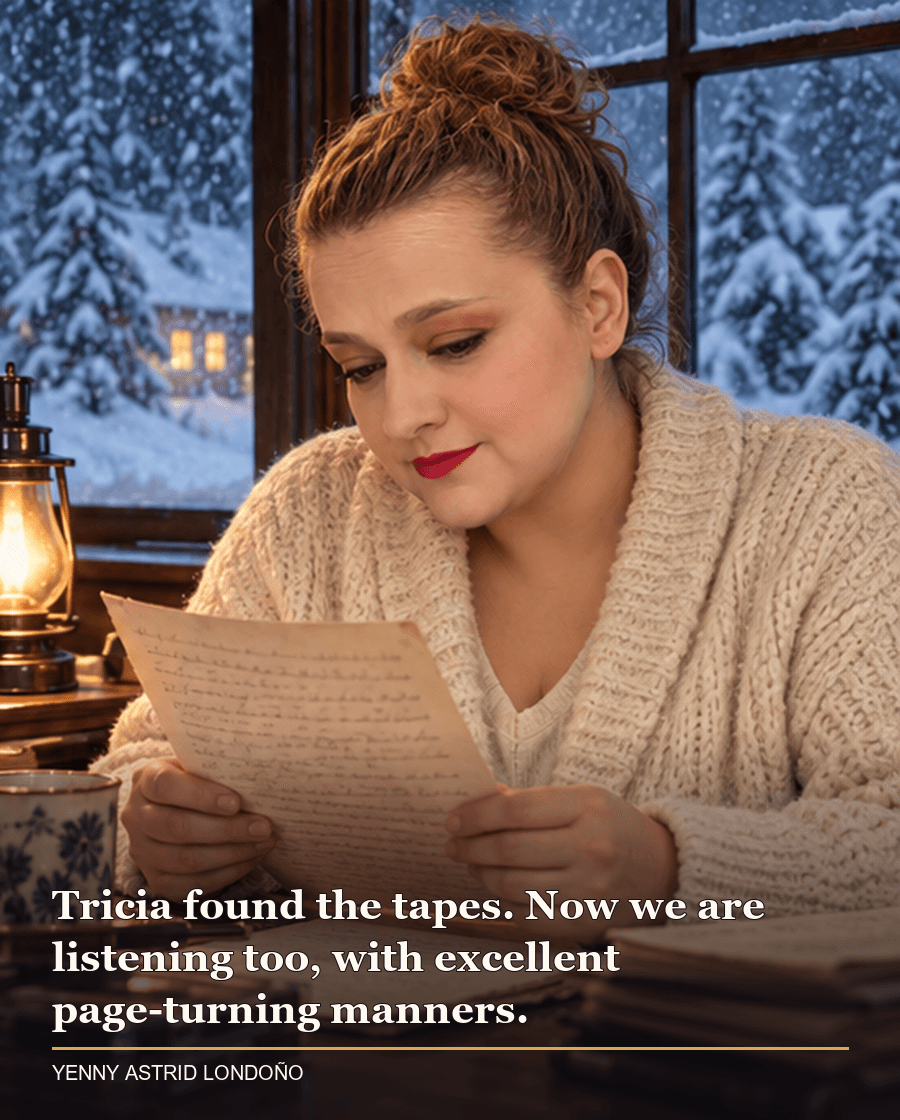
Frequently asked questions
What is Never Lie by Freida McFadden about?
Newlyweds Tricia and Ethan get trapped by a snowstorm in a house once owned by missing psychiatrist Adrienne Hale. Tricia finds recordings of Adrienne’s patient sessions and listens for clues about the disappearance.
Is Never Lie a standalone novel?
Yes. It is a standalone psychological thriller and does not require reading another Freida McFadden book first.
Who is Adrienne Hale in Never Lie?
Adrienne is a psychiatrist who disappeared before Tricia and Ethan arrive at her former home. The recordings she left behind reveal pieces of her patients’ lives and the secrets connected to her disappearance.
Is Never Lie set during a snowstorm?
Yes. A storm blocks Tricia and Ethan from leaving the isolated house, creating the confined setting where Tricia finds and listens to the recordings.
Does this review reveal the ending?
Yes. It discusses Adrienne’s disappearance, the patient recordings, Tricia and Ethan’s suspicions, and the final explanation.
What did Yenny think of Never Lie?
I enjoyed the recordings as an investigative device and the snowbound atmosphere. The treatment of therapy ethics is convenient, and some final turns are weaker than the buildup, but it remains a fast, entertaining mystery.
The Book
Never Lie
by Freida McFadden
Get the bookIf you buy through this link, Yenny earns a small commission and you pay the same price.
Keep reading
If you liked it, keep going

Javier Castillo
The Snow Girl
The Snow Girl: Kiera disappears and everyone moves on except her parents
Javier Castillo's The Snow Girl: Kiera vanishes at a New York parade and a tape reopens the case five years later. My honest review, 4 out of 5.
October 22, 2026
John Katzenbach
The Analyst
The Analyst: a birthday threat, fifteen days and a therapist who has lost control
John Katzenbach's The Analyst: a psychoanalyst gets fifteen days to find out who is threatening him. My honest review of this thriller.
October 22, 2026
Juan Gómez-Jurado
The Patient
The Patient: the President on the operating table and a daughter nobody can trade
Juan Gómez-Jurado's The Patient: a neurosurgeon, a President on the table and a kidnapped daughter in sixty-three hours. My honest review.
October 22, 2026
Want more like this? Join the Readers Club and get one of my books for free.
Share
My books
Books by Yenny Astrid Londoño



About the author
Yenny Astrid Londoño
Yenny Astrid Londoño is a Colombian author and entrepreneur, founder of Anchetas Medellín. She writes about real life with sarcasm, irony and smart humor, turning everyday situations, mistakes and imperfect relationships into stories that readers can laugh at and recognize themselves in.

A free book from me
Get a free book from me
Subscribe and get Sobreviviendo a mis muertos in full as a PDF.
After that, I'll only write when I have something worth telling you.
Also available: Read this review in Spanish →