
Book review
The Housemaid:
Millie needs work and the Winchesters need help. Their immaculate home comes with a locked attic room, a volatile employer, and a husband who seems far too reasonable. You know how that goes.
By Yenny Astrid Londoño · October 6, 2026 · 8 min read
Share
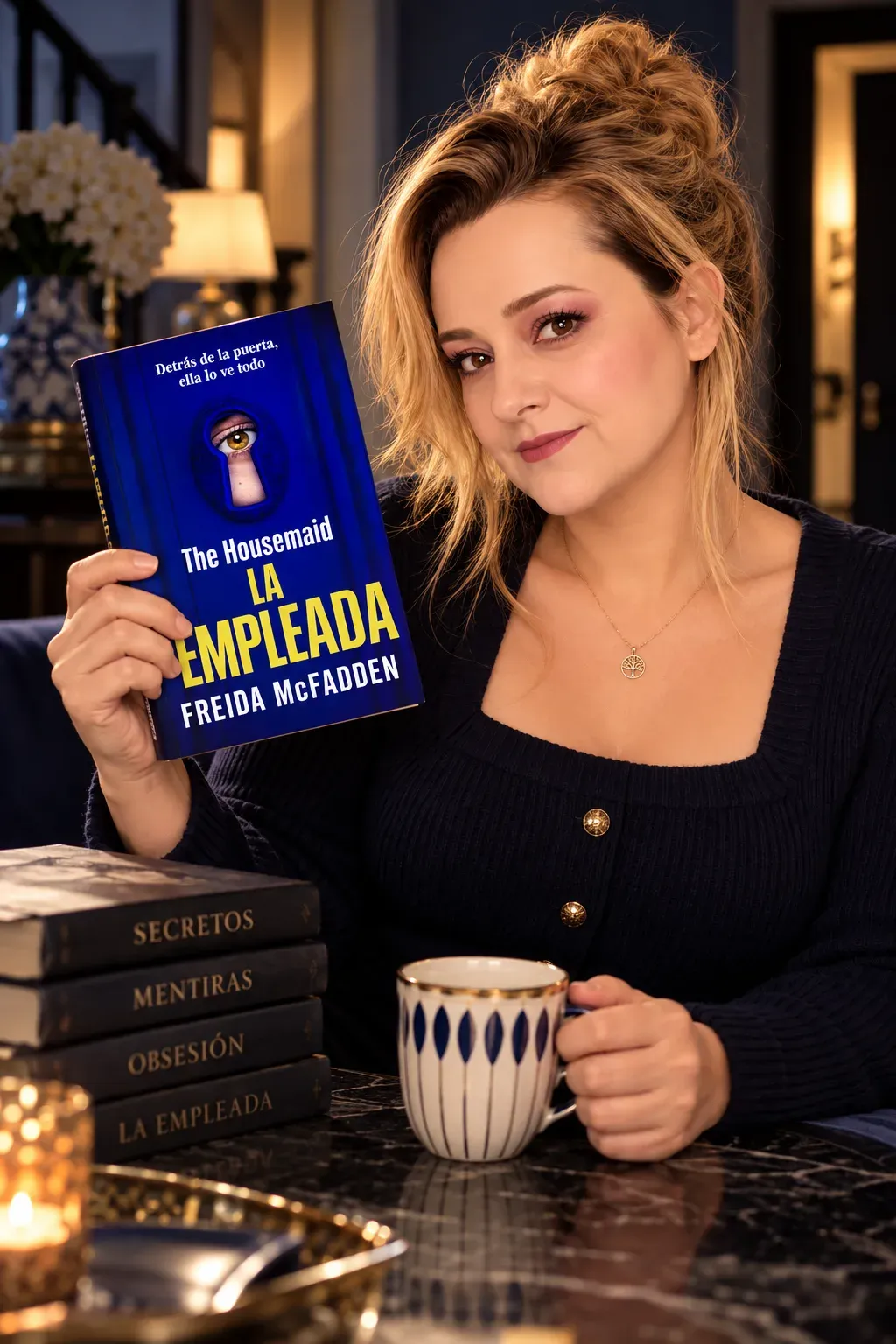
The Book
The Housemaid
Domestic thriller
by Freida McFadden
More reviews by Freida McFadden →
4.5 out of 5 stars
But the book has one problem: it hooks you.
Millie Calloway needs a job and a place to stay. Nina Winchester offers her both: work as a housemaid in a wealthy family’s home and a room in the attic. Nina is volatile, unpredictable, and seemingly impossible to please; Andrew, her husband, appears patient and kind. Their daughter Cecelia watches the adults with the careful silence of a child who has learned that a house can change temperature without warning.
The arrangement looks simple enough until the attic room’s lock makes it clear that privacy is not a standard feature. Freida McFadden’s thriller knows how to make domestic details carry threat: a bedroom, a dinner, a smile that seems generous until you notice who has to earn it. The book moves fast, but its hook works because every person in the house may be telling a story that benefits them.
Millie has a job offer and a room in the attic
Millie is not choosing between several comfortable careers. She has a difficult past, limited options, and a real need to keep working. That matters. She does not walk into the Winchester house because she is fascinated by rich people’s problems; she accepts the job because she needs the money and the room. When circumstances are tight, a warning sign can look like something you will deal with after payday.
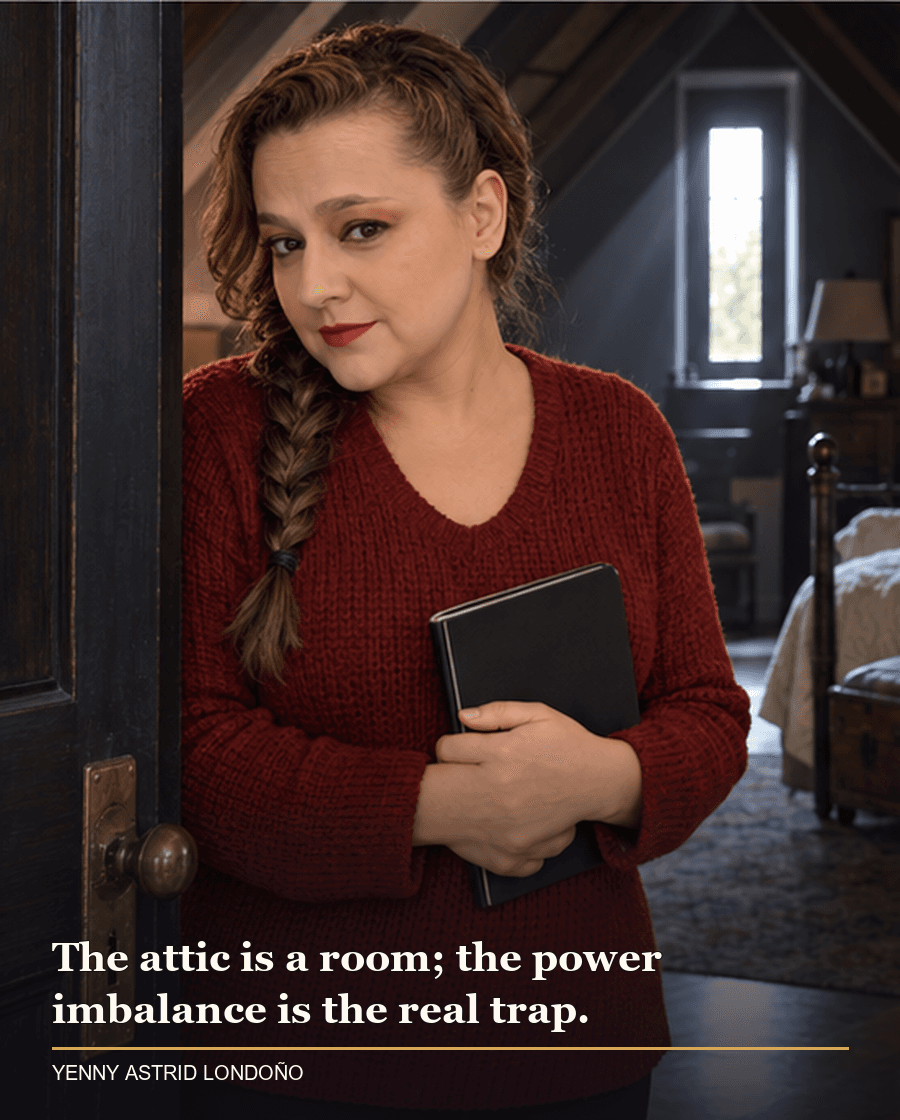
The attic bedroom is the first detail that refuses to behave like a normal bedroom. Its door locks from the outside. Nina explains it away, but the image stays with you. A room can be small and still feel like a message: someone else gets to decide when you leave. Millie is observant, but she is also trying to survive the arrangement long enough to keep it. I understood the calculation even while thinking, “Girl, please do not ignore the door with the external lock.”
Nina’s behavior makes her the easiest person to blame
Nina changes moods, makes unreasonable demands, and can turn an ordinary task into a test Millie did not know she was taking. From Millie’s point of view, Nina appears chaotic and cruel. Andrew, by contrast, offers the calm voice and sympathetic expression of a man who seems to be managing a difficult wife. The household hands us a ready-made explanation: Nina is the problem, Andrew is the victim, and Millie is caught in the middle.
That is precisely why I wanted to question the arrangement. Who tells the story? Who gets to remain composed while someone else is being called unstable? Nina can be difficult without making Andrew trustworthy by default. A woman’s behavior is not a complete diagnosis of a marriage, especially when the person describing her has a lot to gain from being believed.
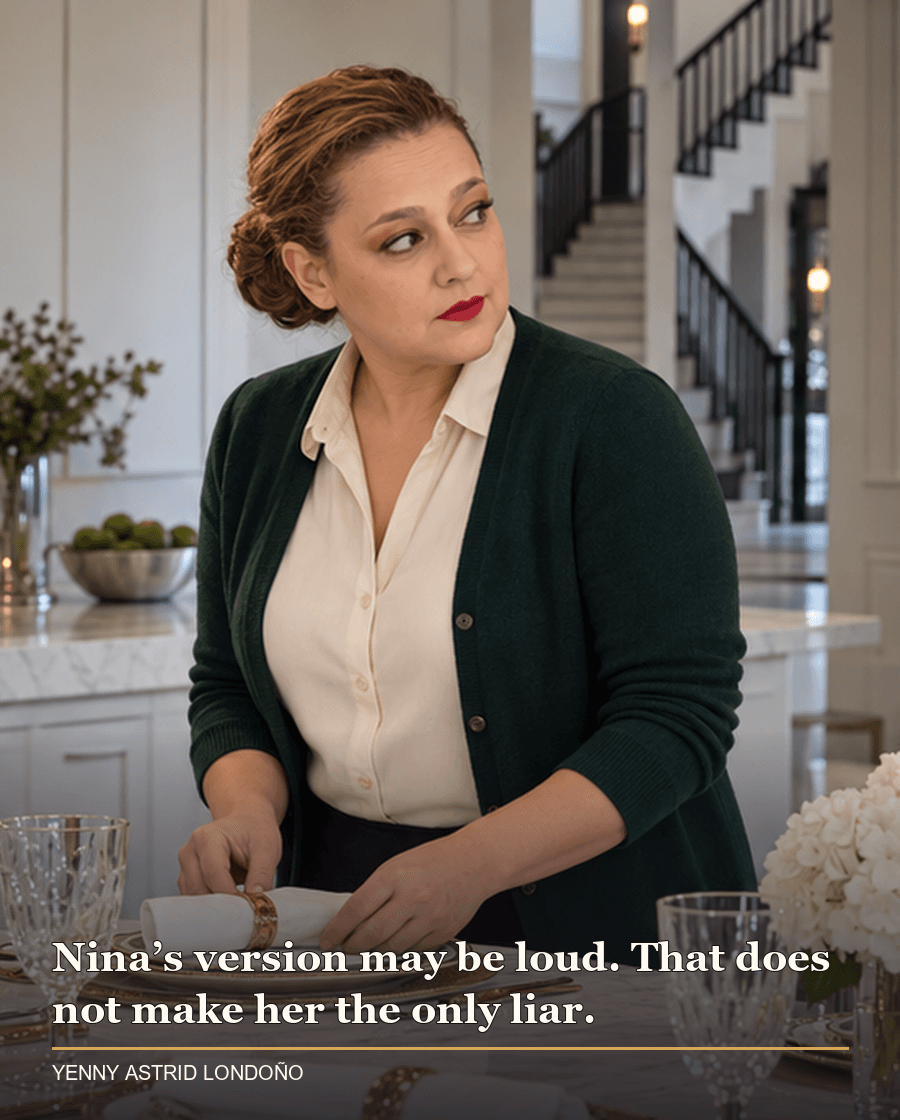
“A spotless kitchen is not proof of a healthy family. Sometimes it is only proof that somebody has time to clean up the evidence.” — Yenny Astrid Londoño
Millie’s own history complicates the job
Millie has been in prison and knows what it feels like to be judged before anyone asks what happened. She is resourceful and capable of making choices that are not clean or comfortable. The story does not treat her as a blank, innocent observer who has wandered into a mystery. She brings her own survival instincts, secrets, and moral compromises into the house.
That gives her more agency than a standard “maid sees something strange” setup. Millie is not only collecting clues; she is weighing what she can risk. The job gives her a place to sleep and a chance at a better future, while the family offers a mess she cannot resolve without exposing parts of herself. I like a protagonist who has to calculate consequences instead of calling the police and waiting in a tasteful chair for the plot to end.
The perfect husband may be part of the performance
Andrew’s kindness is presented as a relief from Nina’s behavior. He notices Millie, speaks gently, and appears to give her the stable adult interaction Nina refuses to offer. But that contrast deserves suspicion. In domestic thrillers, “the nice husband” can be a character description or a public-relations strategy. We should not confuse a soft voice with a clean record.
The novel lets Millie—and the reader—respond to Andrew’s version of events before we know what he has left out. That tension is effective because the power in the house is not evenly distributed. The Winchesters own the property, pay Millie, and control the story told to the outside world. A worker who lives in the attic is not in the same position as the family hiring her. Every “helpful” gesture sits inside that imbalance.
Cecelia notices more than the adults want to explain
Cecelia is surrounded by adults who present different versions of her parents. Children often learn the rules of a household by noticing what cannot be said aloud. Her behavior and silences add another layer to the story: the adults may be busy arguing about who is unreasonable, but the child has been watching the consequences.
I appreciated that the family’s tension does not stay contained between Millie, Nina, and Andrew. A child’s safety changes the stakes. The house is not just a workplace where Millie can decide to quit if things get unpleasant. People in that home depend on one another, and some of them have far less power to leave than the person reading the book.
“The attic bedroom has a lock. The question is who thinks that should make you feel safer.” — Yenny Astrid Londoño
The twists work because the house keeps changing sides
The first half sets up an obvious explanation, then makes us question the person who seemed easiest to blame. As Millie learns more about the Winchesters, earlier scenes take on different meanings. The attic, the marriage, Nina’s behavior, and Andrew’s patience stop looking like separate details and start revealing the structure of the household.
McFadden’s pace is the book’s greatest weapon. Chapters end on a new question, and the answers often create two more. I did guess some of the direction before the reveal, and a couple of turns lean on the kind of dramatic decision that makes you say, “You had all afternoon to think about this and still chose the worst option.” But the reversals are tied to character power and control, so the surprises have more to them than a random final-page stunt.

What I liked, and what I wanted the book to handle more carefully
I liked Millie’s resourcefulness, the confined setting, and the way the story rearranges our assumptions about the people in the house. The contrast between the immaculate home and the ugliness happening inside it is simple but effective. The book also understands that money and employment shape what a person can say out loud. Millie cannot behave as if the job is disposable when it pays for shelter.
At times, the plotting pushes people into silence or danger because a direct conversation would shorten the book. The pace is entertaining, but some developments are more melodramatic than psychologically convincing. I also wanted a little more room for the consequences of the violence and control the story depicts. A twist can be satisfying and still leave the emotional cleanup in a corner.
The title character is not simply a witness
Millie’s position as the housemaid changes what she can observe and what she can risk. She sees the family’s routines from the inside, but she is also being paid by the people whose behavior she is evaluating. She cannot pretend that employment is neutral. A worker living in a wealthy employer’s home has access to private spaces and very little control over the story that will be told if something goes wrong.
That tension gives the book a sharper edge than the title might suggest. Millie is not a camera with a uniform. She has her own past, needs, and decisions, and she can be both resourceful and morally complicated. The novel is most interesting when it lets those facts coexist instead of asking the reader to choose between “innocent” and “dangerous” as if people came with two neat checkboxes.
“A woman can look unstable and still be the only person in the house telling the truth.” — Yenny Astrid Londoño
My verdict: the house is beautiful, and the power inside it is not
The Housemaid is an entertaining domestic thriller whose most effective trick is making the reader decide which woman is the problem before the evidence is complete. Millie’s practical vulnerability, Nina’s volatile reputation, Andrew’s polished kindness, and the locked attic room all feed that question. The twists are not only about who knows what; they are about who has the authority to make their version sound believable.
I enjoyed the pacing, the setting, and Millie’s refusal to be a passive observer. The book sometimes depends on contrivance and goes bigger than it needs to, but it delivers the fast, messy suspense it promises. The cleanest room in the house may still be the one where the truth is being hidden. I would read it with the door open—and the people hiring me under observation.
Frequently asked questions
What is The Housemaid by Freida McFadden about?
Millie takes a live-in housekeeping job with the wealthy Winchester family. Nina’s unpredictable behavior, Andrew’s apparent kindness, and Millie’s locked attic room make the household increasingly unsettling.
Is The Housemaid a psychological thriller or a domestic thriller?
It is usually described as a domestic thriller, with psychological-suspense elements. Its central tension comes from secrets inside a home and the unequal power between the family and the employee who lives with them.
Is Millie an unreliable narrator?
Millie has a complicated past and does not reveal everything immediately, but the novel’s uncertainty also comes from the competing stories told by Nina and Andrew. The reader has to question who controls the version of events.
Is The Housemaid part of a series?
Yes. It begins Millie Calloway’s series. The later books continue her story, so reading them in order gives more context to her relationships and decisions.
Does this review reveal the ending of The Housemaid?
Yes. It discusses Millie’s past, the attic room, the Winchesters’ marriage, Andrew’s abuse, and the major reversals.
What did Yenny think of The Housemaid?
I found it fast and entertaining, with an effective setting and a protagonist who has to work within real financial limits. Some twists are melodramatic and a few silences stretch the plot, but the story delivers the domestic suspense it promises.
The Book
The Housemaid
by Freida McFadden
Get the bookIf you buy through this link, Yenny earns a small commission and you pay the same price.
Keep reading
If you liked it, keep going

Javier Castillo
The Snow Girl
The Snow Girl: Kiera disappears and everyone moves on except her parents
Javier Castillo's The Snow Girl: Kiera vanishes at a New York parade and a tape reopens the case five years later. My honest review, 4 out of 5.
October 22, 2026

John Katzenbach
The Analyst
The Analyst: a birthday threat, fifteen days and a therapist who has lost control
John Katzenbach's The Analyst: a psychoanalyst gets fifteen days to find out who is threatening him. My honest review of this thriller.
October 22, 2026
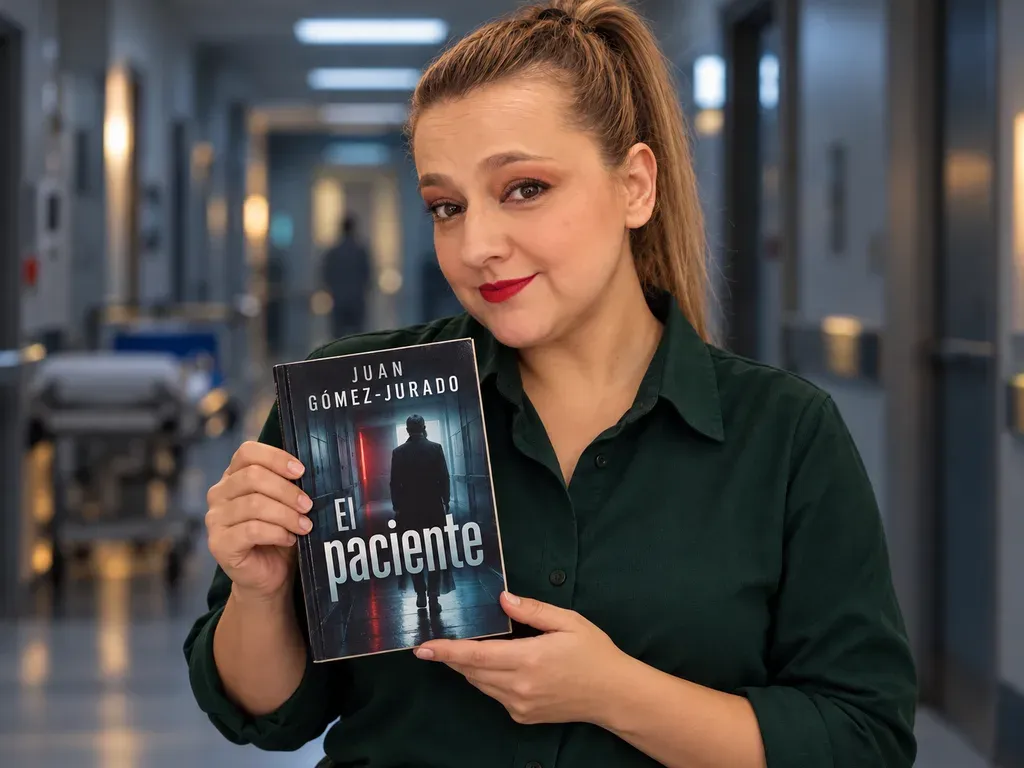
Juan Gómez-Jurado
The Patient
The Patient: the President on the operating table and a daughter nobody can trade
Juan Gómez-Jurado's The Patient: a neurosurgeon, a President on the table and a kidnapped daughter in sixty-three hours. My honest review.
October 22, 2026
Want more like this? Join the Readers Club and get one of my books for free.
Share
My books
Books by Yenny Astrid Londoño



About the author
Yenny Astrid Londoño
Yenny Astrid Londoño is a Colombian author and entrepreneur, founder of Anchetas Medellín. She writes about real life with sarcasm, irony and smart humor, turning everyday situations, mistakes and imperfect relationships into stories that readers can laugh at and recognize themselves in.

A free book from me
Get a free book from me
Subscribe and get Sobreviviendo a mis muertos in full as a PDF.
After that, I'll only write when I have something worth telling you.
Also available: Read this review in Spanish →