
Book review
Hell:
Carmen Mola's Hell: an uprising in Madrid, a love story inside the violence and a trip to Cuba where the paradise has too much blood. Review, 4 out of 5.
By Yenny Astrid Londoño · October 21, 2026 · 7 min read
Share
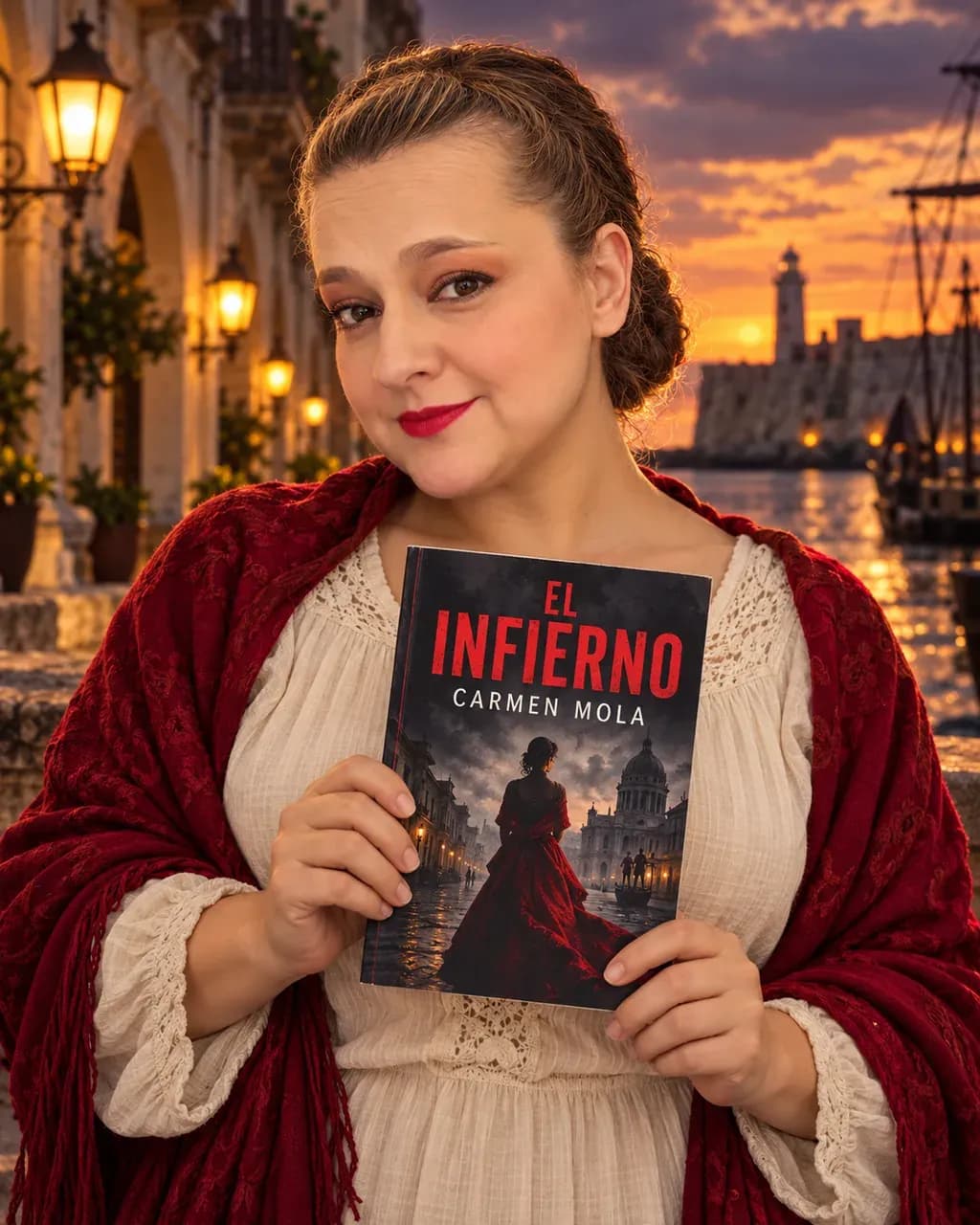
The Book
Hell
Noir fiction
by Carmen Mola
4 out of 5 stars
The setting between Madrid and Cuba, the crossing between politics and private life, and the pace sustain the reading very well.
Madrid wakes up to a revolution at the window
In Hell, politics stops being café conversation and arrives as gunshots, bodies, and people trying to guess which side might keep them alive. The uprising against Queen Isabella II changes what the characters can do and what it costs them. Big historical events do not stay inside textbooks once they start entering homes with weapons.
Carmen Mola does not use the conflict as a pretty date on a page. Political violence changes the direction of the story and leaves people making choices under pressure instead of composing a manifesto in peace. Most of us have principles right up until someone puts a gun on the table. Then we find out whether the table is even stable.
Leonor and Mauro do not get a peaceful love story
Leonor and Mauro give the novel an emotional center, but not the soft-focus kind of romance where the world politely waits while two people sort out their feelings. They meet inside violence, and the circumstances give them little room to decide what they want without considering the danger around them.
I like that love does not erase the period or turn every sacrifice into a beautiful scene. Affection can be shelter; it can also be a vulnerability someone else knows how to use. When a thriller mixes romance with danger, the couple should change each other’s choices, not just chase each other across several locations. This book tries to make their bond carry consequences.
From Madrid to Cuba, a change of scenery does not fix the story
The journey to Cuba widens the novel’s world and changes the scale of the conflict. Madrid is marked by political upheaval; Cuba is marked by colonial power and slavery. The title becomes more than a metaphor when we have to ask what kind of paradise is built on the stolen freedom of other people.
I appreciate that the ocean does not function like an eraser. The characters arrive somewhere new, but power relations travel with them. Sometimes the uniform changes, or the language of the person in charge, or the name on the property. Injustice adapts to whatever is profitable with the flexibility most of us would like to have when changing jobs.
Slavery cannot be picturesque background
The novel deals with a subject that must not become exotic scenery. Slavery shapes the economic and social order of the Cuba it depicts: who can move, who is treated as property, and who benefits when cruelty is presented as normal. If the romance and the intrigue take the foreground, that system remains in the room, determining who has freedom and who does not.
This gives the story a weight beyond the relationship between its protagonists. Private love cannot be a little island where everyone else’s suffering disappears. A novel can follow Leonor and Mauro without pretending the people around them are not paying the bill. Affection is not an exemption from looking at the world that makes a person’s choices possible.

A historical thriller that refuses to stay in one genre
Hell moves between historical thriller, political violence, adventure, romance, and twists. The mix can be fun when each part gives the others a reason to exist: the uprising creates danger, the relationship creates emotional stakes, and the trip to Cuba opens a different set of conflicts.
The risk is overload. When every door brings another conspiracy, passion, crime, or revelation, I start wondering if any character can have a glass of water without that becoming a prelude to tragedy. Mola turns up the volume; readers who know her work will recognize that she is not here to ask permission. The question is whether all that intensity gives the story more depth or sometimes crowds out the time it needs to feel what has happened.
The pace runs fast; the emotional aftermath sometimes needs more room
The book has momentum. Scenes often end with a reason to continue, and a change of place renews the conflict before I can get too comfortable. It is a strong choice for that “just one more chapter” feeling, the phrase people say at two in the morning as if tomorrow were a rumor.
The speed can also work against emotional aftermath. Some consequences need more than a page before the next threat arrives. I wanted to stay with certain characters for a little longer—not for a repeated explanation, but because surviving an event is not the same as having processed it. Violence leaves more than bodies; the people who remain still have to carry it.
What I did not like
The scale of the material is ambitious, but the Madrid and Havana sections do not always move with the same pulse. The dramatic turns can pile up until brutality risks becoming scenery, especially in a novel that touches slavery and war. I would have welcomed more quiet space for some characters to absorb what happened instead of being hurried toward the next catastrophe.
I rate Hell 4 out of 5 stars. The historical setting, the collision between politics and private life, and the pace kept me reading and gave me plenty to argue about. I take off a point for the accumulation of dramatic blows and moments when speed does not let characters process what they have lived through. The volume could come down a little without losing the storm.
Should I read The Beast first?
No. Hell takes place a few years after The Beast and shares a broad historical backdrop, but the central story stands on its own. Reading both can add context and let you notice connections, but you do not need homework before opening this one.
I recommend it to readers looking for a historical thriller with romance, political upheaval, and a journey into colonial Cuba. I would not sell it as a conventional romance or a gentle portrait of its era. That would be like offering someone a hammock in the middle of a storm. Expect violence, power, and characters trying to make choices inside a world that has already narrowed their options.
Leonor escapes one hell and finds another
The novel works best when the movement from Madrid to Cuba changes more than the scenery. Leonor’s escape carries her toward a different kind of danger, and the book asks how people search for freedom while living among systems built to deny it. Love can matter deeply in that story. It cannot make the surrounding history disappear.
Frequently asked questions
A military uprising against Isabella II throws Madrid into violence and changes the lives of Leonor and Mauro. The story later moves to Cuba and confronts colonial slavery alongside its historical thriller and romance plot.
No. Hell is a standalone historical novel by Carmen Mola, outside the Elena Blanco crime series.
No. The novels share a nearby historical context, but Hell has its own central story and can be read independently.
It includes an important love story, but it also blends historical thriller, political violence, and adventure. It is not a conventional romance.
The story moves primarily between Madrid and Cuba, in settings shaped by political upheaval, colonial power, and slavery.
Yes. It includes murder, political violence, and the realities of slavery. Readers who avoid these subjects should keep that in mind.
Frequently asked questions
What is Hell by Carmen Mola about?
The novel begins with a military uprising against Isabella II in Madrid and follows characters whose lives are marked by the violence. Later the story moves to Cuba and also addresses the system of colonial slavery.
Do I need to read The Beast first?
No. Hell has its own plot and can be read on its own.
Is it a romance novel?
It includes an important love story, but it is mixed with historical thriller, political violence and adventure. It is not a conventional romance.
Where does it take place?
The plot moves mainly between Madrid and Cuba, in two settings marked by violence and power relations.
Is it a very violent read?
Yes. It includes murders, political conflict and references to slavery. If you prefer to avoid harsh scenes, keep that in mind.
Does Hell belong to Elena Blanco's series?
No. It is a standalone historical thriller by Carmen Mola, set between Madrid and Havana in the nineteenth century.
The Book
Hell
by Carmen Mola
Get the bookIf you buy through this link, Yenny earns a small commission and you pay the same price.
Keep reading
If you liked it, keep going
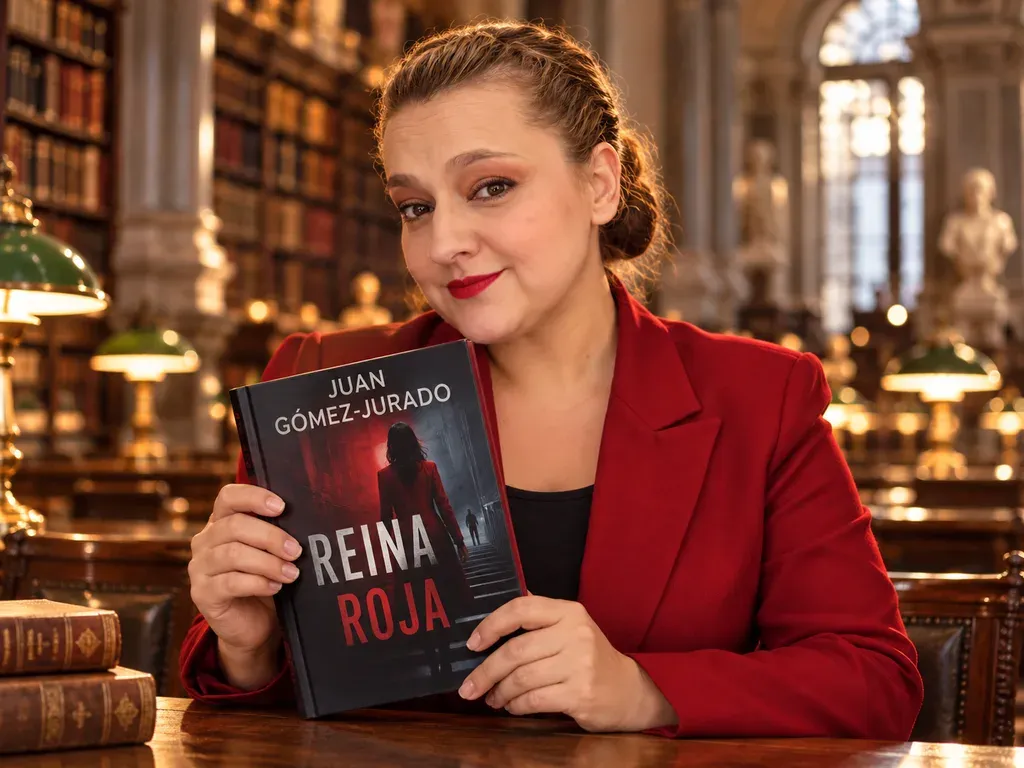
Juan Gómez-Jurado
Red Queen
Red Queen by Juan Gómez-Jurado: Antonia Scott sees everything except a reason to leave her apartment
Antonia Scott has no badge, no official job and an intelligence powerful enough to make a room uncomfortable. Jon Gutiérrez arrives at the wrong door and gets pulled into a case involving wealth, power and people who believe money can buy silence. It can buy quite a lot. It cannot always buy good judgment.
October 26, 2026
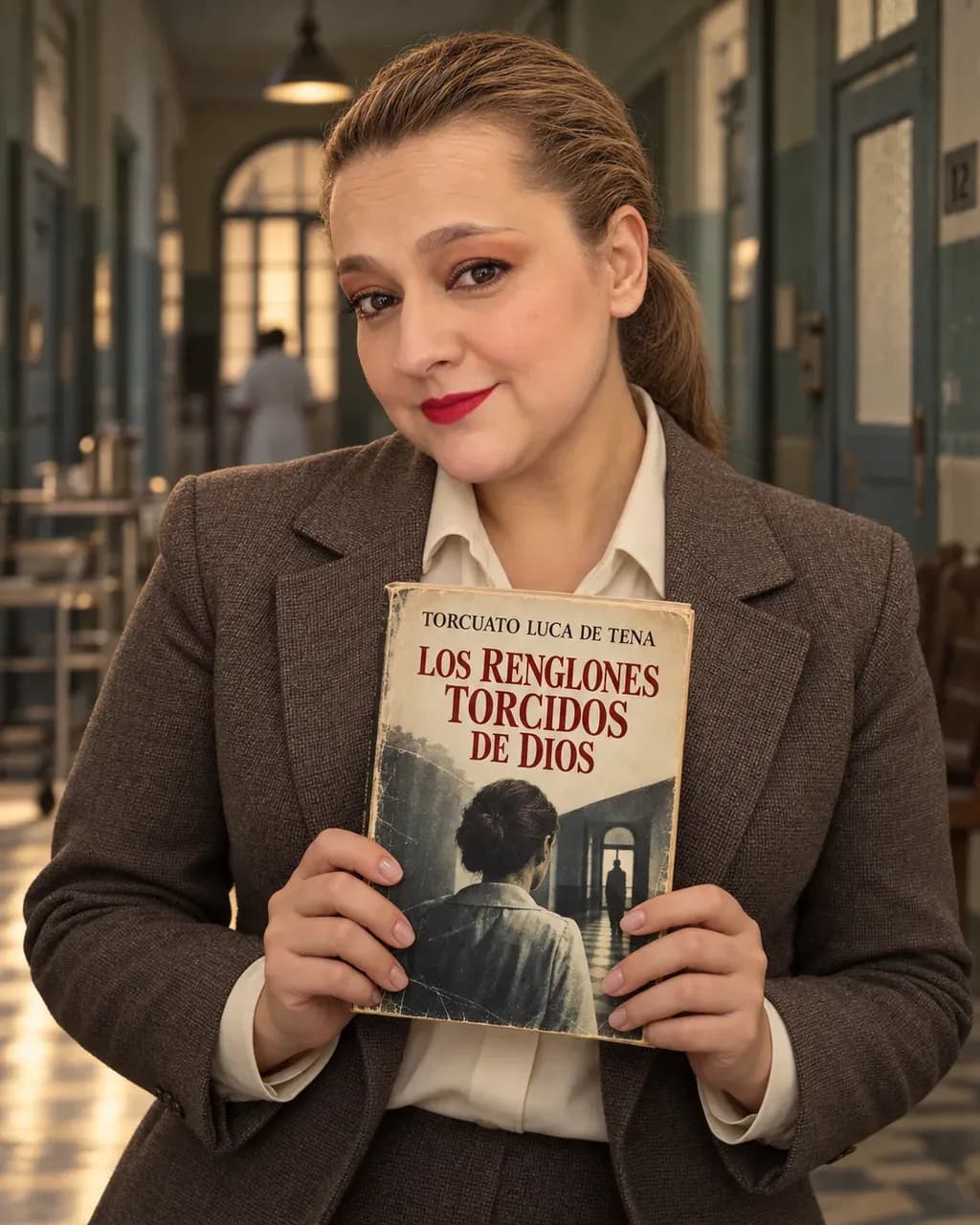
Torcuato Luca de Tena
God's Crooked Lines
God's Crooked Lines by Torcuato Luca de Tena: who gets to decide who is sane?
Alice Gould enters a psychiatric institution with a story of her own. The hospital has another version. That is where the novel starts asking a question institutions would rather keep in their paperwork: who gets to name someone sane, and what happens when the person holding the file is wrong?
October 26, 2026
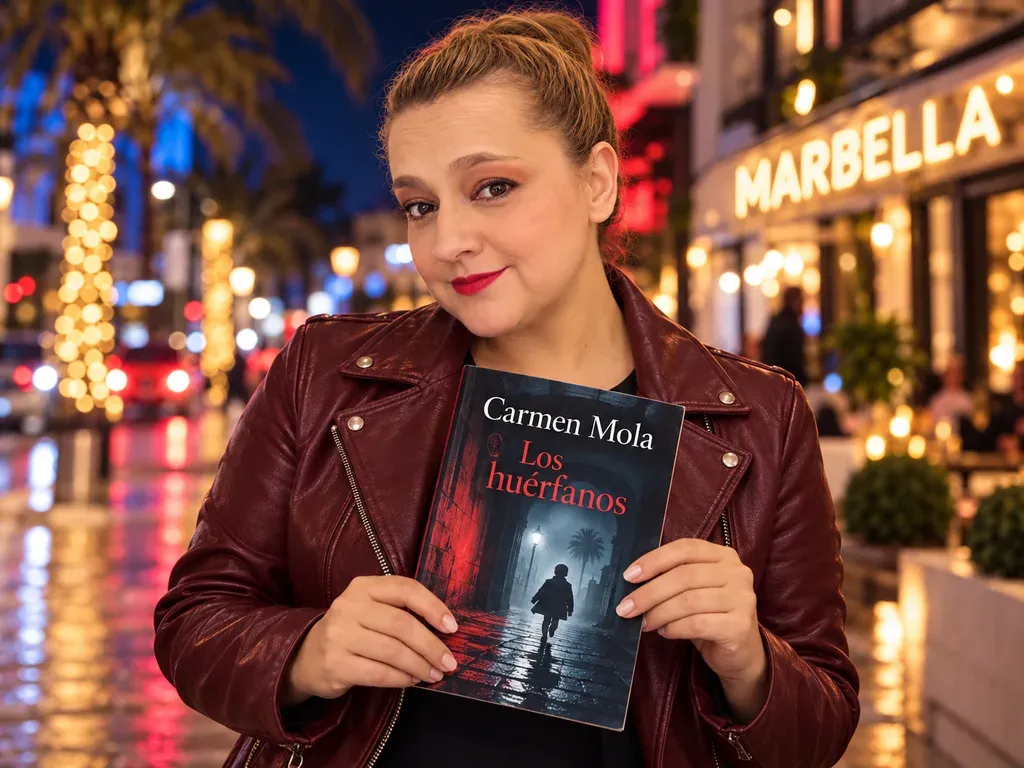
Carmen Mola
The Orphans
The Orphans by Carmen Mola: abandoned children grow into crime bosses. What a hell of a career path
Three children meet in Belfast, build a family out of survival and grow into adults who have learned how to make money from crime. Years later, a case pulls Laura Pastor and her family into a world where loyalty is real, but so are the bullets. The title sounds sad; the career path is considerably worse.
October 25, 2026
Want more like this? Join the Readers Club and get one of my books for free.
Share
My books
Books by Yenny Astrid Londoño



About the author
Yenny Astrid Londoño
Yenny Astrid Londoño is a Colombian author and entrepreneur, founder of Anchetas Medellín. She writes about real life with sarcasm, irony and smart humor, turning everyday situations, mistakes and imperfect relationships into stories that readers can laugh at and recognize themselves in.

A free book from me
Get a free book from me
Subscribe and get Sobreviviendo a mis muertos in full as a PDF.
After that, I'll only write when I have something worth telling you.
Also available: Read this review in Spanish →