
Book review
The Bad Daughter:
The disappearance of Belén brings Alma Ortega back to Almansa. The last name offers protection, but you have to ask who.
By Yenny Astrid Londoño · October 8, 2026 · 10 min read
Share
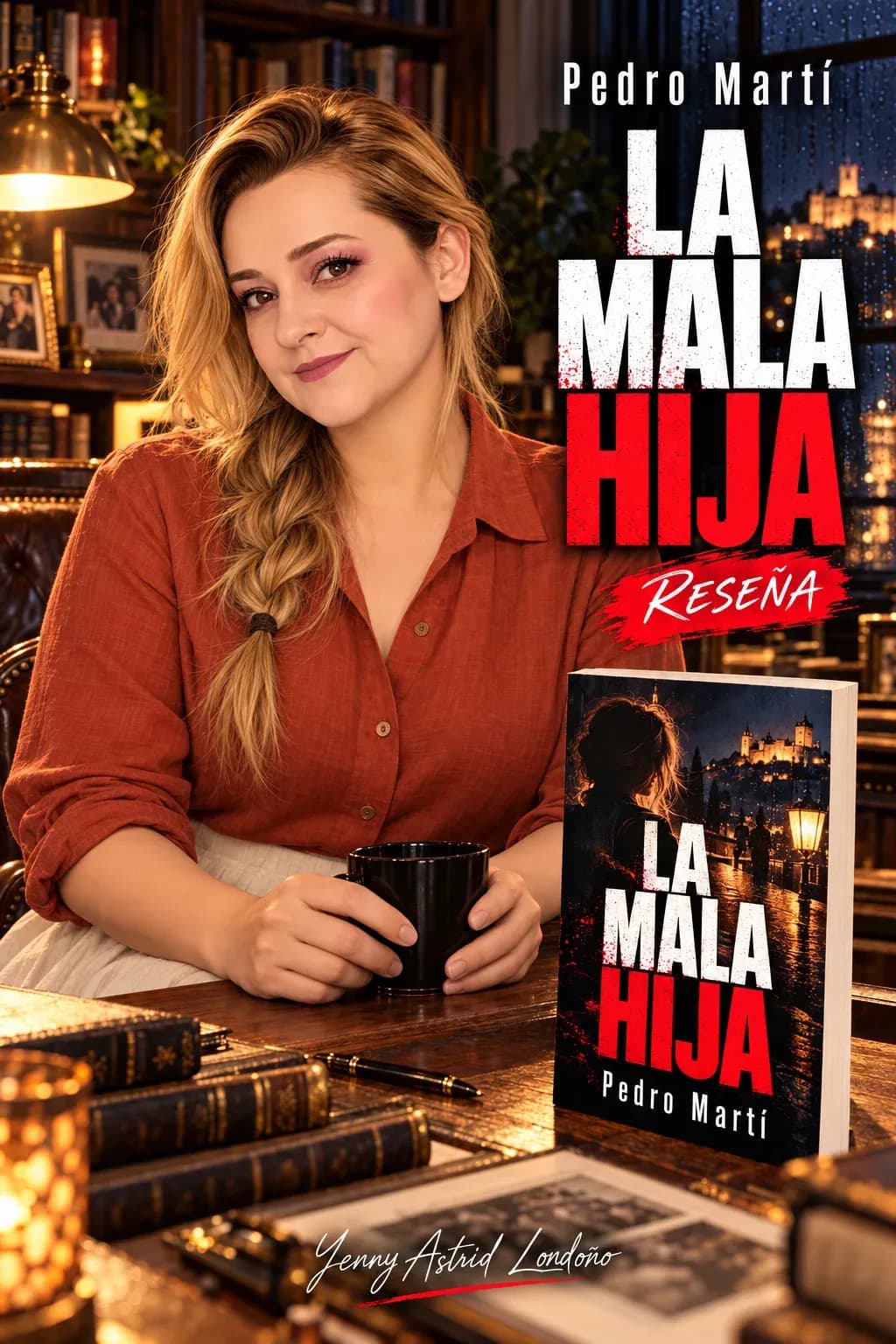
The Book
The Bad Daughter
by Pedro Martí
4 out of 5 stars
Around it, something much more urgent was needed: for someone to behave like an adult.
A family can spend years polishing its reputation while the people inside it are still trying to breathe. The Bad Daughter begins in that ugly gap between what a family says it is and what its daughters have lived through.
Alma returns to a place where everybody remembers a version of her. The disappearance at the centre of the case puts her relationship with her sister and the family's old expectations under pressure. It is easy to ask which daughter failed. I am more interested in who wrote the rules.
Pedro Martí gives the investigation room to disturb the family's story about itself. A good name can protect people; it can also become the excuse for not listening to the person who most needs help.
Alma returns to a place that also knows how to look at her
Returning to your hometown to investigate comes with a problem a new posting doesn’t: people think they know you before you ask your first question. They remember your family, your childhood, what people said about you. Your badge may be new; their version of you has been around for years.
Alma brings professional training and a real responsibility. She also brings grief and relationships that don’t automatically respect her authority as an investigator. That overlap makes her return compelling: the case requires distance, while the town keeps trying to put her back in her old place.
That gives the crime story a strong tension. Investigating means asking questions of people who may have expected everyone to keep treating them as usual. Familiarity helps a community function. It can also become a very convenient reason not to question anyone’s behavior.
No one is guilty simply because they belong to a family. What unsettles me is a community where familiarity starts counting for more than facts. Knowing someone all your life doesn’t mean you’ve seen every part of their life. That distinction tends to arrive late to the conversation.
Two sisters don't leave their problems at the entrance to the investigation
Alma and Paula share a family, but they didn’t live it the same way. One left; the other stayed. That choice can turn into a grievance no one quite knows how to name. Sometimes two adults are still arguing about a goodbye from years ago.
Working together means more than agreeing on a lead. They have to decide who listens to whom, how much the past still weighs, and when an old resentment is disguising itself as a professional disagreement. I like that their relationship has this much history, because the case asks more of them than simply cooperating.
I don’t want an investigator whose family exists only to hand her a dramatic wound. I want to see what happens when professional duty reaches someone close to her. Alma and Paula’s relationship gives that question real consequences.
Blood is usually presented as a guarantee of care. The novel forces us to remember that it also creates loyalties that can conflict with the truth. And when that happens, love doesn't create an automatic solution. You have to decide who is being protected with each silence.

Belén did not have to be exemplary to deserve protection
I care a lot about the title. The label “bad” can start working against a girl before anyone finds out what happened to her. It is enough for her to go out, hide something or move away from the version that the family had prepared for her.
A victim shouldn’t have to prove she was a good student, a good daughter, or a good person for the harm done to her to matter. A criminal investigation shouldn’t turn into a contest for who deserves the most sympathy. Strip away every compliment, and Belén still deserves the same protection.
That's why I read the family reputation with distrust. It can offer help, but it can also demand behavior that makes the suffering presentable. There are houses where first they ask who is going to find out and then, if there is time, they ask what happened.
There is no need to attribute that reaction to all the characters to recognize their violence. Abuse needs opportunities. The cover-up requires someone to prefer to preserve an image. And a girl can get caught between the two while adults continue to talk about how important family is.
Family reputation also enters the investigation
The case forces us to look at the distance between knowing a family and knowing what happens within it. Respectability can offer confidence, but it can also make a question seem offensive before someone decides to answer it. I care about that mechanism more than the enumeration of secrets.
When an adult insists on a girl's image, it is worth looking at what he is defending. He may be remembering her with affection. They may also be trying to preserve a version that makes any contradiction uncomfortable. The investigation has to open space for what Belén experienced, even if it doesn't fit the portrait that others had prepared.
There is no need to tell the outcome to discuss it. The pain of a minor doesn't become less important because understanding it damages a reputation. The question of who knows something must be accompanied by another: who has reasons for others to continue not knowing it.
Affection doesn't solve all obligations
Alma and Paula need to work within relationships that bring history. The case can put them face to face with a painful difference between loving someone and accepting their version. Affection helps you listen; it can also make it more difficult to recognize what you didn't want to find.
For me, that is one of the most serious conversations in the novel. Being loyal cannot automatically mean keeping another person out of any scrutiny. A family also exists to sustain responsibilities, not only to offer refuge when someone needs to explain themselves.
I reserve those responsible and the decisive revelations. The reader deserves to reach them within the story. Criticism can talk about concealment, the limits of protection and what it costs to accept a truth without turning a review into the inventory of the end.
What did not work for me in The Bad Daughter
My biggest reservation is the sheer accumulation of suffering. A story involving minors, abuse and a cover-up has to know what it is showing and why. Shock is not the same thing as depth. A revelation can hit hard and still leave too little room for the person who endured it. I’d rather spend that space with her than climb one more rung on the atrocity ladder.
I don't want Belén to become the place where the book deposits everything unbearable for adults to have an intense investigation. The disappearance organizes the story, but the girl should not exhaust herself in that usefulness. This objection is also a way of reading: returning to it every time a secret threatens to steal all the attention. What are we learning about her life? What are we consuming as a surprise?
The tension between Alma and Paula is strong, though readers who want the investigation to advance through police work at every turn may need patience. Their family history takes up real space. I like investigators who have lives beyond the case; I also want their wounds to shape actual choices. Pain interests me most when it changes how someone listens or whom they believe, not when it sits there as a character’s entire explanation.
And I am not a fan of summarizing this reading with the word addictive. There is material that begs to stop. Saying you can't stop may explain the pacing, but it doesn't explain the full experience of such a tough novel. I would like the recommendation to leave room for those who need to close the book for a while. That is also reading carefully, although it is less spectacular in an advertisement.
The title and the distribution of blame
The bad daughter allows us to discuss who has the authority to assign that adjective. A family may call a person evil who doesn't obey, who tells something inconvenient, or who refuses to keep up an appearance. The word seems to describe a behavior, but it can also serve to punish a voice. That's why it matters to me to listen to who talks about Belén and what they gain from the description they offer.
Research has one advantage over gossip: it should ask for facts. The family environment, on the other hand, can offer moral portraits as if they were evidence. She was good, she was rebellious, she always did this. None of those sentences alone answer what happened. Reading them carefully helps you recognize when an explanation is illuminating and when it is defending the person who utters it.
Alma's return introduces another difficulty: there are people who feel authorized to speak to her from what they remember from their childhood. Her job is to investigate the present, but the town preserves an older version of her. This friction gives value to the Almansa scenario. The place counts for its relationships, for the shared memory and for the cost of going against what everyone takes for granted.
A useful conversation for a book club would be to compare loyalty and protection. Does protecting the family mean preventing something from being known or preventing it from continuing to happen? The answer seems simple until a truth threatens a beloved bond. The novel finds its discomfort precisely there, where it is no longer enough to say that one loves one's loved ones.
For whom is this novel worth it?
I’d recommend it to readers who like investigations shaped by family ties and don’t expect every personal conflict to be neatly separated from the case. Alma and Paula bring something different from the lone detective who follows only instinct: here, closeness has consequences, and seeking the truth can cost you.
I wouldn’t recommend it if you want a light mystery, little violence, or a story where harm to minors stays in the background. The content warning matters more than any excitement about the twists. This review also keeps the culprits and outcome to itself, so you can read it before opening the novel.
After reading, I’d look at how the word “good” changes from the beginning to the end. What did it mean, who used it, and who benefited from that expectation? That lets us talk about Belén without turning a book-club conversation into a grim inventory of her suffering. The title promises to judge a daughter; I’d rather ask what the adults around her were doing.
“When the family starts defending its name, check who had to pay for it.” — Yenny Astrid Londoño
My rating is 4.5 out of 5
I give it four and a half stars because the case makes family loyalty part of the investigation, not a decorative subplot. The revelations hurt because they put already important relationships at risk. Alma and Paula don’t get to stand safely outside the mess and judge everyone else.
My reservation is the accumulation of atrocities. A plot this tough has to keep asking whether each new horror adds meaning or merely raises the shock level. I don’t want to feel that a girl’s suffering exists to make the next twist bigger.
I’d recommend it to anyone looking for a full-length crime novel, family secrets and an uncomfortable moral conversation. The book includes violence and exploitation of minors, so it’s worth knowing what kind of material you’re stepping into.
The Bad Daughter leaves me looking at the adults: the ones who knew, the ones who preferred not to know, and the ones who finally had to accept a truth that broke their lives.
They demanded that Belén be good.
What she needed was something much more urgent: adults who acted like adults.
Frequently asked questions
Does this review reveal who is responsible?
No. I discuss the premise and themes while preserving the identities of those responsible and the ending revelations.
Who investigates the disappearance?
Alma Ortega returns to Almansa and investigates alongside her sister Paula, a civil guard.
What hard themes appear?
Sexual abuse of minors, exploitation, family cover-up and violence. It is not a light mystery.
What does the relationship between Alma and Paula contribute?
The investigation forces the sisters to work together while dealing with their conflicts. This adds a different tension to the search: sharing a last name doesn't guarantee trust or the same way of understanding what happened.
What reservations does this review raise?
The accumulation of violence can impose itself on the space that victims need to exist as people. I also question when the family conflict illuminates the case and when it threatens to turn the pain into fuel for another twist.
Who might be interested in The Bad Daughter?
It may suit readers looking for an investigation shaped by family ties, silences and reputation. If you want a light mystery to switch off with, its subject matter may make this the wrong book for you right now.
The Book
The Bad Daughter
by Pedro Martí
Get the bookIf you buy through this link, Yenny earns a small commission and you pay the same price.
Keep reading
If you liked it, keep going
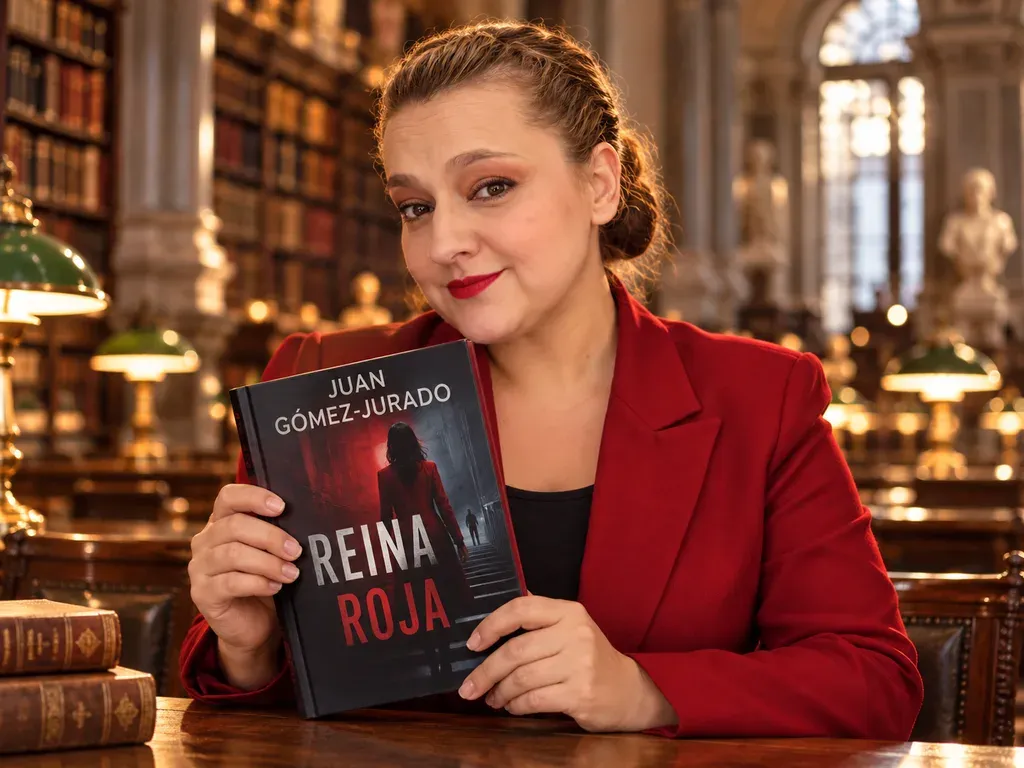
Juan Gómez-Jurado
Red Queen
Red Queen by Juan Gómez-Jurado: Antonia Scott sees everything except a reason to leave her apartment
Antonia Scott has no badge, no official job and an intelligence powerful enough to make a room uncomfortable. Jon Gutiérrez arrives at the wrong door and gets pulled into a case involving wealth, power and people who believe money can buy silence. It can buy quite a lot. It cannot always buy good judgment.
October 26, 2026
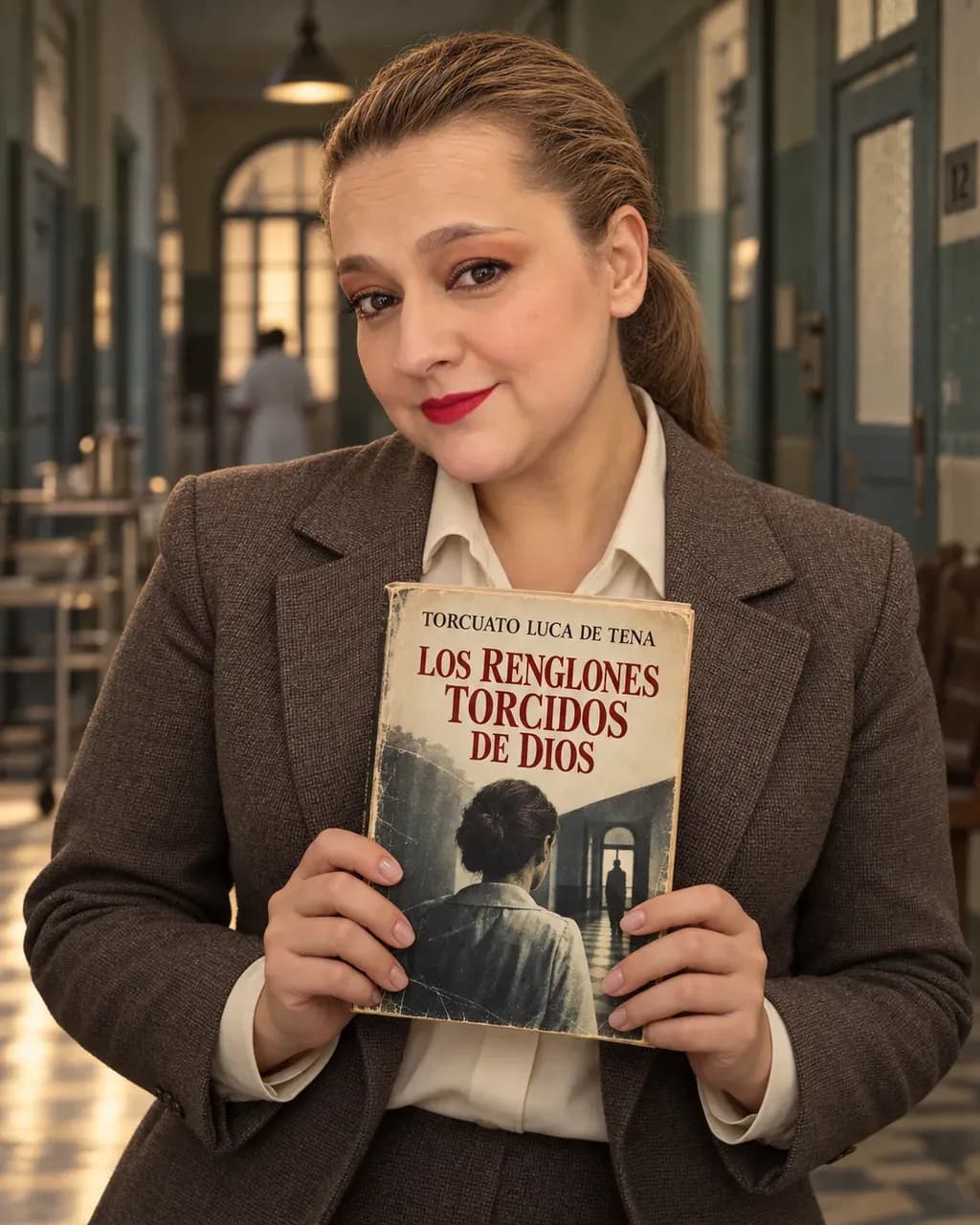
Torcuato Luca de Tena
God's Crooked Lines
God's Crooked Lines by Torcuato Luca de Tena: who gets to decide who is sane?
Alice Gould enters a psychiatric institution with a story of her own. The hospital has another version. That is where the novel starts asking a question institutions would rather keep in their paperwork: who gets to name someone sane, and what happens when the person holding the file is wrong?
October 26, 2026
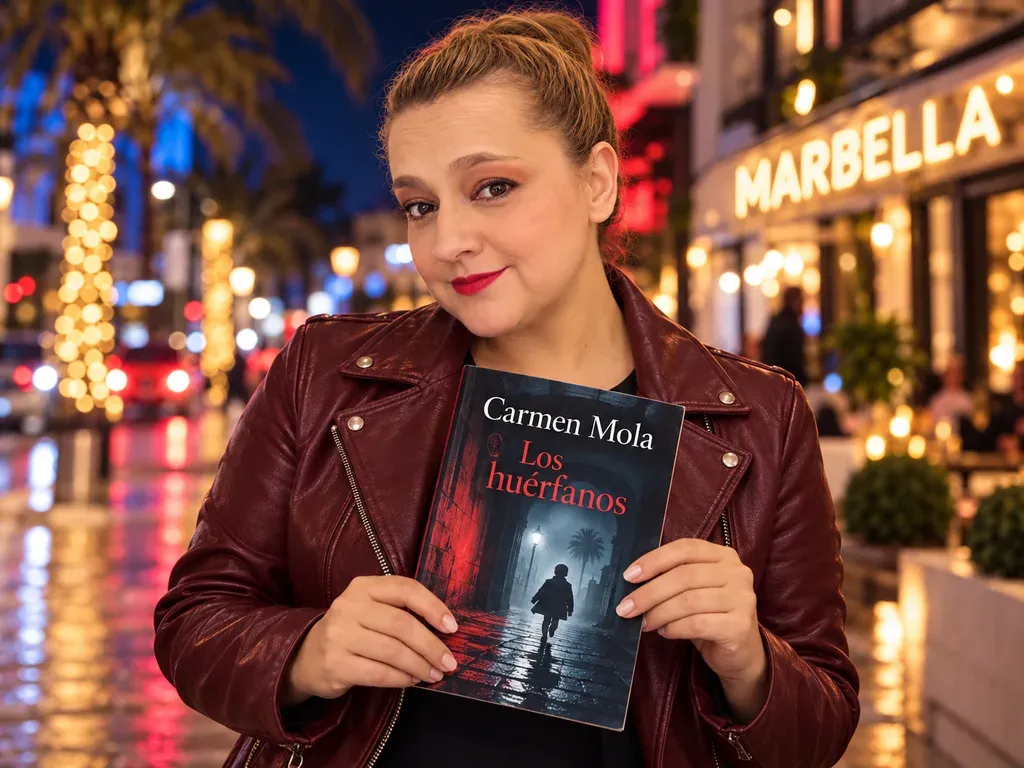
Carmen Mola
The Orphans
The Orphans by Carmen Mola: abandoned children grow into crime bosses. What a hell of a career path
Three children meet in Belfast, build a family out of survival and grow into adults who have learned how to make money from crime. Years later, a case pulls Laura Pastor and her family into a world where loyalty is real, but so are the bullets. The title sounds sad; the career path is considerably worse.
October 25, 2026
Want more like this? Join the Readers Club and get one of my books for free.
Share
My books
Books by Yenny Astrid Londoño



About the author
Yenny Astrid Londoño
Yenny Astrid Londoño is a Colombian author and entrepreneur, founder of Anchetas Medellín. She writes about real life with sarcasm, irony and smart humor, turning everyday situations, mistakes and imperfect relationships into stories that readers can laugh at and recognize themselves in.

A free book from me
Get a free book from me
Subscribe and get Sobreviviendo a mis muertos in full as a PDF.
After that, I'll only write when I have something worth telling you.
Also available: Read this review in Spanish →