
Book review
The Boyfriend:
Sydney thinks she may have found the right man. A string of murders makes her—and us—look twice at the man she’s dating.
By Yenny Astrid Londoño · October 8, 2026 · 10 min read
Share

The Book
The Boyfriend
Domestic psychological thriller
by Freida McFadden
More reviews by Freida McFadden →
3.5 out of 5 stars
What she shouldn't need to do to get him is stop wondering who he is dating.
Finding a decent man to date is tiring enough without wondering whether the charming one has a body count. Sydney has every reason to want a relationship. That doesn't mean she has to turn off her instincts when the details stop adding up.
Freida McFadden takes the fantasy of the perfect boyfriend and gives it the kind of context that makes a compliment sound different on a second reading. Sydney's hope matters here. So does the pressure to be agreeable while trying to stay safe.
I read The Boyfriend less as a warning that women should never trust anyone and more as a look at how easily charm can borrow credibility. A handsome face is not a character reference. Unfortunately, dating apps have yet to add that field.
Sydney wants a relationship and that doesn't make her guilty
Before you start yelling at the protagonist to open her eyes, remember this: wanting company is not a character flaw, and falling in love does not give the next stranger permission to hurt you. I’m tired of reviews that begin by grading what a woman should have noticed, as if being deceived were an exam she failed.
What interests me is how we handle information when someone seems to be exactly what we hoped for. One disappointment can make you cautious; several can leave you too tired to keep your guard up. Sometimes we’re not falling for a person so much as we’re desperate to stop looking.
The novel takes advantage of that disposition. The promise of a beautiful relationship has value before there is sufficient knowledge of the other. Sydney doesn't know everything she needs to know yet, but she already has a possible life in her head. And that imagined life has a hard time receiving an unpleasant question.
A doctor’s title helps sell the charm
A respectable profession can act like a moral certificate. Tell us a man is a doctor and we start filling in the rest ourselves: responsible, careful, intelligent, surely incapable of a certain kind of atrocity. That last part is our addition. It isn’t printed on the diploma.
That’s where the thriller finds its sharpest nerve. He doesn’t have to lie in every conversation if everyone around him is already volunteering to fill in the virtues. Appearances, apparently, are happy to work overtime for free.
I don't suspect a profession because it appears in a crime novel. What I question is the comfort with which we use it to stop looking at behaviors. A person can save lives during the shift and be unbearable when they get home. Job competence and intimate decency don't come bundled in the same package.
Charm becomes dangerous when any contradiction receives an explanation that protects it. He is tired, he has a lot of work, it is difficult for him to open up. Everything can be true. It can also become a collection of excuses that we make without him having to ask for them.
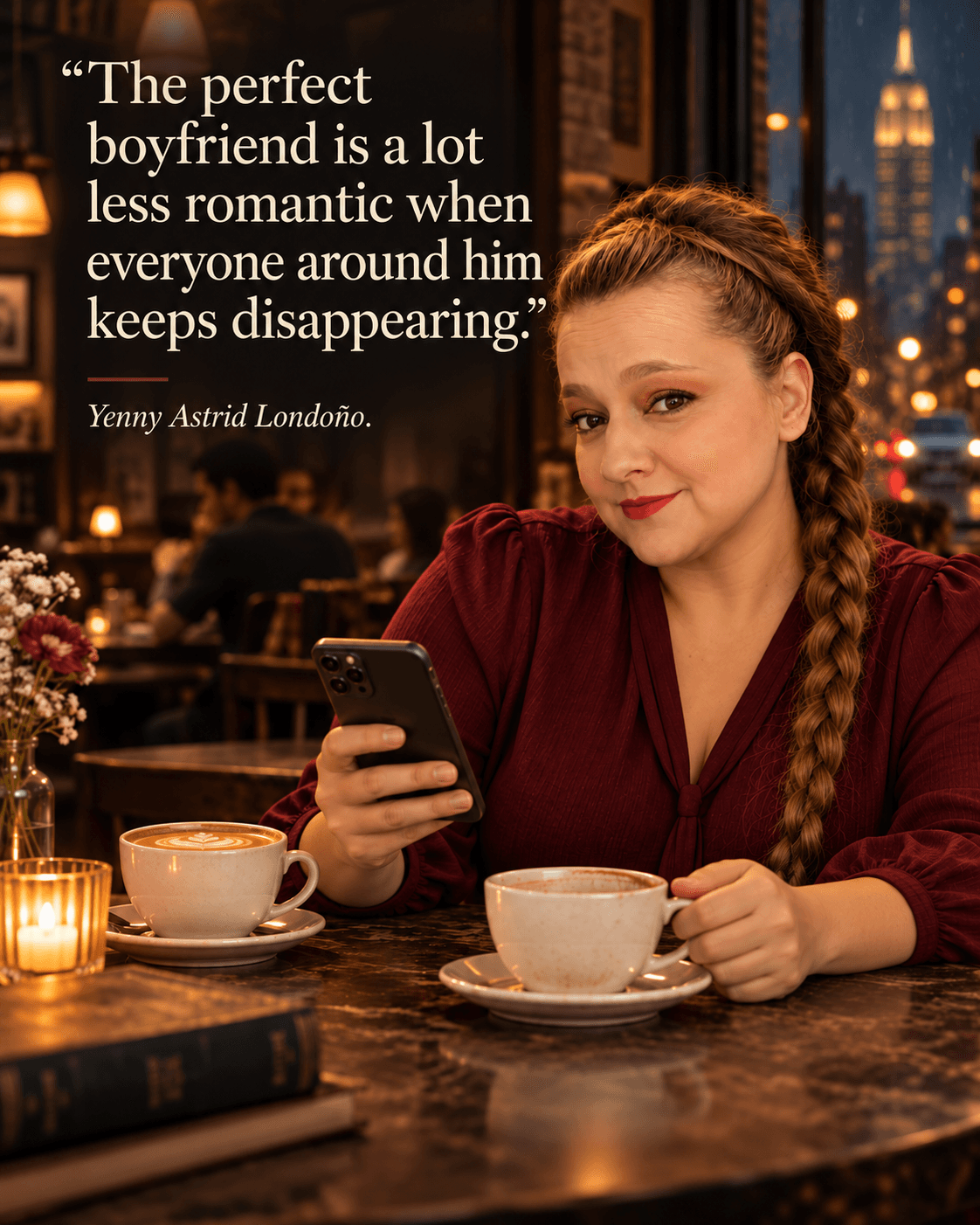
Dating apps arrange introductions; we bring the hope
The world of digital dating has a pretty efficient cruelty: it lets you choose between profiles while reminding you that you, too, are one profile among many. There is supposed to be abundance. The experience may seem more like a job interview where no one read the resume and everyone wants benefits from day one.
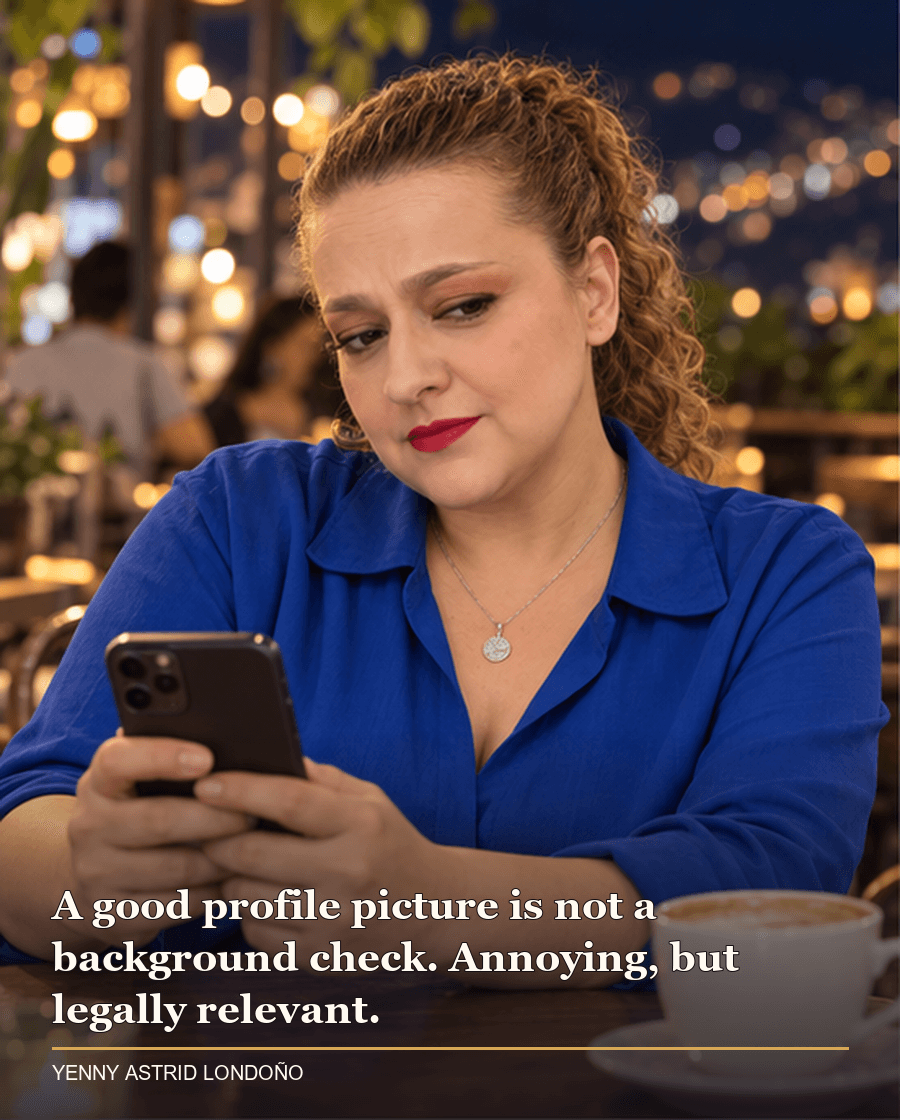
McFadden places the suspicion on that familiar ground. Getting to know someone starts with a selected version. Then comes the slow work of figuring out how much it matches the real person. The photograph may be recent and the rest of the presentation may still be a work of fiction.
I’m interested in the gap between how quickly attraction happens and how slowly we actually learn who someone is. You can feel close after one night. That doesn’t mean you’ve seen how he handles a no, talks about his exes, or reacts when he doesn’t get what he wants.
The novel wraps that intimate question in a criminal threat, but the question stands on its own: how much do we bother to check, and how much do we reinterpret because we want to believe we’ve finally found something good? Sometimes we stop asking questions because we’re tired of starting over.
Suspecting the man you like means questioning your own hope
Romantic suspicion doesn’t just change how you see the other person. It also reaches back and unsettles the version of you who was happy with him. Maybe that happiness depended on incomplete information. That hurts before you even know what’s true.
I like that the premise allows fear to be read within desire. Sydney may want to get closer and need distance at the same time. This contradiction is more interesting than a protagonist turned into an infallible machine for detecting signals. People don't receive information like an office receives documents.
It also seems unfair to demand certainty when the thriller keeps making certainty difficult. If everyone is hiding something, the work is figuring out which silence matters and which one is just there to send us chasing the wrong thing.
Therein lies the pleasure of the book: accompanying a confidence that can no longer be sustained with the same ease. I can enjoy suspicion without needing every man in the story to become a walking manual of perversion. A mystery needs nuances for distrust to mean something.
Twists earn their place when they change what we already saw
With McFadden there is always the temptation to measure the book by the last surprise. To me that seems like a very narrow way of reading. The ending can shake the floor, yes, but along the way it also matters what we are doing with Sydney and with the women who did not have the opportunity to come out.
A revelation gains strength when it modifies a previous detail. You lose part of it when you only demand to accept information that was saved until a convenient time. I don't need to guess the culprit. I need to feel that the story had a shape before it is explained to me.
My reservation is how much room the romantic ideal takes up. If everything hinges on whether he turns out to be wonderful or awful, Sydney’s own life is left waiting for a man’s answer. The book gives me more to talk about when I also look at what she wants to keep for herself.
That's why I'm not going to reveal the solution here. The game of suspicion is worth a look. But the interest of a review should not end in telling you that there is a twist and that, please, prepare yourself because it is tremendous. Even the back cover says that.
What did not work for me in The Boyfriend
What I'm least convinced about is the space occupied by the question of whether this man deserves Sydney's trust, versus the space devoted to what Sydney needs outside of him. The loving approach is effective, but it leaves me asking for a protagonist whose life doesn't seem to be waiting for the candidate's evaluation. A woman may want a partner and have other emergencies. Being single should not narratively leave you in a waiting room.
I also struggle with insisting on the perfect boyfriend package. Handsome, attentive, doctor: I already understood why he arouses excitement. I find ambiguous behavior more interesting than the inventory of qualities. When the charm comes so certified from the presentation, the reader who is fond of the genre begins to distrust out of obligation. And a suspicion that is born because we know that we are reading a thriller later needs something else to sustain itself.
My third objection is how easily the other women become part of the criminal pattern. They establish the threat, of course, but that doesn’t exhaust who they are. Sydney gets a detailed history; the women before her deserve more than the job of warning us what might happen next. I want to know how far the book lets them step outside that role.
I have no problem with a novel wanting to entertain me. What bothers me is the idea that entertainment excuses sloppy relationships or decisions. McFadden is known for her surprises, but the characters still have to make sense when I look back. Changing suspects is fun; making the pieces fit is what makes that fun last.
How to read the signs without blaming Sydney
I kept three questions in mind as I read: what do we know from someone’s actions, what do we know only because they told us, and what are we filling in because we want it to be true? Separating those things lets you enjoy the mystery without turning every impression into a test. A character can be irritating and still be innocent. Another can sound lovely and still owe us answers.
It is also worth observing what happens when the relationship is no longer comfortable. Attention during a date is one part of the bond; the reaction to a question or a limit offers other information. I'm not saying the book is a sentimental safety guide. It's fiction. But the conflict serves to discuss why we so often confuse charm with the ability to care.
There’s one advantage we should remember: we know the conventions of the genre, while Sydney is trying to live her life. We know the title may be hiding a trap. She can’t treat every date like the synopsis of a thriller. If we judge her using information she doesn’t have, we get to sound very clever from the couch: “It was obvious.” How convenient.
Who should read The Boyfriend?
I’d recommend it if you like suspense built around intimacy, suspicions that change a relationship, and social appearances that can be as dangerous as the crime. The book keeps asking whom we can trust and why. You don’t need to have read another McFadden novel first.
If you’re expecting a detailed police procedural or pages of backstory for every victim, I’d adjust your expectations. Sydney’s relationship and her desire for things to work are the main way into the story. And I wouldn’t sell this as dark romance: dates and attraction don’t magically turn a criminal threat into a love story.
The question I’d take to a book club is this: when does a good first impression become an excuse for everything? Readers may point to different moments. That gives us more to discuss than competing to guess the culprit. The culprit is one answer; what we do with trust is the conversation.
“A red flag doesn't become green because the man holding it is handsome.” — Yenny Astrid Londoño
My rating is 4 out of 5
I give it four stars for the mix of desire, suspicion and polished appearances. It’s for readers who like wondering what kind of person is sitting across from them while the protagonist tries to make a relationship work. The tension comes from somewhere recognizable; the crime isn’t doing all the heavy lifting.
I’m holding back the fifth star because the perfect-boyfriend lure asks me to tolerate some familiar tricks, and I wanted more of Sydney’s life outside the relationship. You may enjoy it more than I did. That’s the point of being clear about what I’m rating.
One question stays with me: how much do we need to know about someone before giving them an important place in our lives? There’s no magic deadline, and a good first impression does not have to become a lifetime contract.
Sydney wants it to go well this time. I understand.
What Sydney shouldn’t have to do to make a relationship work is stop wondering who she’s dating.
Frequently asked questions
Can I read The Boyfriend without having read another Freida McFadden novel?
Yes. It is a standalone story, so you can start here without reading another book by McFadden first.
Does this review reveal the murderer?
No. It preserves the identity of the person responsible and the resolution.
What rating did Yenny give The Boyfriend?
Four out of five. I enjoyed how the book turns the desire for a relationship into a source of suspicion, though I wanted more room for Sydney’s life outside the romance.
What stands out about Sydney as a protagonist?
Sydney’s desire for a relationship lets us see how dating fatigue can shape her suspicions. Much of the tension comes from separating what she observes from what she wants to believe.
What might disappoint you about The Boyfriend?
The insistence on the perfect man and the importance of romance may leave you wanting more space for Sydney’s life outside the relationship. If you’re looking for a detailed police procedural, this book puts more emphasis on emotional distrust.
Who would you recommend The Boyfriend to?
I’d recommend it to readers who enjoy messy relationships, a tight circle of suspects and revelations that change how earlier scenes read. If you want an in-depth police procedural, keep in mind that the main attraction here is the question of whom Sydney should trust.
The Book
The Boyfriend
by Freida McFadden
Get the bookIf you buy through this link, Yenny earns a small commission and you pay the same price.
Keep reading
If you liked it, keep going
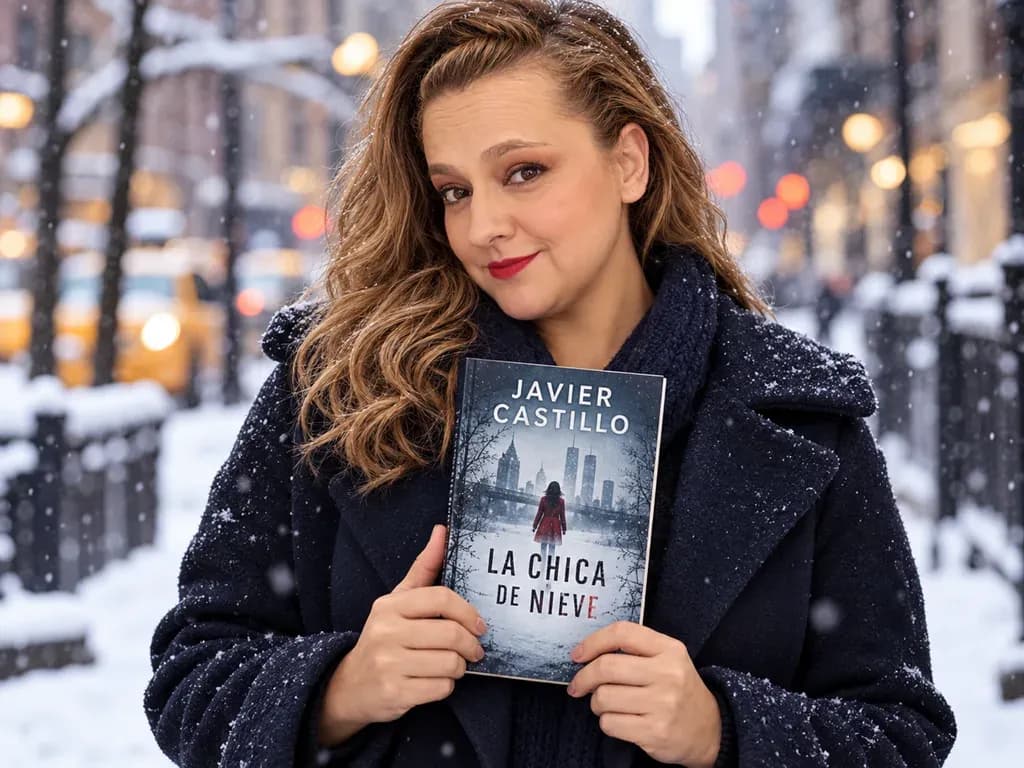
Javier Castillo
The Snow Girl
The Snow Girl: Kiera disappears and everyone moves on except her parents
Javier Castillo's The Snow Girl: Kiera vanishes at a New York parade and a tape reopens the case five years later. My honest review, 4 out of 5.
October 22, 2026
John Katzenbach
The Analyst
The Analyst: a birthday threat, fifteen days and a therapist who has lost control
John Katzenbach's The Analyst: a psychoanalyst gets fifteen days to find out who is threatening him. My honest review of this thriller.
October 22, 2026
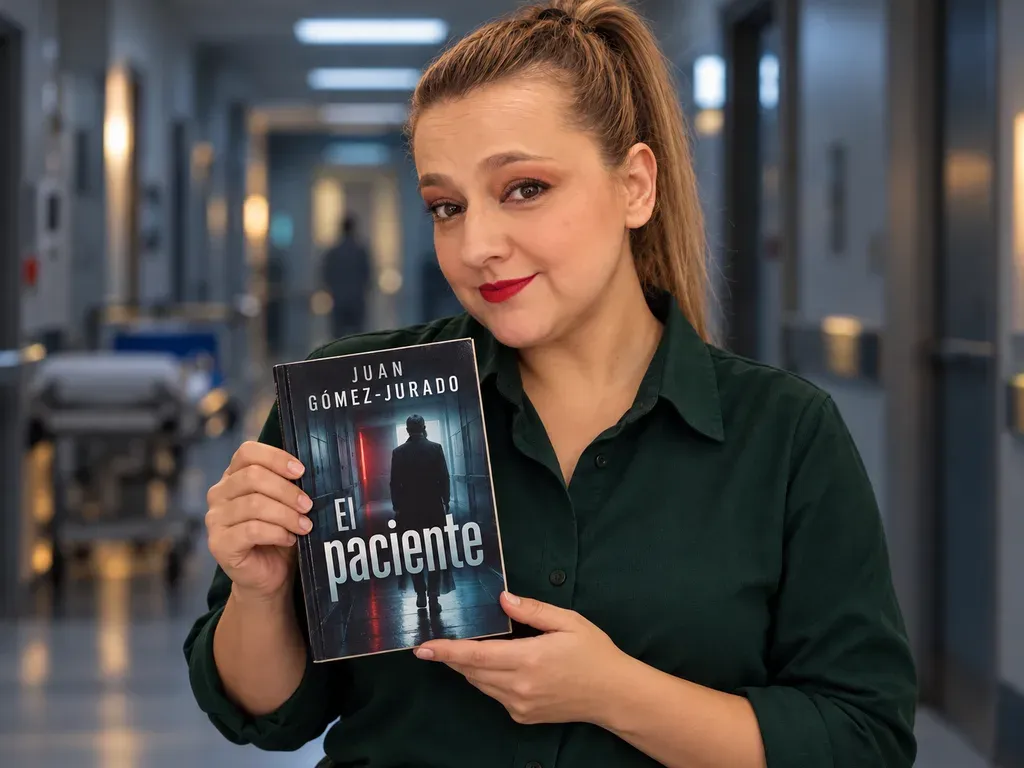
Juan Gómez-Jurado
The Patient
The Patient: the President on the operating table and a daughter nobody can trade
Juan Gómez-Jurado's The Patient: a neurosurgeon, a President on the table and a kidnapped daughter in sixty-three hours. My honest review.
October 22, 2026
Want more like this? Join the Readers Club and get one of my books for free.
Share
My books
Books by Yenny Astrid Londoño



About the author
Yenny Astrid Londoño
Yenny Astrid Londoño is a Colombian author and entrepreneur, founder of Anchetas Medellín. She writes about real life with sarcasm, irony and smart humor, turning everyday situations, mistakes and imperfect relationships into stories that readers can laugh at and recognize themselves in.

A free book from me
Get a free book from me
Subscribe and get Sobreviviendo a mis muertos in full as a PDF.
After that, I'll only write when I have something worth telling you.
Also available: Read this review in Spanish →