
Book review
The Housemaid Is Watching:
Millie has the house, the husband, the children, and the respectable life she once wanted. Naturally, the neighborhood arrives with enough secrets to make the welcome basket look suspicious.
By Yenny Astrid Londoño · October 6, 2026 · 8 min read
Share
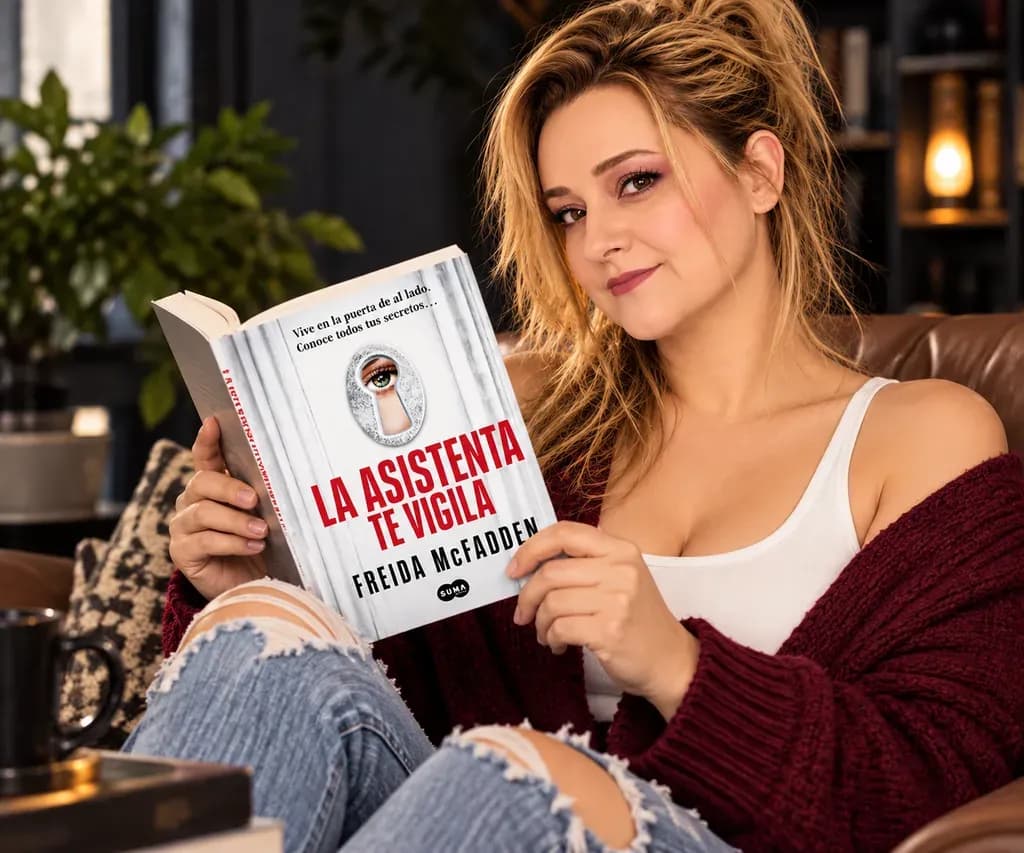
The Book
The Housemaid Is Watching
Domestic thriller
by Freida McFadden
More reviews by Freida McFadden →
3.5 out of 5 stars
It entertained me, especially once it stopped making me watch Millie's marriage and started showing me what was really happening in the houses of the neighborhood.
Some characters need stability. Others become dangerous the minute they get it. Millie Calloway has spent years surviving other people’s beautiful homes and ugly secrets, so seeing her married to Enzo, raising Ada and Nico, and finally able to call a place hers should feel like a win. It does, for about five minutes. Then the neighbors start watching, Enzo starts acting strangely, and the book reminds us that a quiet street can be a collection of people peeking through expensive curtains.
Freida McFadden shifts Millie into a new role. In the earlier books, she entered wealthy households as an employee and learned what was rotten behind the immaculate kitchen. Here, she owns the house and has a family she cannot afford to lose. That change gives the sequel a reason to exist beyond “Millie gets another job in another nightmare.” The question is no longer only whether she can escape a dangerous household. It is whether the life she fought for can survive the people who have access to it.
Millie got the home she wanted. Why does the street feel like a warning?
Millie’s new life is built from ordinary victories: a home, children, work helping people, a husband with a business, and some distance from the years when she was barely getting by. The house matters because it represents safety she earned rather than borrowed. That makes the neighborhood’s attention feel invasive quickly. Suzette Lowell is far too interested in Enzo, Jonathan seems less alarming, Janice watches the street like an unpaid security system, and Martha, who works for the Lowells, looks at Millie as if she knows more than she should.
The setup works because each neighbor can be read two ways. A look might be harmless, a secret might be protective, and a person who seems nosy might have a reason that is not simply “I enjoy being creepy before breakfast.” The book keeps Millie guessing, and the reader has to decide whether her instincts are warning her or dragging old fear into a new house.
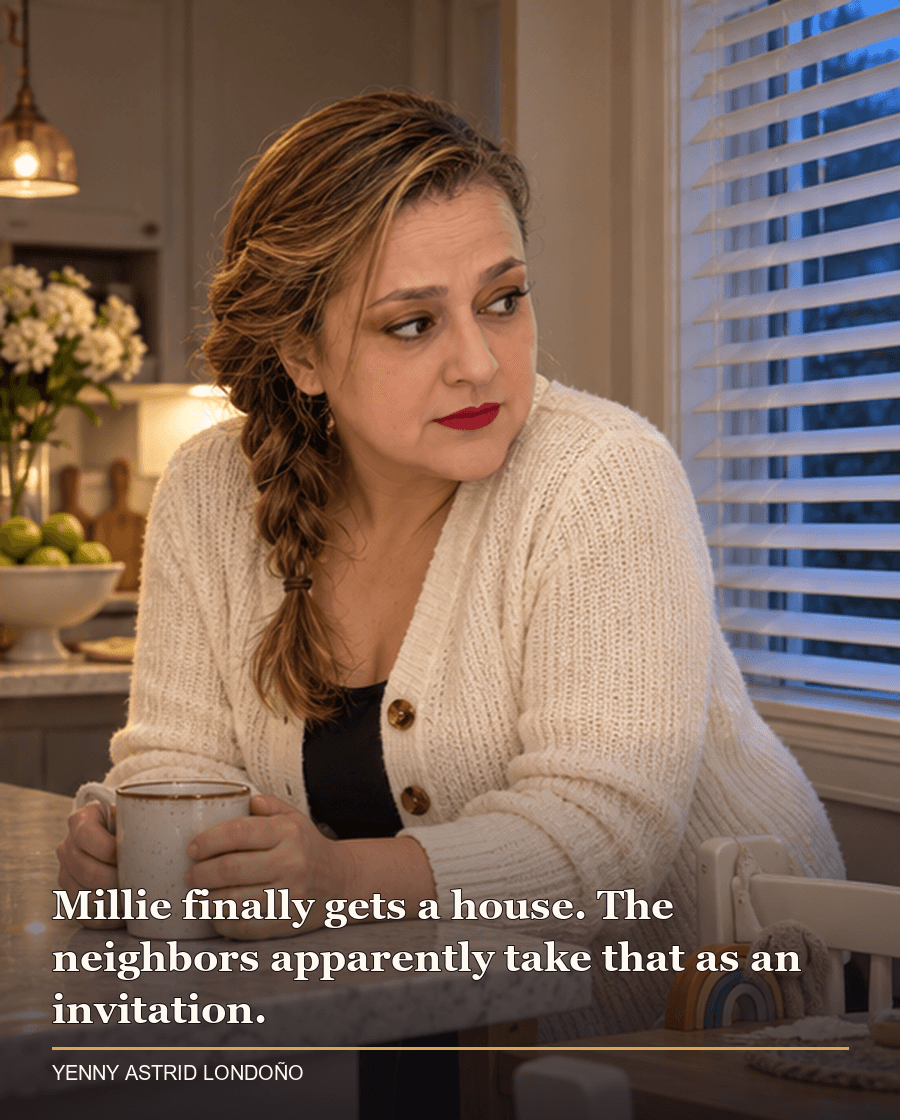
A new address does not erase the old Millie
Millie is not the same woman who used to enter someone else’s home and wait for the trap to close. She has children now, a mortgage, a job, and much more to lose. She cannot solve every problem by running, fighting, or disappearing. That limitation gives the story a useful tension: the instincts that once helped her survive may also make her misread what is happening around her.
I liked seeing her try to be a responsible mother while still being Millie. She notices things. She doubts people. She knows that a polished household can hide a disaster. But the book sometimes makes her wait too long to ask Enzo a direct question. I understand why fear and trust complicate that conversation; I also wanted to hand both adults a cup of coffee and tell them to use their words before the plot charges them rent.
“Millie finally got a house of her own. The neighbors apparently took that as an invitation to move into her business.” — Yenny Astrid Londoño
Enzo’s secret points Millie toward the wrong explanation
Enzo disappears, hides information, and handles money Millie cannot account for. Suzette’s interest in him gives Millie a very obvious theory to grab onto: perhaps the new life includes an affair. The novel deliberately feeds that suspicion. It is a familiar domestic-thriller trick, and it works because Millie has reason to believe that secrets inside a marriage are rarely decorative.
The explanation is different. Enzo is helping Martha get away from Jed, her abusive husband. His secrecy comes from trying to protect someone, not from the betrayal Millie imagines. That reveal fits Enzo and gives Martha a reason to matter, but the long stretch of suspicion felt more drawn out than necessary. A difficult conversation would not have made the couple magically perfect, but it might have saved several chapters of everyone interpreting half a sentence like it was evidence in court.
The children’s story is where the book turns darker
While Millie worries about Enzo and Suzette, Nico’s behavior changes. He becomes aggressive, breaks things, and gets into trouble. Ada is attentive to her brother, and Millie knows something is wrong without understanding what. At first, that uncertainty can be mistaken for a child adjusting to a new home. The truth is more disturbing, and it gives the book a sharper emotional center than neighbor gossip alone could provide.
The novel asks the adults to look beyond the convenient explanation. Children do not always have the words, confidence, or safety to explain what is happening. Their behavior can be the clue everyone dismisses because it would be easier to believe that they are merely being difficult. This part made me more uneasy than the standard “the neighbors are weird” material, because the danger is not a rumor across the street; it is tied to the people the family should be able to trust.
The neighborhood works like a small surveillance network
Janice’s watchfulness, the Lowells’ household, and the other neighbors create a place where everybody seems to know something about everybody else. That does not automatically make them useful witnesses. Sometimes it only means they have collected enough information to mislead themselves with confidence.
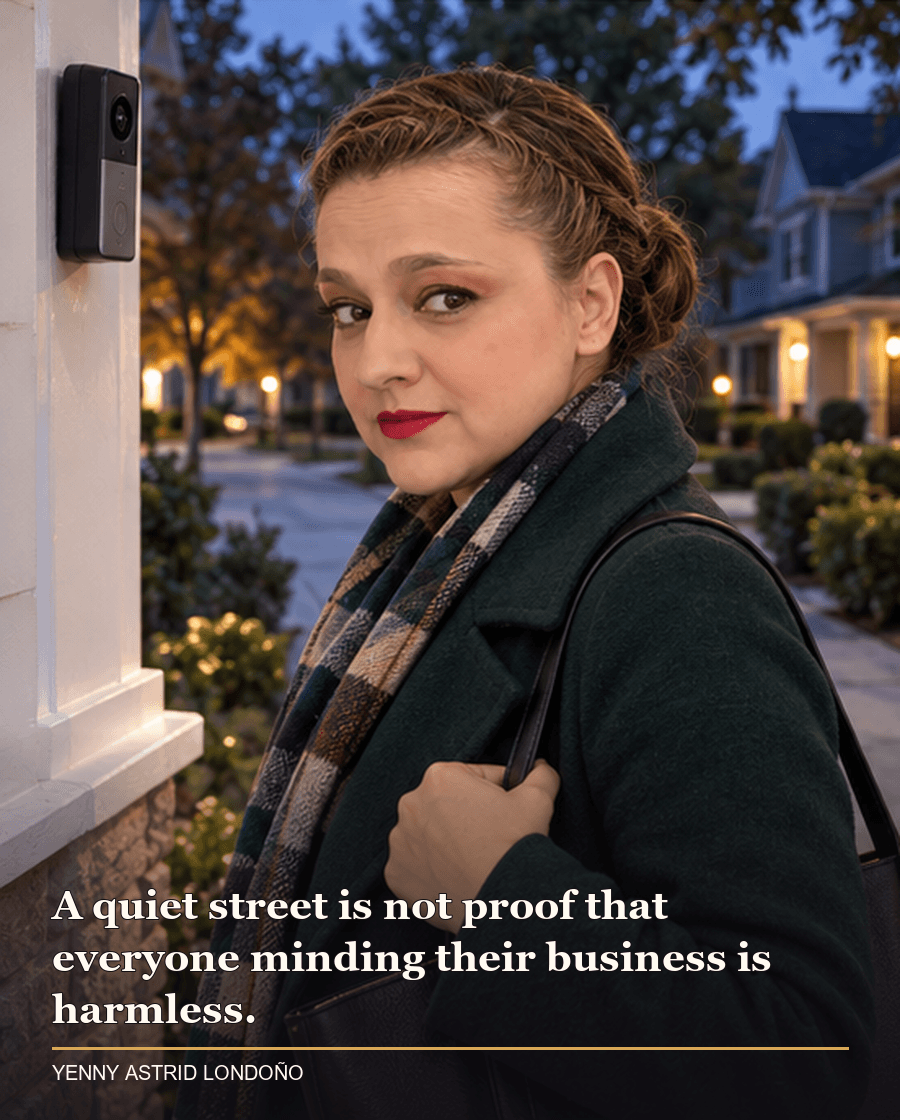
I enjoyed how the book uses the suburban setting. A quiet street promises safety, but it also makes every deviation visible: a car parked too long, a missing person, a child acting differently, a neighbor who knows your routine. The house becomes both refuge and display case. If your neighbors know when you leave and who comes home, that is not automatically friendship. It may be the beginning of an evidence board with a very nice lawn.
“If the whole street knows your schedule, that is not community. That is surveillance with better landscaping.” — Yenny Astrid Londoño
What I liked, and where the suspense loses a little air
The strongest choice is moving Millie from employee to homeowner and mother. Her past matters, but the book lets her present change the stakes. I also liked the way the apparently separate concerns—Enzo’s secrecy, Martha’s fear, Nico’s behavior, and the neighbors’ interest—gradually connect. The novel has that quick, readable McFadden rhythm: one more chapter, one more suspicion, and suddenly your tea is cold and you are blaming the book.
The weaker stretch is the extended misunderstanding between Millie and Enzo. It keeps the reader circling a false explanation for a long time, and I wanted more progress on the children’s danger while the adults were busy withholding information. Some reveals also rely on people failing to say one crucial sentence. That is effective as a suspense device right up to the point where you want to yell, “Use the phone. It is right there.”
Is this sequel worth reading?
Yes, especially if you have followed Millie from the first book. The story gives her a different kind of danger and lets her family life complicate the survival instincts that used to define her. New readers can follow the central mystery, but some of the emotional payoff comes from knowing what Millie had to endure before she could buy a home and build a family.
This is not a quiet literary meditation on suburbia. It is an entertaining domestic thriller built around suspicious neighbors, concealed motives, children in danger, and twists designed to keep you turning pages. It has a few stretches where everyone could solve half the book with one honest conversation. But if you like McFadden’s fast, messy secrets, this one knows exactly which curtain to twitch.
The family secret is more personal than the neighborhood gossip
The neighbors provide the atmosphere, but the emotional danger comes from the gap between what Millie thinks is happening and what her family is able to tell her. The book is at its best when the house stops being a symbol of success and becomes a place where each person is trying to protect someone without knowing what the others already suspect. That is a more interesting problem than simply asking which neighbor has the strangest hobby.
It also gives Millie’s role as a mother real weight. She is trying to keep her children safe while interpreting changes she cannot immediately explain. Her instincts are useful, but they do not make her omniscient. I liked that tension: loving your children does not magically hand you the answer key, and pretending otherwise can make it harder to notice what they are actually showing you.
“A family can look perfectly settled and still have one person quietly deciding who gets to feel safe.” — Yenny Astrid Londoño
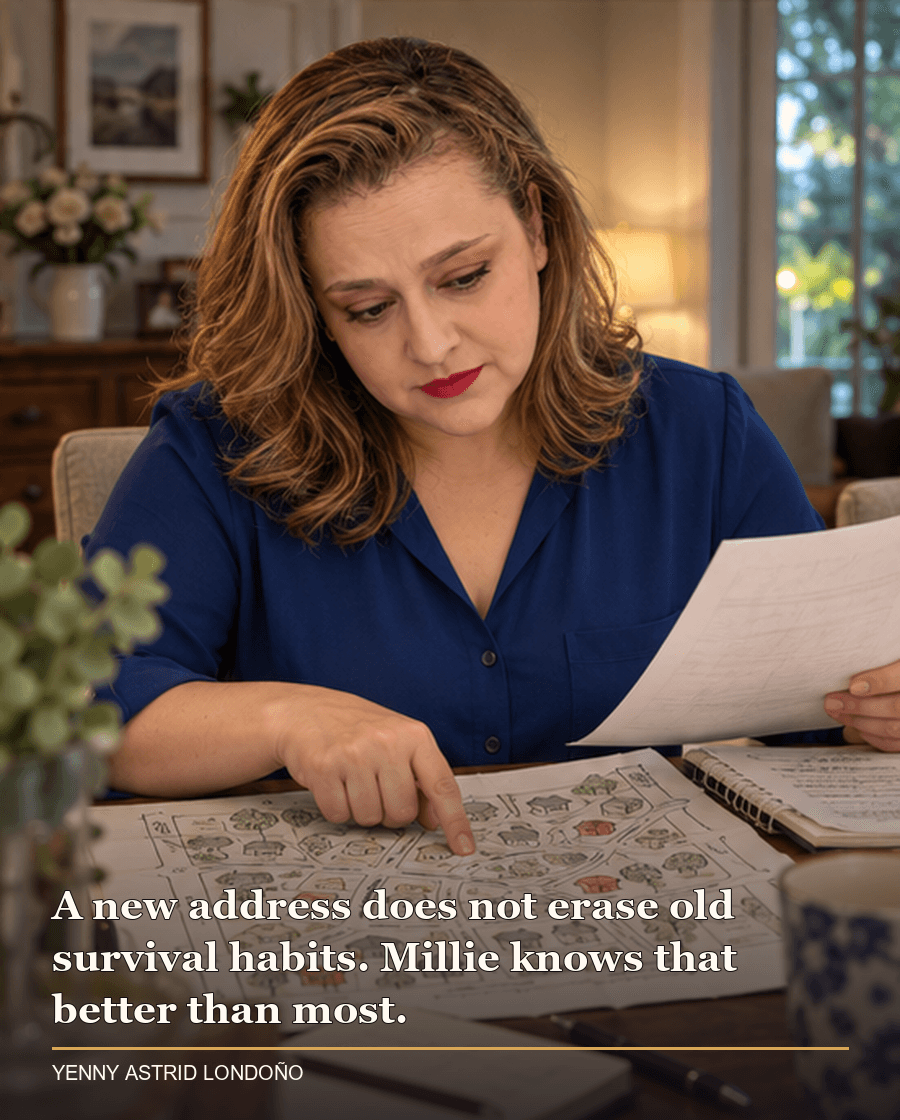
My verdict: Millie’s home is hers, but privacy is apparently a luxury
The Housemaid Is Watching works best when it remembers that Millie’s new life is not a reset button. She has built something worth protecting, and that makes every suspicious silence matter more. The novel’s most interesting question is not simply which neighbor is hiding something. It is how a family recognizes danger when the people around them keep calling it normal.
I enjoyed the shift in Millie’s circumstances, the neighborhood atmosphere, and the way the children’s storyline deepens the threat. I was less patient with the drawn-out secret between Millie and Enzo, and a couple of turns ask the adults to postpone basic communication so the suspense can stretch its legs. Still, the book is brisk, tense, and easy to devour. Millie earned her home. The block, however, needs to learn what a boundary is.
Frequently asked questions
What is The Housemaid Is Watching about?
Years after the earlier Housemaid books, Millie lives with Enzo and their children in a home of their own. Strange neighbors, her husband’s secrecy, and changes in Nico’s behavior make that apparently settled life feel unsafe.
Do I need to read The Housemaid first?
It is possible to follow the new mystery on its own, but the first book gives important context for Millie’s past, her relationship with Enzo, and why owning a home means so much to her.
Is The Housemaid Is Watching part of a series?
Yes. It continues Millie Calloway’s story after The Housemaid and The Housemaid’s Secret. Reading in order gives the character arc more weight.
Is The Housemaid Is Watching a psychological thriller?
It is a domestic thriller with psychological-suspense elements. The tension comes from family secrets, suspicious behavior, and the question of whom Millie can trust inside and outside her home.
Does this review contain spoilers?
Yes. The review discusses Enzo’s secret, the danger surrounding Nico, Ada’s role, Jonathan Lowell’s murder, and Martha’s connection to Millie.
What did Yenny think of The Housemaid Is Watching?
I enjoyed the changed stakes and the suburban unease, though the prolonged misunderstanding between Millie and Enzo tested my patience. It is an entertaining, twisty sequel with a few conversations that should have happened sooner.
The Book
The Housemaid Is Watching
by Freida McFadden
Get the bookIf you buy through this link, Yenny earns a small commission and you pay the same price.
Keep reading
If you liked it, keep going

Javier Castillo
The Snow Girl
The Snow Girl: Kiera disappears and everyone moves on except her parents
Javier Castillo's The Snow Girl: Kiera vanishes at a New York parade and a tape reopens the case five years later. My honest review, 4 out of 5.
October 22, 2026

John Katzenbach
The Analyst
The Analyst: a birthday threat, fifteen days and a therapist who has lost control
John Katzenbach's The Analyst: a psychoanalyst gets fifteen days to find out who is threatening him. My honest review of this thriller.
October 22, 2026

Juan Gómez-Jurado
The Patient
The Patient: the President on the operating table and a daughter nobody can trade
Juan Gómez-Jurado's The Patient: a neurosurgeon, a President on the table and a kidnapped daughter in sixty-three hours. My honest review.
October 22, 2026
Want more like this? Join the Readers Club and get one of my books for free.
Share
My books
Books by Yenny Astrid Londoño



About the author
Yenny Astrid Londoño
Yenny Astrid Londoño is a Colombian author and entrepreneur, founder of Anchetas Medellín. She writes about real life with sarcasm, irony and smart humor, turning everyday situations, mistakes and imperfect relationships into stories that readers can laugh at and recognize themselves in.

A free book from me
Get a free book from me
Subscribe and get Sobreviviendo a mis muertos in full as a PDF.
After that, I'll only write when I have something worth telling you.
Also available: Read this review in Spanish →