
Book review
The Maidens:
Cambridge provides the buildings, the Greeks provide the tragedy, and Mariana provides a trust nobody had earned.
By Yenny Astrid Londoño · October 8, 2026 · 7 min read
Share

The Book
The Maidens
Psychological thriller
by Alex Michaelides
More reviews by Alex Michaelides →
3.5 out of 5 stars
To investigate Sebastian, she first had to stop defending him.
It's very hard to ask a dead man for explanations. He doesn't answer, he doesn't contradict himself, and he doesn't arrive late to remind you why you used to be furious with him. Over time even his flaws can start to look like endearing details. Memory takes things away, and you end up calling love the edition that remains.
Mariana Andros, a group therapist, is grieving her husband Sebastian when the murder of a student takes her to Cambridge, where her niece Zoe studies. There she meets Professor Edward Fosca and the group of students who gather around him: the Maidens.
Suspicion is organized around a visible man, charismatic and quite willing to make use of the place he occupies. While Mariana watches him, there is another man who is far better protected. Her own. The one who already died.
Cambridge can also be a place where nobody asks the uncomfortable question
The university offers a magnificent stage for confusing prestige with trust. Old buildings, specialized knowledge, names that seem to deserve silence when spoken. You walk in expecting intelligence and risk extending that expectation to decency.
They are not the same thing.
A professor who can explain a Greek tragedy may be perfectly capable of producing a small contemporary tragedy with his students. The vocabulary doesn't vaccinate him. Sometimes it only gives him a more elegant explanation.
Michaelides uses that atmosphere to place Mariana in a space where everything seems to carry meaning: the verses, the rituals, the relationships between those who belong to the group. It's easy to start looking for a cultured key that makes the violence fit in order.
I'm also interested in what happens before she finds it. Fascination with a person can make an institution take far too long to recognize behavior that, outside that building, would look much less impressive. Prestige is useful when there is work behind it. When it starts working as a permit, we are already in trouble.
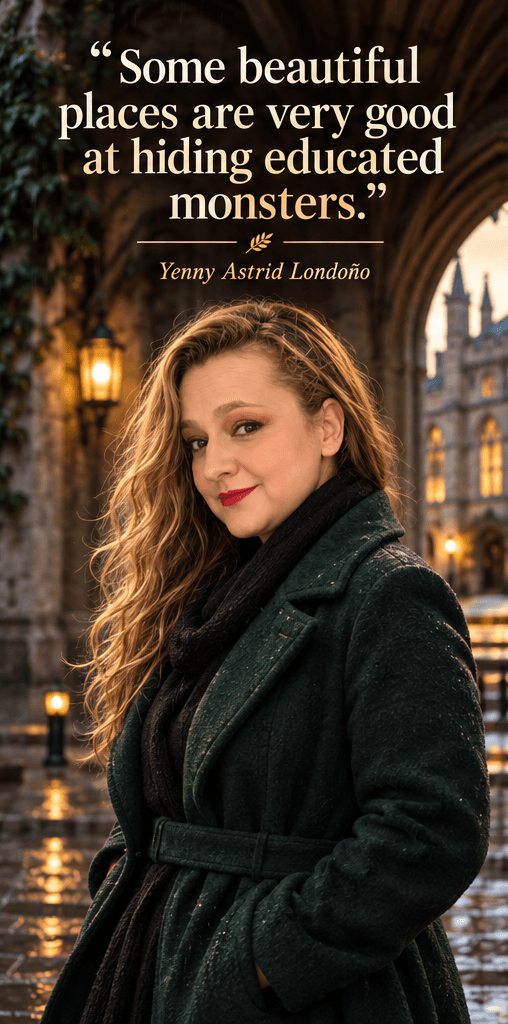
Fosca draws attention, and that also benefits someone else
Fosca doesn't need to be the killer to be questionable. The attention he concentrates is an important part of the deception, but the ending doesn't automatically turn his conduct into an innocent misunderstanding.
This is one of the issues that interests me most in the book: the difference between a wrong suspicion and a false observation. Mariana can be wrong about the crime without having invented everything unpleasant she saw around the professor.
We find that distinction hard to accept. Once the revelation arrives, we want to return each character to the right shelf. If he didn't kill, clean. If he killed, everything he said was a lie. What a marvelous system of organization. A pity it rarely works.
A man can take advantage of his students' admiration and at the same time be used as a decoy by someone else. What he did still deserves attention even if it doesn't explain the corpses.
And a decoy works best when it already carries something worrying. You don't need to invent a threat from scratch; it's enough for us to do the rest of the work.
Mariana's grief has a man who doesn't accept revision
Sebastian's absence determines the way Mariana looks at herself and understands others. She isn't simply a sad protagonist to whom a mystery happens. Her grief also organizes which possibilities she finds hard to imagine.
I find that a powerful idea, because loving memory can turn into a form of authority. The person remembered no longer needs to argue; we argue on their behalf. We defend what we thought we knew and leave out whatever doesn't fit.
You can truly miss someone and have known them in an incomplete way. No amount of pain makes that combination impossible.
Here the novel touches something more uncomfortable than the ritual murder. Discovering a lie from a living person at least lets you look them in the eye. Discovering it after their death leaves you rearranging conversations that can no longer be repeated.
It doesn't only ask what he did. It asks where you were while he was doing it, what you saw and what there was no way to know. That last point matters: Mariana's ignorance doesn't make Sebastian's responsibility hers.
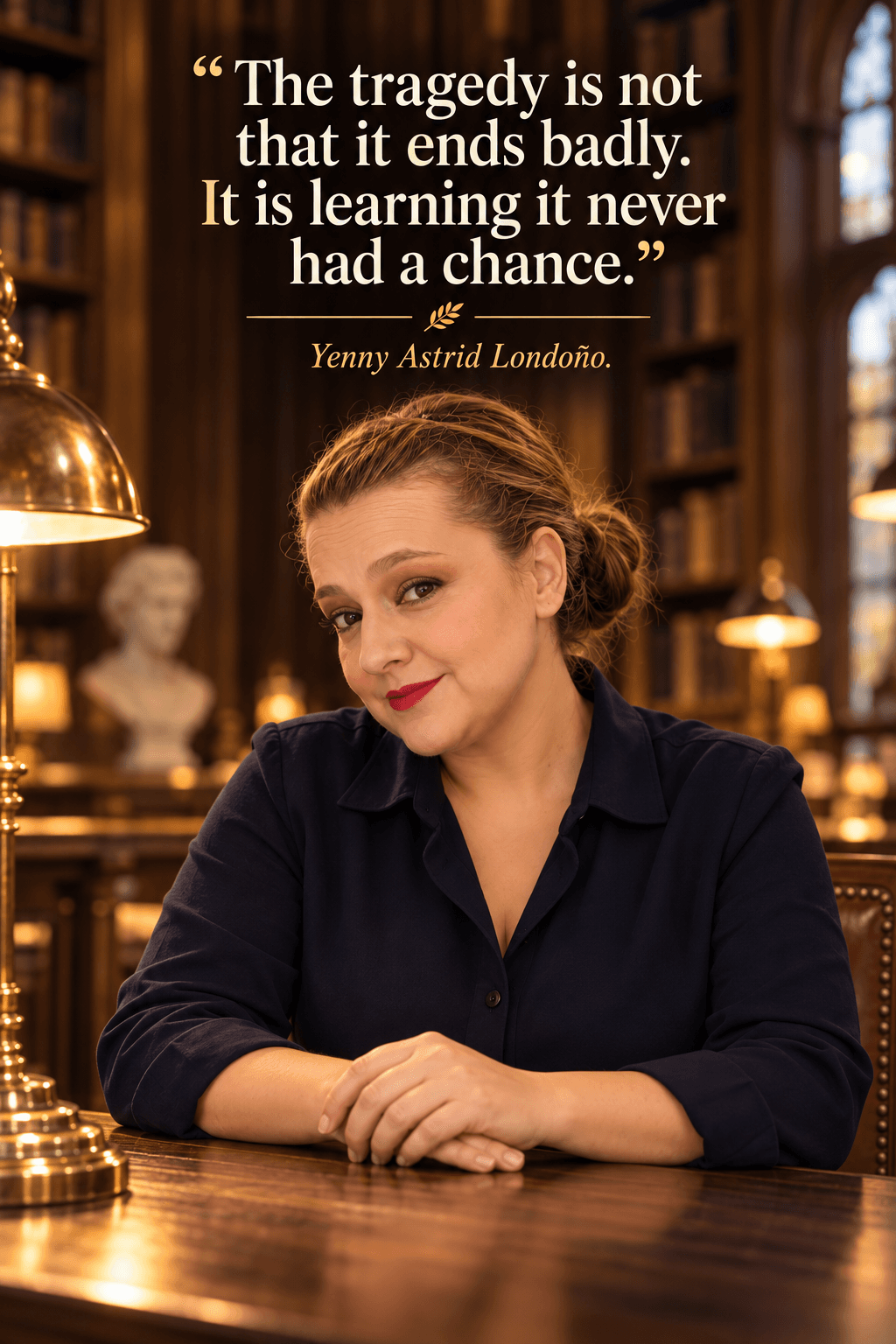
Zoe and Sebastian were inside Mariana's circle of trust
Zoe carries out the murders following a plan of Sebastian's. He had kept a relationship with her since her adolescence and had planned to eliminate Mariana for her money, using Fosca as the apparent culprit.
The revelation breaks two bonds at once. Mariana believed she was protecting her niece while keeping her love for her dead husband. She discovers that those two certainties shared a story that had been hidden from her.
And here one has to be careful about calling all of that an affair. Sebastian was an adult and Zoe was an adolescent under a relationship of family trust. Secrecy doesn't make the responsibilities symmetrical.
What Zoe does afterwards is gravely serious. But recognizing her violence doesn't require erasing the manipulation she suffered. We can look at a person as responsible for a harm and, at the same time, ask who used her before.
Sebastian keeps a terrible advantage for much of the novel: Mariana remembers him in love. He is less exposed to scrutiny than the professor, the students or anyone still alive who might make her uncomfortable.
What an effective kind of protection. To die and leave his wife holding up the reputation.
The twist changes the past and also asks a lot of the reader
The idea of revealing the idealized husband has force. It forces a revision of the grief and turns the investigation into a crisis of intimate knowledge. Mariana doesn't only lose a certainty about the crime; she loses the marriage she thought she had lived.
My objection lies in how many decisions you have to accept for that plan to work. The murders of the students serve a strategy whose aim lies elsewhere, and that can leave the group that gives the book its title with less human weight than it promises.
The victims deserve more than facilitating a huge twist. If their deaths matter mainly because of the direction they made us look, the tragedy can feel too subordinated to the surprise.
There is also the distance between the display of mythology and the final explanation. The setting is suggestive, but not everything that seems significant ends up being significant in the same way. Sometimes the scenery offers a depth that the machinery of the crime doesn't need.
That doesn't invalidate the proposal. It does stop me from automatically mistaking an unexpected ending for a perfectly prepared one. They are two different virtues, even if they are sold together with considerable enthusiasm.

What I didn't like about The Maidens
The ending needs too many things to come out exactly as they had to.
And when a plan depends on fifteen perfect coincidences, I no longer know whether I'm watching intelligence or simply good luck sponsored by the author.
Besides, the murdered girls are precisely “the maidens” of the title, and yet they end up with less weight than I expected.
Don't give me a title about them and then put them to work as decoration for the big twist.
I'm more interested in what Mariana has to revise than in the killer's intelligence
The Maidens finds its best reading when we stop admiring the plan and stay with what it ruined. A woman was trying to understand a crime from a life whose own past also needed to be understood.
The therapist knows tools for listening to others, but that knowledge doesn't make her immune to the wish to keep someone she loved. That makes sense. Training doesn't remove the feelings that make a question difficult.
The book combines an attractive atmosphere, a suspect who draws all the looks and a revelation that makes the memory painful. It also demands tolerance for its convenient moves. For me, the intimate betrayal gives me more to talk about than the promise of a flawless puzzle.
Because Mariana could investigate Fosca.
Frequently asked questions
Should I read The Silent Patient first?
Not necessarily. Mariana's mystery can be read on its own.
Who are the Maidens?
The select group of students who surround Professor Edward Fosca at Cambridge.
Does the review contain spoilers?
Yes. It includes the link between Zoe and Sebastian and the plan aimed at Mariana.
What is The Maidens about?
Mariana Andros, a group therapist, is grieving her husband Sebastian when the murder of a student takes her to Cambridge, where her niece Zoe studies. There she meets Professor Edward Fosca and the group of students who surround him: the Maidens.
What didn't I like about The Maidens?
The many decisions you have to accept for the plan to work, victims who are subordinated to the surprise, and a display of mythology that isn't always backed up by the final explanation.
The Book
The Maidens
by Alex Michaelides
Get the bookIf you buy through this link, Yenny earns a small commission and you pay the same price.
Keep reading
If you liked it, keep going

Javier Castillo
The Snow Girl
The Snow Girl: Kiera disappears and everyone moves on except her parents
Javier Castillo's The Snow Girl: Kiera vanishes at a New York parade and a tape reopens the case five years later. My honest review, 4 out of 5.
October 22, 2026

John Katzenbach
The Analyst
The Analyst: a birthday threat, fifteen days and a therapist who has lost control
John Katzenbach's The Analyst: a psychoanalyst gets fifteen days to find out who is threatening him. My honest review of this thriller.
October 22, 2026
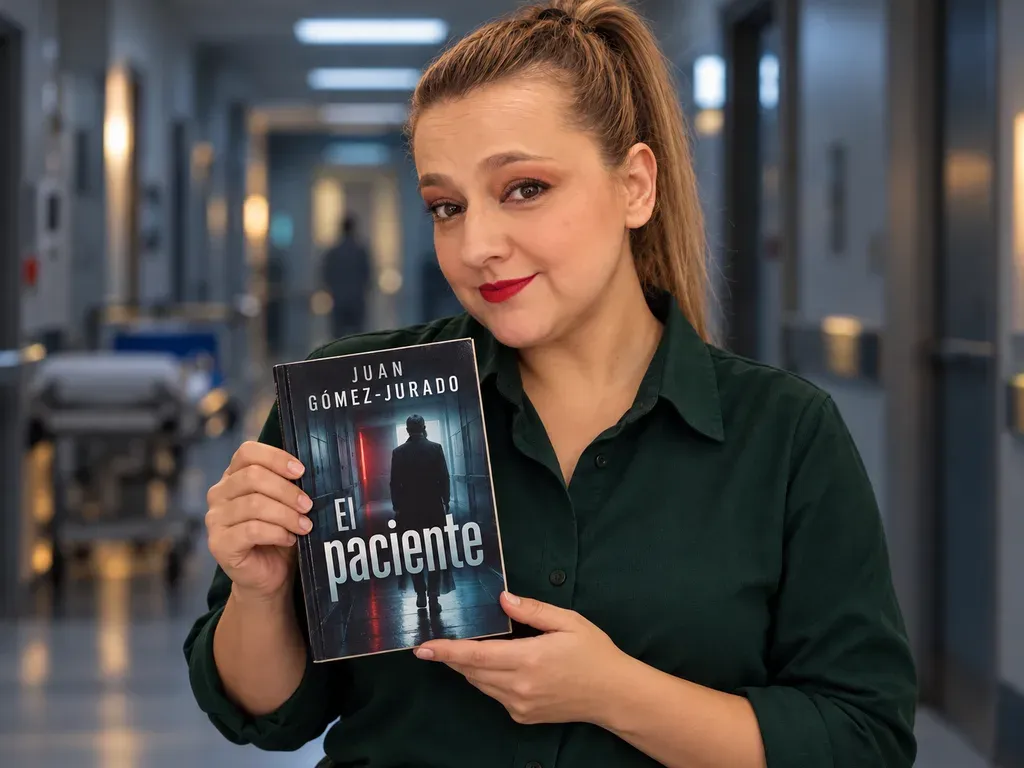
Juan Gómez-Jurado
The Patient
The Patient: the President on the operating table and a daughter nobody can trade
Juan Gómez-Jurado's The Patient: a neurosurgeon, a President on the table and a kidnapped daughter in sixty-three hours. My honest review.
October 22, 2026
Want more like this? Join the Readers Club and get one of my books for free.
Share
My books
Books by Yenny Astrid Londoño



About the author
Yenny Astrid Londoño
Yenny Astrid Londoño is a Colombian author and entrepreneur, founder of Anchetas Medellín. She writes about real life with sarcasm, irony and smart humor, turning everyday situations, mistakes and imperfect relationships into stories that readers can laugh at and recognize themselves in.

A free book from me
Get a free book from me
Subscribe and get Sobreviviendo a mis muertos in full as a PDF.
After that, I'll only write when I have something worth telling you.
Also available: Read this review in Spanish →