
Book review
The Master:
Jotadé investigates the disappearances of women who turn up dead. The title itself raises the question of who gets to claim power over someone else.
By Yenny Astrid Londoño · October 8, 2026 · 10 min read
Share

The Book
The Master
by Santiago Díaz
4 out of 5 stars
It requires that nobody manages to stop you. And that is where the investigation can still change the story.
The word master tells you a lot about a person who uses it for himself. It is not enough for him to control a room; he wants to believe the people inside it belong to him. That is a frighteningly short distance from a title to a locked door.
At a bus stop outside Madrid, police find the body of a teenage girl who disappeared years earlier. She was killed after giving birth. Iván Moreno and Jotadé Cortés begin to connect her death to other missing women.
Santiago Díaz brings Jotadé back with a case that started long before the body was found. His life with Lola and his relationship with Lucía keep moving while he investigates. The novel is interested in the violence that becomes possible when someone claims ownership of another life and manages to keep that claim hidden.
A body answers one disappearance and exposes another
Finding someone can be the worst news an investigation brings. The family needed an answer, but an answer doesn’t automatically bring relief. There is a particular cruelty in learning that someone was alive for part of the time everyone was searching for them.
The novel begins in that gap. Those years were not empty just because the case file couldn’t explain them. The kidnapped woman kept living through something no one else knew about, and the police are left confronting the consequences of violence that went on for years.
I'm interested in that weight of time. A thriller can treat the disappearance as the interval necessary to set up a mystery. Here I prefer to read it as a life interrupted and administered by another. Every year has a cost even if we don't yet know what happened within it.
The body offers information. It also forces you to think about what information comes too late to change. This distance makes the investigation of the other women urgent. It is not about completing a collection of cases. It's about finding out who can still get out.
Giving birth doesn't end captivity
The link between the murders and childbirth makes the premise especially brutal. A woman’s body is treated as if it exists to serve a function someone else has chosen to exploit. Her wishes don’t count inside the kidnapper’s system.
I don't find automatic depth in a criminal having a plan. Sometimes the supposed complexity of the monster receives more attention than the simplicity of what it took from the victim: freedom, time, the ability to decide. A mind can be elaborate and still hold a miserable idea.
The title points straight at that claim of dominance. “Master” tries to dress up a violent hierarchy as if someone had a natural right to command another person. They don’t. What we have is someone who needs to subjugate another human being to keep a fantasy about himself alive.
I don’t want the women to disappear beneath the description of the killer’s method. A pattern can help investigators; it should never replace the women who suffered. A victim has a whole life beyond the detail that links her case to another.
Jotadé investigates while other people judge him
Jotadé is the only Roma police officer at his station. That shapes how he moves through the world beyond his ability to solve a case: people may decide who he is before they’ve heard a word from him.
I want his Roma identity to be part of his life without making him responsible for representing an entire community. A protagonist doesn’t get more interesting because we turn him into an exemplary exception or celebrate every rule he breaks as genius.
Intuition can move an investigation. You also need contrast. When a detective novel asks us to admire someone because they do what they want, I want to see what consequences that freedom preserves and who has to pay for their mistakes. Charisma is not a substitute for work.
That lets me read Jotadé with sympathy and still hold him to account. I don’t have to choose between wanting to follow him and questioning one of his decisions. Interesting characters can take both; fictional saints usually bore me before the corpse even turns up.
Lola and Lucía continue to exist while the case progresses
Work doesn't suspend private life. I wish there was a box to postpone relationship problems until the kidnapper is resolved. But the people close to you still need something, even when an investigation has compelling reasons to take up everything.
The crisis with Lola and Lucía’s situation in juvenile detention expand Jotadé’s world. They matter because different people need different things from him. The case is urgent, but the people he loves can’t be put on hold forever either.
I read those lines with a question: if the detective knows how to recognize the danger outside, how well can he listen to those around him. Being effective at research doesn't guarantee being easy to live with. There are brilliant people at work who come home and even lose the ability to answer a question without becoming defensive.
Relationships interest me when they modify a decision and preserve their own life. I'm less convinced if they only exist to show that the protagonist has a lot going on. Lola and Lucía deserve space as people, not only as proof of the effort he is making.
Tension doesn't always have to hide the culprit
Díaz has explained that knowing the criminal allows us to build suspense from another place. That choice shifts attention from the riddle to the distance between what the reader knows and what researchers can prove.
I like that possibility because knowing who did something doesn't answer how much longer they can do it. Impunity has duration, resources and opportunities. The question can stop being a name and start being an action: how to reach someone, how to prevent the next harm, how to sustain proof.
I won't complete here the information that the book decides to present. I prefer to keep the route for those who enter for the first time. What I do value is that crime novels don't necessarily depend on maintaining an identity until the last pages.
It also demands more from the process. If there is already enough information to suspect, the delays must have a reason that the story can support. Suspense gains strength when a difficulty seems part of the situation and not a door that the author closed because there were still a hundred pages left.
What did not work for me in The Master
My main objection is how intense the criminal material is. The opening brings together disappearance, captivity, childbirth and murder. That combination hits hard, but the women cannot become props for showing us how monstrous the killer is. The case needs a pattern; the victims still need lives beyond the pattern.
When suspense depends on stopping the next attack, time becomes the engine of the story. That works for me. Even so, I don’t want urgency to erase the grief or the years already lost. Not everything can be measured by the next dramatic move. The disappearance still weighs on the present, even while the chase is underway.
I also want Jotadé’s rough edges to stop short of becoming an excuse for anything he does. The appeal of a difficult cop lies in the conflict he creates, the way he works and the things he cannot fix. “On the edge” is a catchy label; by itself, it explains very little. I’m more convinced by a choice with a cost than by a personality the story always expects me to admire.
The other reservation is practical: this is the second installment of the series. Anyone who arrives for the promise of a powerful case may find relationships that were already underway. I don't think it's a defect to have continuity. I think it is necessary to warn this before recommending it as if it all started here. Reading in order allows Lola, Lucía, and the protagonist's past to have the weight they deserve.
Why knowing a threat can increase suspense
A traditional mystery makes us wonder who did it. Suspense can also ask how long it will take others to understand what the reader already knows. It is an important difference to approach The Master. Tension doesn't have to wait for a name to be revealed; it can grow by seeing that research still doesn't have something that we do know.
That resource changes attention. A seemingly normal conversation can become unbearable if we know that someone is in danger. A small police advance can matter more than a big explanation, because it brings concrete action closer. Pleasure ceases to consist solely of getting it right and begins to include the helplessness of looking from the outside. We have no way of calling Jotadé and telling him to hurry up, no matter how angry he is.
What I evaluate then is the relationship between information and decision. Does knowing something allow you to act? Who needs to check it? What information is missing for a suspicion to stop being intuition? This reading avoids requiring the book to have the mechanism of another type of thriller and allows us to assess what it is trying to do.
It also makes the criminal's responsibility more visible. If the story allows us to see how it works, we don't have to convert that closeness into admiration. Understanding a strategy doesn't require celebrating those who use it. I prefer to pay attention to the limits of his control and the people who resist being organized by him.
Reading order and expectations
I’d start with Jotadé, then continue with The Master. This installment has its own case, but the protagonist’s relationships and personal story keep developing across the series. If you’ve followed him from the beginning, that continuity is part of the pleasure. If this is your first Santiago Díaz novel, decide whether you’re ready to enter a series rather than treating this as a one-off.
I’d recommend it if you want a tense crime thriller where stopping further harm matters as much as reconstructing what happened. I wouldn’t pick it up for a gentle read or if you want to avoid sexual violence and captivity. A warning doesn’t ruin a novel; it lets you choose with your eyes open.
To discuss it later, I would ask what actions we call protection and what actions only preserve someone's authority. The title is not a decoration. It is pointing out a way of understanding others as property. Reading from that idea allows the conversation to go beyond how afraid the case made us. I also care what kind of power made it possible.
My rating is 4.5 out of 5
I give it four and a half stars for a case that lets us talk about possession, years in captivity, and the work it takes to challenge impunity. Jotadé’s personal relationships also give the series a world worth following from the first book.
My reservation is in the balance between the criminal impact and the lives that receive it. Such a fierce premise can become a race to intensify the horror. I prefer that the investigation keeps the women in the conversation and that the protagonist doesn't absorb all the interest.
This is for readers looking for a hard-edged police thriller who can handle sustained violence. I recommend starting with Jotadé so the relationships can build naturally, instead of meeting everyone as a name attached to the new case.
The master puts a powerful word on cowardly behavior. Dominating someone defenseless doesn't require greatness.
It requires that no one can stop you. And that's where research can still change history.
Frequently asked questions
Is The Master the first Jotadé novel?
No. It is the second installment, after Jotadé. Starting with the first book gives the character’s relationships and history room to make sense.
Does the review reveal the ending?
No. Analyze the starting point and preserve the criminal resolution.
Is it a hard read?
Yes. The case includes prolonged kidnapping and murders of women after giving birth.
Does interest depend only on discovering the murderer?
The novel also addresses the threat and pressure to stop it. The question is not only who is behind it, but what investigators can do before the damage continues. That difference matters when choosing a thriller.
What do I question about the novel?
The rawness demands that each scene provide more than just impact. My reservations also point to the need for Jotadé's protagonism to leave space for others and for tension not to replace the consequences of the case.
Who would I recommend The Master to?
Readers who already know Jotadé and want another high-pressure case with a brutal threat. If violence against women or captivity is especially difficult for you, keep those themes in mind before starting.
The Book
The Master
by Santiago Díaz
Get the bookIf you buy through this link, Yenny earns a small commission and you pay the same price.
Keep reading
If you liked it, keep going
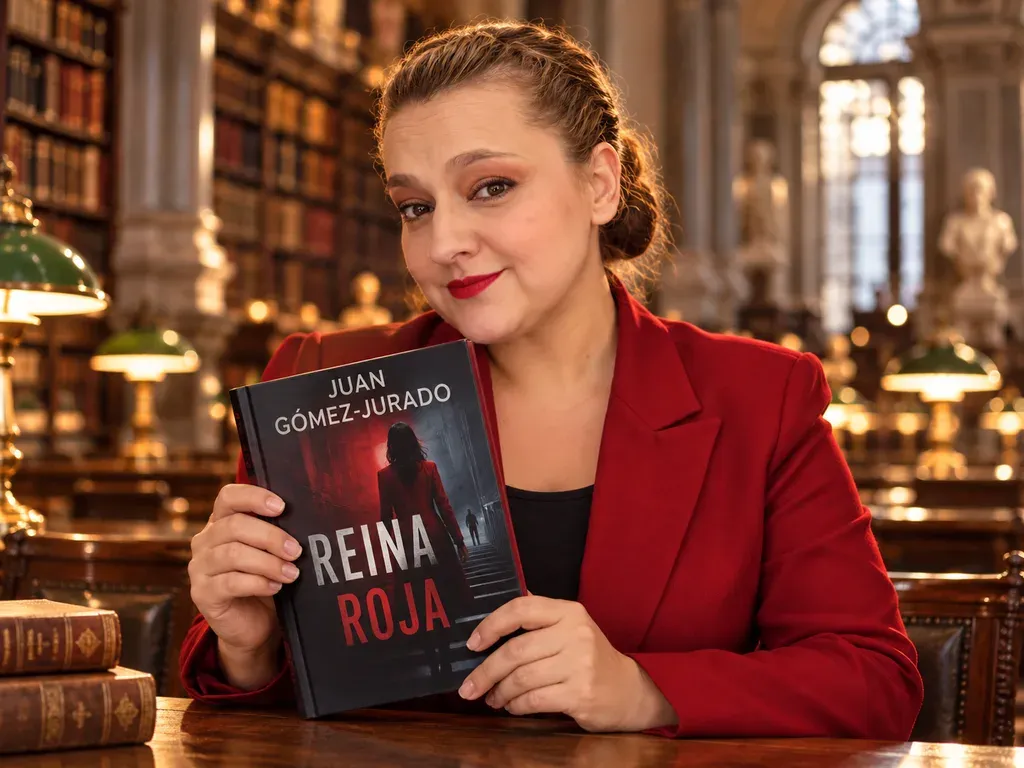
Juan Gómez-Jurado
Red Queen
Red Queen by Juan Gómez-Jurado: Antonia Scott sees everything except a reason to leave her apartment
Antonia Scott has no badge, no official job and an intelligence powerful enough to make a room uncomfortable. Jon Gutiérrez arrives at the wrong door and gets pulled into a case involving wealth, power and people who believe money can buy silence. It can buy quite a lot. It cannot always buy good judgment.
October 26, 2026
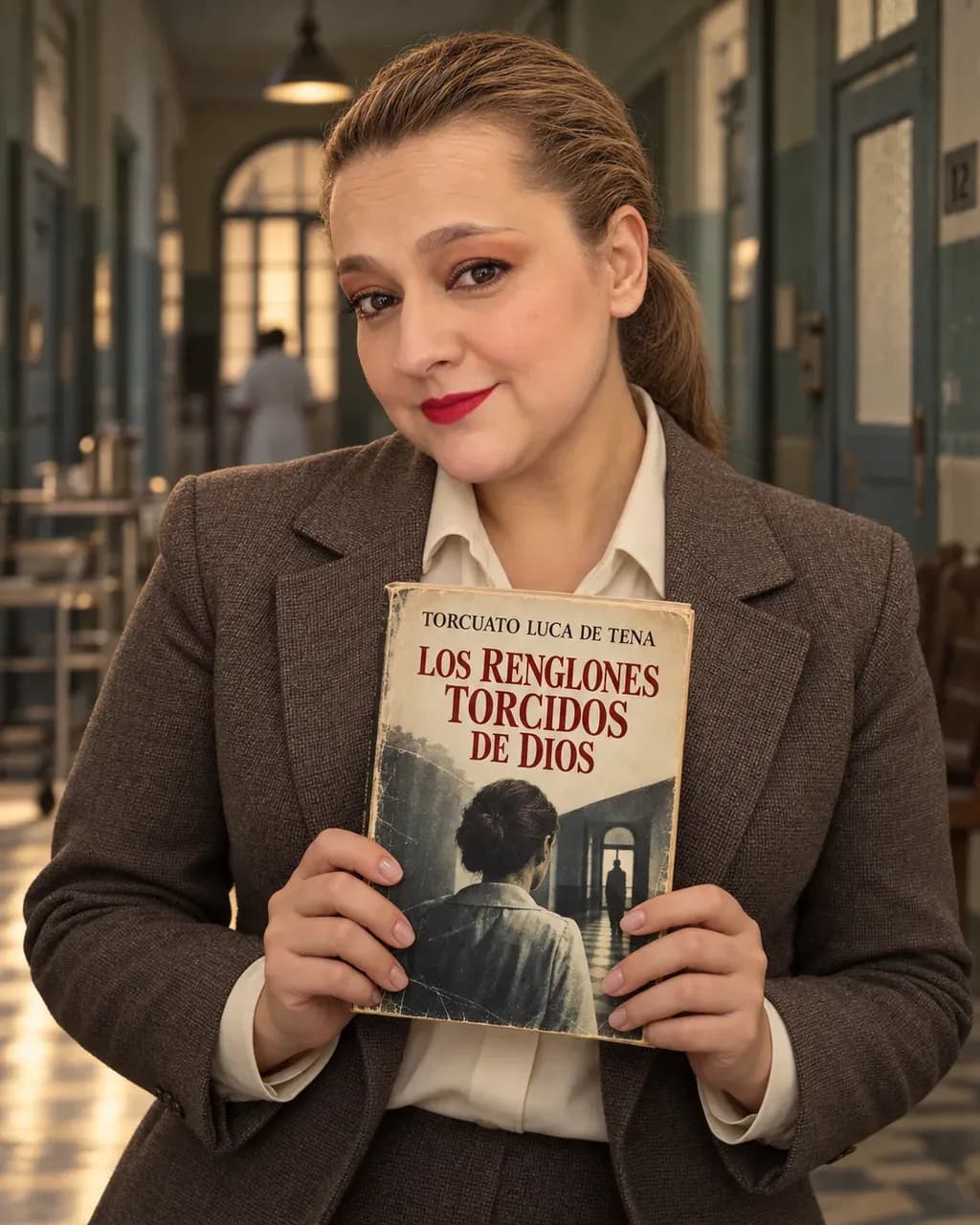
Torcuato Luca de Tena
God's Crooked Lines
God's Crooked Lines by Torcuato Luca de Tena: who gets to decide who is sane?
Alice Gould enters a psychiatric institution with a story of her own. The hospital has another version. That is where the novel starts asking a question institutions would rather keep in their paperwork: who gets to name someone sane, and what happens when the person holding the file is wrong?
October 26, 2026
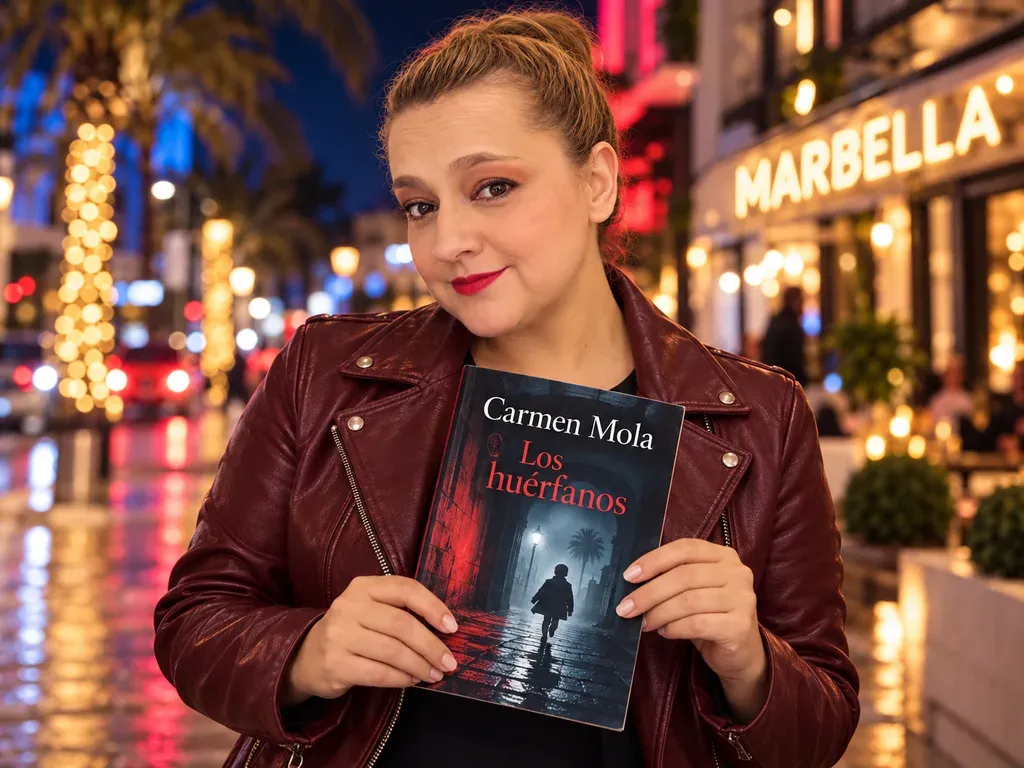
Carmen Mola
The Orphans
The Orphans by Carmen Mola: abandoned children grow into crime bosses. What a hell of a career path
Three children meet in Belfast, build a family out of survival and grow into adults who have learned how to make money from crime. Years later, a case pulls Laura Pastor and her family into a world where loyalty is real, but so are the bullets. The title sounds sad; the career path is considerably worse.
October 25, 2026
Want more like this? Join the Readers Club and get one of my books for free.
Share
My books
Books by Yenny Astrid Londoño



About the author
Yenny Astrid Londoño
Yenny Astrid Londoño is a Colombian author and entrepreneur, founder of Anchetas Medellín. She writes about real life with sarcasm, irony and smart humor, turning everyday situations, mistakes and imperfect relationships into stories that readers can laugh at and recognize themselves in.

A free book from me
Get a free book from me
Subscribe and get Sobreviviendo a mis muertos in full as a PDF.
After that, I'll only write when I have something worth telling you.
Also available: Read this review in Spanish →