
Book review
The Nanny:
Paula needs help with her children, but she wants to keep control of everything. Yurena enters a house where caring and monitoring are already confused.
By Yenny Astrid Londoño · October 8, 2026 · 10 min read
Share
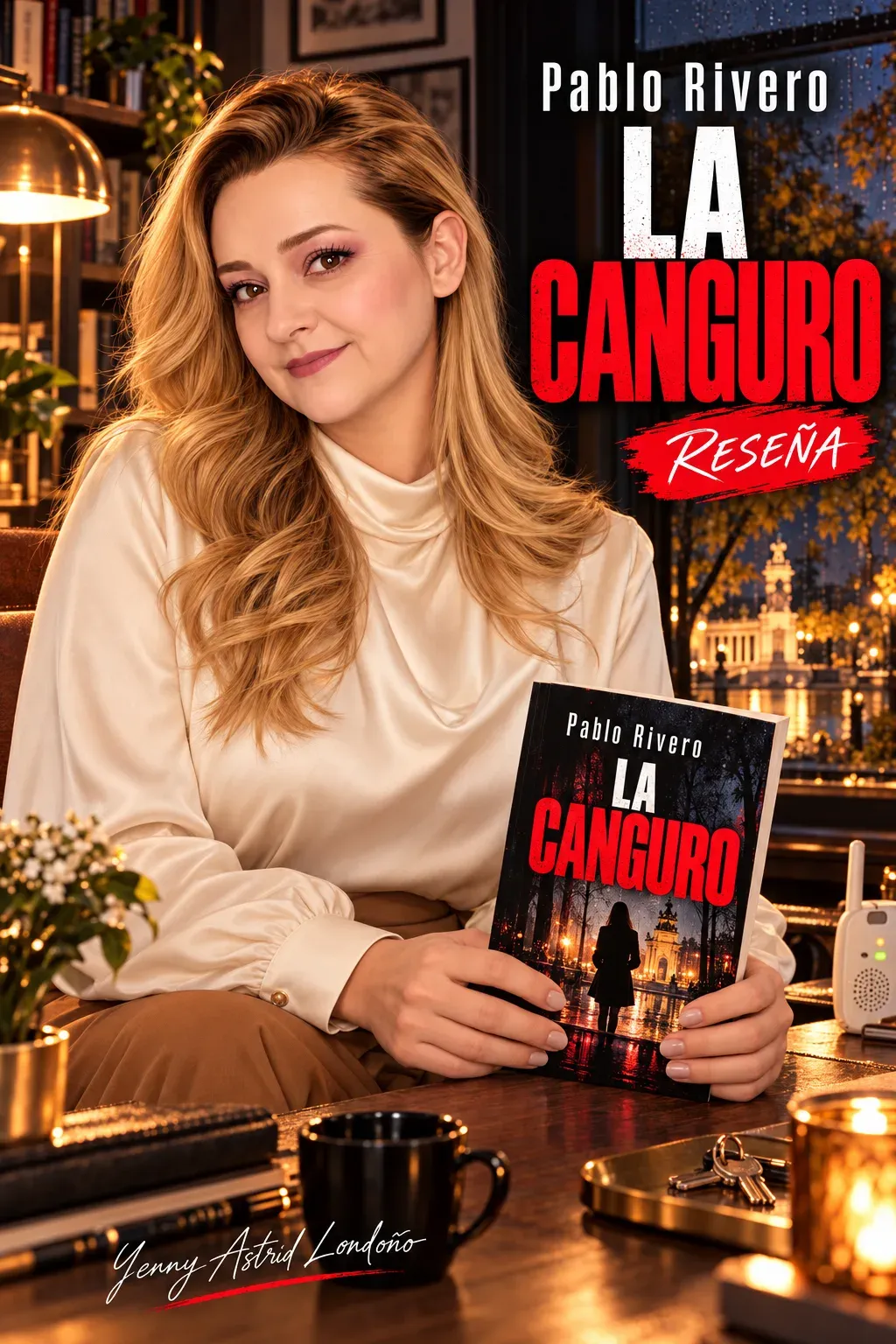
The Book
The Nanny
by Pablo Rivero
3.5 out of 5 stars
What does deserve questions is a house where helping is only possible if nobody asks too many questions.
The person caring for your children sees a part of your home few people ever see: the exhausted mornings, the argument nobody finished, the rule everyone follows without explaining why. Some jobs offer more intimacy than a decade-long friendship.
Paula needs help with Ethan and Martina. She lives inside a routine of fear and rules while her husband Raúl is often away. Yurena arrives as a possible relief. Accepting her help, though, means letting another person notice what happens in the house.
The Nanny opens with a violent event in Madrid’s Retiro Park, then takes us back thirteen days. We know something is going to break. What interests me is how this family gets there—and how often “care” becomes a convenient name for control.
A mother cannot hold everything through willpower alone.
Paula is raising her children inside exhaustion and isolation. Before turning her into the excessive woman who is too suspicious, it is worth looking at the distribution of work. There is a functioning family because someone remains available for everything the others need. This availability has a cost, even if it doesn't come with a receipt.
It annoys me how quickly people praise a mother’s sacrifices while assuming she can keep making them forever. If a mother doesn't have space to rest, talk, or reclaim a part of her life, it's not enough to praise how much she loves her children. Praise can become the cheapest way to continue without helping her.
Rivero places fear within that routine. The house should offer refuge, but it also contains a vigilance that doesn't rest. Paula tries to avoid danger and ends up living as if it were already present everywhere.
I don't need to use a diagnosis to understand that this way of living is unbearable. The novel offers a concrete human situation. I prefer to look at her before turning anxiety into a label that automatically explains everything she does.
Rules can protect and also prevent someone from looking
Every house with children has rules. Schedules, medications, meals, things that should not be touched. The problem begins when a rule stops protecting someone and starts protecting one version of events.
Paula's need to find a person who won't ask is a very different signal from her need to get competent help. Working well requires understanding. If the condition of employment is not to understand too much, intimacy is already beginning to use silence as a tool.
To me, that difference seems more disturbing than a closed door. The door announces a prohibition. The rule can be presented as a responsible act and cause those who obey it to participate without realizing something they don't know.
Money matters here too. The nanny comes to work; the family decides what she is allowed to ask and how much it might cost her to make them uncomfortable. We can still follow the mystery and notice that imbalance. A private home is also someone’s workplace, and that person deserves boundaries and straight answers.
Yurena arrives when Paula needs to trust
Yurena offers a presence that seems to alleviate confinement. For Paula, this possibility is not only practical. Delegating touches the image she has built of herself and the security she tries to preserve for the children.
Trusting another person requires accepting that there will be things that you will not observe directly. And if your peace of mind depends on seeing it all, help can feel like a threat even though it's precisely what you need. That contradiction supports the premise very well.
I don't want to decide from the title that the employee is the danger. The domestic thriller often uses the stranger who enters the house, but another question should be left open: what does she find inside. The person hired does not necessarily invent the tensions she discovers.
The game between relief and suspicion has value because Paula needs something from Yurena. You can't resolve the discomfort by simply walking away without also losing a chance to rest. Dependency makes the relationship matter before we know how to interpret it.
Ethan has a voice that makes his mother's version uncomfortable
The novel uses four first-person voices and intersperses Ethan's diary. That choice allows the house to not exist solely as Paula understands it. The son also has an experience of the rules, the attention and the place he has occupied since Martina's arrival.
A child can be wrong about a situation and still say something true about how he or she feels within it. I'm interested in hearing both. I don't want to turn his anger into automatic proof of evil nor his age into a guarantee of absolute innocence regarding every behavior.
Coexistence has this difficulty: the same action can be protection for those who impose it and suffocate for those who receive it. That doesn't make all versions equivalent. It forces you to look at the event with more than one voice before accepting an explanation.
The diary also offers a private space. What a person writes without an audience can show resentment, fantasy or fear; it should not be read as a literal statement of everything you will do. The novel gains possibilities with that difference between thought and action.
Knowing that a tragedy is coming changes even the sound of an argument
The beginning at Retiro park and the return to the previous days make the routine lose its innocence. A domestic scene may seem small on its own. Read with the certainty of a future violent event, it begins to ask for other attention.
I like how the timeline changes the way we hear ordinary family life. It also needs a light touch: not every detail has to be a clue, and not every disagreement has to announce catastrophe. If the book keeps shouting danger, the threat can start to sound like background noise.
My reading prefers the tensions that modify a relationship. Who stops listening, who starts to hide something, who can no longer ask for help without feeling judged. There a house can become dangerous without a spectacular scene appearing every now and then.
And that's why I keep the central secret. The important thing here is to accompany the difficulty of deciding what to believe. It would be unfair to take away from this construction the time it needs for each voice to alter the previous one.
“Protecting your child can turn into watching everyone except the person who matters.” — Yenny Astrid Londoño
What did not work for me in The Nanny
What gives me the most pause is how closely the story ties motherhood to danger. An exhausted mother, a caregiver coming into the home, rules no one wants to explain: it’s fertile ground, but domestic thrillers visit it often. I want Paula to remain more than a distressed woman everyone watches. Fear can shape part of your life; it shouldn’t get to explain all of it.
I don’t want suspicion of Yurena to rest only on the fact that she’s an outsider. Hired help gets the cheapest kind of suspicion: she’s new, she knows things, she has access. That’s the easy answer. The interesting questions are who has authority in this house and whether the nanny can really refuse, ask questions, or walk away.
The countdown creates pressure from the start, though it can make earlier scenes feel overemphatic. We know tragedy is coming, so every bit of friction starts to look like an announcement. I prefer tensions that still feel like ordinary life. If every gesture comes with a neon sign saying SECRET HERE, I lose some of the pleasure of noticing things for myself.
My objection is not that there are several voices. That is one of the most fertile possibilities of the book. What I ask is that each one contribute a different perception, their own way of understanding a rule or of justifying a behavior. Changing the name of the narrator and maintaining the same suspicion is not enough. The house becomes complex when the versions do more than postpone the answer.
What the voices of the house contribute
An intimate narrative allows you to hear someone explain themselves. That explanation can be sincere and limited at the same time. Paula knows her own exhaustion, but she doesn't necessarily understand everything Ethan feels. Yurena observes from another place, conditioned by her work and what she is allowed to know. The child's diary introduces a different intimacy than a family conversation.
That is why it is convenient to separate perception and fact. When someone describes a behavior as caring, we can ask how the other person receives it. When a character expresses anger, we don't have to turn that anger into a confession of an act. The domestic novel gains interest with these displacements: a house can have many incompatible certainties before a deliberate lie appears.
The workload also deserves that reading. Preparing meals, monitoring schedules, and anticipating needs don't happen in a vacuum. Who can leave? Who should be available? Who gets rest and who gets advice? These questions make Paula's motherhood have a material dimension. Exhaustion stops being a personality defect and begins to be related to what the family expects of her.
I won't use the novel to diagnose its characters. I prefer to examine their decisions and the relationships that enable them. Calling a mother crazy can shut down the conversation too soon. And a story built around versions precisely requires that we not take for granted what still needs to be heard.
Who I would recommend The Nanny to
I’d recommend it if you like domestic settings where intimacy turns uncomfortable and each narrator changes how a scene reads. The tension comes less from danger outside the home than from the pressure already building inside it. The title invites you to suspect the nanny; the more interesting question is what the family expects her to ignore.
If you want a police procedural at the center of the story, or if threats involving children are hard for you to read, know that before picking it up. I also wouldn’t sell it as a gentle meditation on parenting. This is suspense, driven by fear, uncertainty, and a violent event. The questions about care grow out of that very uncomfortable setup.
For a book club, I’d bring one question: which house rules protect a person, and which ones protect someone’s version of events? No one needs to spoil the ending to discuss how “help,” “watching,” and “trust” shift as we get to know each character. That conversation gives us more than a race to guess who’s hiding something.
“A safe house stops feeling safe when nobody agrees who is in control.” — Yenny Astrid Londoño
My rating is 4 out of 5
I give it four stars for turning family caregiving into a power relationship that deserves examination. The distinct voices and counting of days offer a clear way to read how the pressure is building.
My reservation appears when psychological suffering risks becoming a universal explanation. A distressed mother still has specific responsibilities, needs and relationships. I want the novel to retain that complexity instead of asking me to fit everything under the word madness.
I’d recommend it to readers who like family secrets and narrators whose versions don’t quite line up. This isn’t a breezy story about a suspicious babysitter; it’s about fear and family ties where protection can start to look a lot like control.
Paula needs help. That shouldn't be embarrassing.
What does deserve questions is a house where helping is only possible if no one asks too much.
Frequently asked questions
Who are the central characters?
Paula and Raúl, their children Ethan and Martina, and Yurena, the babysitter who enters the family's life.
Is the ending told in this review?
No. I preserve the central secret and the resolution.
What kind of thriller is it?
A domestic thriller about fear, family secrets, care and control, with different narrative voices.
Why does it matter that the story has different voices?
Because family life looks different from every position. The different accounts let us compare fears, interests and silences; we should also ask who is interpreting a behavior and what information they have.
What is it that convinces me the least about the approach?
Domestic fear needs nuances so as not to reduce the mother to her anguish or the caregiver to automatic suspicion. I am interested in behaviors that sustain tension, more than the simple fact of letting someone into the house.
Who might like The Nanny?
Readers who enjoy family secrets and caregiving relationships turning uncomfortable may find a lot here. If you prefer a police investigation to drive the whole novel, this story puts more weight on what happens inside the family and how each person interprets it.
The Book
The Nanny
by Pablo Rivero
Get the bookIf you buy through this link, Yenny earns a small commission and you pay the same price.
Keep reading
If you liked it, keep going

Javier Castillo
The Snow Girl
The Snow Girl: Kiera disappears and everyone moves on except her parents
Javier Castillo's The Snow Girl: Kiera vanishes at a New York parade and a tape reopens the case five years later. My honest review, 4 out of 5.
October 22, 2026
John Katzenbach
The Analyst
The Analyst: a birthday threat, fifteen days and a therapist who has lost control
John Katzenbach's The Analyst: a psychoanalyst gets fifteen days to find out who is threatening him. My honest review of this thriller.
October 22, 2026
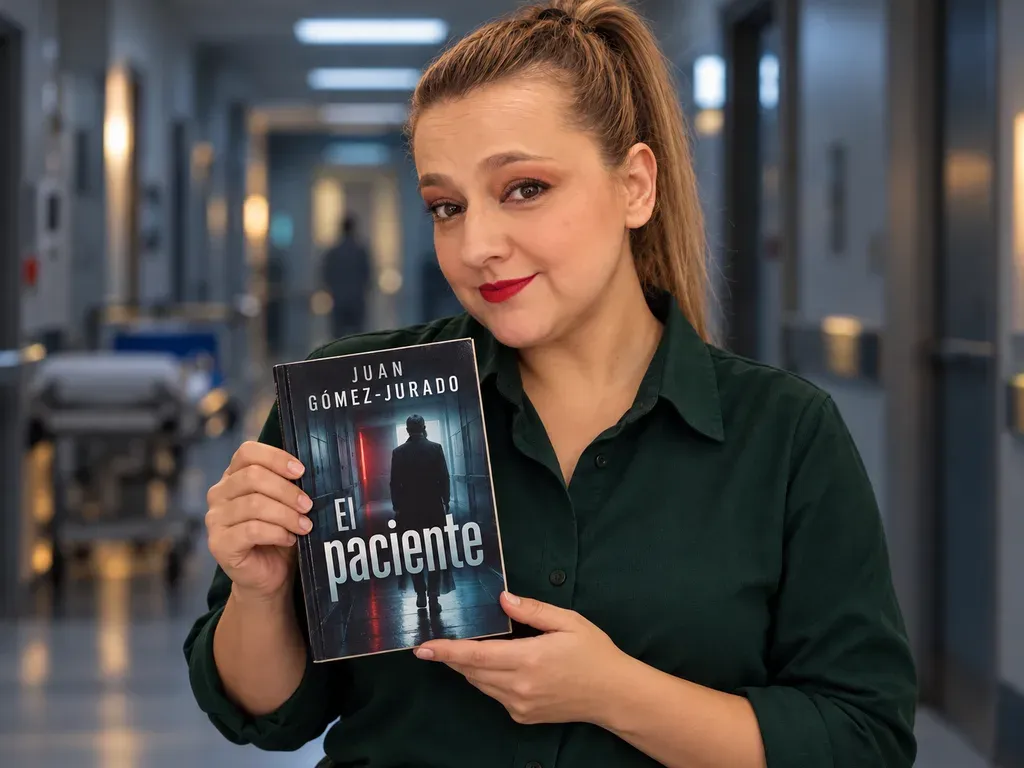
Juan Gómez-Jurado
The Patient
The Patient: the President on the operating table and a daughter nobody can trade
Juan Gómez-Jurado's The Patient: a neurosurgeon, a President on the table and a kidnapped daughter in sixty-three hours. My honest review.
October 22, 2026
Want more like this? Join the Readers Club and get one of my books for free.
Share
My books
Books by Yenny Astrid Londoño



About the author
Yenny Astrid Londoño
Yenny Astrid Londoño is a Colombian author and entrepreneur, founder of Anchetas Medellín. She writes about real life with sarcasm, irony and smart humor, turning everyday situations, mistakes and imperfect relationships into stories that readers can laugh at and recognize themselves in.

A free book from me
Get a free book from me
Subscribe and get Sobreviviendo a mis muertos in full as a PDF.
After that, I'll only write when I have something worth telling you.
Also available: Read this review in Spanish →