
Book review
The Surgeon:
There's a killer in Boston and a woman the past is hunting again. Her skill won't convince him to leave her alone.
By Yenny Astrid Londoño · October 8, 2026 · 7 min read
Share
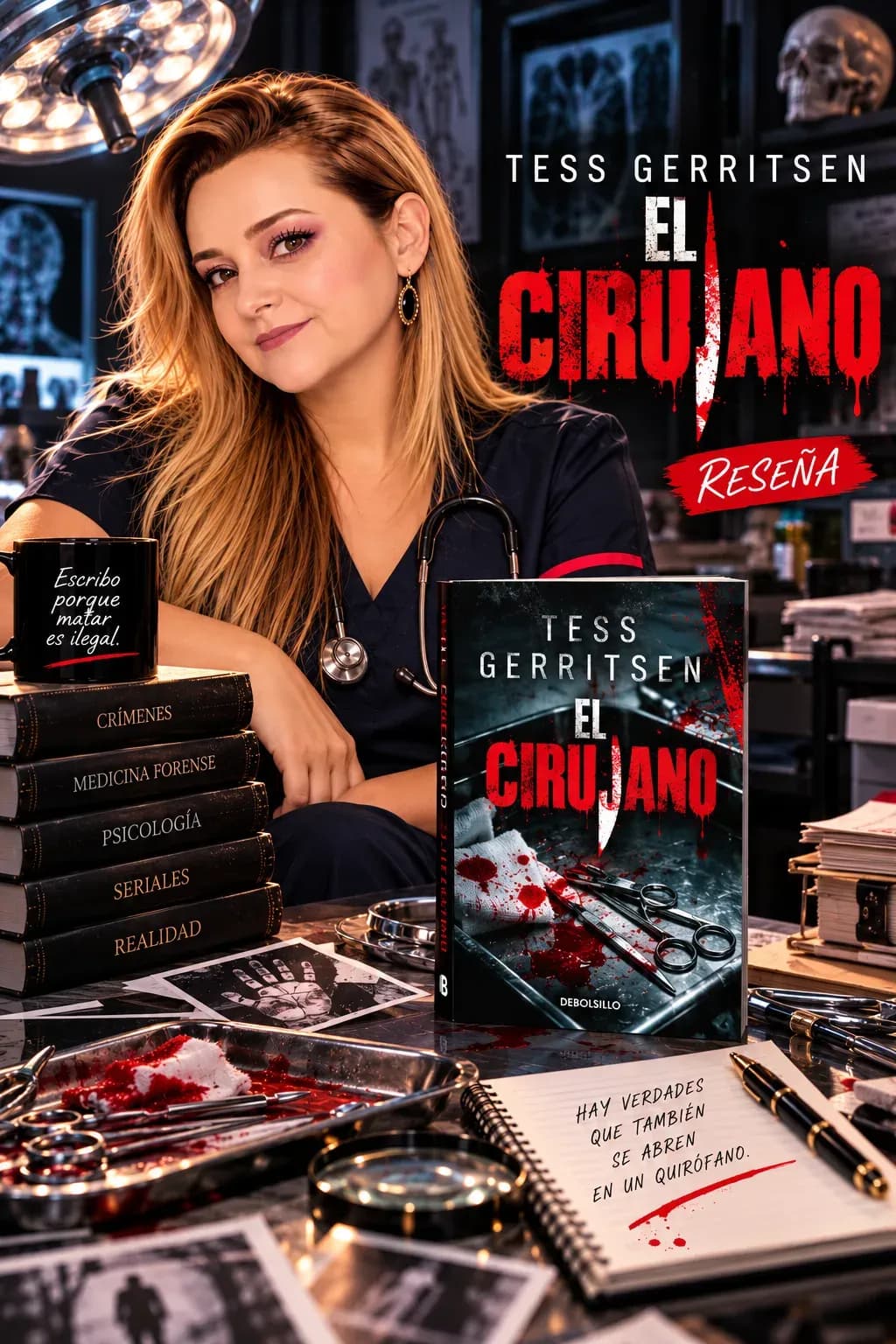
The Book
The Surgeon
Crime and medical thriller
by Tess Gerritsen
4.5 out of 5 stars
It shouldn't come with the obligation to look invulnerable.
There is a comfortable habit of admiring a woman because she survived, and then growing impatient when she is still afraid. It's over, you got out, you're strong. As if strength came with an obligation not to bother anyone about it again.
Catherine Cordell is a doctor who survived an attack and killed her attacker. Some time later, in Boston, murders begin that reproduce details of that violence. Detectives Jane Rizzoli and Thomas Moore investigate while the past stops being something Catherine can keep at a distance.
The threat has a precision that beats comfort. Nobody can tell her it's over. Someone is using what she suffered to get close to her again.
Catherine can do her job well and be afraid at the same time
Catherine's profession makes it hard to reduce her to a motionless victim. She has knowledge, responsibilities and a concrete ability to step in when someone else needs help.
What interests me is that this competence exists alongside the fear. There's no need to choose one for her to be believable. A woman can do demanding work and still come home and check a door more than once.
Life after an assault doesn't turn into a permanent show of recovery. It also needs routines, silences and days when the person doesn't have to explain why something unsettles her.
Gerritsen places Catherine's craft close to the threat. The medical precision that serves to heal at work appears twisted in the killer's methods. That adds a discomfort that goes beyond technical knowledge.
The same vocabulary can belong to two completely different intentions. Knowing how a body works doesn't yet tell you what you're willing to do to it. That's why the criminal's skill shouldn't be confused with a greatness that deserves admiration.
The nickname gives prestige to a cruelty that doesn't need it
The press calls the killer the Surgeon because of how precise his crimes are. It's an effective name for a novel, and quite revealing about how we turn certain violence into characters.
A nickname concentrates attention. It gives the case unity and lets people talk about the perpetrator as if he were presenting a signature. Meanwhile the victims can start to disappear behind an identity that is easy to remember.
I'm not saying a thriller should give up building a recognizable threat. I want us not to lose sight of who pays for that construction. The precision of the harm does not make the harm any less brutal.
The association with medicine also has a particular perversity. Care requires access to the body and trust in whoever touches it. This killer uses a skill tied to that access to impose the opposite.
What unsettles me isn't only the wound he can inflict. It's that he understands where a person expects protection and knows how to turn that place into vulnerability. Catherine has concrete reasons to recognize the threat. She is not a woman imagining too much.
Rizzoli is also working against what people expect of a woman
Jane Rizzoli joins the investigation from a police environment where she has to fight for recognition of her ability. Her relationship to the case doesn't end with following Moore's decisions.
I'm interested in that presence because the thriller can place two women before different forms of distrust. Catherine needs people to believe what she fears. Rizzoli needs people to take seriously what she knows how to do.
They are not identical problems, and it isn't worth simplifying them. But the novel lets you see how much extra work appears when a woman must prove, beyond the task itself, that she has the right to occupy that place.
Rizzoli can be abrasive, make mistakes and have conflicts. I don't need to turn her into a flawless figure to understand why it's exhausting that every flaw seems to stand for all the women who might come after her.
A difficult man is usually just a difficult man. A difficult woman can quickly turn into a debate about whether women are suited to the job. What an admirable talent for enlarging the problem when it suits.
The return of the threat doesn't cancel what Catherine already did
There's something cruel about having to face again a danger tied to what you've already escaped. Survival can feel questioned, as if the earlier ending had been merely a postponement.
But Catherine doesn't return to the starting point. What she lived through still exists, with its consequences and also with her capacity to act. The new threat does not erase the woman who got out of the previous one.
This difference matters to me, because stories of persecution sometimes seem to punish any attempt to rebuild a life. The victim finds a space, and the story destroys it to prove the killer can always reach her.
Suspense needs danger; the character needs more than the loss of every refuge. When the novel keeps her craft, her decisions and her relationships, Catherine has a life the criminal threatens, instead of existing only to receive the threat.
It's also hard to accept the desire for protection without confusing it with incapacity. Asking for help is an action. Autonomy doesn't mean having to survive alone to deserve respect. One already has enough work trying to stay alive.
Moore's closeness should not replace Catherine's life
The relationship between Moore and Catherine brings affection into a story shot through with violence. That closeness can offer rest, but it needs careful measure.
A woman who is being hunted doesn't need a romance for her recovery to make sense. Affection can accompany her; it shouldn't become the certificate that she is finally fine.
I'm interested when proximity lets us see Catherine outside the case file. Less so when comfort risks organizing her around the man who protects her. Both readings are worth keeping open as we go.
Investigation and intimacy have different needs. A detective needs facts. A person who has suffered needs not every conversation to demand evidence. Putting both close together can produce complex scenes, as long as the book doesn't resolve them with an overly simple sentimental promise.
Fear isn't persuaded just because someone loves you. I wish it were. It would be a precious service, and they would probably already be charging a subscription for it.
What I didn't like about The Surgeon
I have a problem with the habit of giving a traumatized woman a boyfriend as proof that she has finally recovered.
No.
Love can help.
But a woman is not “repaired” because a good man showed up.
Catherine survived something horrifying.
Her recovery could be imperfect, slow, furious, lonely, accompanied, with therapy, without therapy, however it came.
But don't sell me the man as a guarantee certificate.
She was already a complete person before him.
The book's violence demands more than curiosity
The Surgeon deals with sexual assault, damaged bodies and very physical fear. That defines the reading experience. I wouldn't recommend it as if it offered only a clever investigation with the pain conveniently set aside.
Its proposal has strength in the relationship between clinical precision, domestic threat and women who must keep a life while others try to decide about their bodies. My interest lies in that relationship as much as in the identity of the criminal.
Here I don't reveal the killer or the final confrontation. I'd rather keep a question that the starting point already makes urgent: how much we demand of a survivor before accepting that her fear still deserves attention.
Catherine can save a person in a hospital and still need someone to look after her when she leaves. She can have been brave and be terrified. She can have won a fight without being obliged to fight all the others alone.
Surviving was already enough work.
It shouldn't come with the obligation to look invulnerable.
Frequently asked questions
Is The Surgeon the first Rizzoli & Isles novel?
Yes. It is the first book in the series. Here the investigation is led by Jane Rizzoli and Thomas Moore; don't expect the television pair to be fully formed yet.
Do I need to know the TV series first?
No. The novel can be read from the beginning, and it's worth keeping it separate from its adaptation.
Are there sexual violence and graphic scenes?
Yes. They are important elements of the story and of the threat against Catherine.
What is The Surgeon about?
Catherine Cordell is a doctor who survived an attack and killed her attacker. Some time later, in Boston, murders begin that reproduce details of that violence. Detectives Jane Rizzoli and Thomas Moore investigate while the past stops being something Catherine can keep at a distance.
What didn't I like about The Surgeon?
That the relationship with Moore risks becoming proof that Catherine is finally fine, and that the book's violence is very physical and defines the reading experience.
The Book
The Surgeon
by Tess Gerritsen
Get the bookIf you buy through this link, Yenny earns a small commission and you pay the same price.
Keep reading
If you liked it, keep going
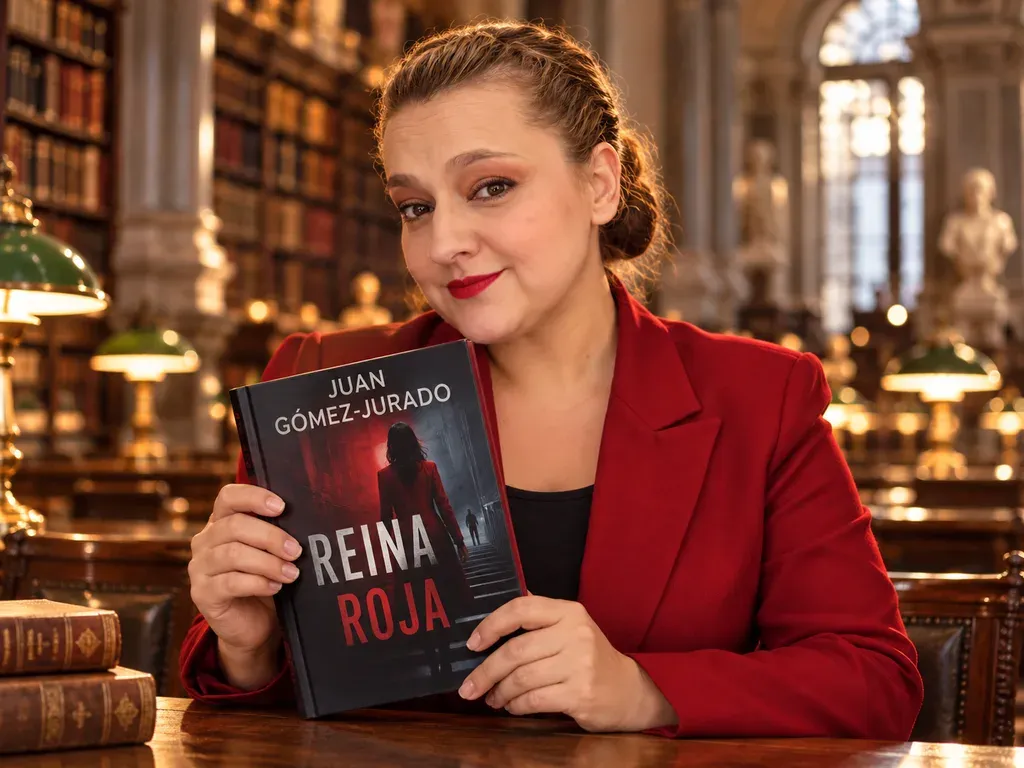
Juan Gómez-Jurado
Red Queen
Red Queen by Juan Gómez-Jurado: Antonia Scott sees everything except a reason to leave her apartment
Antonia Scott has no badge, no official job and an intelligence powerful enough to make a room uncomfortable. Jon Gutiérrez arrives at the wrong door and gets pulled into a case involving wealth, power and people who believe money can buy silence. It can buy quite a lot. It cannot always buy good judgment.
October 26, 2026
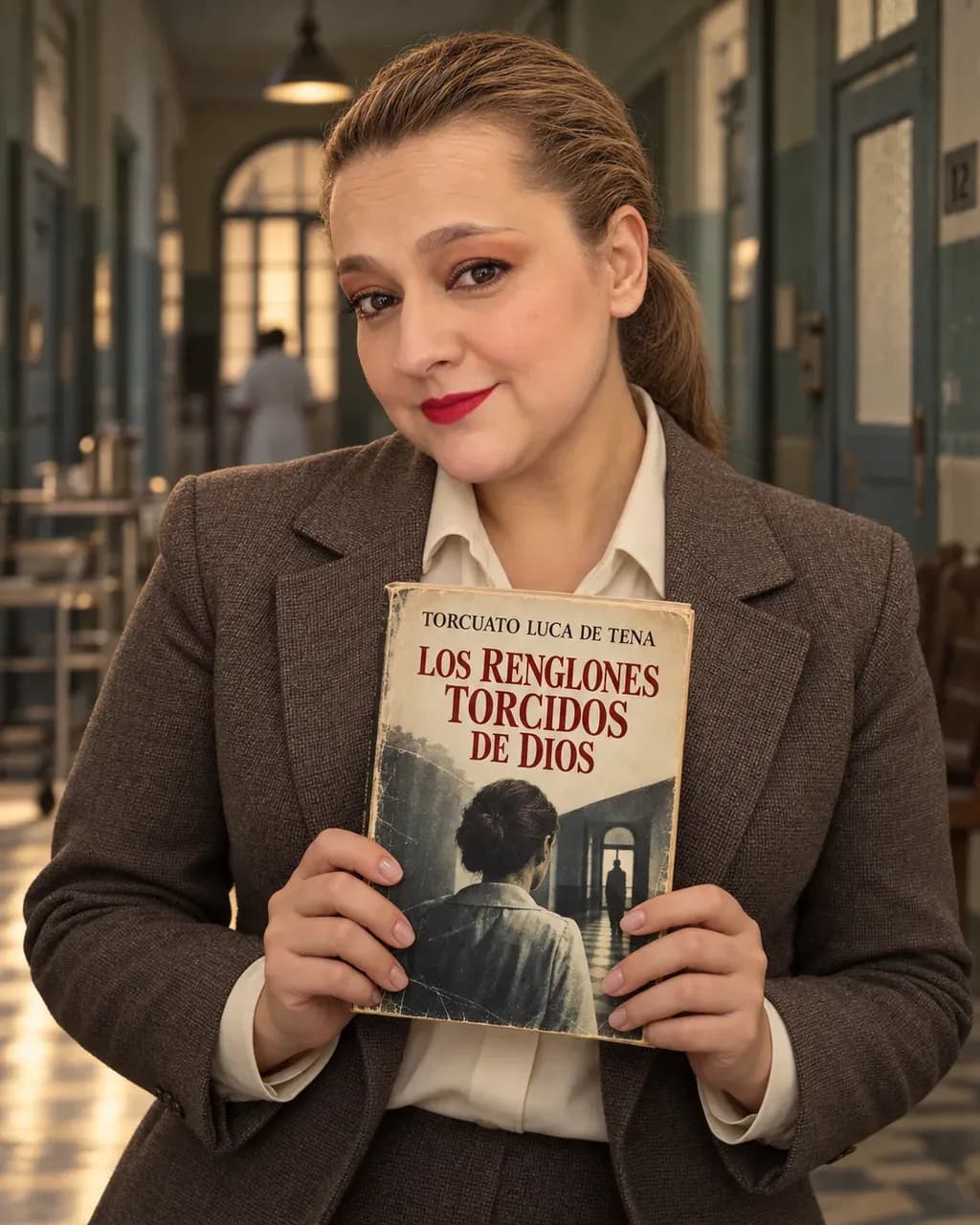
Torcuato Luca de Tena
God's Crooked Lines
God's Crooked Lines by Torcuato Luca de Tena: who gets to decide who is sane?
Alice Gould enters a psychiatric institution with a story of her own. The hospital has another version. That is where the novel starts asking a question institutions would rather keep in their paperwork: who gets to name someone sane, and what happens when the person holding the file is wrong?
October 26, 2026
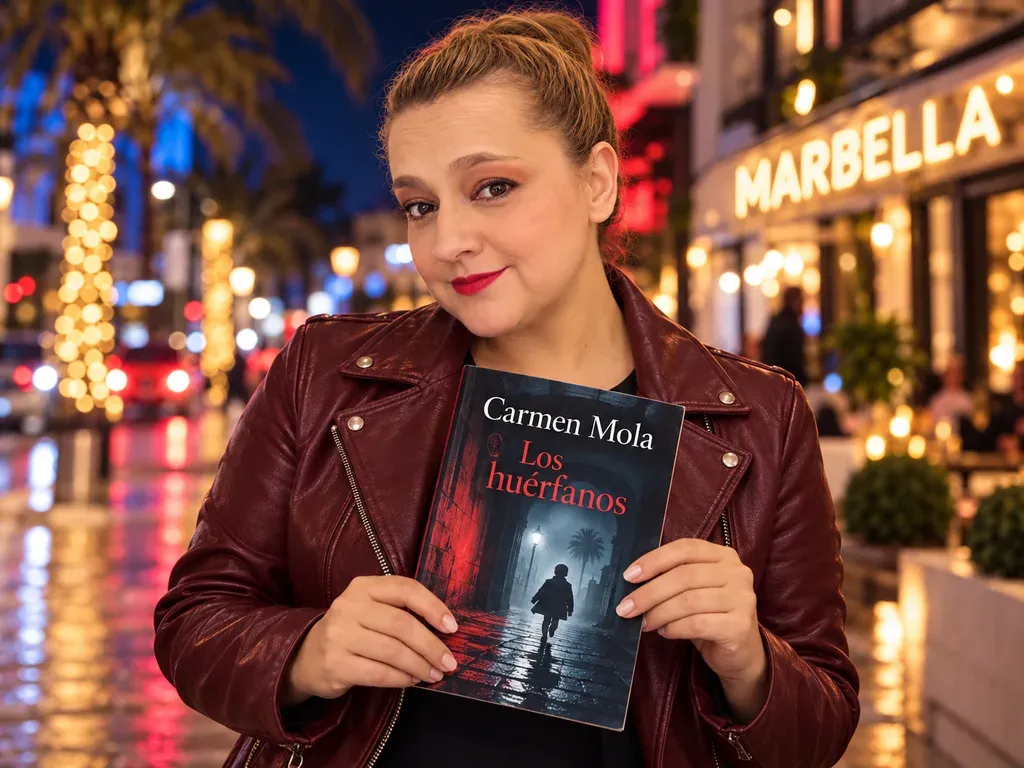
Carmen Mola
The Orphans
The Orphans by Carmen Mola: abandoned children grow into crime bosses. What a hell of a career path
Three children meet in Belfast, build a family out of survival and grow into adults who have learned how to make money from crime. Years later, a case pulls Laura Pastor and her family into a world where loyalty is real, but so are the bullets. The title sounds sad; the career path is considerably worse.
October 25, 2026
Want more like this? Join the Readers Club and get one of my books for free.
Share
My books
Books by Yenny Astrid Londoño



About the author
Yenny Astrid Londoño
Yenny Astrid Londoño is a Colombian author and entrepreneur, founder of Anchetas Medellín. She writes about real life with sarcasm, irony and smart humor, turning everyday situations, mistakes and imperfect relationships into stories that readers can laugh at and recognize themselves in.

A free book from me
Get a free book from me
Subscribe and get Sobreviviendo a mis muertos in full as a PDF.
After that, I'll only write when I have something worth telling you.
Also available: Read this review in Spanish →